Type something to search...
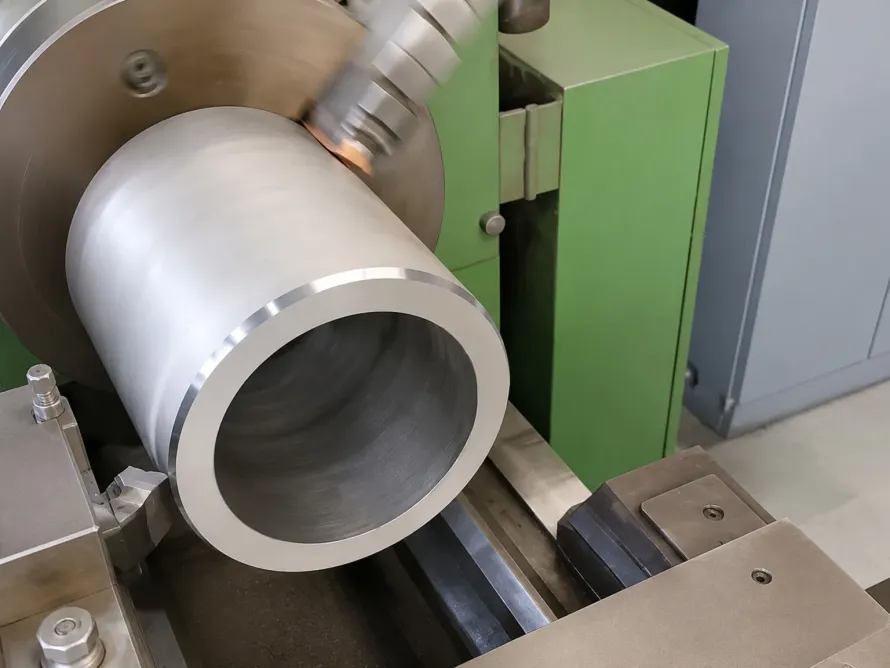
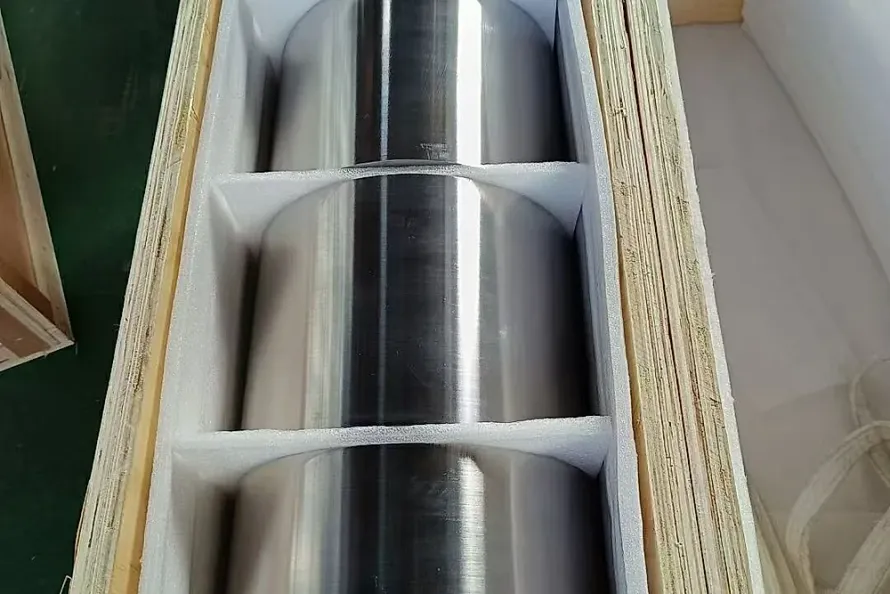
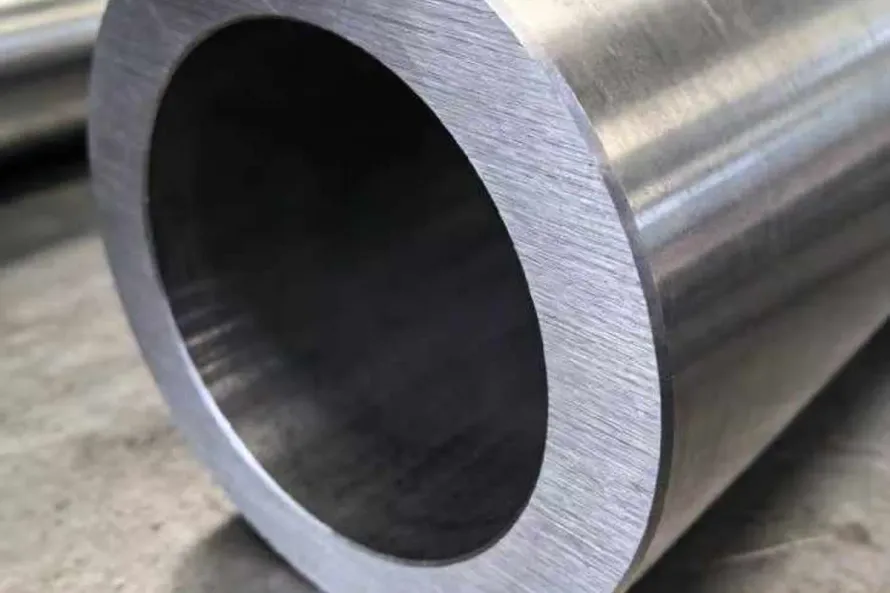
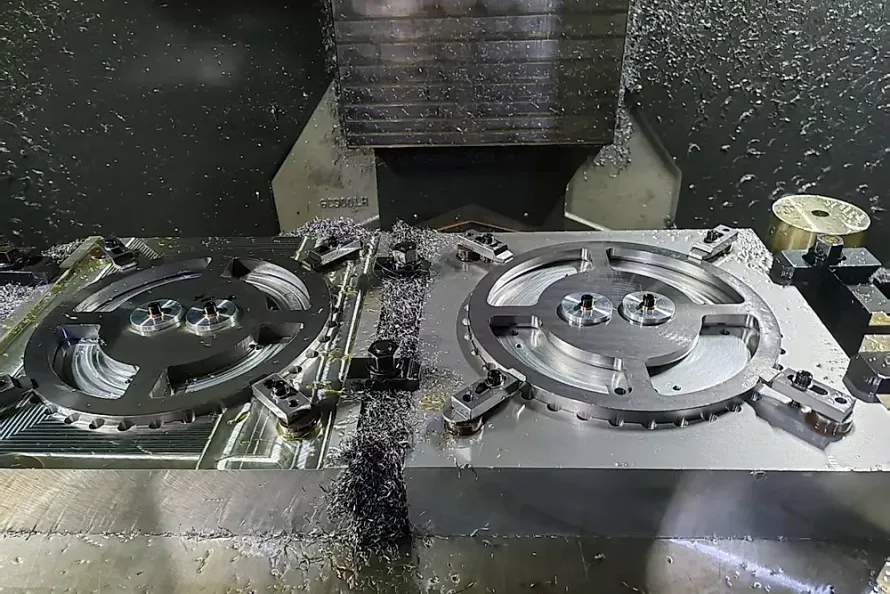
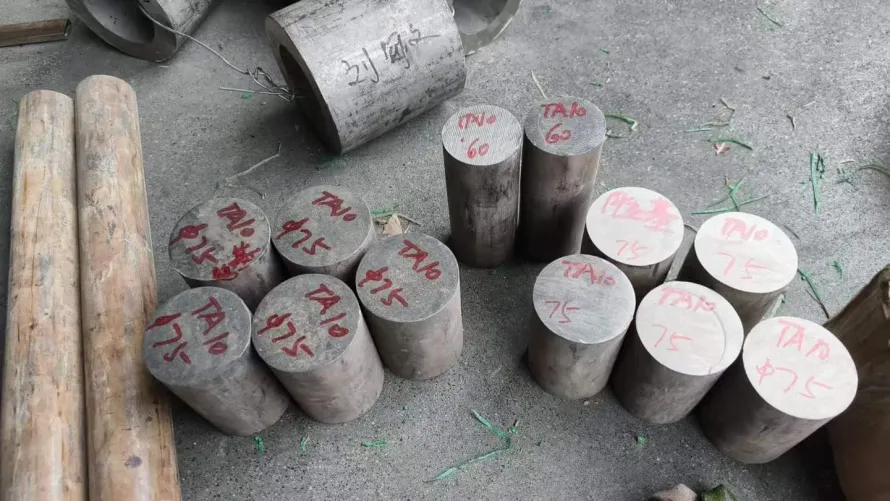
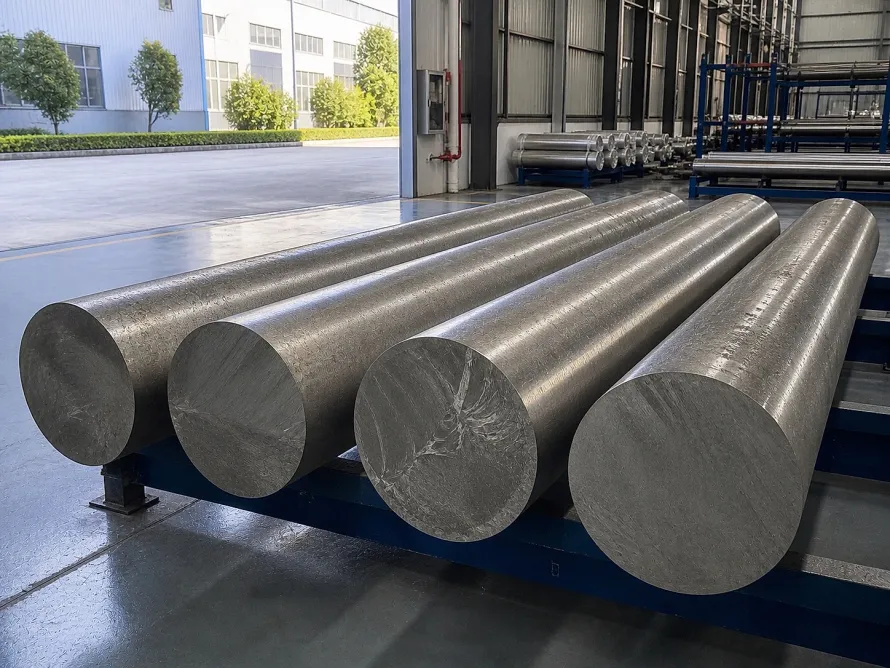
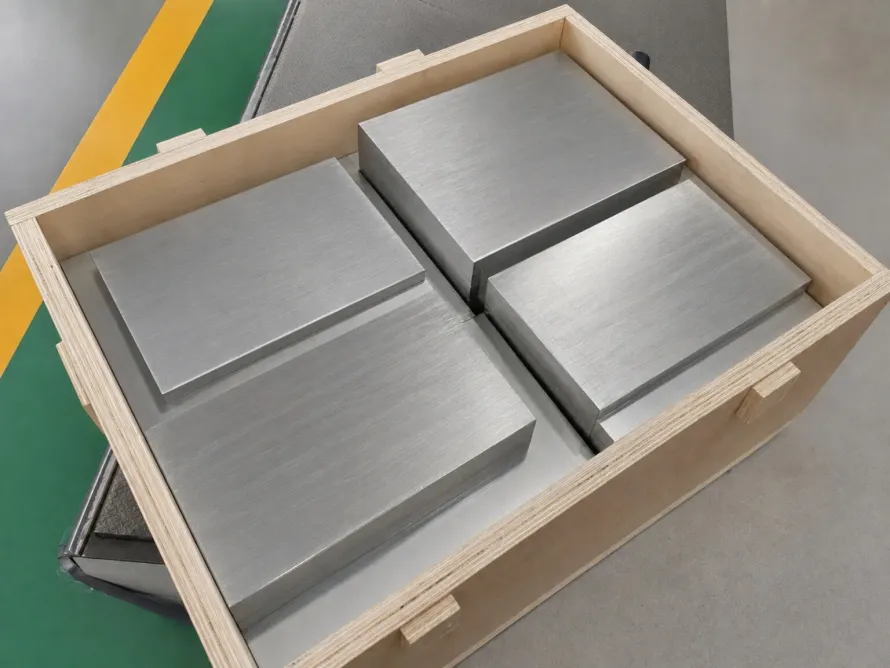
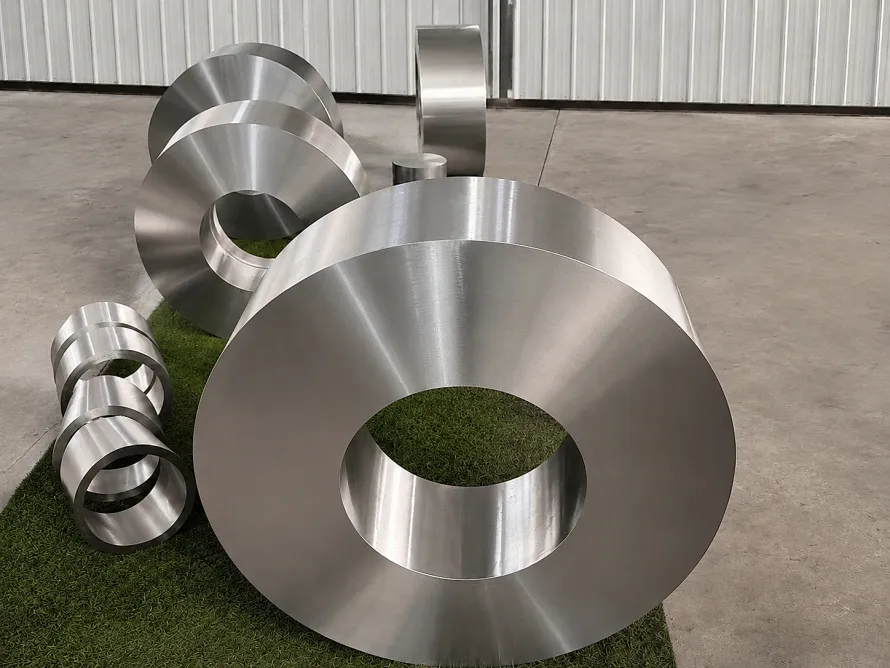
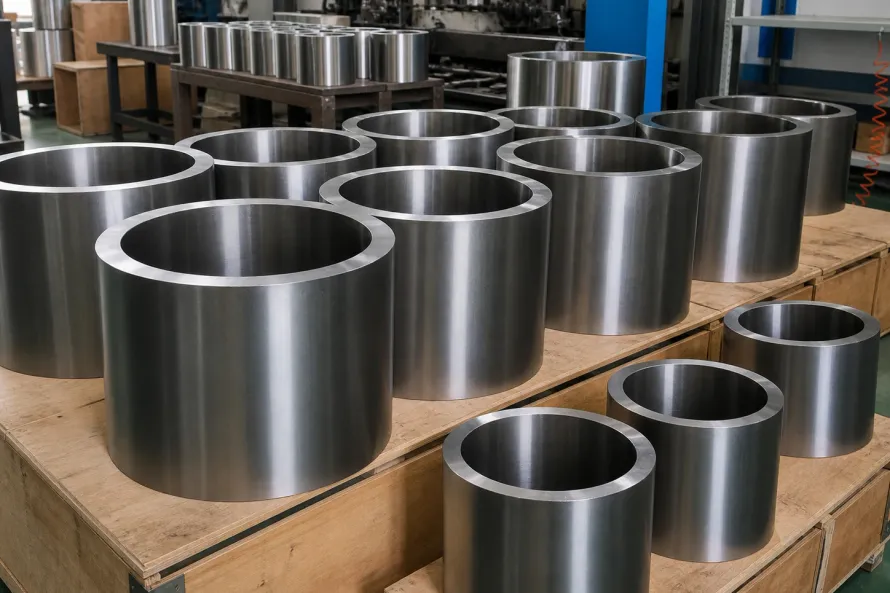
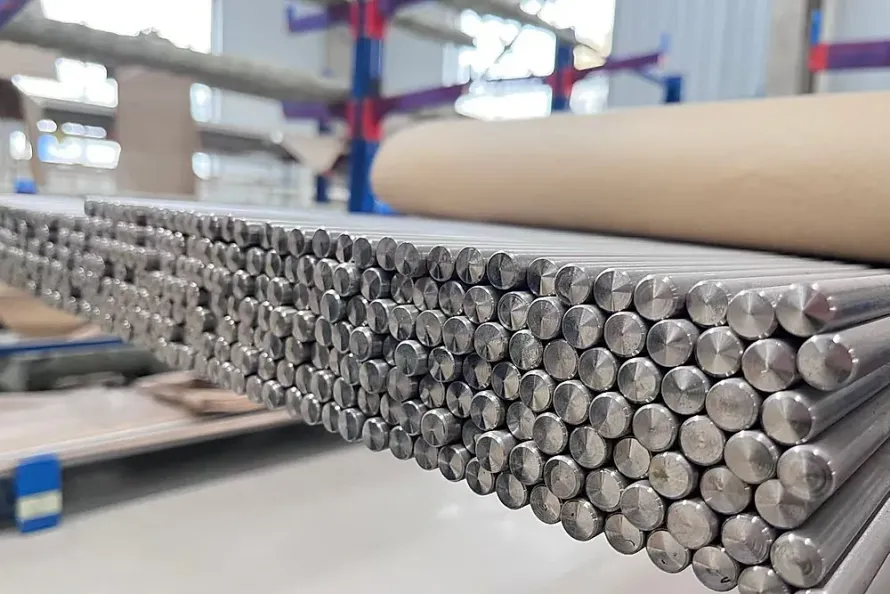
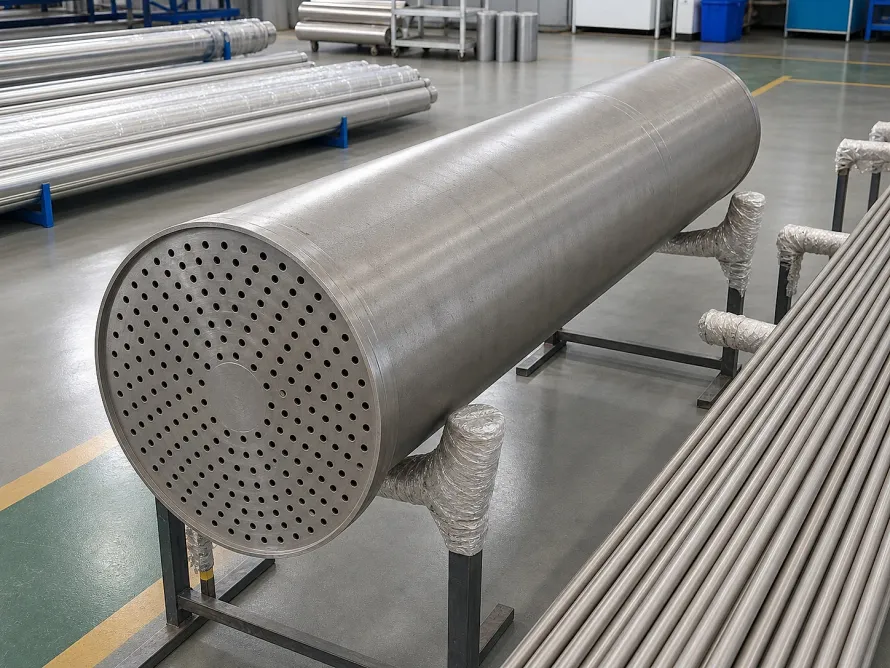
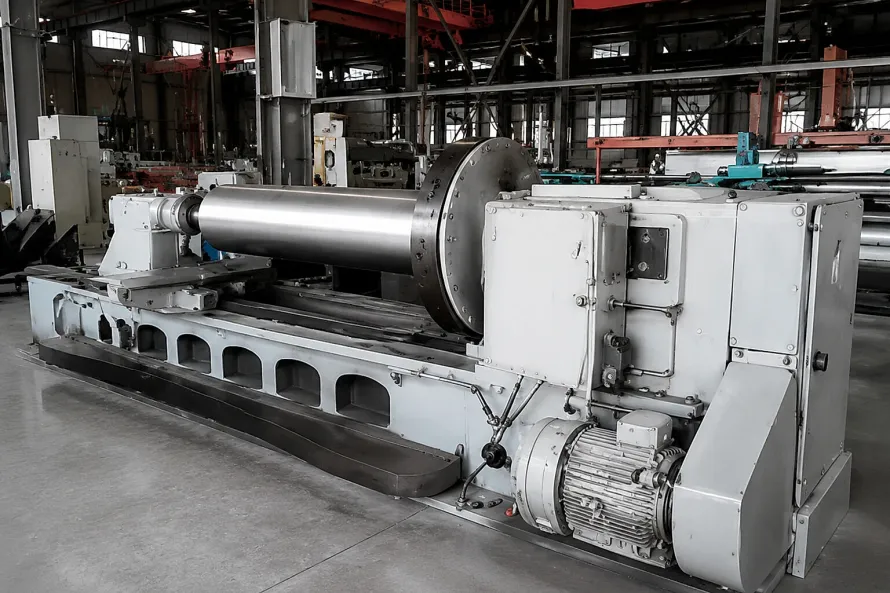
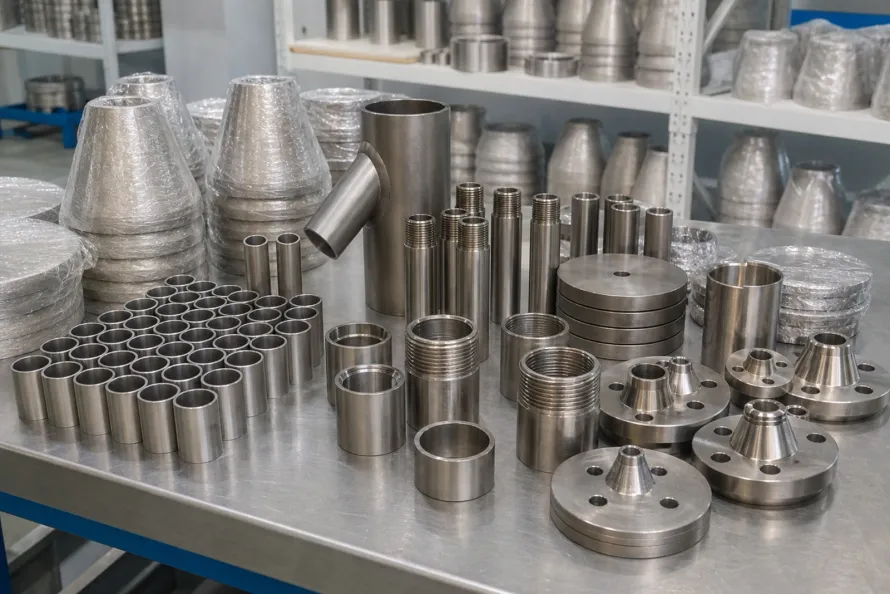
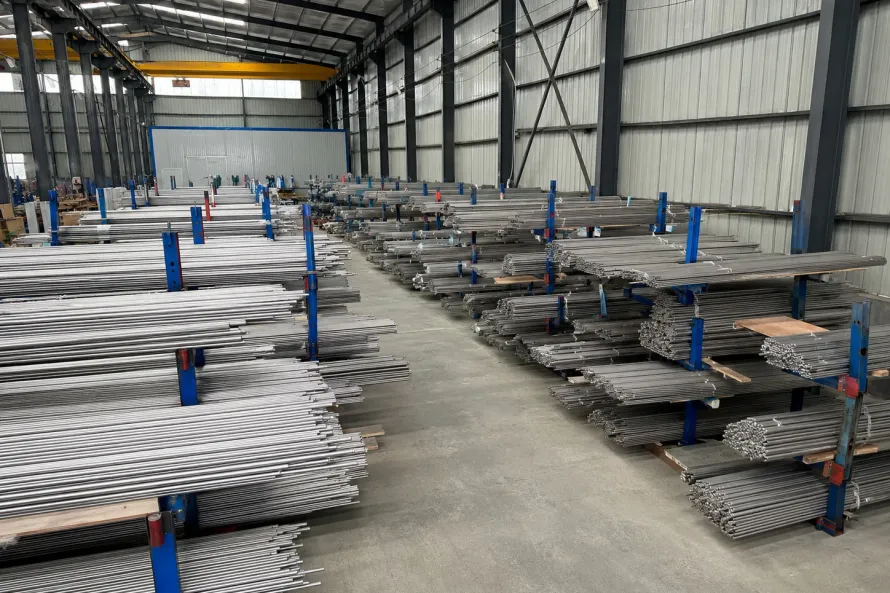
Titanium bar stock in a factory setting, representing the material baseline that buyers must connect to process data, inspection records and release evidence.
  • By Jason/ On 10 Jun, 2026

AIM-4AM Shows Why Titanium AM Buyers Need a Data-to-Allowables Evidence File

Dyndrite’s June 4, 2026 announcement that its team was selected for the America Makes and NCDMM Artificial Intelligence for Material Allowables in Additive Manufacturing project is not a titanium product approval. That boundary matters. The current AIM-4AM demonstrator is 17-4PH stainless steel in the H1025 condition, produced by Laser Powder Bed Fusion, or LPBF.

For titanium buyers, the value of the news is more indirect and more useful. AIM-4AM points to the kind of evidence file that any high-performance AM material route will need before procurement teams can trust claims about faster qualification, lower testing burden, or production-ready process control.
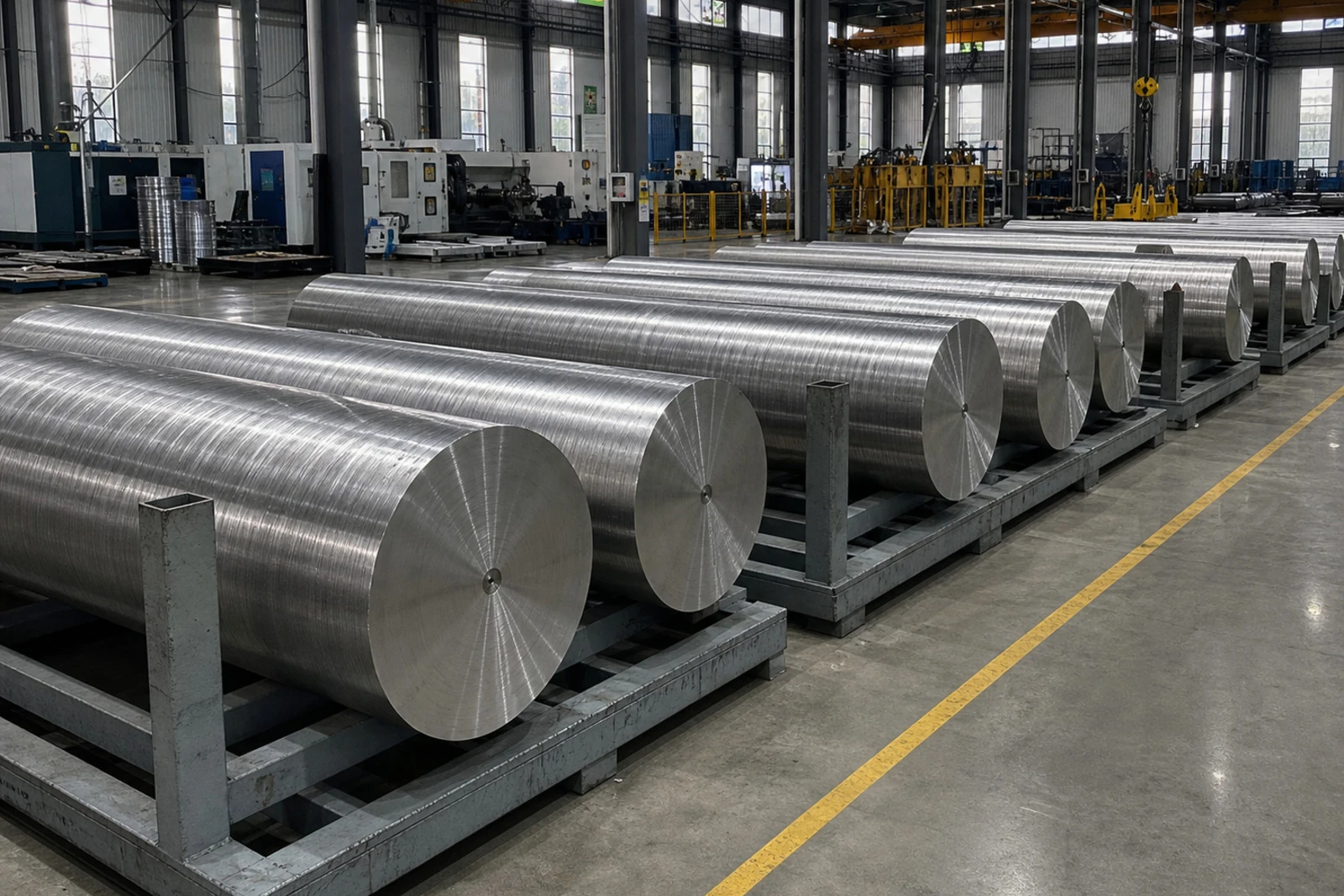
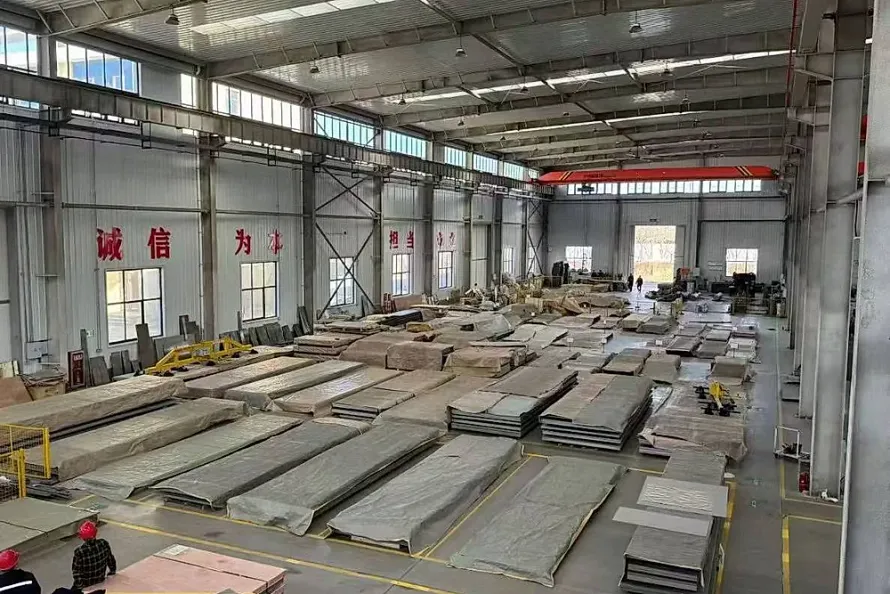
Titanium bar stock in a factory setting, representing the material baseline that buyers must connect to process data, inspection records and release evidence.

TCT Magazine reported on June 8, 2026 that AIM-4AM is a $2 million initiative to develop an AI-driven framework for identifying and quantifying risk inside the material-allowables approach for LPBF. Dyndrite will lead the team, Mimo Technik will execute controlled LPBF builds and testing coordination, and RTX will act as the technology transition partner for aerospace and defense relevance.

That combination is the story. The industry is not only asking whether AM can make a metal part. It is asking whether the data behind the process can support an allowable, survive customer review, and define what physical testing can safely be reduced without hiding risk.

Why A Steel Project Matters To Titanium Buyers

The first buyer discipline is to avoid overreach. AIM-4AM does not validate titanium powder, titanium wire, Ti-6Al-4V, titanium near-net-shape preforms, or any delivered titanium component. It does not mean a titanium AM part can skip qualification. It does not turn a machine-learning model into a material certificate.

But titanium buyers should still pay attention because the qualification problem is shared. Aerospace, defense, medical, space and energy buyers do not accept AM parts simply because the alloy name is familiar. They ask whether the route is stable enough to produce repeatable material properties, whether the process data is trustworthy, whether inspection can catch meaningful variation, and whether the release record matches the actual application boundary.

That is where AIM-4AM becomes relevant. The Manufacturing USA opportunity page says the project aims to develop an AI-driven framework that identifies and quantifies risk in material allowables for 17-4PH H1025 stainless steel made by LPBF. The America Makes RFP describes a program intended to link reduced physical testing to quantified risk categories, support pedigreed AM materials data, and validate AI-driven predictions through acceptance-ready testing protocols.

For titanium AM, the lesson is not “AI will qualify the material.” The lesson is that buyers should make every reduced-testing claim show its evidence chain.

The Evidence Burden Moves Upstream

Traditional buyer review often starts late: a material test report, a dimensional report, a certificate, a first article package, or a supplier quality document. AM pushes the evidence burden upstream because many sources of variation are created before final inspection. Powder or wire feedstock, machine configuration, scan strategy, build orientation, atmosphere control, thermal history, post-processing, surface condition and inspection method can all affect the final release decision.

That does not make AM unmanageable. It means the buyer file has to connect more layers.

A supplier claiming faster qualification through AI-assisted allowables should be able to show what the model is trained on, what variance it is trying to reduce, which process signals are controlled, what physical tests remain, and where the proposed allowable is not valid. Without that chain, “reduced testing” is only a cost-saving phrase.

The AIM-4AM announcement is useful because it names the missing middle. Dyndrite said the team will develop machine-learning-driven methods to assess qualification risk, generate preliminary qualification datasets, validate predictions against experimental tensile and fatigue data, support statistically informed reduced-testing protocols, and align production-oriented approaches with material allowables development and qualification requirements.

Those are not marketing decorations. They are the categories titanium buyers should ask suppliers to document.

The Data-To-Allowables Evidence File

For titanium products, a practical response is a data-to-allowables evidence file. It is not a substitute for customer approval, drawing control, material specifications, inspection plans, or application-specific testing. It is the bridge that keeps digital qualification claims auditable.

Evidence layerBuyer questionRecords to request
Material boundaryWhat alloy, feedstock form and condition are actually covered?Ti-6Al-4V, CP titanium or other grade identity; powder, wire, billet or preform source; chemistry; lot handling and reuse rules
Process windowWhat process state is allowed?LPBF, DED, WAAM, HIP, machining or post-processing route; parameter set; machine configuration; atmosphere and thermal controls
Data pedigreeWhat data feeds the model or qualification argument?Build logs, sensor data, traveler records, calibration files, inspection data, lab test records and excluded data notes
Physical validationWhat testing still proves the route?Tensile, fatigue, chemistry, density, surface, microstructure, NDT, CT, dimensional and application-specific tests
Statistical confidenceHow is reduced testing linked to risk?Sampling plan, confidence basis, risk categories, model validation, repeatability evidence and failure-mode review
Application boundaryWhere can the allowable or evidence be used?Part family, load case, service environment, customer program, geometry limits and excluded applications
Release and change controlWhat forces re-approval?Feedstock change, machine change, parameter change, site change, post-process change, inspection-method change or drawing revision

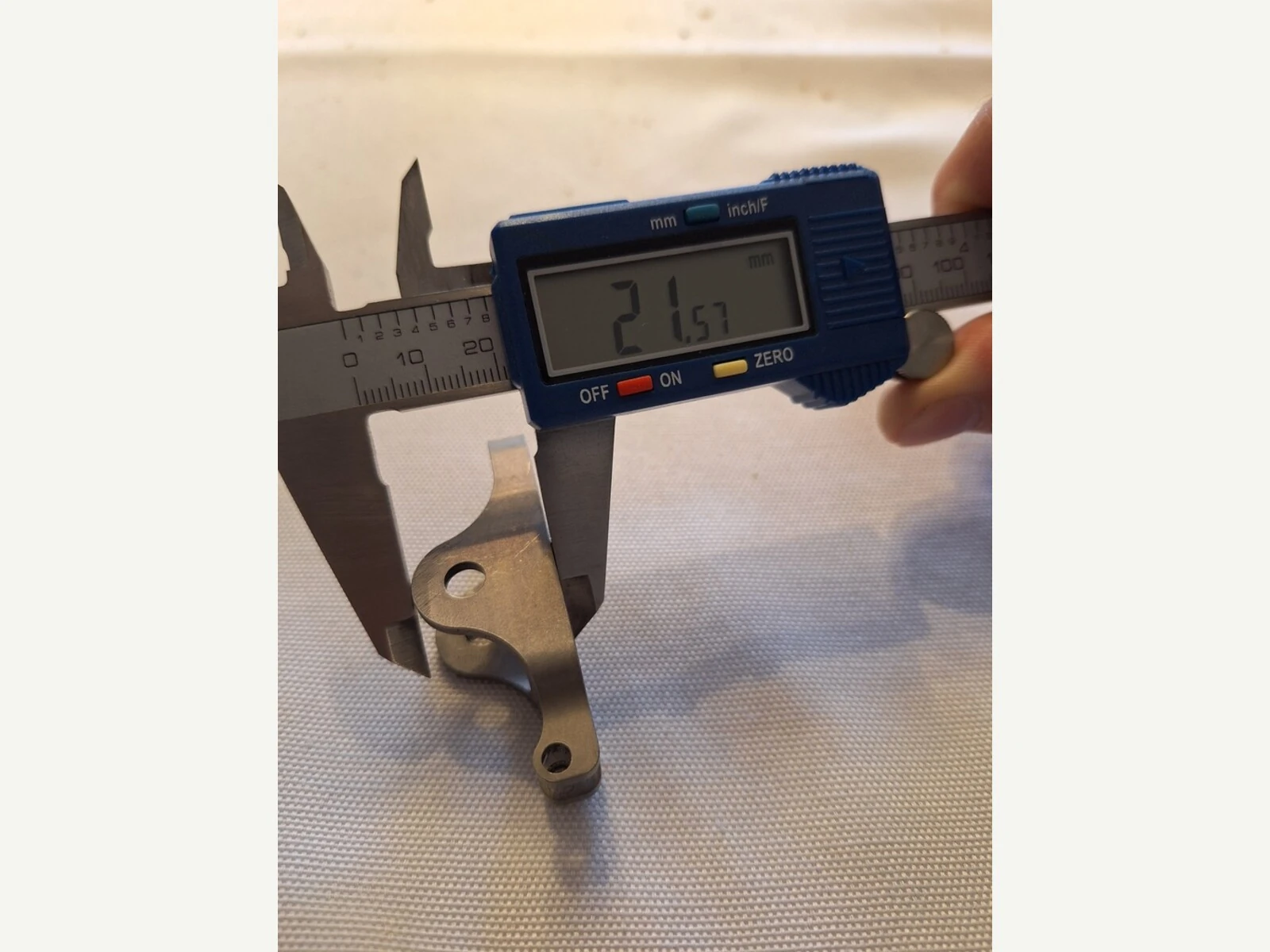
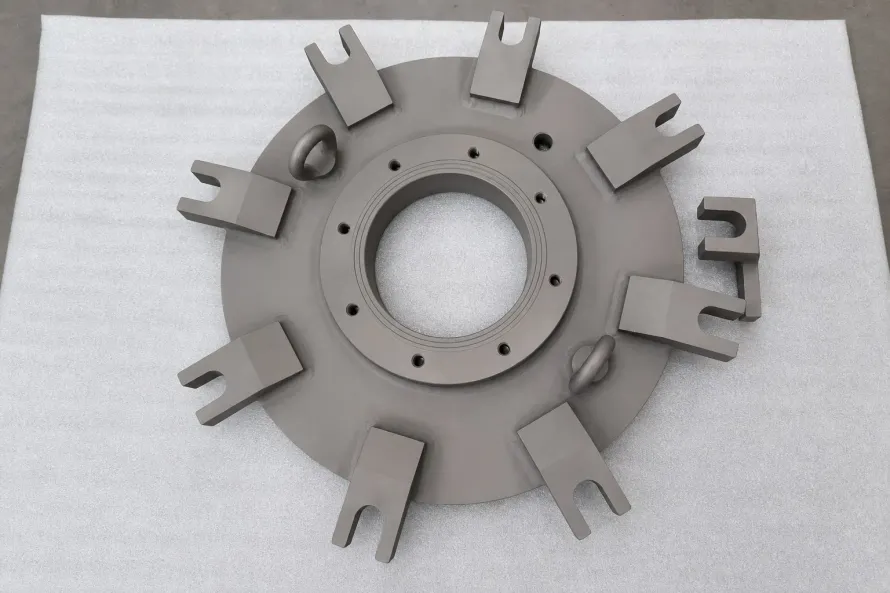
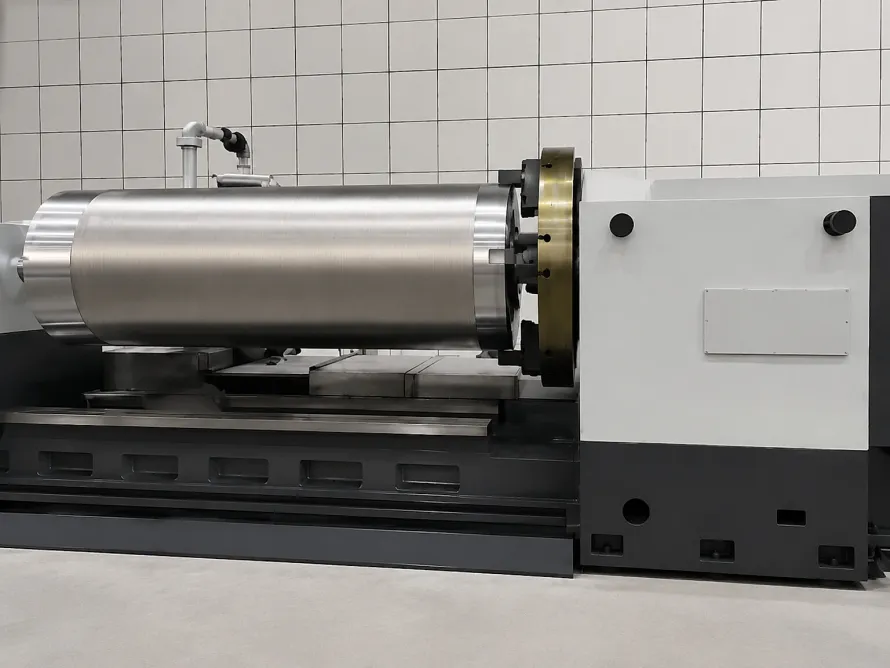
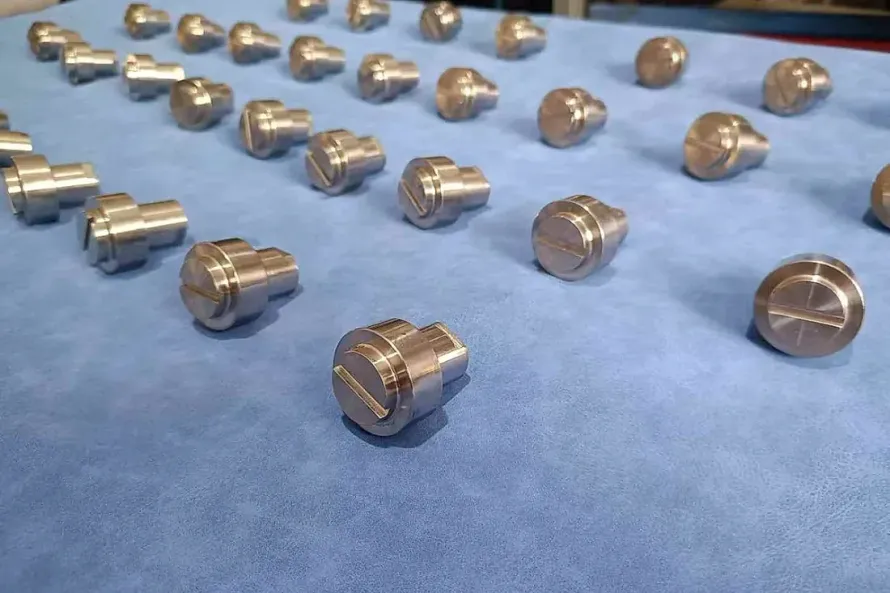
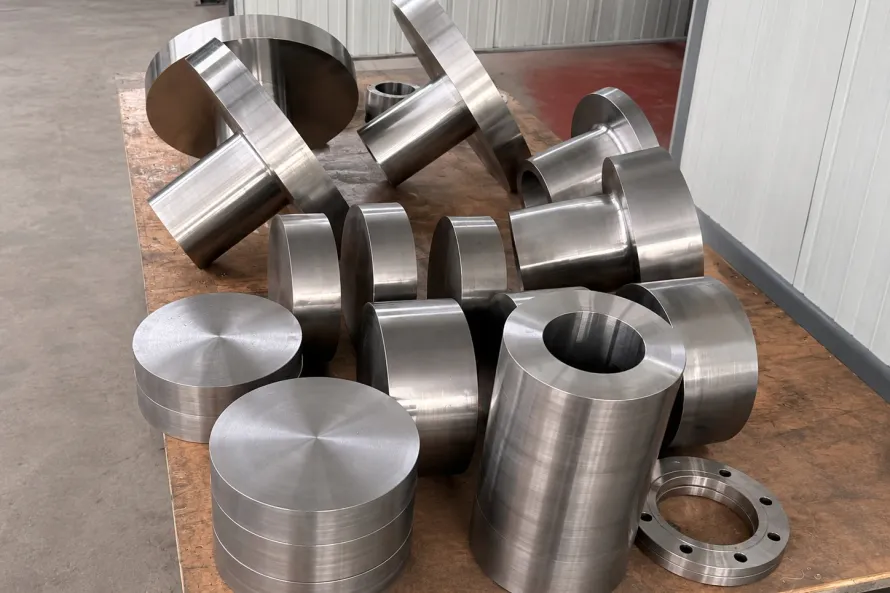
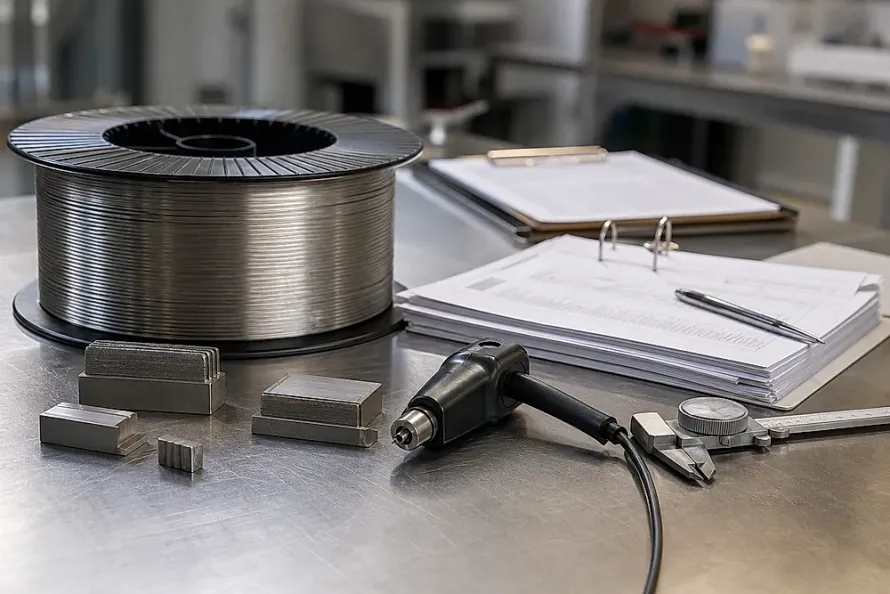
Digital caliper measurement of a small machined titanium part, showing why AM or machined routes still need dimensional verification in the buyer evidence file.

This structure keeps the buyer from making two common errors. The first is treating a model result as if it were a finished material approval. The second is treating a successful coupon program as if it automatically covers every production geometry.

Titanium buyers need the opposite habit. They should ask which facts are general, which are machine- or site-specific, which are part-family-specific, and which require customer approval before shipment.

What AI Does Not Remove

AI can help identify high-value tests, model process-structure-property relationships, and focus engineering attention on the variables that matter. It cannot remove the need for traceable input material, controlled process parameters, qualified inspection, physical validation, and a release record that says exactly what the shipment proves.

The America Makes RFP reinforces that point. It set out a maximum period of performance of 21 months, including 18 months of technical effort and 3 months for report finalization, and emphasized traceability, data management, reproducibility, calibration, specifications, certifications, material sources, post-processes, inspection, testing and quality control protocols. Those requirements are not signs of a shortcut. They are signs that the shortcut must be earned.

That is especially important for titanium because AM is often compared against forged, rolled, bar-stock, tube-stock, plate-stock or machined routes. A proposed AM route may reduce buy-to-fly waste or improve geometry freedom, but the buyer still has to approve the route against the part’s service duty. A titanium bracket, fastener, pressure part, implant blank, heat-exchanger component or aerospace preform does not become acceptable because its data package is modern. It becomes acceptable when the data package matches the risk.

Lessons For Titanium Suppliers

The strongest commercial lesson is not limited to AM specialists. Conventional titanium suppliers can use the same evidence logic.
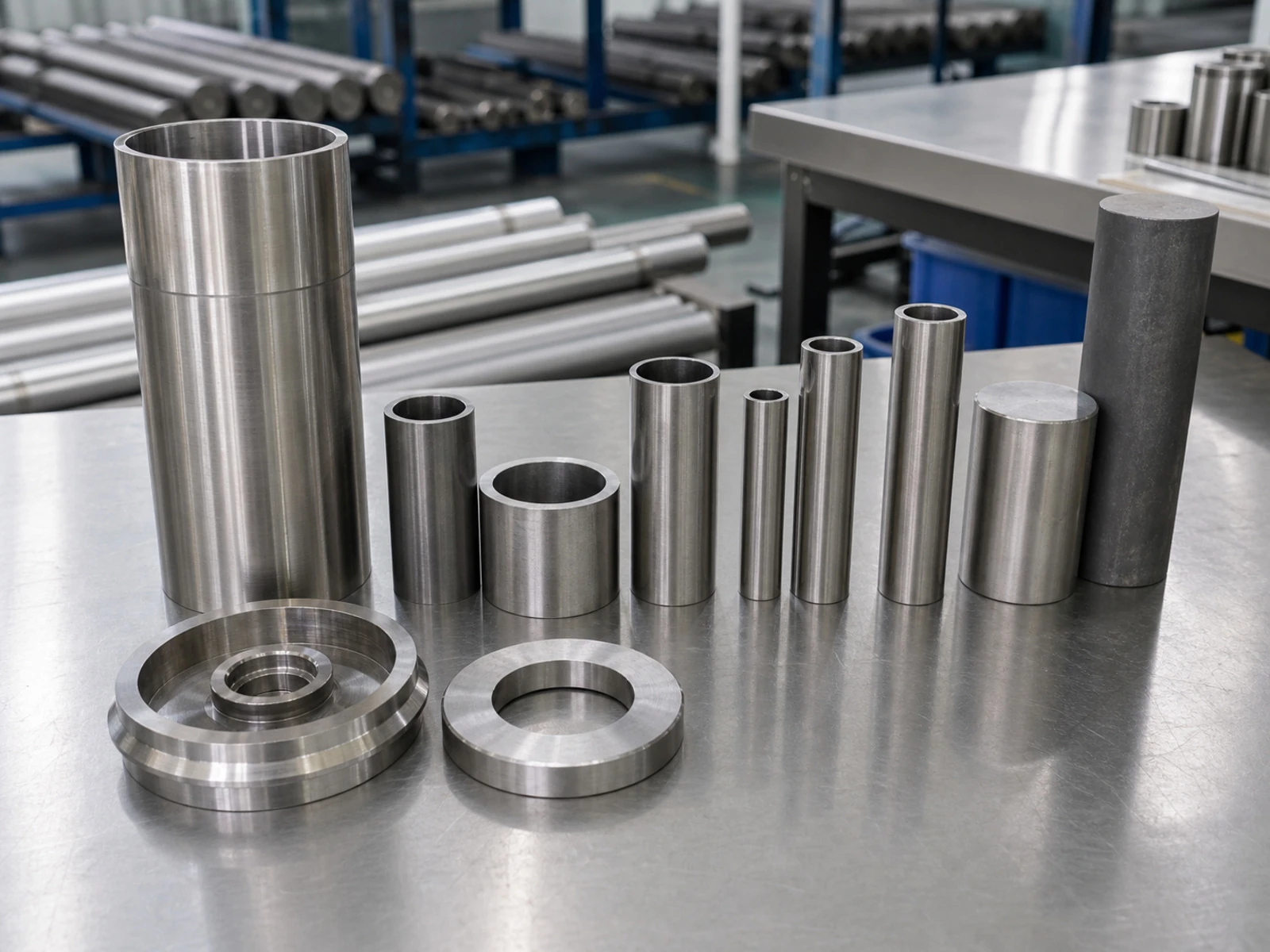
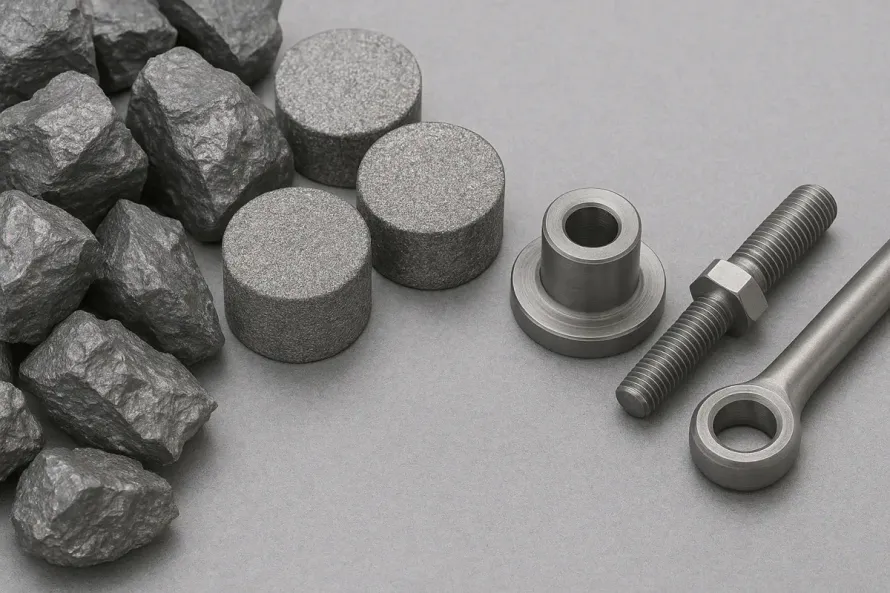
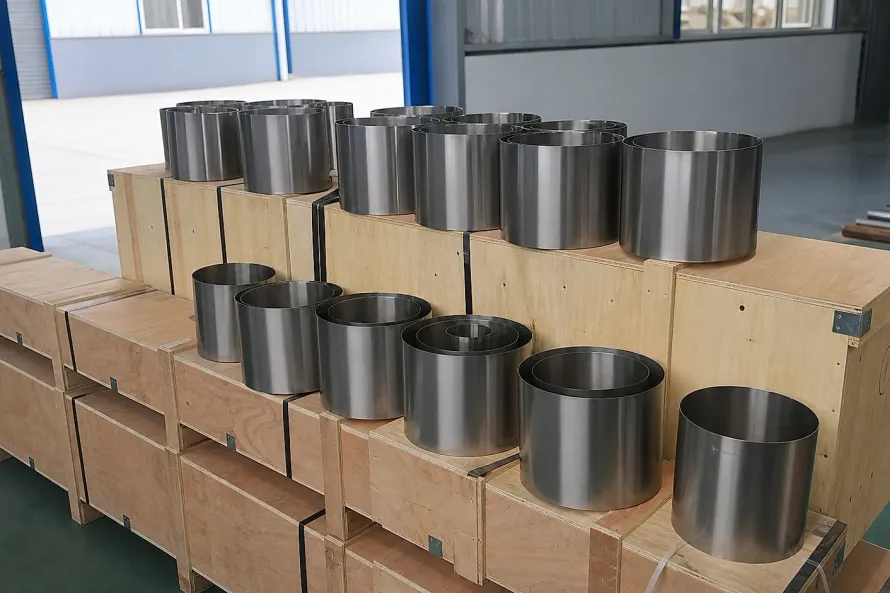
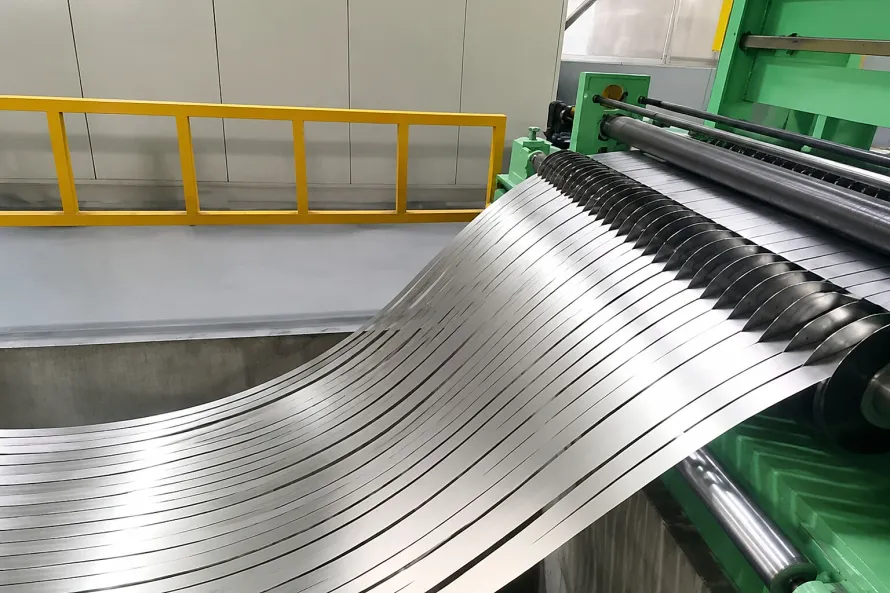
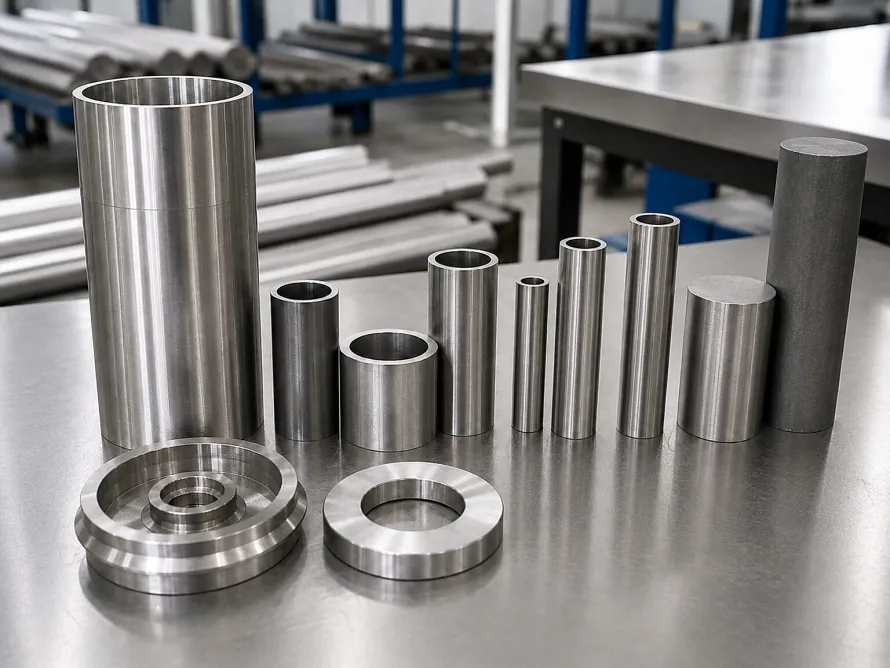
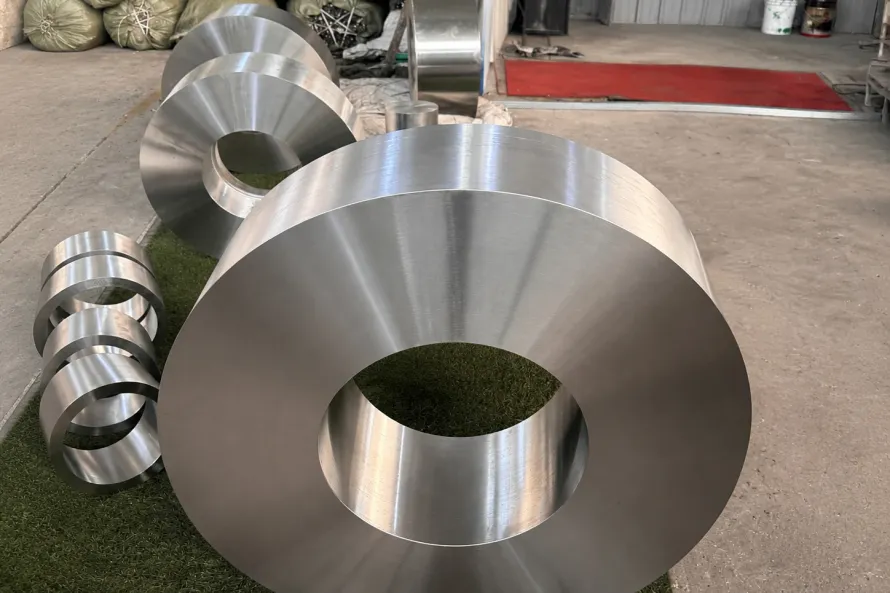
Titanium tubes, rings and sample components arranged on a bench, illustrating how material form and process route must stay visible in qualification evidence.

A titanium bar supplier can document heat identity, chemistry, ultrasonic inspection, straightness, surface condition and shipment release. A tube supplier can connect grade, OD and wall tolerance, production route, surface condition, pressure or leak evidence, cleanliness and packaging. A machined titanium component supplier can connect input stock, machining route, dimensional inspection, special processes, certificate wording and change control.

The common thread is not AI. It is auditability.

A buyer who sees a clean evidence path can separate real readiness from vague process claims. A supplier who keeps that path clean becomes easier to evaluate, easier to approve and easier to trust when the part family changes.

That is the useful titanium reading of AIM-4AM. The project may begin with 17-4PH H1025 stainless steel, but the buyer question it raises is broader: when a supplier says data can reduce testing, can the supplier show exactly which risk has been measured, which tests remain, and where the evidence stops?

For titanium products, that question is becoming part of the purchase decision.

FAQ

# Does AIM-4AM validate titanium additive manufacturing?
No. AIM-4AM's current demonstrator material is 17-4PH stainless steel in the H1025 condition produced by LPBF. The titanium relevance is indirect: the project shows what evidence buyers should expect when titanium additive manufacturing suppliers claim faster qualification, reduced testing or data-supported material allowables.
# What is a data-to-allowables evidence file?
It is a buyer review file that connects material boundary, process window, data pedigree, physical validation, statistical confidence, application boundary, release wording and change control. For titanium products, it keeps digital qualification claims tied to auditable records rather than loose claims about AI or reduced testing.
# Why do reduced-testing claims need extra scrutiny?
Reduced testing is useful only when the supplier can show which risk has been quantified, what physical tests remain, how predictions were validated, and where the proposed allowable does not apply. Without that chain, reduced testing becomes a cost-saving phrase rather than a qualification argument.
# What records should titanium AM buyers request?
Buyers should request feedstock identity, machine and parameter records, build logs, inspection data, calibration files, tensile and fatigue validation, NDT or CT results when relevant, application limits, release wording and change-control triggers. The exact package depends on part family and customer approval requirements.
# Can conventional titanium suppliers use the same framework?
Yes. The framework also helps suppliers of titanium bar, tube, plate, forgings and machined components present clearer evidence. The same audit logic connects material identity, processing route, inspection records, certificate wording, packaging and change control, even when no AM process is involved.

Need this material? Get a factory-direct quote.
Request a Quote
Tags

Related Posts

Manufacturing and Technology
CATL Debuts Titanium Alloy Battery Case: Mass-Market EVs Hit a Titanium Inflection Point
By Jason/ On 28 Apr, 2026

CATL Debuts Titanium Alloy Battery Case: Mass-Market EVs Hit a Titanium Inflection Point

At its April 22 launch event, CATL rolled out six battery technologies. One sat quietly under the headline noise: an aerospace-grade titanium alloy battery case. The official numbers: wall thickness reduced 60%, weight down 30%, strength tripled, pack-level energy density lifted by 20 Wh/kg. Paired with the Qilin Condensed 350 Wh/kg cell, total vehicle range hits 1,500 km. This is the first time titanium has appeared on the load-bearing parts list of a million-unit EV platform. The same week, Samsung Galaxy S26 Ultra and iPhone 17 Pro both walked away from titanium mid-frames and went back to Armor Aluminum. Two stories in opposite directions, in the same news cycle — that contrast deserves to be unpacked carefully. What it actually takes to put titanium into a battery caseCATL did not start from a Ti-6Al-4V forged billet. It started from commercially pure titanium (Gr.1/Gr.2) cold-rolled sheet, 0.3–0.8 mm thick, ≥1,000 mm wide. For the past decade, the titanium mill industry has filed that spec under "edge demand" — the volume customers were chemical processing, medical, and seawater desalination plate heat exchangers. Aerospace plate has always meant Ti-6Al-4V forged stock at ≥3 mm. Battery-grade thin sheet was a market too small to schedule a dedicated mill run. CATL's announcement just dragged that "edge demand" into the middle of the production curve. Three reasons. First, content per vehicle. A mid-size EV battery case rebuilt in 0.5 mm titanium sheet consumes 8–12 kg of titanium per car. Run that against China's 2025 EV output of roughly 12 million units — a 10% penetration rate equals 14,400 tonnes/year of titanium sheet demand. That single number is larger than China's entire titanium plate-and-strip export volume for last year, combined. Second, process constraints. EV-volume cadence requires the cold-rolled-and-annealed sheet to hold oxygen content below 0.18%, surface roughness Ra ≤0.4 μm, and yield ≥95% on wide coil (>1,200 mm). Public records suggest fewer than 10 mill lines worldwide can deliver this spec consistently. China runs 4–5 of them, concentrated in Baoji and Zunyi. Third, materials logic. CATL did not specify titanium for the optics. It specified titanium because it had to clear ballistic impact and nail penetration safety tests at the same time. A conventional aluminum case needs a 1.2 mm wall to pass the GB nail test; Gr.2 titanium clears it at 0.5 mm. Every cubic millimeter saved goes back to the cell stack. That is real energy-density arbitrage, not a press-release figure. Phones dropping titanium the same week — same logic, opposite sign The S26 Ultra and iPhone 17 Pro de-titaniumization looks like a contradiction. The logic underneath is identical. Phones optimize for thinness. Flagships are pushing from 8.2 mm down toward 7.5 mm. Titanium (4.51 g/cm³) becomes a liability versus aluminum (2.70 g/cm³) at that wall thickness — a 0.6 mm titanium frame is 67% heavier than aluminum, and the user feedback loop on hand-feel is measured in weeks. Armor Aluminum closes most of the bend-strength gap at roughly half the mass. EV battery cases optimize against a different test matrix: nail penetration, fire, crush, salt spray, 25-year service life. Across those, titanium's corrosion potential, strength-to-density ratio, and high-temperature creep resistance sit a full order of magnitude above aluminum. The intersection of specs is what decides which material wins. The phone intersection points to "light + thin." The EV intersection points to "safe + long-life." That distinction matters more than the recurring debate over whether titanium prices are up or down. The phone titanium market is a marginal market — small total volume, price-sensitive, frequent material swaps. The EV battery case is a structural market — once it locks into a vehicle platform, it stays for 3–5 years, and over time it migrates from flagship trims down into the mid-tier. Supply-side picture for CP titanium thin sheetIn our Baoji (China's Titanium Valley) spot inventory system, April 2026 stock of Gr.1/Gr.2 commercially pure titanium sheet (0.3–1.0 mm thick, ≥1,000 mm wide) sits at 30 tonnes. That number is not large by traditional market standards, but against an EV battery case demand curve, it means we can release a sample-batch run within two weeks. Over the past six months, RFQ frequency from power battery and ESS customers has stepped up noticeably. The RFQ profile is different from aerospace Tier 2 work — order sizes are modest (typically 200–2,000 kg), but once qualification clears, they convert into stable monthly repeat purchases. The pattern almost mirrors the evolution of copper foil and aluminum foil into the lithium-ion supply chain — heavy iteration up front, then the order book locks into a long-term industrial baseline. Another supply-side fact: fewer than 10 lines globally can produce 1.2–1.5 m wide Gr.2 coil. That capacity curve scales slowly because cold-mill roll width and annealing-furnace atmosphere control are 6–8 year capital-equipment cycles. CATL just handed every titanium sheet-and-strip producer a 3–5 year demand certainty signal. A checklist for buyers and materials engineers If you are scoping titanium procurement for H2 2026 through H1 2027, three actions belong at the top of the list. First, put Gr.1/Gr.2 titanium sheet on the battery case alternate-material list — even if your current production line is still running aluminum. Qualification cycles run 12–18 months ahead of the production decision. By the time the program manager decides to switch, sourcing the spec is already a bottleneck. Second, write "coil width ≥1,200 mm + oxygen content ≤0.18% + surface roughness Ra ≤0.4 μm" into the RFQ template as hard requirements. Asking generically for "Gr.2 titanium plate price" gets you a commodity quote. Asking for the spec set above is what gets you into the battery case supply chain. Third, treat spot availability as a decision-line item, not an afterthought. On our titanium sheet and plate and titanium foil lines, customers with spot access are submitting samples 3–4 weeks ahead of those waiting on futures runs. In a qualification race, that gap is first-mover advantage. The signal worth tracking over the next 12 months is not "which EVs put titanium in." It is "which 1.2 m wide cold-mill lines start booking battery-industry contracts." That data point will reflect titanium's true penetration into the EV stack earlier than any price index. Related Products & ServicesService → No Minimum Order Quantity Sourcing — sample/trial channel for early-stage battery case qualification work Product → Titanium Sheets and Plates — Gr.1/Gr.2 commercially pure cold-rolled sheet, ≥1,000 mm wide, in stock Product → Special Titanium Alloys — qualification path for the special grades EV safety testing demandsAbout: Titanium Seller is a supply chain platform based in Baoji, China's Titanium Valley.
Manufacturing and Technology
From Ore to Precision: How Titanium Parts Are Engineered for Excellence
By William Jacob/ On 10 May, 2025

From Ore to Precision: How Titanium Parts Are Engineered for Excellence

Titanium parts used in aerospace, medical, and industrial systems don’t just start on a CNC lathe—they begin as minerals deep in the Earth. The journey from raw titanium ore to a precision-engineered component involves an intricate chain of metallurgy, chemistry, and machining expertise. This article breaks down each step in the process: from extraction and refining to alloying, forming, and final finishing. Whether it’s a jet turbine blade or a spinal implant, the excellence of titanium parts lies in the science of their transformation.Step 1: Extracting the Raw Material Titanium is primarily extracted from ilmenite (FeTiO₃) and rutile (TiO₂) ores. Mining locations: Australia, South Africa, and Canada lead in titanium ore production. Once mined, the ore undergoes chlorination to produce titanium tetrachloride (TiCl₄), a volatile compound essential for purification.Step 2: Refining via the Kroll Process The Kroll Process remains the primary method for refining titanium: TiCl₄ is reduced using magnesium (Mg) in a high-temperature reactor. The result is a porous, sponge-like raw titanium—often called titanium sponge. This sponge is melted in a vacuum arc remelting furnace to produce ingots.Though energy-intensive, the Kroll process produces high-purity titanium suitable for aerospace and medical applications.Step 3: Alloying and Ingot Formation Titanium is rarely used in pure form. It’s alloyed with elements like: Aluminum (Al) and Vanadium (V) for aerospace-grade materials (e.g., Ti-6Al-4V). Molybdenum (Mo) and Iron (Fe) for enhanced machinability and corrosion resistance.These ingots are then forged or rolled into billets, slabs, or bars depending on their intended application.Step 4: Forming and Machining Precision forming techniques shape titanium into usable formats: Hot forging and extrusion shape structural parts. CNC machining refines parts down to micron-level tolerances. EDM (Electrical Discharge Machining) is used for complex geometries.Because titanium has low thermal conductivity and high hardness, cutting requires slow speeds, rigid setups, and titanium-grade tool coatings.Step 5: Surface Finishing and Inspection Final steps involve enhancing performance and ensuring integrity: Anodizing or passivation creates a corrosion-resistant surface. Ultrasonic testing, X-ray diffraction, and dye penetrant inspection detect internal and surface defects. For medical and aerospace components, each part must pass strict ISO and ASTM standards.Applications of Precision Titanium ComponentsJet turbine blades: High strength and heat resistance Dental and orthopedic implants: Bio-compatibility and non-reactivity Chemical valves and seals: Resistance to acid and salt corrosion Motorsport parts: Weight savings without compromising strengthIndustry Outlook With advancements in 3D printing, powder metallurgy, and AI-driven quality control, the engineering of titanium parts is becoming faster, cleaner, and more precise. As manufacturing pushes for lighter, stronger, and more sustainable materials, titanium’s role will only grow.

Manufacturing and Technology
IperionX Hits 4.2 Tonnes in March on 24/7 Operations: From 1,400 tpa Math to Production Cadence
By Jason/ On 29 Apr, 2026

IperionX Hits 4.2 Tonnes in March on 24/7 Operations: From 1,400 tpa Math to Production Cadence

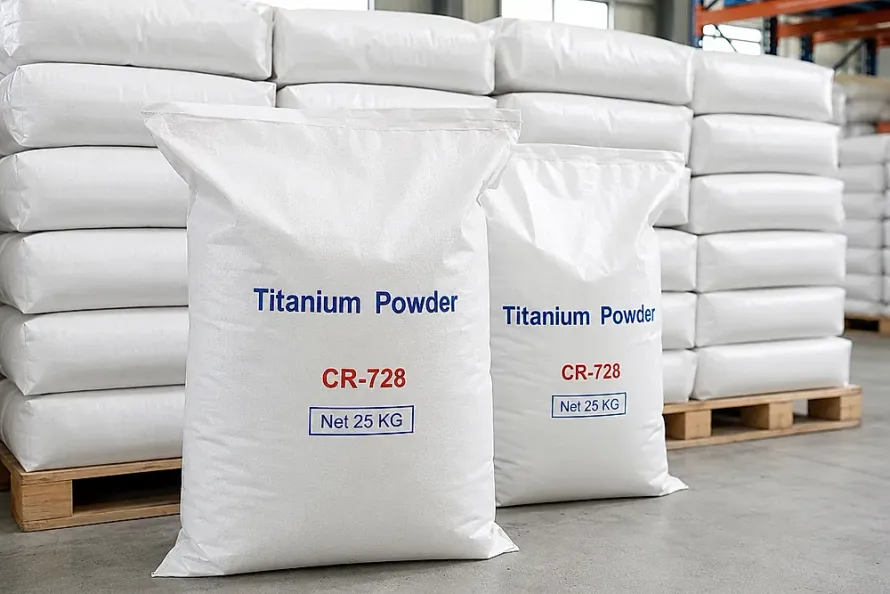
IperionX released its March 2026 quarterly on April 27. Buried under the headline volume figure is a number worth pulling apart: in March the Virginia plant produced 4.2 tonnes of HAMR (Hydrogen Assisted Metallothermic Reduction) titanium powder, putting annualized run-rate around 50 tpa, with a CY2026 year-end target of 200 tpa. The site has now shifted to 24/7 operation. Four days ago we worked through the math showing IperionX's 1,400 tpa would cover only 3.5% of the 40,000-tonne US shortfall — a long-run "patch, not foundation" verdict. Today's news cuts at the same company from the other side: whether the long-run math holds is one question; whether short-run execution cadence is on track is another. The 4.2 tonne figure tells us the second one is happening. What 4.2 tonnes per month actually meansSpread 4.2 tonnes across a month and you get 135 kg/day. For a titanium powder plant that is not a big number — Toho and Osaka push out sponge by the hundred tonnes per day, and the major Baoji powder lines run at tens of tonnes per month. But on the curve of US-domestic titanium powder going from zero to live, this is the first piece of physical evidence that line cadence has stabilized. Pulling out the specific numbers from the quarterly:Cash + committed funding: $48.2M cash + $42.1M of committed reimbursable government funding, plus the $47.1M IBAS award now landed Feedstock locked: 290 tonnes of free DoD scrap titanium transferred — at 200 tpa run-rate that is roughly 1.5 years of feedstock cover Equipment in place: 100-tonne single-axis press optimization complete, 300-tonne SACMI six-axis press installed, and the large-format cold isostatic press (CIP) is in operation Downstream orders: defense fastener line ramping; American Rheinmetall prototype order signed Optional funding path: the SBIR Phase III IDIQ channel runs up to $99MTake those five variables together and IperionX is in possession of the physical conditions to execute on plan through the second half of 2026 and into the first half of 2027. That doesn't contradict our four-day-old "1,400 tpa only covers 3.5%" line — execution-on-plan is line cadence, coverage gap is market structure. Both are true descriptions of the same project at different time horizons. HAMR and traditional Kroll: the product-line split is still clean What deserves spelling out is that IperionX's 4.2 tonnes of titanium powder is not aimed at displacing traditional VAR (Vacuum Arc Remelting) ingot. The HAMR process produces titanium powder or semi-finished alloy directly, and the downstream falls into three buckets: First, additive manufacturing — US defense fasteners, satellite structures, medical AM components. Second, powder metallurgy press parts — mid-size components where isotropy matters. Third, scrap closed-loop recycling — converting the 50,000-tonne stock of US titanium scrap back into usable feedstock. Aerospace large forgings — Boeing 787 spars, F-35 primary structure, Airbus A350 landing gear — still go through the traditional Kroll-route path: Kroll sponge → VAR double or triple melt → large ingot → forge. US-domestic capacity on that route is essentially zero, and supply still leans on Japan (Toho, Osaka), China (Baoti, Pangang, Western Superconducting), and the partly-functional VSMPO output that the EU sanctions keep waving past. In other words, what IperionX solves in 2026-2027 is the localization of the US AM titanium powder supply chain. It does not solve the localization of aerospace large forgings. That product-line distinction is the single thing buyers most often miss when reading IperionX coverage — HAMR is a complement to Kroll, not a replacement. What we see at the Titanium Valley endIn our Baoji (China's Titanium Valley) physical inventory system as of late April 2026:Titanium powder: spherical Ti-6Al-4V (TC4) / Gr.23 ELI in the 15-53 μm size band, roughly 800 kg in stock. Specification matches direct LPBF (Laser Powder Bed Fusion) / SLM print requirements Titanium wire: Φ1.0 / Φ1.2 / Φ1.6 / Φ2.0 / Φ2.4 mm, five diameters, roughly 1 tonne combined in stock. Matches the dominant feed-wire diameters for WAAM (Wire Arc Additive Manufacturing)That stock picture isn't large in absolute terms, but it is interesting against IperionX's 4.2-tonne/month reference. The US HAMR route is biased toward "non-spherical / direct-alloy" output, and spherical LPBF powder still depends on offshore supply. AM customers running qualification on spherical powder care about oxygen content (<0.13%), satellite particle ratio, and flowability — none of which has a fully equivalent US-domestic substitute through 2026-2027. Inquiry frequency from US and European AM customers has clearly increased this week. The inquiry profile has a common thread: small order, tight qualification. Typical sample batches run 200-500 kg, but each batch demands the full ICP chemistry report + particle size distribution (PSD) + Hall flow stack. That profile maps almost exactly onto IperionX's own early-customer profile, which suggests the same demand category is being served on both sides — only the geography differs. Checklist for buyers and materials engineers If you are planning titanium powder and wire procurement for late-2026 through mid-2027, three things to do right now: First, build separate qualified vendor lists for the HAMR route and the Kroll route. For the former, US-domestic supply via IperionX is the lead choice (US compliance priority); for the latter, you still need a stable feed from offshore Tier 1 mills. Run them as two separate tracks — don't conflate them. Second, lock "spherical powder PSD ≤53 μm + oxygen ≤0.13% + satellite particles ≤2%" into your RFQ template as a hard requirement. That is the entry threshold for direct LPBF/SLM print. The HAMR process route doesn't cover that sub-specification near-term. Third, settle stock vs futures separately. What we see across our titanium wire and powder lines is that customers who can pull physical sample material clear AM project qualification four to six weeks ahead of customers depending purely on futures supply. In the window before IperionX hits volume production, that is a real first-mover advantage. The variable worth tracking over the next 12 months is not whether IperionX hits its 200 tpa target — most likely it does — but how many Chinese and Japanese mills make it onto the US AM titanium powder qualified vendor lists. That curve determines what real share Asian powder mills hold in the US market post-2027. Related Products & ServicesService → No Minimum Order Quantity Sourcing — the 200-500 kg single-batch qualification channel for early-stage AM projects Product → Titanium Wires — Φ1.0-2.4 mm WAAM-grade titanium wire from stock, multi-grade Product → Special Titanium Alloys — Ti-6Al-4V / Gr.23 ELI spherical powder and matched AM grade stockAbout: Titanium Seller is a supply chain platform based in Baoji, China's Titanium Valley.
Manufacturing and Technology
Five Titanium Alloys, Three Mills, One Shipment — How We Delivered Large-Diameter Seamless Pipe No Single Supplier Could
By Jason/ On 09 Apr, 2026

Five Titanium Alloys, Three Mills, One Shipment — How We Delivered Large-Diameter Seamless Pipe No Single Supplier Could

Five alloys. Three mills. One bill of lading.An offshore engineering contractor spent three weeks collecting quotes for large-diameter seamless titanium pipe — TC4, TA15, TA24, TA1, TA2, all ASTM B861, all in one shipment. Four suppliers responded. One quoted welded pipe and called it "equivalent." In comparable service conditions, weld seam fatigue life runs 30–40% below parent metal under cyclic pressure. Equivalent is not the word. What the Market Actually Offers Large-diameter titanium seamless pipe is not a catalog item. Each alloy has its own hot-working personality. TA1 and TA2 are forgiving — wide temperature windows, predictable grain behavior. TC4 is α+β. Pierce it more than 30–50°C above the β transus and grain structure coarsens. Mechanical properties collapse. TA15 and TA24 are near-α. A 20°C overshoot during extrusion scraps the entire billet. No single mill in Baoji runs all five grades on large-diameter seamless. The equipment overlap doesn't exist. So most traders do what they always do: take the deposit, subcontract to three or four mills, hope the timelines align, and let the buyer sort out the paperwork. Some don't even bother matching heat numbers between the MTC and the actual pipe — if the buyer skips PMI verification, nobody's the wiser. This buyer had already learned that lesson. Four suppliers. Four delivery windows. Four incompatible documentation sets. They didn't just need pipes. They needed one entity to take absolute metallurgical and logistical liability.How We Ran It We pulled from three partner facilities across Baoji's titanium cluster. Each selected for a specific capability. TA1/TA2 went to a mill running a 3,000-ton class hot extrusion press. Wall thickness tolerance on commercial pure titanium: ±0.5mm. No drama. TC4 went to a facility with deep α+β alloy piercing experience. Temperature control precision: ±10°C. Three pipes from the first batch drifted toward the upper wall thickness limit. We rejected them on-site before they left the shop floor and had the mill re-size. TA15 and TA24 required a specialist — a facility with 20 years in titanium manufacturing and a decade of dedicated large-diameter tube experience — one of Baoji's first enterprises to specialize in this segment. They maintain a proprietary heating schedule database for uncommon grades. Institutional knowledge that doesn't appear in any catalog. Our QC team didn't sit in a meeting room waiting for final paperwork. They verified heat numbers before billets entered the furnace. They ran parallel PMI checks at each facility. They flagged dimensional drift before it became a reject. When the crates were ready, they scanned one last time before the lids were nailed shut. Three facilities. Same inspection protocol. Zero exceptions. The Delivery LogGrade Lead Time Process NoteTA1 / TA2 25 days Standard hot extrusionTC4 35 days Including on-site re-sizing of 3 pipesTA15 / TA24 30 days Specialized near-α thermal scheduleTotal volume: ~8 tonnes Logistics: 1 bill of lading. 1 consolidated MTC package. 0 drama. "Anybody can sell you a TA1 tube. But when a project demands five alloys, three extrusion methods, and synchronized delivery — you don't need a broker. You need a project manager wearing steel-toed boots on the factory floor." — Supply Chain Director JasonRelated Articles:Titanium Forging & Ring Rolling in Action Aerospace Titanium Supply Chain Is Being Reshaped Titanium Tubes & PipesAbout: Titanium Seller — a supply chain platform based in Baoji, China's Titanium Valley, coordinating 600+ titanium enterprises.

Manufacturing and Technology
Machining Titanium: 5 Common Mistakes That Kill Your Tools
By Jason/ On 21 Apr, 2026

Machining Titanium: 5 Common Mistakes That Kill Your Tools

Ti-6Al-4V gives you roughly one-quarter to one-third the tool life of 304 stainless. Cutting speeds drop by half. Metal removal rates fall by more than 50%. Every shop supervisor who has run titanium knows these numbers. But short tool life isn't titanium's fault. Most of the time it's a process problem. Our CNC shop machines more than five tonnes of titanium alloy parts every month. The five mistakes below are ones we've made ourselves and seen repeatedly on parts customers send back for rework. Each one comes with concrete parameters—not vague advice like "watch your cutting speed," but numbers you can enter directly into the machine. Mistake 1: Copying Stainless Steel Cutting ParametersThis is the most common mistake newcomers make, and the cause is straightforward. The recommended cutting speed (Vc) for 304 stainless is 80–150 m/min. For Ti-6Al-4V it's 40–60 m/min—half as fast. Yet many shops run their first titanium job with the same parameters they use for stainless, simply out of habit. The result: tip temperature spikes past 600°C almost immediately. Titanium's thermal conductivity is only about one-sixth that of steel, so heat concentrates at the cutting edge rather than dissipating through the workpiece. Carbide coatings burn off within three to five minutes. The insert is done. Worse, the high temperatures trigger surface hardening (alpha case) on the workpiece, making every subsequent operation even harder. Corrective parameters:Vc: 40–60 m/min (use the lower end for finishing) Feed per tooth fz: 0.08–0.15 mm/tooth Axial depth ap: 2–4 mm roughing, 0.3–0.8 mm finishing Tooling: coated carbide (TiAlN or AlCrN), edge angle ≤45°Mistake 2: Insufficient Coolant Flow or Wrong Nozzle Direction Titanium machining depends on coolant far more than most other materials—this is not an exaggeration. Stainless can be run with minimum quantity lubrication (MQL) or even dry. Titanium cannot. Because of titanium's low thermal conductivity, if coolant does not precisely reach the cutting zone, local tip temperature can climb from 200°C to 800°C in seconds. The coating peels. The edge chips. The typical failure is not "coolant turned off." It's insufficient flow, or a nozzle aimed at the chips rather than the tool-workpiece contact zone. Coolant hitting the side of the cut only cools the chips—it does nothing for the edge. Corrective approach:Flow rate: ≥20 L/min (high-pressure coolant at 70–100 bar is optimal) Nozzle direction: aimed directly at the tool-workpiece contact zone, not at the chips Coolant concentration: 8–12% (higher than the 5–8% typical for stainless) Use through-spindle coolant if the machine supports it—tool life improves 30–50%Mistake 3: Letting the Tool Dwell on the Workpiece Titanium has an underappreciated characteristic: a low elastic modulus. Specifically, around 114 GPa—compared to 193 GPa for stainless steel and 69 GPa for aluminum. Titanium sits between the two. This means titanium springs back under cutting pressure. When the tool pauses or decelerates at a position—direction reversals, program block transitions, any dwell—the workpiece rebounds against the cutting edge. The result is edge chipping or chatter marks on the machined surface. In our shop, this issue is most pronounced when machining thin-wall titanium tubes and titanium flanges. On parts with wall thickness below 3 mm, springback can reach 0.05–0.1 mm—enough to push dimensions out of tolerance. Corrective approach:Program continuous feed throughout the cut—no dwell while the tool is engaged Use arc lead-in/lead-out on thin-wall parts; avoid straight plunge entry Use climb milling for finishing, not conventional milling—climb entry angles are shallower and springback is reduced Add auxiliary fixtures or supports to minimize thin-wall deflectionMistake 4: Ignoring Chip MorphologyChips tell you what's happening at the cut. That's not a figure of speech. The ideal chip from titanium machining is a short, curled "C" or "6" shape. If you're seeing long stringy ribbons wrapping around the tool, your parameters are off—usually feed is too low or depth of cut is too shallow. Ribbon chips do more damage than just tangling. They re-enter the cut zone and generate secondary heat through friction, accelerating tool wear. The less obvious problem: ribbon chips score the finished surface, pushing surface roughness above spec. For precision machined parts requiring Ra ≤0.8, that's a rejection criterion. "We have a standing rule: if a chip exceeds 30 mm in length, stop and check the parameters. The right titanium chip is 5–15 mm long, curled, and breaking freely without wrapping the tool. When you see long chips, the first response isn't more coolant—it's more feed." — Shop Supervisor Liu Corrective approach:Keep feed per tooth at ≥0.06 mm/tooth—anything lower produces rubbing rather than cutting Use chip-breaker geometry inserts If chips remain long, try increasing depth of cut—deeper cuts produce thicker chips that break more readilyMistake 5: Skipping Stress Relief After Machining Titanium alloys work-harden more severely than most people expect. During CNC machining, cutting forces and heat build residual stress in the workpiece surface layer. On simple geometries machined from bar stock, residual stress may not matter. But on thin-wall parts, complex structural components, or aerospace parts with strict fatigue life requirements, residual stress is a delayed failure mechanism. A typical case we've seen: a batch of Ti-6Al-4V aerospace brackets passed all dimensional checks after machining, only to be returned by the customer after assembly—residual stress from machining released under thermal cycling and caused 0.1–0.2 mm warp across the part. The entire batch came back. Corrective approach:Perform stress relief annealing after finish machining: 480–650°C, 1–4 hours, under vacuum or inert gas Add an intermediate anneal between roughing and finishing to release roughing stresses before the final pass—dimensional stability improves noticeably For parts with fatigue requirements (aerospace), AMS 2801 specifies the conditions under which stress relief is mandatoryAll five mistakes are avoidable through parameter discipline. Titanium machining does not require special talent—it requires respect for the material's properties. Our machining services team can provide full process recommendations based on your part drawings, from tooling selection through heat treatment. Send us your prints.Related Products & ServicesService → Titanium CNC Machining — Precision machining services for titanium alloys, from bar stock to finished parts Product → Titanium Rods — Gr.2/Gr.5 bar stock, the starting material for CNC machining Product → Titanium Sheets & Plates — Plate and sheet feedstock for machined componentsRelated Articles:Titanium Plate Grade Selection: Gr.2 vs Gr.5 Grade 5 Titanium Forgings 2026: Why Lead Times Won't Shrink Titanium Forging & Ring Rolling in Action

Manufacturing and Technology
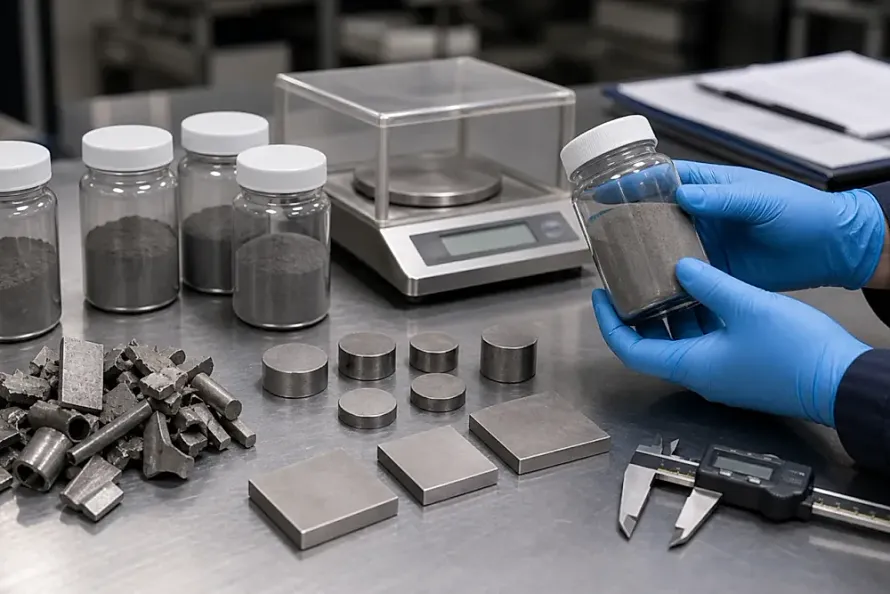
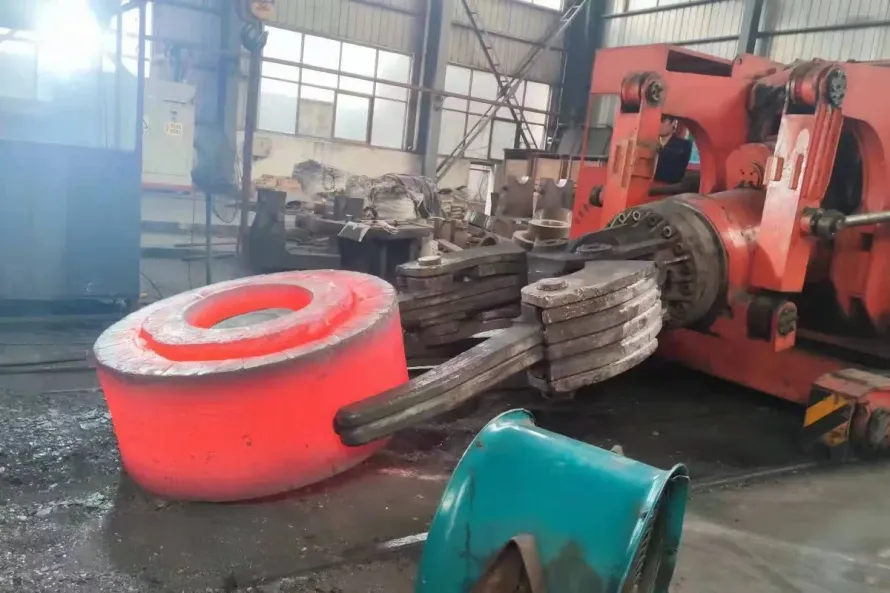
A clean titanium powder inspection bench with sealed powder jars, recycled titanium scrap, pressed coupons and test records, showing how recycled titanium routes need traceable powder-to-part evidence
By Jason/ On 08 May, 2026

IperionX's 24/7 Powder Ramp Shows Why Recycled Titanium Still Needs a Qualification Chain

IperionX's move to continuous titanium powder production is a real supply-chain signal, but not because output tonnage alone changes the market. For buyers of titanium powder, fasteners, brackets, plates, bars or custom components, the bigger question is whether a recycled titanium route can carry enough evidence from scrap feedstock to approved product form.Metal AM reported on May 6 that IperionX's Virginia Titanium Manufacturing Campus had moved to 24/7 production during the quarter ended March 31, 2026, with all HAMR powder production systems commissioned and in ramp-up. IperionX's March 2026 quarterly report said powder output reached about 4.2 metric tons in March, equal to roughly 50 tpa annualized at an early-stage ramp rate, and that the company was targeting about 200 tpa of titanium powder run-rate capacity by the end of 2026. The same report matters because it links powder to downstream products. IperionX said powder metallurgy scale-up continued during the quarter, including a 100-ton uniaxial press, a cold isostatic press for larger-format titanium components, a six-axis 300-ton SACMI powder metallurgy press, additional sintering furnaces and binder-jet additive manufacturing capability. The company framed these systems as part of the path from powder output toward higher-volume titanium powder-to-part manufacturing and customer qualification. That is where the industrial story sits. A powder plant can run around the clock and still be early in commercial qualification. Buyers do not only buy powder. They buy a route that must survive material review, process validation, inspection and application approval. Why Scrap-to-Powder Is a Supply-Chain Question The U.S. Geological Survey's 2026 titanium summary said the United States did not produce titanium sponge metal in 2025 and estimated net import reliance for titanium sponge at 100%. USGS also reported estimated 2025 sponge imports of 44,000 tons and noted that U.S. producers of ingot and downstream products remained reliant on imported sponge and scrap. In that context, a recycled titanium powder route is strategically interesting. It offers a way to convert scrap into powder and then into manufactured products without treating imported sponge as the only starting point. IperionX said in January that the U.S. Government had transferred about 290 metric tons of high-quality Ti64 scrap to the company and obligated the final US$4.6 million under a US$47.1 million award supporting titanium supply-chain scale-up. But scrap-to-powder is not automatically scrap-to-approved-part. The value is created only if the feedstock record, powder properties, forming route and final inspection package remain connected. The Buyer Framework: From Scrap to Approved Part For buyers evaluating recycled titanium powder or powder-derived products, the practical framework is:Evidence gate What buyers should verify Why it mattersFeedstock provenance Scrap source, alloy identity, contamination controls and segregation Recycled titanium only works when the starting material is traceablePowder specification Chemistry, oxygen level, particle size, morphology, flowability and lot consistency Powder behavior affects pressing, sintering, AM and final propertiesProcess route HAMR, powder metallurgy, press-sinter-forge, binder jet or other consolidation path Different routes produce different density, microstructure and geometry limitsDownstream capacity Presses, sintering furnaces, finishing, machining and inspection availability Powder output is not the same as finished-product readinessInspection evidence Mechanical testing, dimensional checks, density, surface condition and nonconformance records Customers qualify evidence, not production claimsCustomer approval path Prototype, low-rate production, market entry timing and application-specific validation Qualification cycles differ by aerospace, medical, automotive, consumer and industrial marketsThis framework is more useful than asking whether a powder plant has reached a headline capacity number. Capacity matters, but qualification determines whether the material can enter a buyer's real supply chain. The same buyer logic appears in our parallel reads — the aerospace titanium procurement chain (five gates) and the medical titanium regulatory chain (six gates around FDA 510(k) and design control). Recycled-powder buyers face the same template, with feedstock-provenance and oxygen-control as the front-loaded risks. What This Means for Titanium Product Buyers For powder buyers, the first issue is repeatability. A recycled route must prove that powder chemistry, oxygen control and lot-to-lot consistency can stay inside the buyer's window. For powder metallurgy and sintered products, the next issue is consolidation. Density, dimensional control, surface condition and downstream machining can decide whether a part is commercially usable. For mill-product and engineered-product buyers, the question is slightly different. IperionX's own investor materials describe a range of possible outputs from powder into mill products, engineered products, fasteners, enclosures, brackets, impellers, actuators, gears, plates, bars, sheets and wire. That breadth is valuable only if each product form has its own qualification logic. A fastener buyer will not approve a route the same way an aerospace mill-product buyer approves plate or bar. An automotive bracket program will not move at the same pace as a consumer-electronics enclosure. The company's quarterly report makes the timing issue visible. It says production remains in ramp-up, downstream capacity is being installed and customer qualification timelines are expected to accelerate as bottlenecks are removed. That language should be read carefully. It is positive for supply-chain development, but it is not the same as broad commercial approval across all titanium product categories. The same caution applies to the TITAN-AM aerospace additive evidence chain — programme announcements move faster than qualified-supply approvals. What Suppliers Should Learn Suppliers working with titanium powder, recycled feedstock or powder-derived components should prepare to sell evidence before volume. A useful buyer package may include feedstock traceability, powder lot data, oxygen and chemistry records, powder handling controls, process-route descriptions, sintering or forging parameters, mechanical test results, inspection records and application-specific validation notes. The same lesson applies to export suppliers outside the powder business. If recycled or powder-derived titanium becomes more common, buyers of bars, plates, tubes, forgings and machined parts will ask where the material came from and how the route was controlled. A lower-cost or lower-carbon titanium story will not be enough if the customer cannot qualify the part. The defensible conclusion is that IperionX's 24/7 ramp is not just a production milestone. It is a test of whether recycled titanium can move from strategic supply-chain promise into qualification-ready products. The winners in that shift will not be the suppliers that only report tonnage. They will be the suppliers that make the route auditable from scrap to powder to approved part.Related Products & ServicesTitanium forgings — Gr.1/Gr.2/Gr.5/Gr.7/Gr.12, AMS 4928 / ASTM B381 channels Titanium bar / rod — ASTM B348 machining stock with batch traceability Titanium sheet & plate — ASTM B265 plate stock for chemical, marine and structural blanks Titanium wire — feedstock-grade wire for AM and welding routes Special titanium alloys — Gr.5 / Ti-6Al-4V and Gr.23 / Ti-6Al-4V ELI reference Titanium nuts & bolts / fasteners — for engineered and bracket applications Contract machining services — finish machining, dimensional verification, inspection-ready delivery Titanium industry news — ongoing tracking of qualification chains across aerospace, medical, chemical and powder routes

Manufacturing and Technology
Surprising Industries That Rely on Titanium—and Why It’s Here to Stay
By William Jacob/ On 16 Jun, 2025

Surprising Industries That Rely on Titanium—and Why It’s Here to Stay

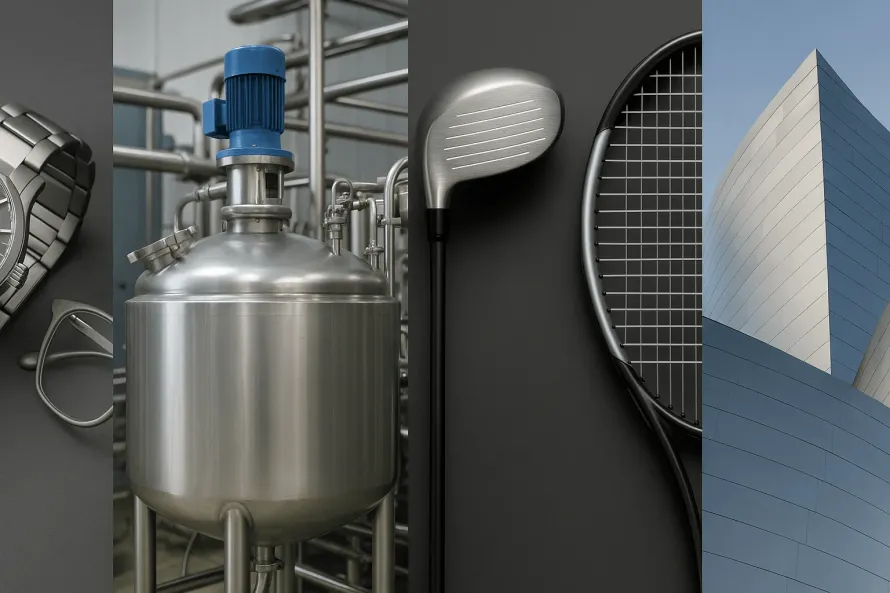
Titanium has long been associated with high-stakes industries like aerospace and medicine, but its unique properties are now being embraced in surprising new sectors. As engineers and designers search for materials that offer strength, longevity, and biocompatibility, titanium’s role is expanding far beyond what most people expect. This article explores five unexpected industries that are leveraging titanium today—and why this metal is becoming indispensable across the board.1. Fashion and Luxury Design Yes, you read that right—titanium is trending in high-end fashion. Watches & Eyewear: Brands like TAG Heuer and Oakley use titanium for lightweight, scratch-resistant frames and casings. Jewelry: Hypoallergenic and corrosion-proof, titanium rings and bracelets are popular among people with sensitive skin.Its minimalist aesthetic and resistance to wear make titanium a staple for modern luxury products.2. Food Processing and Culinary Equipment In commercial kitchens and industrial food plants, cleanliness and corrosion resistance are critical. Titanium knives and utensils stay sharp longer and resist food acids. Food-grade titanium tanks are used for brewing beer, fermenting dairy, and handling acidic products like vinegar or citrus juices.Unlike stainless steel, titanium doesn’t leach metals under heat or acidic conditions, making it safer and longer-lasting in the food sector.3. Sports and Recreation Equipment While cycling and camping gear is already embracing titanium, other sports are catching on: Golf Clubs: Titanium driver heads offer better energy transfer and lighter swing weight. Tennis Rackets & Hockey Sticks: Titanium-reinforced frames improve strength without compromising flexibility. Diving Gear: Titanium dive knives and regulators resist saltwater corrosion better than steel.For performance-focused athletes, titanium offers a competitive edge.4. Chemical and Pharmaceutical Industries In labs and factories that process corrosive chemicals, titanium provides unmatched resistance. Titanium reactors and piping are used in the production of drugs, acids, and petrochemicals. Unlike other metals, titanium won’t contaminate sensitive chemical mixtures or break down over time.Its reliability reduces maintenance cycles, making it a cost-effective long-term choice for manufacturers.5. Architecture and Building Materials Architects are using titanium for more than just cladding: Roof panels, window frames, and structural supports made from titanium alloys are now being used in landmark buildings. The metal’s natural oxide layer forms a self-healing surface, making it weather-resistant for decades without repainting.Examples include the Guggenheim Museum Bilbao, whose shimmering titanium facade has become iconic.Why Titanium’s Popularity Will Keep GrowingRecyclability: With a recovery rate of over 90%, titanium is one of the most sustainable metals in industrial use. Innovation in Manufacturing: Advances in 3D printing, powder metallurgy, and hybrid materials are lowering production costs. Consumer Awareness: People are becoming more conscious of quality, health, and environmental impact—areas where titanium excels.Titanium’s combination of aesthetic appeal, strength, and versatility makes it not just a trend, but a foundational material for the future.

Manufacturing and Technology
TA10 / Gr.12 Titanium-Molybdenum-Nickel Alloy Bars — Daily Production Update
By William Jacob/ On 08 Apr, 2026

TA10 / Gr.12 Titanium-Molybdenum-Nickel Alloy Bars — Daily Production Update

Today's production spotlight: a fresh batch of TA10 / ASTM Gr.12 titanium-molybdenum-nickel alloy raw bars, stacked and marked on our workshop floor. Material: TA10 (ASTM Gr.12 / Ti-0.3Mo-0.8Ni) TA10 is a near-alpha titanium alloy with additions of molybdenum (0.2–0.4%) and nickel (0.6–0.9%). Compared to commercially pure titanium, Gr.12 offers significantly improved crevice corrosion resistance in hot brine, wet chlorine, and reducing acid environments — making it a go-to choice for:Chemical processing — heat exchangers, reactor vessels, and piping Oil & gas — sour-service downhole components Marine desalination — evaporator tubes and plate heat exchangers Power generation — condenser tubing in coastal plantsToday's Batch This run includes raw bars (unfinished billets) in two diameters:Diameter Grade QuantityΦ60 mm TA10 / Gr.12 Multiple piecesΦ75 mm TA10 / Gr.12 Multiple piecesEach bar is marked with its grade and diameter for full traceability through the production chain.What Happens Next These raw bars will be ultrasonically inspected, then machined or forged to customer specifications — turned bars, shafts, fastener blanks, or valve components. We can supply TA10 bar stock from Φ10 mm up to Φ300 mm, in both forged and rolled conditions. Need Gr.12 titanium alloy bars or custom machined parts? Contact us for pricing and lead times.Related Articles:Titanium Bars & Rods Titanium Forging & Ring Rolling in Action

Manufacturing and Technology
The Rise of Titanium in Outdoor Gear: Innovations and Benefits at 2025
By William Jacob/ On 04 Apr, 2025

The Rise of Titanium in Outdoor Gear: Innovations and Benefits at 2025

In the world of outdoor exploration, where every gram counts and durability is paramount, titanium has emerged as a game-changer. This lightweight, corrosion-resistant metal is transforming the design and performance of camping gear, climbing equipment, and adventure tools. This article delves into the science behind titanium's rise, its applications in modern gear, and how it’s redefining outdoor experiences. Introduction Outdoor enthusiasts demand gear that can withstand harsh conditions while remaining portable and reliable. Titanium, with its unique blend of strength, lightness, and longevity, has become a material of choice for manufacturers. From lightweight trekking poles to high-performance cookware, titanium gear is now a staple in backpacks worldwide. This article explores how titanium is revolutionizing the industry and what users can expect in the future.Why Titanium? Key Advantages Over Traditional Materials 1. Unmatched Strength-to-Weight Ratio Titanium is 45% lighter than steel and 50% stronger than aluminum, making it ideal for gear where weight savings are critical. A titanium tent pole, for instance, offers comparable durability to aluminum at half the weight. 2. Corrosion ResistanceResists saltwater, sweat, and chemicals, making it perfect for marine environments or coastal hikes. Outperforms stainless steel in acidic or alkaline conditions.3. Thermal StabilityConducts heat efficiently, ideal for cookware that distributes warmth evenly. Maintains structural integrity at extreme temperatures (-250°C to 600°C).4. Aesthetic Appeal Titanium’s sleek, modern look appeals to minimalist adventurers, while its matte finish reduces glare in sunny environments.Applications of Titanium in Outdoor Gear 1. Camping and Survival ToolsCookware: Titanium pots and pans are lightweight and rust-proof. Brands like Black Diamond and MSR offer sets that boil water 20% faster due to superior heat conductivity. Tents: Titanium alloy poles withstand strong winds and UV exposure without bending or snapping.2. Hiking and Mountaineering EquipmentTrekking Poles: Models like Gregory’s Titanium Z-Poles reduce user fatigue by cutting pole weight by 30%. Climbing Gear: Carabiners and harnesses made of titanium offer unmatched safety in alpine environments.3. Water Filtration SystemsKatadyn’s Titanium Filtration removes bacteria and protozoa while resisting chemical corrosion, ensuring longevity in remote water sources.4. Wearable GearWatch Cases and Straps: High-end brands like Suunto use titanium for dive watches, combining elegance with submersibility down to 300m.Designing Titanium Gear: Challenges and Innovations 1. Manufacturing ProcessForging vs. Machining: Forged titanium (e.g., tent poles) is stronger but costlier. Machined titanium (e.g., cookware) allows complex designs but requires precise tooling.Welding Difficulties: Titanium oxidizes at high temperatures, requiring specialized inert gas chambers during fabrication.2. Cost ConsiderationsRaw titanium is 3–5x more expensive than aluminum, but its lifespan often justifies the investment. Cost-effective alternatives: Titanium alloys (e.g., Ti-6Al-4V) balance price and performance. Composite materials: Titanium-coated steel reduces weight without full titanium costs.3. Design TrendsModular Systems: Collapsible titanium frames (e.g., Alps Mountaineering’s backpack frames) allow users to customize gear for different trips. 3D Printing: Custom titanium parts for orthopedic braces or personalized trekking poles are becoming feasible.Maintenance and Longevity of Titanium Gear 1. Cleaning TipsUse mild soap and warm water; avoid abrasive scrubbers to prevent scratching. For saltwater exposure: Rinse immediately and dry thoroughly to prevent pitting.2. Storage PracticesStore in dry environments to prevent moisture-induced oxidation. Avoid stacking titanium gear with steel tools to reduce galvanic corrosion risks.3. Repair OptionsMinor scratches can be polished with titanium-specific compounds. Professional welding services are available for structural repairs, though rare due to material durability.Market Trends and Future of Titanium in Outdoor Gear 1. Growth in DemandThe global titanium outdoor gear market is projected to grow at a CAGR of 8.2% through 2030, driven by eco-conscious consumers and adventure tourism.2. Sustainability AngleTitanium’s recyclability (95% recovery rate) aligns with zero-waste goals. Companies like Patagonia are pioneering “take-back” programs for titanium gear.3. Emerging TechnologiesNano-coatings: Anti-microbial layers for cookware. Smart Integration: Titanium alloys embedded with sensors for real-time gear diagnostics (e.g., pole stress monitoring).Conclusion Titanium’s marriage of strength and elegance has solidified its place in the outdoor gear industry. Whether you’re summiting a mountain or trekking through a jungle, titanium equipment ensures reliability without compromising mobility. As manufacturing techniques evolve and sustainability becomes a top priority, expect titanium to dominate the next era of outdoor innovation. For adventurers, investing in titanium gear is no longer a luxury—it’s a strategic choice for enduring the extremes.

Manufacturing and Technology
Titanium in Smartphones: The Split Between Retreat and Advance
By Jason/ On 12 Apr, 2026

Titanium in Smartphones: The Split Between Retreat and Advance

Two headlines landed in the same week. Apple confirmed the iPhone 17 Pro will drop its titanium frame and return to aluminum. Samsung leaked identical plans for the Galaxy S26 Ultra. Then, on the other side of the Pacific, OPPO unveiled the Find N6 — featuring a 3D-printed titanium hinge manufactured by BLT (Bright Laser Technologies) that consolidates 92 discrete parts into just 4. Titanium in consumer electronics is not retreating. It is splitting. The divergence signals a structural shift in how the smartphone industry values titanium — and it carries direct implications for titanium supply chains, powder metallurgy markets, and procurement strategies worldwide. If you source titanium sheets & plates, titanium rods, or spherical titanium powder for additive manufacturing, this split matters. The Retreat: Why Flagship Phones Are Abandoning Titanium Frames Apple introduced titanium frames with the iPhone 15 Pro in September 2023. Samsung followed with the Galaxy S25 Ultra in January 2025. Both moves were marketed as premium differentiators — lighter, stronger, more corrosion-resistant than stainless steel or aluminum. The experiment lasted two product cycles. Here is why it ended. Cost pressure is relentless. Titanium frame production requires multi-step CNC machining of thin-wall Grade 5 (Ti-6Al-4V) or Grade 2 CP billets. Material removal rates are slow. Tool wear is aggressive. Apple reportedly spent 3–4× more per frame compared to equivalent aluminum parts, and the yield losses on thin-wall titanium phone shells pushed effective costs even higher. Consumer perception fell short. Internal market research at both companies — corroborated by third-party teardown analysts at iFixit and TechInsights — indicated that most buyers could not distinguish the feel of a titanium frame from anodized aluminum once a case was applied. The "titanium premium" that justified a $100+ BOM increase simply did not translate into measurable purchase intent or retention lift. Recyclability became a boardroom issue. Apple's 2025 Environmental Progress Report set aggressive closed-loop recycling targets. Aluminum is infinitely recyclable in existing streams. Titanium recycling infrastructure for consumer-scale thin-wall scrap remains fragmented and expensive. The sustainability math favored aluminum. Manufacturing complexity provided no moat. Titanium's difficulty-to-machine reputation was initially seen as a competitive barrier — a reason why only Apple and Samsung could afford to use it. In practice, the Shenzhen supply chain commoditized titanium frame machining within 18 months. Chinese CNC contract manufacturers offered titanium frame production at 60% of the cost Apple's original partners charged. The exclusivity premium evaporated faster than anyone predicted. The numbers confirm the trend. The iPhone 17 Pro line, expected in September 2026, will use a 7000-series aluminum alloy frame with a micro-arc oxidation surface treatment. Samsung's Galaxy S26 Ultra, slated for January 2027, will reportedly adopt Armor Aluminum 3.0 — a proprietary hardened alloy. Combined, these two product lines represented an estimated 120–150 million units per year of potential titanium frame demand. That demand is now gone.The Advance: OPPO's 3D-Printed Titanium Hinge Rewrites the Playbook The same week Apple confirmed its aluminum pivot, OPPO launched the Find N6 with a hinge mechanism that may be the most advanced titanium component ever mass-produced for a consumer device. The numbers are striking. BLT, one of China's largest metal additive manufacturing companies, used Laser Powder Bed Fusion (LPBF) to print the hinge assembly from Ti-6Al-4V powder. The results: 92 parts consolidated into 4. Total hinge weight dropped by 62%. Thickness shrank from 0.3 mm to 0.15 mm. Bending rigidity increased by 36%. The hinge passed TÜV Rheinland certification for 600,000 fold cycles — roughly 5 years of heavy use at 300+ folds per day. How? The answer lies in topology-optimized lattice structures that are impossible to manufacture with traditional stamping, forging, or multi-part assembly. LPBF builds the geometry layer by layer from 15–53 μm spherical titanium powder, enabling internal lattice cells that deliver stiffness where it is needed while eliminating material everywhere else. The result is a part that is simultaneously thinner, lighter, stronger, and cheaper to assemble. The feedstock matters. BLT's process uses gas-atomized spherical Ti-6Al-4V powder with strict particle size distribution (PSD) control — typically D10 of 18 μm, D50 of 35 μm, D90 of 50 μm. Powder flowability, oxygen content (< 0.13%), and recycling protocols are critical to part density and fatigue life. This is not commodity titanium. It is precision-grade AM powder produced under aerospace-adjacent quality systems. The assembly cost reduction is equally important. Traditional foldable hinges require dozens of stamped steel and MIM (metal injection molded) parts, each needing individual tolerancing, surface treatment, and mechanical fastening. OPPO's 4-part titanium hinge eliminates most of that assembly labor. Fewer parts mean fewer failure modes, tighter tolerances on the final assembly, and a shorter production line. BLT reportedly delivers the printed hinge components with post-machining tolerances under ±0.02 mm — competitive with the best MIM parts but in a material with twice the specific strength. And OPPO is not alone. Persistent supply chain leaks — most recently from analyst Ming-Chi Kuo and corroborated by Korean component suppliers — suggest Apple's foldable iPhone prototype uses a titanium-and-liquidmetal (Zr-based BMG) composite frame for the hinge section. If Apple ships a foldable device in 2027 or 2028, titanium will be back in Cupertino — not as a decorative frame, but as a load-bearing structural element in the fold mechanism. What This Means for Titanium Supply Chains The retreat and the advance pull titanium demand in opposite directions. The net effect is not simply "less titanium in phones." It is a fundamental rebalancing of volume, form factor, and value. Large-batch thin-wall titanium shell demand disappears. Apple and Samsung's titanium frames consumed Grade 2 and Grade 5 sheet and billet stock in high volumes — estimated at 800–1,200 tonnes per year combined, processed through CNC milling and multi-axis machining. That demand evaporates over the next 12 months. For titanium sponge producers, this removes a marginal demand driver that had supported pricing in 2024–2025. Expect short-term softness in CP Grade 2 sheet pricing, particularly in the 0.5–2.0 mm thickness range favored by consumer electronics. Small-batch, high-precision titanium powder demand accelerates. OPPO's hinge uses grams of titanium per unit, not the tens of grams required for a full frame. But the per-gram value is vastly higher. AM-grade spherical Ti-6Al-4V powder (15–53 μm) commands $180–$350/kg depending on purity and PSD spec, compared to $25–$45/kg for equivalent wrought mill products. If foldable phones reach 80–100 million units annually by 2028 — a figure consistent with IDC and Counterpoint projections — powder demand from this segment alone could reach 400–600 tonnes per year. The net math: volume shrinks, but value per kilogram climbs. Consumer electronics titanium demand shifts from a high-volume, low-margin milling operation to a low-volume, high-margin powder metallurgy operation. Producers positioned in wrought products face headwinds. Producers positioned in gas-atomized spherical powder face tailwinds. Quality systems tighten. Foldable hinge components are fatigue-critical. Powder suppliers must demonstrate lot-to-lot consistency in PSD, flowability (Hall flow < 25 s/50g), oxygen content, and satellite particle fraction. This favors established atomization operations with statistical process control — and creates barriers to entry for lower-tier producers. Geographic concentration intensifies. Both the wrought titanium supply chain and the AM powder supply chain run through Baoji. But the customer profiles are diverging. Wrought product buyers tend to be large-volume, price-sensitive OEM contract manufacturers. AM powder buyers tend to be smaller-volume, spec-driven technology companies willing to pay premiums for documented quality. Suppliers who can serve both profiles — offering cut-to-length mill products alongside qualified AM powder — will capture the broadest share of the consumer electronics titanium wallet.View from Titanium Valley From Baoji — the heart of China's titanium production cluster — the shift is already visible on the ground. Consumer electronics procurement inquiries have changed character over the past two quarters. Through 2024 and early 2025, buyer RFQs centered on thin-wall titanium sheet and precision-machined billets for phone frames. Since Q3 2025, the mix has rotated toward spherical Ti-6Al-4V powder in the 15–53 μm range, small-lot titanium wire for wire-DED prototyping, and micro-component fabrication for hinge sub-assemblies. This shift is expected to accelerate through 2026 as foldable designs proliferate. Powder pricing inquiries have increased notably. Multiple Baoji-based atomization facilities report growing quote requests from Shenzhen and Dongguan electronics supply chain integrators who previously had zero titanium exposure. This shift is expected to accelerate through 2026 as foldable designs proliferate. This transition mirrors what happened in aerospace 3–5 years ago, when additive manufacturing moved from R&D curiosity to serial production. The consumer electronics sector is following the same adoption curve — compressed into a shorter timeline because the parts are smaller and the iteration cycles are faster. What This Means for You The titanium-in-smartphones divergence is not an abstract industry trend. It creates concrete planning requirements depending on where you sit in the value chain. If you are a titanium mill product supplier: Rebalance your product mix expectations. The consumer electronics segment that drove incremental sheet and billet demand in 2023–2025 is contracting. Offset strategies include deepening your position in aerospace, marine, and chemical processing — sectors where demand for titanium pipes, titanium equipment, and heavy-wall forgings remains structurally strong. If you are a powder producer or atomizer: This is your growth vector. Invest in PSD control, oxygen management, and qualification documentation. Consumer electronics OEMs and their Tier 1 hinge suppliers will demand the same rigor that aerospace primes require — and they will pay for it. If you are a product designer or mechanical engineer: Evaluate whether your titanium applications are "frame-type" (decorative, substitutable) or "hinge-type" (structural, geometry-dependent, non-substitutable). Frame-type applications will face continuous cost-down pressure from aluminum and stainless alternatives. Hinge-type applications — where titanium's specific strength and fatigue life create designs that no other material can achieve — will expand. If you are a procurement manager: Map your titanium spend against this framework. Wrought titanium for consumer casings is becoming a spot-market commodity. AM-grade titanium powder for precision components is becoming a strategic material with qualified-source constraints. Plan accordingly. Use tools like our weight calculator to model material requirements across both scenarios. The smartphone industry's relationship with titanium is not ending. It is growing up. The days of using titanium as a marketing badge on a phone frame are over. The era of using titanium as an enabling material for mechanisms that would otherwise be impossible — thinner hinges, lighter folds, longer fatigue life — is just beginning. For suppliers, engineers, and procurement teams alike, the question is no longer whether titanium belongs in your phone. It is which form of titanium belongs in which part of your phone.Jason is an industry analyst and titanium supply chain specialist at Titanium Seller, based in Baoji, China's Titanium Valley.Related Products & Services:Titanium Wires — Feedstock for Additive Manufacturing & Precision Applications Titanium Sheets & Plates — Mill Products for Industrial & Consumer Applications CNC Milling Services — Precision Machining for Titanium ComponentsRelated Articles:Aerospace Titanium Supply Chain Is Being Reshaped by 3D Printing and Domestic Production US Titanium Act: What It Means for Global Buyers Why Titanium Is Taking Over Modern Manufacturing

Manufacturing and Technology
Titanium Forging & Ring Rolling in Action — Daily Production Update
By William Jacob/ On 07 Apr, 2026

Titanium Forging & Ring Rolling in Action — Daily Production Update

Another day on the forging floor. Here is a look at today's production run — titanium ring forgings going from raw billet to finished product, right here in our Baoji workshop. From Billet to Red-Hot Ring The process starts with titanium billets and hollow blanks, cut to weight and preheated in our gas-fired furnace. Once the material reaches forging temperature (typically 900–950°C for Ti-6Al-4V), it moves to the ring rolling mill.Ring Rolling in Progress The glowing titanium blank is placed on the ring rolling machine, where it is expanded into the target diameter through continuous rotational compression. The entire rolling cycle takes just minutes, but the temperature window is critical — too cold and the material cracks, too hot and grain growth reduces mechanical properties. Finished & Ready to Ship After rolling, the rings are heat-treated, ultrasonically inspected, and machined to final dimensions. Today's batch includes DN100 flanges destined for chemical processing equipment.This is what daily production looks like at Titanium Seller — no stock photos, just real metal moving through real machines. Need custom titanium forgings? Get in touch and we will quote your next order.Related Articles:Titanium Forgings — From Billet to Precision Shape Why Titanium Is Taking Over Modern Manufacturing

Manufacturing and Technology
6 Industries Where Titanium Mesh Is Irreplaceable
By Jason/ On 24 Apr, 2026

6 Industries Where Titanium Mesh Is Irreplaceable

Titanium mesh is not a headline product. It lacks the visibility of aerospace forgings or the press attention of medical implants. But its range of applications is almost certainly wider than you expect. From electrolytic cells in chlor-alkali plants to cranial repair plates on neurosurgical tables, from pre-filtration systems in desalination facilities to anode baskets in electroplating lines — titanium mesh fills an indispensable role across six industries. Each one demands a different combination of mesh aperture, wire diameter, grade, and surface condition. 1. Chemical Filtration: The Only Material That SurvivesThe chemical industry is the largest end market for titanium mesh. In sulfuric acid, hydrochloric acid, and wet chlorine environments, stainless steel mesh typically lasts 3–6 months. Titanium mesh lasts 5–10 years. Unit cost is roughly three times higher; service life is more than ten times longer. Life-cycle cost comparison is decisive. Typical applications:Anode substrates in chlor-alkali electrolytic cells — titanium mesh as the base, coated with RuO₂-IrO₂ or IrO₂-Ta₂O₅ catalyst layers Liquid/gas filtration elements in chemical reactors Filter cartridge frames in concentrated acid serviceSelection criteria: Grade 1 or Grade 2 (commercially pure titanium, best corrosion resistance). Aperture matched to filtration duty — 2–5 mm for coarse duty, 0.1–0.5 mm for fine filtration. Wire diameter 0.5–2.0 mm. Surface condition: acid-pickled and clean to ensure coating adhesion. 2. Medical Implants: The Highest-Value Segment Medical titanium mesh commands a unit price 5–10 times that of industrial-grade mesh. The reason is straightforward: biocompatibility requirements and the cost of regulatory certification. Typical applications:Cranial mesh plates — covering bone defects following neurosurgery Maxillofacial repair mesh — mandible reconstruction, orbital floor repair Pelvic reconstruction mesh Guided bone regeneration (GBR) barrier membranes in dental implantologyTitanium mesh holds its position in medical use because of three properties: mechanical behavior closer to bone than any alternative (elastic modulus ~114 GPa, versus ~20 GPa for bone and 193 GPa for stainless steel), complete biocompatibility with no immune rejection, and clean imaging under both CT and MRI without artifact generation. Selection criteria: Grade 1 CP titanium or Grade 5 ELI (ASTM F136/F67). Wire diameter is extremely fine: 0.1–0.5 mm. Aperture 0.3–1.5 mm. Processing must include ultrasonic cleaning, vacuum annealing, and sterile packaging. Every batch requires a complete biocompatibility test report."Medical-grade mesh carries the best margins, but also the highest barriers to entry. Qualifying a new supplier through FDA 510(k) or EU CE MDR certification typically takes 18–24 months. That's why medical customers rarely change suppliers once they've validated a source." — Technical Engineer Hu3. Desalination and Water Treatment: The Filtration Layer in a $250B Build-Out Middle East desalination investment is projected to exceed $250 billion. Every reverse osmosis (RO) system requires titanium mesh in its front-end pre-filtration stage — removing coarse particulates from seawater before they reach the expensive RO membranes. Typical applications:Primary and fine-filtration screens in seawater desalination units Electrolytic electrode substrates in wastewater treatment (coated titanium anodes) Pre-filter elements in reverse osmosis systemsSelection criteria: Grade 2 titanium mesh, aperture 0.5–3 mm. Seawater carries approximately 19,000 ppm Cl⁻; the self-repairing TiO₂ passive film on Grade 2 performs exceptionally well in this environment. Where crevice structures exist, upgrade to Grade 12 (Ti-0.3Mo-0.8Ni). Tube and mesh materials are often procured together — tubes for heat exchangers, mesh for filtration units. 4. Electroplating and Hydrometallurgy: The Standard Anode Basket MaterialThe electroplating industry is a sizeable and often overlooked titanium mesh market. Every plating bath requires anode baskets to contain the anode material — nickel balls, copper balls, and similar — and the basket must resist dissolution in an energized electrolyte. Titanium is the only cost-effective material that meets this requirement. Typical applications:Plating bath anode baskets loaded with nickel, copper, or tin ball anodes Electrode mesh plates for electrolytic copper, nickel, and zinc refining Titanium mesh substrate plus Ru-Ir or Ir-Ta coating = coated titanium anodeSelection criteria: Grade 1 titanium mesh, wire diameter 1.0–3.0 mm, aperture 3–10 mm (allowing free electrolyte circulation). Anode baskets are fabricated by welding — titanium welding must be performed under argon shielding, otherwise weld oxidation causes embrittlement. 5. Aerospace: Precision Filtration in Hydraulic Systems Aerospace hydraulic systems require exceptionally clean fluid (NAS 1638 Class 5–7). Titanium mesh filter elements weigh roughly 60% of equivalent stainless steel parts and resist the trace-moisture corrosion present in hydraulic oil. Typical applications:Hydraulic system filter assemblies in aircraft Precision fuel system filtration screens in turbine engines Lightweight shielding and structural mesh in spacecraftSelection criteria: Grade 5 titanium mesh (strength requirement), wire diameter 0.05–0.2 mm (extremely fine), aperture 5–40 μm (precision filtration). AMS standards apply. Each batch requires a particle-count test report. 6. Marine Engineering: Ballast Water Treatment and Corrosion Protection The IMO Ballast Water Management Convention requires all vessels to install ballast water treatment systems. Titanium mesh is the core component in electrolytic disinfection units — serving as the anode that generates sodium hypochlorite to eliminate marine organisms. Typical applications:Electrolytic anodes in shipboard ballast water treatment systems Pre-filtration screens for seawater intake piping on offshore platforms Titanium mesh linings in corrosion-protection assembliesSelection criteria: Grade 2 titanium mesh with coating treatment. Marine environments present high Cl⁻ concentration and significant temperature cycling — coating adhesion and substrate corrosion resistance are equally critical.Six markets, six distinct sets of technical requirements. If you are evaluating titanium mesh for any of the applications above, start by fixing three parameters: grade (Gr.1 / Gr.2 / Gr.5), aperture size, and wire diameter. Bring those three parameters and a description of your operating conditions to us — we can provide a selection recommendation and quotation within 24 hours.Related Products & ServicesProduct → Titanium Mesh — Full specification range, Gr.1/Gr.2/Gr.5, apertures from 0.05 to 10 mm Product → Titanium Anodes & Electrodes — Coated titanium anodes for electrolytic and electroplating applications Service → Fabrication — Titanium mesh welding and custom anode basket manufacturingRelated Articles:Grade 2 Titanium: Why the Chemical Industry Depends on It Middle East Desalination Boom: What $250B Means for Titanium Tubes Titanium Plate Grade Selection: Gr.2 vs Gr.5

Manufacturing and Technology
Titanium Plate Grade Selection: Gr.2 vs Gr.5
By Jason/ On 20 Apr, 2026

Titanium Plate Grade Selection: Gr.2 vs Gr.5

A titanium plate sits in front of you. Same silver-gray metallic finish. Same dimensions. Price difference: 40–60%. Gr.2 or Gr.5? The wrong choice doesn't mean "slightly underperforming." It means equipment failure. Two Industry FailuresTwo real scenarios worth examining. Case 1: A chemical heat exchanger specified Gr.5 — crevice corrosion perforated it 18 months later. A chlor-alkali plant commissioned new titanium heat exchangers. The design spec called for "titanium alloy plate." Procurement followed a high-strength logic and ordered Ti-6Al-4V (Gr.5). Eighteen months into service, crevice corrosion perforated the tube-sheet joints. The cause is straightforward. Gr.5 is less corrosion-resistant than Gr.2. That sounds wrong — shouldn't an alloy outperform commercially pure titanium? Not here. The 6% aluminum and 4% vanadium in Ti-6Al-4V raise strength, but degrade resistance in high-chloride environments. Gr.2 CP titanium forms a more stable TiO₂ passive film in wet chlorine and hydrochloric acid service. High temperature, high chloride, crevice geometry — that combination is precisely where Gr.5 is weakest. Case 2: An aerospace structural part specified Gr.2 — the strength requirement wasn't close, the whole batch was scrapped. An aerospace components fabricator received customer drawings for wing rib plates machined from titanium plate material. Procurement cut costs by ordering Gr.2 sheet. Post-machining inspection recorded tensile strength at 345 MPa — far below the design requirement of 895 MPa. The entire batch was scrapped. Again, the cause is direct. Gr.2 is commercially pure titanium with a yield strength around 275 MPa. Gr.5 is an α+β dual-phase alloy with yield strength above 830 MPa. That's a 3× difference. Gr.2 physically cannot meet the load requirements of aerospace structures. Two cases. Two opposite errors. Both ended in total loss. The Core Decision: Corrosion vs Strength The selection logic isn't complicated. One question drives everything: Is your application corrosion-dominated or strength-dominated? Corrosion-dominated → Gr.2 (CP titanium):Chemical reactors, heat exchangers, pipelines Seawater desalination equipment Electrolyzer anodes Hydrometallurgy, chlor-alkali industryThese applications share one trait: aggressive media (high-concentration Cl⁻, HCl, wet Cl₂) with moderate structural loads. Gr.2's TiO₂ passive film self-repairs better in these environments. The aluminum and vanadium alloying elements in Gr.5 become corrosion-sensitive sites rather than assets. Strength-dominated → Gr.5 (Ti-6Al-4V):Aerospace structures (frames, ribs, skin panels) Aerospace fasteners High-pressure vessels Motorsport and high-performance sporting equipmentThese applications prioritize structural load-bearing, fatigue life, and strength-to-weight ratio. Corrosion is not the primary concern — aerospace service environments don't involve strong acids or alkalis. Gr.5 ranks among the highest specific strength of any metallic material. The two paths are clear. The difficulty sits in the middle. The Gray Zone: Marine, Medical, and Pressure VesselsSome applications demand both corrosion resistance and strength. Grade selection stops being a binary choice. Marine equipment: Seawater service (19,000 ppm Cl⁻) combined with pressure-bearing requirements. Pure Gr.2 handles corrosion but lacks strength. Pure Gr.5 meets strength requirements but carries crevice corrosion risk. The industry standard answer is Gr.12 (Ti-0.3Mo-0.8Ni) — trace molybdenum and nickel additions to a Gr.2 base, giving 10× better crevice corrosion resistance while retaining CP titanium-level weldability. If you're working on a marine project, Gr.12 bar stock and plate are worth evaluating first. Medical implants: The human body is corrosive (body fluids contain Cl⁻) and load-bearing. ASTM F136 mandates medical-grade titanium use Ti-6Al-4V ELI (Extra Low Interstitials) — the low-interstitial variant of Gr.5, with oxygen content capped at 0.13% instead of 0.20%. Better fatigue performance and higher biocompatibility. Standard Gr.5 is non-compliant. Pressure vessels: ASME code explicitly restricts which titanium grades are permitted in pressure vessel construction. Most cases call for Gr.2 or Gr.12, not Gr.5 — Gr.5 carries stress corrosion cracking (SCC) risk in certain temperature ranges, and ASME sets an upper temperature limit on its use. "Many customers open with 'I need titanium plate' and don't say what environment it's going into. The first thing we do is not quote — it's ask about the service conditions: what's the medium? What temperature? Any crevice geometry? What's the design pressure? Those four answers lock in the grade." — Technical Engineer Hu Grade Selection Decision Tree Based on the logic above, here is an actionable selection process: Step 1: Identify the primary failure modeCorrosion failure (medium contains Cl⁻, HCl, H₂SO₄, wet Cl₂) → go to the Corrosion Path Mechanical failure (fatigue, yielding, impact) → go to the Strength Path Both → go to the Gray ZoneStep 2: Corrosion PathStandard corrosion environments (seawater, dilute acid) → Gr.2 High-temperature severe corrosion + crevice geometry → Gr.12 Reducing acids (HCl >3%, H₂SO₄ >1%) → Gr.7 (Ti-0.15Pd) or Gr.16Step 3: Strength PathAmbient-temperature structural parts (aerospace, motorsport) → Gr.5 Medical implants → Gr.5 ELI (ASTM F136) High-temperature service 300–600°C → Gr.5 or Ti-6242S CNC machining of complex structures → Gr.5 (better machinability than CP titanium)Step 4: Gray ZoneMarine pressure-bearing → Gr.12 Chemical pressure vessels → Gr.2 (ASME code takes precedence) Contact the supplier's technical team with four parameters: medium composition, temperature, crevice geometry, design pressureNeed a grade assessment for your specific service conditions? Bring those four parameters and contact us — we'll return a grade recommendation and cutting plan within 24 hours.Related Products & ServicesService → Cut to Length — Plate cut to project dimensions, ready to ship Product → Titanium Sheets & Plates — Gr.2/Gr.5/Gr.12 plate, multiple specs in stock Product → Titanium Pipes — Gr.2/Gr.12 pipe for chemical process linesRelated Articles:Titanium Price 2026: Why Regional Gaps Keep Widening Middle East Desalination Boom: What $250B Means for Titanium Tubes TA10 / Gr.12 Titanium-Molybdenum-Nickel Alloy Bars

Manufacturing and Technology
Clean batch of titanium cylindrical parts staged on pallets, showing why powder-route evidence must transfer from development quantities to release-ready production lots.
By Jason/ On 11 Jun, 2026

Continuum's CFR Shows Why Titanium Powder Buyers Need a Pilot-Batch Transfer File

Continuum Powders' current launch of Custom Foundry Runtime is not only a service announcement for specialty alloy developers. For titanium powder buyers, it points to a practical procurement problem: a promising pilot batch is not yet the same thing as a repeatable production supply.Continuum announced the CFR service in Houston on June 3, 2026, describing flexible access to its plasma-gas atomization platform for specialty alloy development, small-batch production and high-value material processing. Metal AM reported the development on June 10, noting that the program can process specialty metal runs as low as 40-50 kg while supporting R&D, qualification programs and later commercial scale-up. That is useful because titanium powder qualification often starts small. A buyer may approve a development lot, print coupons, adjust parameters, review chemistry and run fatigue or density checks before production demand exists. The hard question comes later: what evidence proves that the next powder batch is still equivalent when the order grows, the atomization campaign changes or the powder moves from test builds into released parts? Why Small-Batch Access Changes The Buyer Question Small-batch atomization helps advanced manufacturers move faster. Aerospace, medical, energy and defense programs often need proprietary chemistries, sensitive feedstocks or narrow development quantities that do not fit traditional large-volume production economics. CFR speaks directly to that gap. But titanium buyers should not read small-batch access as automatic production readiness. A 40-50 kg powder run may be enough for parameter development, coupon builds, sample components or early customer evaluation. It may not be enough to prove long-term lot stability, multi-machine behavior, powder reuse limits, packaging consistency or production release. The buyer question therefore shifts from "Can this powder be made?" to "Can the evidence from this batch survive the transfer into the next batch?" The Titanium Mechanism Behind The News Titanium powder is unforgiving because small chemistry and handling differences can change downstream performance. Oxygen, hydrogen, nitrogen, particle-size distribution, morphology, satellite particles, flowability, apparent density, reuse history and contamination control all matter before the first part is printed. Continuum's Ti64 product page describes Ti6Al4V, UNS R56400, as available in Grade 5 and Grade 23 and suited to additive manufacturing routes including LPBF, EBM and binder jetting. It also lists powder checks tied to ASTM B213, ASTM B964 and ASTM B212. Those details are useful reminders: titanium powder buying is not just a material name. It is a chain of measurable powder behavior.When the powder is made in a development-scale campaign, the buyer needs to know what is fixed and what may change. Was the feedstock route the same? Was the atomization equipment the same? Was the inert-gas environment controlled in the same way? Were samples pulled from the full powder lot or only from a convenient container? Were fine and coarse fractions handled consistently? Did the certificate describe the pilot batch only, or the process that can be repeated? Without those answers, a clean pilot result can become a false sense of security. The Pilot-Batch Transfer File A useful response is a pilot-batch transfer file. It is not a replacement for a certificate of analysis. It is the bridge between a successful development lot and a production lot that a buyer can release into real parts.Evidence layer Buyer question Titanium powder records to requestFeedstock identity What entered the atomization run? Virgin or reclaimed feedstock route, melt identity, chemistry target, interstitial limits and contamination controlsAtomization route What process made the powder? Atomizer, campaign boundary, gas environment, melt history, process controls and deviation logPowder lot definition What exactly is the approved lot? Lot size, container count, sampling plan, retained sample, PSD split and sieve historyPowder properties Does the powder behave the same way? Chemistry, oxygen and hydrogen, particle-size distribution, morphology, flow, apparent density and tap density where applicableBuild evidence What did the pilot powder actually prove? Machine, process route, coupon plan, density, tensile or fatigue data, heat treatment and inspection recordsScale-up bridge What changes when volume grows? Batch-size change, equipment change, site change, feedstock change, PSD cut change and required requalification triggerRelease rule When can the buyer use the next batch? Acceptance criteria, certificate wording, nonconformance rule, powder reuse policy and customer approval boundaryThis file matters most when a program moves from samples to recurring supply. The first batch may prove that a material concept is possible. The transfer file proves whether the next batch can be trusted. What Buyers Should Ask Before Scaling For aerospace buyers, the first question is whether the pilot powder is connected to a frozen material-process combination. If the future production route changes atomizer, PSD cut, feedstock class or post-processing path, the buyer should treat it as a change-control event, not a routine reorder. For medical titanium buyers, the transfer file should protect biocompatibility and cleanliness assumptions. Grade 23 language is not enough if oxygen limits, handling, sampling, cleaning, packaging or retained-sample rules change between pilot and production lots.For industrial or energy buyers, the practical issue is often repeatability. A one-time development powder can support a trial, but production purchasing needs stable acceptance criteria, documented nonconformance handling and a clear rule for when a new batch requires fresh printing, testing or customer review. Distributors should also pay attention. If they sell titanium powder or powder-derived products, they need to preserve the link between the supplier certificate, the actual powder lot, any repacking or splitting and the customer's approved use case. What Not To Overread CFR is not proof that every small titanium powder run is qualified for aerospace, medical or pressure-service use. Continuum's announcement also states that its first 2026 CFR project involved a precious metal-based alloy, not titanium. The titanium relevance comes from the service model and from Continuum's existing production-scale titanium powder position, not from a disclosed titanium CFR qualification case. That distinction matters. The news is not "small-batch powder is automatically production-ready." The more useful lesson is that the market is building more flexible paths between alloy development and production. Titanium buyers should make sure the evidence path is as flexible as the manufacturing path. Buyer Takeaway Small-batch atomization can accelerate titanium powder development, but it also creates a new evidence gap. Buyers may see excellent data from one pilot lot, then assume the next batch is interchangeable. In titanium, that assumption can be expensive. The practical safeguard is a pilot-batch transfer file. It should connect feedstock identity, atomization route, powder lot definition, powder properties, build evidence, scale-up bridge and release rule before the buyer treats a development batch as a production supply. For titanium powder, the story does not end when a batch can be made. It ends when the next batch can be proven.

Manufacturing and Technology
Titanium Rod Procurement: 6 Traps to Avoid
By Jason/ On 23 Apr, 2026

Titanium Rod Procurement: 6 Traps to Avoid

Titanium rod looks like the simplest titanium product — a round metal bar. It is also one of the most disputed categories in procurement. The problem is not poor quality. It is the grey area in specification language. Take a "Ø25mm Gr.5 titanium rod." Ground versus black-surface finish means a tenfold difference in dimensional tolerance, a 40% difference in unit price, and two extra machining operations before the part is ready to cut. If your purchase order does not specify surface finish and tolerance class, what you receive may be nothing like what you expected. The following six traps come up repeatedly at our Baoji facility, where we process thousands of titanium rods every month. Trap 1: Grade Without Surface FinishThis is the most common mistake. The order reads "Gr.5 Ti-6Al-4V Ø25 × 1000mm" with no surface specification. How does the supplier interpret that? Default: the cheapest option — black surface bar. Black bar is the as-hot-rolled or as-forged condition with no surface finishing, which carries the lowest unit price. If your downstream operation is CNC precision machining, black bar means: first turning pass to remove the oxide skin and scale (consuming 1–2 mm of radial stock), then grinding or finish-turning to target diameter. That adds one to two extra operations and increases machining time by 30–50%. Our shipping data shows the following breakdown for titanium rod orders:Surface type Share Tolerance class Surface roughness Ra Typical applicationGround ~55% h7–h9 (tight) <0.8 μm Direct-to-CNC, highest efficiencyTurned ~30% h11 (medium) 1.6–3.2 μm Reliable UT inspection, mid-range costBlack surface ~15% Wide Rough Lowest cost, heavy roughing stockKey lesson: State the surface finish explicitly on the purchase order. If you are unsure, describe your downstream operation — the supplier can recommend the right finish. Trap 2: Confusing Diameter Tolerance Classes For a Ø25mm titanium rod, how much does the permitted deviation differ between h7 and h11?h7: Ø25 +0/−0.021 mm h11: Ø25 +0/−0.130 mmSix times the deviation. If your part drawing calls for a Ø25 h7 fit and you ordered h11 bar, the outside diameter will likely be out of tolerance after CNC machining. That is not a material defect — it is a wrong tolerance class. A subtler trap: some suppliers quote "ASTM B348" in their documentation, but ASTM B348 only covers chemical composition and mechanical properties. It does not govern diameter tolerance. Diameter tolerance requires a separate reference to ASTM E29 or ISO 286. If your order only cites the B348 standard number, the actual tolerance is entirely up to the supplier's default — which may be h9 or h11. Key lesson: Specify the tolerance class (h7/h9/h11) or an equivalent standard directly on the order, not just the material standard. Trap 3: No Length Tolerance Defined A rod ordered as "1000mm long" might arrive anywhere from 998mm to 1010mm. Length tolerance on titanium rod depends on the cutting method: bandsaw cutting typically holds ±2–3 mm; precision saw cutting can achieve ±0.5 mm; tighter requirements call for a facing pass. The problem is that most purchase orders specify "1000mm" and nothing else. The supplier defaults to the most economical method — bandsaw, ±3 mm. If your part needs 1000 ±0.5 mm, you will be facing the end on arrival, adding an operation and wasting material. Key lesson: State both the length and the length tolerance. If precision length is required, flag it upfront — suppliers can meet ±0.5 mm with precision cutting or end facing. Trap 4: Skipping Straightness InspectionTitanium rod — especially small-diameter long bar (Ø<15mm, L>1000mm) — is prone to bow. ASTM B348 requires no more than 0.8 mm of bow per 300 mm of length. That is adequate for most applications. But for high-volume turning on CNC bar-feeding lathes, 0.8 mm/300 mm of bow can cause chuck-induced vibration that degrades dimensional accuracy and surface quality. Automatic lathe bar stock typically demands ≤0.3 mm/300 mm. Meeting that level requires an additional straightening pass. "We had a batch come back from a customer — they said the rod was running out on their automatic lathes. We measured straightness and found it fully within B348. The problem was that the customer had not specified a straightening requirement, and automatic lathes hold straightness to two to three times the standard. After that, any order for small-diameter long bar, we proactively ask whether it is going into a bar feeder." — Shop Supervisor Liu Key lesson: If the bar will be used in an automatic lathe or any precision clamping application, specify your straightness requirement separately. Trap 5: Accepting the MTC Without Checking the Physical Bar The mill test certificate (MTC) is the birth certificate for chemical composition and mechanical properties. What the MTC does not cover:Actual measured diameter (MTC only lists nominal) Surface roughness Straightness Surface defects (cracks, laps, inclusions)We have seen this scenario: a perfect MTC — chemistry in spec, tensile strength met — but the bar carries a hairline longitudinal crack. UT inspection cannot find surface cracks because the ultrasound does not pass through the defect zone. The customer discovers it only after machining. Key lesson: On receipt, do three things: 1) Measure diameter with a caliper — sample 10%, minimum three bars, three points per bar (head, middle, tail); 2) Visual inspection against a raking light — cracks and laps are most visible in oblique lighting; 3) For aerospace applications, require a dye penetrant (PT) or magnetic particle (MT) report from the supplier. Trap 6: No Heat Number Traceability Required A lot of 50 titanium rods may come from two or three different melt heats. If the order does not require single-heat supply, the supplier defaults to mixed-heat shipment — because matching a single heat number increases inventory complexity and can extend lead time. Mixed heats are fine for general industrial use. For aerospace, medical, and nuclear applications, traceability is a hard compliance requirement — every part must trace back to a specific heat number and ingot batch. Key lesson: For aerospace, medical, or nuclear applications, state "single heat supply" and "complete heat traceability documentation" on the purchase order. For general industrial use, mixed-heat supply is acceptable — it offers better lead times and pricing.None of these six traps are caused by a quality problem with the material. Every one of them traces back to ambiguous specification language on the purchase order. Writing down exactly what you need matters more than finding a good supplier. Need a titanium rod procurement specification template? Contact us to get one.Related Products & ServicesService → Cut to Length — Precision cutting service with length tolerance down to ±0.5 mm Product → Titanium Rods — Gr.2/Gr.5 rod in ground, turned, and black surface finish, off-the-shelf stock Product → Titanium Forgings — Forged billet, the starting stock for large-diameter titanium barRelated Articles:Titanium Plate Grade Selection: Gr.2 vs Gr.5 Machining Titanium: 5 Common Mistakes Grade 5 Titanium Forgings 2026: Why Lead Times Won't Shrink

Manufacturing and Technology
Titanium Wire Is the Quiet Winner in Additive Manufacturing — From Aerospace WAAM to Dental Orthodontics
By Jason/ On 15 Apr, 2026

Titanium Wire Is the Quiet Winner in Additive Manufacturing — From Aerospace WAAM to Dental Orthodontics

Last month, a buyer inquired about Ti-6Al-4V wire. Not for welding. Not for springs. For orthodontic archwires. That inquiry gave me pause — because the same week, GKN Aerospace announced an $8.4 million joint program with the U.S. Air Force Research Laboratory called TITAN-AM, focused on industrializing laser wire deposition (LMD-w). Meanwhile, Airbus is already series-producing titanium parts for A350 cargo door frame structures using plasma wire-directed energy deposition (w-DED). Aerospace giants are consuming wire feedstock. Dental orthodontics is consuming wire feedstock. The material connecting both ends is the same Ti-6Al-4V spool. The difference? Diameter tolerance, surface finish, and certification framework are worlds apart. But the upstream supply chain — titanium ingot, bar stock, wire drawing — overlaps almost entirely. Why Wire, Not Powder Titanium additive manufacturing runs on two tracks: powder bed fusion (PBF) and wire-based deposition (DED/WAAM). Powder dominated the last decade. By 2026, wire is closing the gap fast. The reasons are straightforward. Cost. Spherical, gas-atomized Ti-6Al-4V powder runs $300–500/kg. The same alloy in wire form costs $80–150/kg — a 3–5x difference. For large structural components, powder economics simply don't work. Build volume. Powder bed printers are limited by their chamber size, typically under 500 mm. WAAM with wire feedstock can deposit structures several meters long. GKN's TITAN-AM program explicitly targets "large titanium aerospace structures." Material utilization. Conventional forging carries a buy-to-fly ratio as high as 12:1 — twelve kilograms of titanium purchased for every kilogram that actually flies. WAAM wire deposition can push that down to 3:1 or lower. Powder bed sits around 5:1. The logic is clear: as additive manufacturing moves from small components to large structural parts, wire feedstock becomes the only economically viable option.What Airbus and GKN Are Actually Doing Two benchmark developments are worth tracking: Airbus A350: Titanium parts in the cargo door surround frame area are now manufactured via w-DED in series production — not prototypes, not qualification lots. Airbus has stated publicly that this process produces "significantly less material waste than conventional subtractive machining." This marks the point where additive moves from R&D into the production line. GKN TITAN-AM: An $8.4M joint program focused on LMD-w industrialization. The core question is no longer "can we deposit titanium with wire?" — it is "can we deposit it repeatably, certifiably, and at volume?" GKN's objective is a complete quality framework from wire spool to finished part, including in-situ monitoring and post-processing heat treatment specifications. WAAM (Wire Arc Additive Manufacturing) represents a third pathway. Material utilization climbs from 5–10% (traditional machining) to 15–20%, with applications in large brackets, landing gear components, and tooling. All three programs point in the same direction: structural, sustained growth in demand for aerospace-grade Ti-6Al-4V wire. Not because wire is inherently superior, but because its economics crush powder and forging on large parts. Dental Uses a Different Wire — Same Alloy Back to that orthodontic inquiry. The Ti-6Al-4V wire used in dental applications shares the same chemistry as aerospace feedstock, but the processing requirements diverge completely:Parameter Aerospace (WAAM/DED) Medical (Orthodontics)Diameter 0.8–3.2 mm 0.2–0.8 mmSurface Low roughness tolerance Bright annealed, zero burrsStandard AMS 4954 ASTM F136 / ISO 5832-3Certification NADCAP FDA 510(k) frameworkLead time tolerance 12–24 weeks acceptable 4–6 weeks mandatoryThe critical difference is lead time and lot size. Aerospace means large orders on long cycles. Medical means small lots with fast turnaround. A supplier capable of serving both ends needs: large-gauge drawing equipment (aerospace) + precision fine-wire drawing lines (medical) + dual-track quality systems. Most suppliers cannot do this. Traditional titanium wire producers either run heavy gauge only (1.0 mm and above, welding wire) or fine wire only (0.5 mm and below, medical grade). The capacity to span both ends is concentrated in a handful of facilities in Baoji. Industry Reality: Two Bottlenecks in the Wire Supply ChainBottleneck 1: Bar stock consistency. Wire is drawn from bar. Aerospace-grade wire demands feedstock bar with oxygen content at or below 0.13% (ASTM F136) and hydrogen at or below 0.012%. Most bar suppliers test at the heat level only, not bar-by-bar. But wire drawing scrap rates are acutely sensitive to feedstock uniformity. A single bar running high on oxygen can triple the breakage rate during drawing. Bottleneck 2: Annealing process control. Orthodontic wire requires vacuum bright annealing to achieve superelasticity and surface smoothness. Temperature control in this step — typically 680–720 C held for 2–4 hours — directly determines elastic modulus and corrosion resistance in the oral environment. Most welding wire producers run annealing furnaces designed for heavy gauge. Fine wire uniformity in those furnaces is poor. "We recently dialed in the annealing parameters for a 0.3 mm Ti-6Al-4V ELI wire line. Temperature variation within plus or minus 5 degrees C, surface roughness Ra of 0.4 micrometers or better. That precision is physically impossible on a welding wire furnace. It requires a dedicated fine-wire annealing system." — Mr. Zhang, Technical Engineer Your Checklist If you are an additive manufacturing director:When evaluating WAAM/DED wire, demand spool-by-spool chemistry reports — not just the heat certificate Pay close attention to diameter tolerance (typically plus or minus 0.01 mm) and surface cleanliness — both directly affect wire feeding stability and deposition qualityIf you are a medical device procurement manager:Ti-6Al-4V ELI (Grade 23) wire must comply with ASTM F136. Standard Grade 5 is not an acceptable substitute Request the supplier's annealing process records (temperature curves, vacuum levels) — not just the final inspection report Small-lot capability (50 kg or less) with fast delivery is essential — suppliers with no minimum order quantity reduce your inventory riskIf you are an aerospace Tier-2 quality engineer:AMS 4954 certification for WAAM wire is quickly becoming a barrier to entry Evaluate whether the wire supplier has vertically integrated capability from bar to finished spool — outsourcing bar stock and drawing externally lengthens the quality control chain and increases riskConclusion Titanium wire used to be welding consumable, nothing more. Today it is a primary feedstock for aerospace additive manufacturing and a foundation material for precision medical devices. These two markets appear to have zero overlap, yet they compete for the same segment of the supply chain: high-purity Ti-6Al-4V bar stock, precision drawing, and differentiated post-processing. GKN's $8.4 million investment and that single orthodontic inquiry are telling the same story: demand for titanium wire has outgrown the "welding" category. Suppliers who can respond to both aerospace heavy-gauge and medical fine-wire requirements are gaining disproportionate pricing power. Need a specific diameter of Ti-6Al-4V wire — samples or mill test certificates? Reach out to us directly.Related Products & ServicesService → No Minimum Order Quantity — Medical-grade small-lot wire, available from 50 kg Product → Titanium Wire — GR5/GR23 (ELI), full range from 0.1 to 7.0 mm Product → Titanium Rods — Wire feedstock bar, oxygen controlled to 0.13% or belowRelated Articles:Aerospace Titanium Supply Chain Is Being Reshaped by 3D Printing Smart Titanium Implants: Antibacterial Surfaces and 3D Printed Medical Devices From Ore to Precision: How Titanium Parts Are EngineeredAbout: Titanium Seller is a supply chain platform based in Baoji, China's Titanium Valley.

Manufacturing and Technology
Why Titanium Is Taking Over Modern Manufacturing: Strength, Lightness, and Beyond
By William Jacob/ On 25 May, 2025

Why Titanium Is Taking Over Modern Manufacturing: Strength, Lightness, and Beyond

Titanium is no longer just a metal for fighter jets and surgical tools—it's becoming a cornerstone of modern manufacturing. As industries seek materials that are strong, lightweight, and resistant to extreme conditions, titanium’s unique properties are turning it into a go-to solution across sectors. From aerospace engineering to medical implants, this wonder metal is proving it has what it takes to meet 21st-century demands. This article takes a close look at the rise of titanium in modern manufacturing: its advantages, applications, the challenges of working with it, and where this trend is heading next.Why Titanium? The Material That’s Changing the Game 1. Strength Without the Weight Titanium has an extraordinary strength-to-weight ratio, offering the durability of steel at almost half the weight. That’s a major advantage in industries like aviation and automotive, where every kilogram matters. 2. Resists the Harshest Environments Unlike many metals, titanium doesn’t corrode easily—even when exposed to saltwater, industrial chemicals, or high heat. Ideal for chemical plants, offshore equipment, and high-performance engines. Naturally forms an oxide layer that protects it from rust and degradation.3. Compatible with the Human Body Titanium is non-toxic and biocompatible, which is why it’s used in medical implants ranging from dental screws to spinal plates. It doesn’t trigger immune reactions and integrates well with bone and tissue.Where Titanium Is Making an Impact 1. Aerospace EngineeringTitanium parts are standard in jet engines, airframes, and landing gear. Alloys like Ti-6Al-4V are used for their heat resistance and structural reliability. Leading manufacturers like Boeing and Airbus now rely heavily on titanium to reduce weight and improve fuel efficiency.2. Medical Devices and ImplantsUsed in hip replacements, pacemaker cases, and bone screws. 3D printing allows for patient-specific implants with faster recovery and better fit. Titanium’s biocompatibility ensures long-term success with minimal complications.3. Automotive and MotorsportsLuxury and electric vehicle makers are adopting titanium for suspension systems, exhausts, and even brake components. Reduces vehicle weight while improving durability and thermal stability.4. Industrial Machinery and ToolingTitanium heat exchangers, pumps, and valves are used in harsh environments like desalination plants and acid-processing facilities. In manufacturing, titanium components last longer and reduce maintenance costs.Challenges in Working with Titanium 1. Difficult to Machine Titanium is hard on tools and dissipates heat slowly. That means: Slow cutting speeds Frequent tool changes Advanced cooling and coatings needed2. Welding and Fabrication Complexities Titanium reacts quickly with oxygen at high temperatures, which can weaken welds. Requires argon shielding or vacuum chambers. Laser and electron beam welding are becoming more common solutions.3. High Material Cost Refining titanium is energy-intensive, and raw titanium costs 3–6x more than aluminum or steel. However, its durability and lower lifecycle cost make it worthwhile for critical parts.Innovation Driving Titanium Adoption 1. Additive Manufacturing (3D Printing)Titanium powders used in Direct Metal Laser Sintering (DMLS) and Electron Beam Melting (EBM). Allows complex part geometries, lightweight lattice structures, and rapid prototyping.2. Advanced AlloysNew blends improve machinability while retaining titanium’s key strengths. Ti-6Al-4V remains the most widely used, but other alloys are tailored for specific industries.3. Sustainability and RecyclingTitanium is highly recyclable with up to 95% material recovery. Manufacturers are increasingly turning to recycled titanium to reduce cost and carbon footprint.The Road Ahead for Titanium in Manufacturing 1. Growing Global DemandAerospace and medical sectors continue to drive demand. The titanium manufacturing market is expected to grow at a CAGR of 7.5% through 2030.2. Increased Use in Consumer ProductsTitanium is showing up in everything from smartphone frames to eyewear and watches, thanks to its sleek look and high durability.3. Cross-Industry CollaborationTitanium innovation is no longer siloed—automotive engineers are learning from aerospace welders, and medical researchers are leveraging 3D-printing techniques from industrial design.

Market and Supply Chain
Amaero TN Plant's May Triple-Incident Shutdown: What a Real Q3 Cut to US-Domestic AM Titanium Powder Actually Means
By Jason/ On 28 May, 2026

Amaero TN Plant's May Triple-Incident Shutdown: What a Real Q3 Cut to US-Domestic AM Titanium Powder Actually Means

May 13 → 16 → 26: Three Events at Amaero's Tennessee Plant In May 2026, Amaero's Cleveland TN titanium and refractory powder plant logged three back-to-back incidents. May 13: a small deflagration, two employees with burn injuries, no equipment damage. May 16: a small fire alarm. May 26: during scheduled dust-hazard remediation, a small controlled fire in a PVC exhaust duct, no injuries and no equipment loss. On May 27, an Amaero investor notice made it explicit: the plant is paused and undergoing a third-party safety review, with the company stating customer-side inventory should absorb the in-quarter revenue impact. A single event can be written off as bad luck. Three events plus a voluntary stand-down plus third-party intervention is a different animal. This isn't the "plant can restart soon" story that followed May 13 — this is the "plant has called itself down" story. For B2B titanium powder buyers, the real question isn't what Amaero's safety review concludes. It's that the Q3 gap in US-domestic AM titanium powder supply is real, immediate, and calculable. The Q3 Gap: It's Not Tonnage, It's Requalification On the AM powder side, Amaero is one of the handful of US-based atomization and commercial powder sources, alongside Carpenter Powder Products, Praxair Surface Technologies and AP&C (a GE subsidiary). The mainstream product is Gr.5 and Gr.23 ELI spherical powder, 15–45 μm cut, serving LPBF (laser powder bed fusion) and DED (directed energy deposition) customers. Amaero hasn't disclosed annual capacity figures. Even at an industry-estimate range of 200–500 tpa, that's under 10–15% of US-domestic supply. The question isn't where the other 85–90% comes from — it's how long the customer-side switch takes. New-supplier lot qualification carries different requirements across AS9100, IATF 16949 and ISO 13485, typically 6–12 weeks. An LPBF service bureau running aerospace plus medical plus defense work has to run each line through each new powder source separately. The three audits can move in parallel, but first-article inspection, build-to-build comparison (same machine, same parameters, same build envelope, different powder source) and final part-performance testing cannot be skipped. The conclusion is clean. The Q3 bottleneck isn't Amaero's tonnage — it's the AS9100 requalification cycle stacking customers into a queue.Four Customer-Side Problem Buckets 1. Open PO, no delivery. Customers need a non-impact statement from Amaero defining the affected lot boundary, while simultaneously kicking off backup-source onboarding. Many supply contracts carry force-majeure clauses, but downstream delivery commitments don't move with them. 2. Q3 prototype or FAI programs. First-article inspection has to be rerun. An LPBF FAI typically covers X-Y-Z tensile coupons, microstructure, porosity by CT, plus O/N/H chemistry retesting. A complete FAI runs 4–6 weeks; including queue, an 8–12 week slip on Q3 programs is normal. 3. Serial-production customers. A short-term bridge supplier is required, but bridge powder versus original powder demands build-to-build comparison. Variables include sphericity, particle size distribution (PSD), flowability (Hall flow, Carney flow), apparent density, tap density, and oxygen/nitrogen/hydrogen content. Any variable drifting more than ±10% from the original powder can trigger as-built part-performance validation. This is the customer type least able to absorb the cost. 4. Defense, ITAR, DPAS customers. Tougher. The non-Amaero alternative still has to satisfy DFARS 252.225-7008 (specialty metals sourcing) and DPAS priority requirements. The candidate pool shrinks further to ATI Powder Metals, AP&C, Carpenter and a handful of others. Defense ITAR programs cannot route through the China compliance channel in Q3. View from Titanium Valley: Where the Asia-Compliant Channel Actually Stands Worth saying plainly: over the past 90 days, the Asia-compliant China channel has logged zero Western AM customer inquiries for non-US-domestic titanium powder. Not because the channel is closed. AS9100, ISO 13485 and ASTM F3001 (LPBF Ti-6Al-4V ELI standard) are all in place at certified plants in Baoji. Gr.23 ELI spherical powder (15–45 μm, O ≤ 1300 ppm) and Gr.5 AM powder via both PREP and EIGA routes are running. The behavioral reality is the constraint: over the past 12 months, Western AM inquiry flow has stayed concentrated in the AP&C / Carpenter / Praxair / Amaero / Tekna (Canada) North American and Canadian footprint. The Amaero TN shutdown is the possible starting point for that pattern to break. The next 60–90 days are the observation window:Whether non-ITAR commercial aerospace Tier-2, commercial AM service bureaus or medical implant OEMs initiate "Asia-compliant channel qualification audits" Whether inquiry volume stays at sample scale (<10 kg) or jumps to prototype scale (50–100 kg) Whether "permanent backup source" terms appear (dual-supplier strategy written into the PO)Current Gr.23 ELI / Gr.5 AM spherical powder spot inventory totals roughly 10 tonnes. That maps to roughly: 1–2 LPBF service bureaus' steady-state consumption for 3–6 months, or 5–10 medical OEM prototype programs' small-batch slices. Enough to bridge, not enough to anchor. Powder vs Bar: The Other Upstream Route Worth flagging that the AM powder bottleneck doesn't sit only at finished powder. Many atomization plants (PREP, EIGA, plasma atomization) rely on Ti-6Al-4V bar stock as feedstock (diameter ≤ 70 mm, VAR (vacuum arc remelt) grade, O ≤ 1500 ppm for ELI powder feed). During the Amaero TN shutdown, even if other North American atomization plants want to ramp, bar-side lead time is 12–16 weeks of queue (VAR furnace and downstream hot-working capacity is constrained). Chinese Gr.5 ELI bar has a compliance lane on the atomization upstream side: Gr.5 titanium bar spot inventory is roughly 5 tonnes, available as emergency upstream feed for non-ITAR atomization plants. Who the China Compliance Channel Fits, Who It Doesn't Fits (qualification can launch in the 60–90 day window):Commercial aerospace Tier-2 LPBF service bureaus (not direct Boeing / Airbus LTAs) Medical implant OEMs at R&D and prototype stages Industrial AM applications (chemical valve components, heat-exchanger prototypes, marine parts) University and research-institute AM labsDoesn't fit (cannot be solved inside Q3):ITAR / DFARS 252.225-7008 defense programs Tier-1 primary structure serial production Boeing / Airbus direct purchase lines already on five-year LTA (long-term agreement) contractsBuyer PlaybookCustomer Type Q3 Action TimelineCurrent Amaero customers (non-ITAR) Request switchover schedule; launch 1–2 backup-source audits in parallel 4–6 weeks to onboardQ3 FAI / prototype programs Backup-source qualification; accept 8–12 week FAI slip 8–12 weeksSerial production Bridge supplier + build-to-build comparison 6–10 weeksITAR / DFARS programs Wait for Amaero restart; strengthen AP&C / Carpenter ties 12–16 weeksR&D / small-volume medical Launch Asia-compliant channel audit; Chinese AM powder small-sample build 6–10 weeksConclusion: Three Signals Stacked > Any Single Event Taken alone, none of the May 13, 16 or 26 events is a heavyweight on its own. But back-to-back occurrence + voluntary shutdown + third-party intervention stacked together shift the "stable assumption" underneath the Western AM titanium powder supply chain. For B2B buyers, Q3 isn't about waiting for the Amaero restart announcement. Q3 is the window to move "dual-supplier strategy" off the slide deck and into the PO. The Asia-compliant channel is one of the optional paths — not the only one, and it won't solve ITAR — but for non-ITAR commercial AM, medical, and industrial R&D and prototype work, this is the first real demand opening in the past 12 months. Related Products & ServicesService → Titanium CNC machining + drawing-based sample parts — 5-axis CNC, 4–6 week delivery, pairs with AM service bureau post-processing Product → Gr.23 ELI / Gr.5 AM spherical titanium powder — combined spot inventory ~10 tonnes, 15–45 μm mainstream cut Product → Gr.5 titanium bar (VAR grade) — atomization upstream feedstock, spot inventory ~5 tonnesRelated ArticlesAmaero plant incident × titanium buyer event-to-release evidence file IperionX HAMR titanium powder 4.2-tonne March production execution Recycled titanium powder qualification chain — the other route for powder-source switchingAbout: Titanium Seller is a supply chain platform based in Baoji, China's Titanium Valley, serving aerospace, chemical, marine, medical and hydrogen-energy buyers worldwide.

Aerospace and Defense
F-35 April 2026 Three Actions: FY27 Budget for 85 Jets + $177M Test-Aircraft Contract + Israel Order → US Military Titanium Forging Demand Stretches, Hitting the 2028-2029 Domestic Forging Capacity Window
By Jason/ On 04 May, 2026

F-35 April 2026 Three Actions: FY27 Budget for 85 Jets + $177M Test-Aircraft Contract + Israel Order → US Military Titanium Forging Demand Stretches, Hitting the 2028-2029 Domestic Forging Capacity Window

Three F-35 Actions in April 2026 In April 2026 the US Department of Defense and its allies moved heavily on the F-35 program:April 6 — Pentagon submits its FY27 defense budget request, seeking 85 F-35s: 38 F-35A (Air Force), 10 F-35B (Marine Corps), and 37 F-35C (Navy) April 23 — Pentagon and Lockheed Martin sign a $177M contract modification for three F-35 flight-science test aircraft, covering all three variants F-35A/B/C, completion April 2031 April 29 — The Israeli cabinet approves a multi-billion-dollar acquisition deal covering new F-35s and F-15IsComputing buy-weight 15-20 mt × forging fraction 30-50% per aircraft: the 85-jet FY27 budget request pulls a theoretical 380-850 mt of titanium forgings (multi-year delivery, annualized roughly 80-280 mt/year over 3-5 years); the 3 test aircraft add another 15-30 mt of direct forging demand. Allied orders contribute volume on the single-digit hundreds of metric tons order of magnitude. Single Contracts Look Modest — Cadence Is the Story US annual military titanium forging demand sits at roughly 2,000-2,500 tons; the F-35 program runs about 35-40% of that (per-airframe titanium forging content roughly 2.7-3.6 tons, current build rate about 150-180 airframes/year). The signal in three contracts within one week isn't the size of any single block, it's:NGAD / B-21 / F-47 mainline programs are not yet in batch production F-35 remains the workhorse of US military titanium forging demand through 2026-2028 Allied procurement (Israel, Singapore and others) is accelerating, keeping the F-35 line at sustained high tempoThis holds the US military titanium forging demand curve on its high plateau through 2026-2028, instead of dipping under the early "NGAD picks up where F-35 leaves off" assumption.What It Hits: The US Domestic Forging Commissioning Window US military titanium large-part forging capacity concentrates at three mills: TIMET (PCC), ATI Specialty Alloys, and Howmet Aerospace. Combined: 5-7 heavy hydraulic presses at 35,000 tons or larger, carrying the bulk of military titanium primary structure forgings. Expansion and upgrade announcements rolling out across 2024-2026 (including the RTX-led forging expansion deal and Howmet's repeated capacity announcements) commission almost entirely in 2028-2029. That timing is not an accident — heavy presses at 35,000 tons or above run 36-48 months from order to commissioning, with forging dies, supporting vacuum furnaces and alloy machining lines on a parallel 24-36 month build. So 2026-2028 is the US military titanium forging capacity gap window: new capacity not online, existing capacity already loaded up by in-service programs. What the Window Looks Like in Practice: Three Transmission Chains First, military lead times stretch. End-to-end forging-to-delivery on F-35 critical large parts (integral center bulkhead, landing-gear fittings) ran roughly 14-18 months in 2024 and is expected to run 18-24 months from 2026 onward. Lockheed Martin and Pratt & Whitney have flagged the corresponding risk in annual reports. Second, commercial aerospace Tier 2/3 titanium forging spillover. With domestic heavy press capacity prioritizing military programs, subcontracted titanium structural parts on Boeing 787 / 777X and Airbus A350 / A321XLR (especially secondary primary structure, fuselage doublers, flap linkages) shift more volume to European mills (Aubert & Duval), Japan (Kobe Steel forgings, Toho Titanium-affiliated forging) and qualified third parties. Third, chemical / marine / medical titanium forging prices face upward pressure. This is the second-order effect of commercial Tier 2/3 spillover — as Tier-1 certified shops are blocked by aerospace, non-aerospace high-compliance demand (chemical reactor titanium forgings, desalination heat-exchanger titanium tube-sheet forgings, large medical-implant titanium forgings) competes for residual capacity, with price elasticity moving up. Specific magnitudes vary by region, specification, and customer type — worth tracking actual Q2-Q3 shipment-end quotes.The Window for Chinese and Asian Titanium Forging Suppliers The military mainline aerospace channel is closed to China — no point romanticizing it. But the chemical, marine, medical, and commercial aerospace non-critical windows are opening:Chemical reactors and desalination heat-exchanger titanium tubing / tube-sheet procurement in the West sees upward order elasticity for qualified Chinese mills through 2026-2027 Medical implants on the ASTM F136 / ISO 13485 route are stable. The F-35 event doesn't directly touch them, but capacity crowd-out pushes some Western medical OEMs to look harder for supplemental supply Tier 2/3 commercial aerospace non-critical parts can flow to Chinese mills with AS9100 in hand — Baoti, Western Superconducting, Xiangtou Goldsky, Beijing Non-Ferrous and othersTitanium Seller offers Gr.5 (Ti-6Al-4V) titanium bar and forging billet, Gr.2 commercially pure titanium, titanium tube and plate, and contract machining services, covering ASTM B265/B348/B381/F136 across the certification map. The focus is chemical, marine, medical and commercial aerospace Tier 2/3 — no military involvement. Three Signals to Watch Worth tracking on the procurement, trade, and production sides:Howmet / TIMET / ATI 2026 Q2 reports — titanium business backlog year-on-year growth, the cleanest read on whether military pull-through is being booked DPA Title III 2026-2027 funding cadence for forging expansions — the Defense Production Act is the primary federal funding channel for US military titanium capacity build-out, and the disbursement timing decides whether 2028-2029 commissioning lands on schedule US sponge titanium import data (USGS / customs monthly) — if Japan-to-US sponge exports run +15% year-on-year or higher in 1H 2026, military titanium shortage is propagating upstream into spongeRelated Products & ServicesGr.5 (Ti-6Al-4V) Titanium Bar and Forging Billet — full ASTM B348 / B381 coverage Gr.23 (Ti-6Al-4V ELI) Medical Titanium — ASTM F136 / ISO 13485 route Titanium Tube, Plate and Tube-Sheet — chemical, marine, heat exchangers Contract Forging and Machining Services — Tier 2/3 non-military fast-slot booking Titanium Industry News — continuous tracking of US military titanium forging supply-demand dynamics

Aerospace and Defense
Norsk Titanium's Double Win: Northrop Grumman Recurring Contract + NADCAP AM Certification Clear the Defense AM Buy-to-Fly Threshold
By Jason/ On 30 May, 2026

Norsk Titanium's Double Win: Northrop Grumman Recurring Contract + NADCAP AM Certification Clear the Defense AM Buy-to-Fly Threshold

Two Milestones in One Week: Recurring Production Contract + NADCAP AM On 2026-05-28 Norsk Titanium signed its first recurring production contract with Northrop Grumman, covering RPD (Rapid Plasma Deposition) titanium structural parts. The next day, 2026-05-29, Norsk announced NADCAP AM accreditation. Two events, one week. The narrative on defense titanium AM has shifted. Defense AM titanium has lived in "first-article qualification" purgatory for years. Norsk's RPD work with Airbus since 2024, the Lockheed and GE Additive trial parts on F-35 — all of it sat in the "made, validated, never serialized" bucket. Recurring production means buy-to-fly series procurement, not another round of one-off validation. NADCAP AM means Northrop no longer needs to run a standalone prime-direct process audit; mutual recognition kicks in. That is the gating condition for standardized Tier-1 procurement. Three thresholds — technical validation, customer lock-in, qualification chain — have cleared together on the DED titanium AM path for the first time. RPD / DED vs LPBF: Two Titanium AM Routes, Two Feedstock Markets Terminology first. RPD is Norsk's proprietary process, part of the wire-fed DED family. The feedstock is Gr.5 titanium wire (1.6–3.2 mm diameter dominates), deposited bead-by-bead under inert atmosphere via plasma arc into near-net titanium preforms, then machined to final dimensions. The other route, LPBF, is led by EOS, SLM Solutions and 3D Systems, running on Gr.23 ELI / Gr.5 spherical titanium powder at 15–45 μm, melted layer by layer by laser. The upstream feedstock markets are fully separated:RPD / DED pulls the wire market: Gr.5 titanium wire, VAR (vacuum arc remelt) plus drawing plus surface treatment plus spool packaging, ±0.02 mm diameter tolerance, Ra below 0.8 μm LPBF pulls the powder market: Gr.23 ELI / Gr.5 spherical, 15–45 μm mainstream, O ≤ 1300 ppm, sphericity ≥ 95%The diffusion effect of the Norsk recurring contract is a unilateral lift in the wire market. The powder side is not directly affected. This sits alongside, but separately from, the Amaero TN powder-source disruption story from 2026-05-28 — one is a cut on the powder side, the other is a structural lift on the wire side.What NADCAP AM Accreditation Actually Costs NADCAP (National Aerospace and Defense Contractors Accreditation Program) sits within SAE. The AM sub-program only went live in 2021 with the AC7110/13 checklist series. The global pass list is short. The audit spans five blocks:Block ScopeProcess control Machine parameter monitoring, deposition window, thermal history, chamber O2/H2OFirst-article qualification FAI plus build-to-build comparison plus process equivalenceMaterial traceability Wire lot → deposition layer → finished part, end-to-endPersonnel Operating engineer certification, inspector certification, technical manager reviewInternal + customer audits Annual internal audit, customer on-site audit, nonconformance closureEach block runs 3–6 months of audit cycle. The full package typically takes 18–24 months. Norsk landing NADCAP AM means the system runs end-to-end on RPD. Why does the pairing matter more than either event alone? Recurring contract plus process accreditation plus qualification chain — each one in isolation is "good news," but only the simultaneous trifecta lets Tier-1 procurement systems treat AM titanium parts as purchasable on equal footing with forged and machined parts. Until now, AM parts have lived in the "special pathway" bucket. View from Titanium Valley: The Real Posture on the Wire Side Looking out from Baoji, the Asian titanium valley, the Gr.5 wire market has had a flat 36 months. Demand came mainly from medical (bone screws, dental implants) and a thin stream of industrial R&D (lab-grade AM trials). Aerospace-grade DED wire orders were absorbed inside the North American chain — Norsk, IperionX, RTX and their suppliers. The Norsk recurring contract plus NADCAP AM is the first visible demand pull from aerospace Tier-1 series parts the wire market has seen. Three layers of real impact upstream: Layer one (immediate): Structural lift in North American demand for Gr.5 atomization-grade billet feeding wire drawing. Norsk and peer DED shops need high-purity VAR titanium bar at 70 mm diameter or less for the drawing line. Current supply runs through ATI / TIMET / Carpenter. Layer two (60–90 days): Civil and commercial Tier-2 AM service bureaus and medical OEMs, reading the Norsk signal, start booking DED wire qualification audits. This window is open to the Asia compliant channel — Baoji Gr.5 wire in the 1.6–3.2 mm range, with mature VAR plus vacuum anneal plus drawing, can plug into non-ITAR programs. Layer three (12–18 months): Wire-mill capacity concentrates on "aerospace-certified" grade. Low-end industrial wire loses pricing power; aerospace-certified wire gains it. The two ends pull apart. Our current spot position: Gr.5 titanium wire at 5 tonnes, Gr.5 titanium bar at 400 tonnes (near-full size range, 6–300 mm diameter). The bar acts as a two-way upstream — slice it for LPBF powder atomization, or draw it down for DED wire. Total mill spot resource library stands at 20,000 tonnes, the steady-state floor after the new plant and new equipment came fully online. Real Impact on Traditional Titanium Forging, Bar and Plate Buyers Do not overreact. AM titanium share in defense aerospace is rising structurally, not disruptively. Parts that suit AM titanium have boundary conditions:High buy-to-fly (traditional machining wastes material) — 8–12:1 range Complex geometry (long 5-axis cycle times, hard-to-reach features) Mid- to small-batch (50–500 units per year; large-batch still goes die or forge) Non-critical or secondary structure (primary load-path parts like wing spars and landing-gear struts stay on forging)Parts that do not suit AM titanium:Large primary structures (engine disks, wing main spars, landing-gear struts) — forgings are irreplaceable High-volume simple parts (titanium fasteners) — cold heading is more economical Ultra-precision thin-wall parts (electrodes, diaphragms) — sheet stamping is more reliableOver 2026–2030, titanium AM share of aerospace buy-to-fly series parts is likely to climb from below 5% today to 8–12%. Forge plus machine stays dominant at 85–90%. Buyer PlaybookBuyer type ActionITAR / DPAS defense AM programs Stay on Norsk + AP&C + Carpenter North American chain; Asia channel not openCivil and commercial Tier-2 AM service bureaus Start Asia compliant channel DED wire qualification audits, 6–10 weeksMedical and industrial AM R&D Engage Asia wire and powder for small batch and sample lots directlyTraditional forging and machining buyers Core market stable, no panic — but watch where AM might displace inside your own product mixUpstream atomization / wire-drawing mills Lock Gr.5 VAR billet LTAs; aerospace-grade feedstock demand is rising structurallyBottom Line: The Real Meaning of Three Thresholds Cleared at Once The thing worth remembering from 2026-05-28 and 05-29 is not either announcement on its own. It is that three thresholds — technical validation, customer lock-in, qualification chain — cleared in the same week. That is the inflection point where defense titanium AM moves from "special pathway" to "standardized procurement." Wire market: structural tailwind. Powder market: neutral. Traditional forgings: mild diversion. Over the medium term (2026–2030) the titanium product mix will reshuffle — but in the near term (2026–2027) forge plus machine still carries the load. Related Products & ServicesProduct → Gr.5 Titanium Wire (DED / Medical / R&D) — 5 tonnes spot, 1.6–3.2 mm mainstream Product → Gr.5 Titanium Bar (VAR atomization upstream) — 400 tonnes spot, near-full size range Service → Titanium Contract Machining + Drawing-to-Sample — AM post-processing / 5-axis CNC, 4–6 week lead timeRelated ArticlesAmaero TN Triple Incident — US AM Titanium Powder Source Cut in Q3 IperionX HAMR Titanium Powder — 4.2 Tonnes March Output Executed Titanium Wire in Additive Manufacturing — From Aerospace WAAM to Dental OrthodonticsAbout: Titanium Seller is a supply chain platform based in Baoji, China's Titanium Valley, serving aerospace, chemical, marine, medical and hydrogen-energy buyers worldwide.

Aerospace and Defense
A quality-control bench with titanium wire spool, machined test coupons, and inspection tools, showing how aerospace LMD-w qualification depends on feedstock control and evidence records
By Jason/ On 05 May, 2026

TITAN-AM Shows Why Aerospace Titanium Supply Is Becoming an Evidence Chain

TITAN-AM Is Not Just Another 3D Printing Announcement GKN Aerospace's new TITAN-AM programme with the U.S. Air Force Research Laboratory, announced April 13, 2026, is a useful signal for titanium suppliers because it puts the emphasis on the hard part of aerospace manufacturing: proving that a process can make structural parts with repeatable material behavior, inspectable geometry, and a qualification path that buyers can trust. For titanium producers and processors, the message is direct. Aerospace buyers will not evaluate future wire-fed titanium routes by alloy name alone. They will ask whether the feedstock, process window, material data, inspection method, and finish-machining route can be tied together into one evidence chain.Why This Is More Than a 3D Printing Story The GKN/AFRL programme is built around five workstreams: large-scale titanium aerostructure components, robust titanium material datasets, simulation, nondestructive inspection techniques tailored to additive manufacturing, and demonstrations on selected aerospace structural components. Those are not marketing details. They describe the barriers that separate an impressive deposited shape from a flight-relevant structural part. Wire-fed directed energy deposition matters because it attacks a known weakness in conventional titanium manufacturing. Large aerospace parts are often forged or machined from heavy input stock, and the amount of metal bought can be far larger than the metal that finally flies. Airbus made the same point in its January 2026 explanation of titanium wire-DED, noting that the process can grow near-net-shape structural parts from titanium wire and reduce the waste associated with machining from plate or forgings. That does not mean plate, forgings, and machining suddenly become obsolete. It means their role becomes more selective. A deposited blank still needs finishing, datum control, surface verification, and inspection access. For critical components, buyers will also need comparison evidence against conventional routes, not just a cost-saving claim. The Demand Context Is Real, but Qualification Is the Bottleneck The aerospace market gives this development commercial weight. Airbus reported 114 commercial aircraft deliveries in Q1 2026 and kept guidance for around 870 deliveries for the full year. Boeing reported 143 commercial airplane deliveries for the same quarter and listed a total company backlog of $694.7 billion. These numbers do not prove a titanium shortage by themselves, but they explain why OEMs and tier suppliers keep looking for qualified ways to reduce lead time, material waste, and special-process bottlenecks. For titanium suppliers, that distinction matters. Demand pressure helps only when a supplier can enter a qualified production route. In aerospace, the limiting factor is often not whether titanium exists somewhere in the market; it is whether the specific grade, form, process record, inspection result, and certification package can survive an engineering and quality review. What Changes for Titanium Wire and Semi-Finished Product Suppliers LMD-w gives titanium wire a more strategic role, but not every wire product can serve that role. Aerospace deposition routes place pressure on chemistry consistency, diameter control, surface cleanliness, lot traceability, oxygen and hydrogen control, packaging, and documented process response. Wire becomes a manufacturing input whose behavior must be understood inside the melt pool, not just a material sold by nominal grade. The same shift affects producers of titanium plate, bar, forgings, and machined parts. Near-net additive routes may reduce bulk material removal, but they increase the need for controlled finishing and verification. Machining shops may be asked to finish deposited blanks with less excess material, more complex geometry, and tighter links between inspection results and final dimensional acceptance. That is why the buyer conversation should move from "Can you supply Ti-6Al-4V?" to "Can you support the evidence path for this process and application?"A Practical Qualification Chain for Buyers For aerospace-grade titanium additive manufacturing, a useful supplier review can be organized around seven links:Evidence link What buyers should ask Why it mattersFeedstock control How are chemistry, diameter, surface condition, cleanliness, and lot identity controlled? Wire behavior affects deposition stability and final material consistency.Process window What parameter ranges have been validated for the alloy, geometry, and equipment? Repeatability depends on more than the alloy designation.Material dataset What tensile, fatigue, fracture, microstructure, and heat-treatment evidence exists? Structural buyers need data that fits the application, not generic AM claims.NDI method Which inspection methods can detect relevant defects in deposited geometry? Additive parts may require inspection logic different from forged or machined stock.Machining allowance How much finish machining stock is needed, and where are datums created? Near-net parts still need a reliable path to final dimensions and surfaces.Certification evidence What records connect feedstock, build, inspection, machining, and final acceptance? Aerospace quality teams review the chain, not isolated certificates.Supplier capability Can the supplier repeat the route across batches and scale without losing control? Industrialisation fails if evidence collapses outside a demonstration run.This framework is useful because it keeps the discussion grounded. It avoids treating additive manufacturing as either a miracle replacement for forging or a laboratory novelty with no production relevance. The real question is narrower and more important: where can a wire-fed titanium route make a qualified part faster, with less waste, while preserving the evidence discipline aerospace buyers require? The Near-Term Impact Is Selective The TITAN-AM announcement should not be read as proof that large titanium aerostructures are about to shift wholesale into LMD-w production. The programme is explicitly about industrialisation and readiness. GKN's announcement points to material datasets, simulation, tailored NDI, and demonstrations precisely because those areas still need to be matured for broader structural use. Airbus' own w-DED activity shows the same step-by-step logic. Its January article described serial integration of large w-DED parts into the A350 cargo door surround area, with printing, ultrasonic inspection, machining, and installation all part of the route. That is a disciplined industrial pathway, not a blanket replacement of traditional titanium supply. For titanium processors, the opportunity is therefore not to claim that every buyer should switch forms. It is to understand which part families are most exposed to buy-to-fly waste, long tooling lead times, complex geometry, or supply-chain pressure, and then prepare evidence for the routes that can credibly help. What Titanium Suppliers Should Learn from TITAN-AM The most durable lesson is that aerospace titanium competition is moving toward documented process capability. Product form still matters: wire, plate, bar, tube, forgings, and machined components each serve different engineering needs. But the higher-value question is how each form enters a qualified manufacturing chain. Suppliers that can discuss titanium only as a grade list will struggle to participate in these conversations. Suppliers that can explain feedstock controls, machining allowances, NDI compatibility, traceability, and application-specific evidence will be more relevant as aerospace buyers test new routes. TITAN-AM is not a final verdict on LMD-w titanium aerostructures. It is a signpost. The next stage of aerospace titanium supply will be won less by broad claims about lightweight metal and more by the ability to connect material, process, inspection, machining, and certification into one defensible record.Related Products & ServicesTitanium wire (Gr.1/Gr.2/Gr.5) — chemistry, diameter, and surface controls relevant to wire-fed deposition feedstock Titanium forgings — large-section near-net stock for hybrid forge-plus-machine routes Titanium bar / rod — billet stock with ASTM B348 / B381 traceability Titanium sheet & plate — heavy-input stock for conventional machining baselines Special titanium alloys (Gr.5 / Gr.23 / Ti-6Al-4V ELI) — aerospace and medical grade reference Contract machining services — finish machining, datum control, dimensional verification for near-net blanks Titanium industry news — ongoing tracking of aerospace titanium qualification, AM, and supply-chain shifts

Aerospace and Defense
Machined titanium sleeves, threaded fittings, flanges, and round components on a factory bench, showing finished parts that still need lot-level release evidence.
By Jason/ On 06 Jun, 2026

IperionX's Fastener Tests: Why Titanium Buyers Need a Fastener-to-Platform Release File

IperionX's June 1, 2026 titanium fastener announcement is not just a lighter-than-steel story. For buyers of titanium bars, machined components, forgings, and finished fasteners, the more useful signal is that a promising mechanical test result still has to be converted into a release file that matches the actual platform, joint, lot, and inspection route.IperionX said testing by the U.S. Army DEVCOM Ground Vehicle Systems Center and Westmoreland Mechanical Testing & Research evaluated Ti-6Al-4V titanium fasteners against comparable SAE Grade 8 steel fasteners. The company reported that 3/4-10 x 3.0-inch titanium fasteners demonstrated 563 to 615 ft-lbf yield torque, compared with 480 to 502 ft-lbf for SAE Grade 8 steel under the same program. It also said WMTR tensile testing under ASTM F606/F606M-25a confirmed 135 to 137 ksi yield strength and 149 to 152 ksi ultimate tensile strength, and that Ti-6Al-4V is typically 40% to 45% lighter than steel. Those numbers matter. They make the news more concrete than a generic "titanium is strategic" headline. But they do not remove the buyer's next responsibility: deciding whether a tested fastener can be released into a specific platform, torque procedure, service environment, and maintenance record. The Result Is Product-Level, Not Platform Approval The strongest part of the announcement is that it moves the discussion from raw material promise to product-level validation. Titanium suppliers often talk about strength-to-weight ratio, corrosion resistance, domestic supply, or powder-to-product manufacturing. A fastener test is narrower and more useful because it asks whether a finished part can meet a recognizable benchmark under a named test program. That is still different from platform approval. A defense, aerospace, marine, or industrial buyer cannot treat a torque-to-yield result as a blanket replacement rule. The buyer still has to know the joint design, thread engagement, clamp load, mating material, galvanic boundary, coating or lubrication condition, installation tooling, maintenance procedure, and service environment. For titanium processors, this distinction is important. A material certificate proves a heat, chemistry, and mechanical-property basis. A product test proves a sample set under a defined method. A release file has to connect both to the actual lot and use case. Why Fasteners Are Not Just Small Bar Stock Fasteners are easy to underestimate because they are physically small. In procurement terms, they are not small. They are repeat-order components that often sit at the edge of structural responsibility, field maintenance, corrosion exposure, and installation discipline. A titanium bar supplier can support the chain with heat traceability, chemistry, mechanical properties, straightness, surface condition, and packaging records. A machining supplier can add thread form, dimensional inspection, burr control, surface finish, cleaning, and lot segregation. A fastener producer has to go further: it must show that the finished geometry, processing route, and mechanical performance remain stable enough for the intended joint.This is where titanium substitution gets serious. Replacing a steel fastener with a titanium fastener is not only a material decision. It changes mass, corrosion behavior, stiffness, installation response, torque window, and sometimes the way technicians read risk. The mechanical result may open the door, but the release file keeps the door from being mistaken for a finished qualification. A Fastener-to-Platform Release File The reusable file should not be a thick binder built for its own sake. It should be a compact chain of evidence that lets a buyer answer one question: can this fastener lot be connected to this platform responsibility without guessing?Evidence layer What the buyer should verifyMaterial and route identity Alloy, heat or powder lot, production route, process revision, and whether the part is made from bar stock, powder metallurgy, forging, or another controlled route.Drawing and thread boundary Drawing revision, thread class, dimensional tolerance, surface finish, head geometry, shank length, washer or nut interface, and any controlled installation feature.Mechanical test bridge Tensile, torque-to-yield, torque-tension, hardness, fatigue, or other tests tied to the same size family, process route, and release lot.Installation condition Torque procedure, lubrication, coating, tool setting, preload target, reuse rule, and maintenance responsibility.Service environment Corrosion exposure, temperature, vibration, galvanic pairing, contact material, cleaning chemistry, and expected inspection interval.Lot release package Certificate of conformity, material test report, inspection report, nonconformance closure, packaging label, and serial or batch traceability.Change control Any change in feedstock source, process route, thread method, surface treatment, subcontractor, test method, packaging, or drawing revision.This framework matters even when a buyer is not purchasing IperionX fasteners. A titanium distributor selling bars for fastener machining, a shop machining titanium threaded components, and a supplier offering titanium forgings all face the same buyer question: where does the responsibility move from material availability to finished-part release? What Titanium Suppliers Can Own Titanium suppliers should be careful not to overclaim platform approval. The stronger commercial position is to own the evidence they can genuinely control. For bars, tubes, plates, and forgings, that means clean material identity, heat traceability, dimensional stability, surface condition clarity, and records that can survive downstream machining. For machined titanium components, it means drawing control, process revision, inspection method, burr and cleanliness control, packaging, and lot release discipline. For finished fasteners, it means matching the production route to the mechanical and installation evidence that the buyer will actually need.The IperionX announcement also shows why suppliers should separate "tested against a benchmark" from "released for a platform." The first can be a valuable technical milestone. The second belongs to a controlled customer approval path. What Buyers Should Not Overread The test results do not prove that every titanium fastener can replace every SAE Grade 8 steel fastener. They do not prove price, delivery, fatigue life, corrosion behavior in every assembly, or approval for any specific aircraft, vehicle, vessel, tool, or industrial system. They also do not make a powder-to-product route interchangeable with a billet, forged, or machined route without evidence. That restraint does not weaken the story. It makes the story more useful. Titanium adoption often fails when teams jump from material advantage to application confidence too quickly. A fastener may be lighter and strong enough in a test, but the buyer still needs a record that explains how the part was made, inspected, installed, and controlled after delivery. The practical test is simple: can a quality reviewer connect the delivered fastener lot to the platform, joint, test method, installation condition, and change-control boundary without calling five people? If the answer is yes, the buyer has moved beyond a headline into a usable release file. If the answer is no, the buyer may have a promising titanium fastener, but not yet a dependable substitution decision.

Aerospace and Defense
Norsk Titanium's Northrop Contract: Why Buyers Need a Qualification-to-Rate File
By Jason/ On 01 Jun, 2026

Norsk Titanium's Northrop Contract: Why Buyers Need a Qualification-to-Rate File

Norsk Titanium's latest aerospace contract is not only an additive-manufacturing milestone. It is a reminder that titanium suppliers do not become production-ready merely because a material route has been qualified once. On May 27, 2026, Norsk Titanium announced through Euronext that it had entered a recurring production contract with Northrop Grumman for aircraft components. The company described the award as its first production contract after an extensive multi-year qualification and specification process, and as validation of readiness for serial aerospace production. Metal AM reported the same move on May 28, noting that the components were undisclosed. For buyers of titanium bars, plates, tubes, forgings, machined parts and near-net-shape preforms, the useful lesson is not that one production route has won every future order. It is that qualification and rate production are different tests. Qualification proves that a route can meet the requirement under an approved scope. Rate production asks whether the supplier can keep meeting that requirement lot after lot, shift after shift, shipment after shipment, without losing control of material identity, process route, inspection capacity, certificate language or change notification. That distinction matters beyond additive manufacturing. A titanium bar source can pass an initial approval and still struggle when monthly volume rises. A plate or sheet supplier can quote availability before confirming ultrasonic inspection slots. A forging route can be technically approved but constrained by heat treatment, machining or NDT bottlenecks. A machined component supplier can pass first article inspection and still need evidence that tooling, operators, subcontracted processing and final release records remain stable as production repeats. Qualification Approval Is Not Rate Readiness Aerospace qualification often creates a false sense of completion. Once the material route is approved, procurement teams may treat the supplier as ready for production. In practice, the approval is only the gate into the next risk zone. The Norsk-Northrop announcement is useful because it explicitly separates the two stages. The release describes a multi-year qualification and specification process before the recurring production award. That sequence is exactly what titanium buyers should study. The hard buyer question after qualification is not "can this route work?" It is "what proves this route will keep working at the required pace?" For processed titanium products, pace changes the evidence burden. A one-off test coupon, trial part or first article can receive intense engineering attention. Recurring production must rely on controlled routines: incoming material checks, route travelers, machine or furnace availability, operator qualification, inspection queue management, nonconformance handling, certificate review and final shipment release.The buyer should therefore avoid treating qualification as a static badge. It is a starting condition. Rate readiness is the repeatability file built around that condition. What Changes When A Titanium Route Repeats When a titanium product moves from qualification to recurring supply, the risk does not disappear. It changes shape. The first shift is from material identity to material continuity. The buyer no longer needs only proof that one lot met chemistry and mechanical requirements. The buyer needs confidence that the next lots will follow the same material source, grade, heat identity, melt route, forging or rolling state, and traceability discipline. The second shift is from process acceptance to process freeze. A supplier may have qualified a route using one machine, one furnace window, one NDT method, one machining allowance or one post-processing sequence. If recurring orders create pressure to move work to another machine, outsource a step, change a fixture or adjust a heat-treatment window, the buyer needs a clear approval trigger. The third shift is from inspection result to inspection capacity. A supplier can inspect one first article carefully. A production schedule asks whether chemical, mechanical, ultrasonic, dimensional, surface and final release checks can happen on time without turning quality control into the bottleneck. The fourth shift is from certificate availability to certificate consistency. Export buyers often receive MTCs, MTRs, certificates of conformity, packing lists and inspection records after the physical goods are already moving. In a rate environment, certificate wording, lot linkage and revision control must be repeatable. Norsk's May 7 announcement with Hittech gives a separate example of the same pattern in semiconductor equipment. The company said its RPD technology had replaced legacy titanium forged blocks with near-net-shape preforms for large carrier trays, while the partners worked on a production model involving precision, material integrity, repeatable performance and higher volumes. That context is not the same as the Northrop contract, but it reinforces the broader buyer point: once titanium production scales, the proof shifts from "the route is possible" to "the route is controlled repeatedly." The Qualification-to-Rate File Titanium buyers should ask for a qualification-to-rate file when a supplier moves from sample approval, first article, trial order or narrow qualification into recurring production. The file should not be a sales deck. It should connect approved scope to repeatable release.Evidence layer Buyer question Records to requestApproved scope Which product form, alloy, size range, drawing, standard and application are actually approved? Approval letter, drawing revision, material specification, grade, product form, qualification boundary and excluded applicationsFrozen route Which process path must not change without notice? Melt or feedstock route, rolling, forging, heat treatment, machining, welding, AM, HIP, cleaning, NDT and subcontracted stepsLot-release packet What proves each recurring lot is releasable? Heat number, traveler, inspection reports, MTC/MTR, certificate of conformity, deviation closure and final QA releaseInspection capacity Can quality checks keep pace with production? NDT schedule, dimensional-inspection plan, lab lead time, calibrated equipment list and inspector qualification recordsProcess-capability trend Is repeatability being monitored beyond pass/fail release? Rejection trends, rework causes, dimensional drift, mechanical-property spread, surface defects and corrective actionsChange control What triggers buyer re-approval? Machine move, furnace change, new subcontractor, parameter change, raw material change, route deviation or certificate revisionRate escalation What evidence is required before volume rises? Trial-lot comparison, capacity reservation, first-lot review, shipment history, open-action closure and buyer sign-offThis framework applies whether the product is a titanium tube for a chemical plant, a plate for machining, a forged ring, a Ti-6Al-4V bar, a welded assembly, a PM-HIP preform or an additively manufactured aircraft component. The evidence details vary, but the buyer logic is the same. Do Not Overread The Contract Signal The Northrop contract does not disclose part numbers, volumes, pricing or platform details. It should not be read as proof that every additive titanium route is ready for broad substitution, or that conventional titanium bars, plates, forgings and machining routes are being displaced. That restraint matters. A current production award is a strong signal about one qualified supplier relationship. It is not a universal market rule. The better conclusion is narrower and more useful: aerospace buyers are rewarding suppliers that can convert technical qualification into recurring release discipline. For titanium product companies, that means the strongest commercial evidence is not only a certificate for one lot. It is the ability to show that the same route, same controls and same release logic can survive volume. CPI Aerostructures' May 26 Northrop follow-on order for E-2D welded assemblies points in a similar direction, although it should be used carefully. The company said its WMI subsidiary would manufacture more than 20 complex welded assemblies through 2028 and noted approvals to aerospace and defense OEM weld specifications for metals including titanium. The release does not say the specific E-2D orders are titanium. What it does show is that aerospace production programs turn approved special processes into multi-year delivery obligations, where certification, welding procedure control, inspection and schedule discipline matter as much as nominal capability. Buyer Takeaway The Norsk Titanium contract is a useful signal because it names the transition that buyers often blur: qualification is not the same as rate. A supplier may be qualified, but buyers still need proof that the approved route can repeat under real production pressure. For titanium bars, plates, tubes, forgings, machined parts, welded assemblies and near-net-shape preforms, the professional buyer question is therefore not only "is this supplier approved?" It is also "what file proves this supplier can release repeat orders without route drift?" The answer should be a qualification-to-rate file: approved scope, frozen route, lot-release packet, inspection capacity, process-capability trend, change-control trigger and rate-escalation evidence. Without that file, a qualified source can still become a production risk. With it, a titanium supplier can show the difference between passing a test and supporting a program. Related Products & ServicesTitanium Rods / Bars — Gr.1/Gr.2/Gr.5/Gr.23 stock and made-to-order Titanium Sheets & Plates — ASTM B265 mill form Titanium Tubes — seamless and welded, ASTM B338/B861 routes Titanium Forgings — forged billet, ring and block stock Aerospace Applications — Gr.5 and Gr.23 ELI route Additive / 3D Printing Applications — DED, LPBF and PM-HIP preform routes CNC Machining — contract machining and value-added services

Market and Supply Chain
VSMPO Capacity Collapse: Tracking Aerospace Titanium De-Russification from 32k to 17k Tonnes
By Jason/ On 25 Apr, 2026

VSMPO Capacity Collapse: Tracking Aerospace Titanium De-Russification from 32k to 17k Tonnes

VSMPO-Avisma was added to the U.S. Entity List on September 27, 2025. Six months on, the production numbers out of Russia tell their own story: annual sponge output has fallen from a pre-war 32,000 tonnes to roughly 17,000 tonnes — close to a 50% cut. Over the same window, Airbus has trimmed its Russian titanium share from 60% down to 20%. This is no longer a tariff countdown. It's a capacity reshuffle that has already happened. The Production Numbers, Six Months InVSMPO has long been the world's largest aerospace titanium supplier, feeding Boeing, Airbus, Rolls-Royce, and Raytheon, with global market share that once cleared 30%. Pre-sanctions sponge output sat around 32,000 tpa, and peak years ran higher. Industry reporting this month puts current effective output at roughly 17,000 tpa. The shortfall stacks across three layers. Feedstock: titanium concentrate flow has tightened as ruble payment channels seize up. Process equipment: vacuum electrodes, magnesium reduction retorts, and other Western-sourced spares are no longer available. Demand: order losses have dropped utilization, and several melt lines now run at half load for extended stretches. The numbers are worth more than the sanctions notice itself. 32k tpa was the theoretical ceiling — Russia willing to ship at full tilt, the West willing to accept it all. 17k tpa is the actual intersection after both sides walked away. The 15,000-tonne gap in between can no longer be re-routed by Russian intermediaries, nor absorbed by Western inventory drawdowns. It's being picked up, in real time, by sponge producers elsewhere. How Airbus Walked from 60% to 20% Around 2014, Airbus sourced roughly 60% of its titanium from VSMPO — making it one of the most Russia-dependent aerospace primes in the West. By early 2026, that share is below 20%. Where did the 40 vacated points go? Three lanes opened in parallel. Lane one is Japan. Toho Titanium and Osaka Titanium Technologies together run 30,000–40,000 tpa of capacity and remain the high-end import source most relied on by U.S. and European aerospace. Both are adding roughly 3,000 tpa of aerospace-grade sponge in stages between 2026 and 2029. That increment is smaller than the Russian gap — but supply stability and a long track record inside aerospace qualification systems are why Japanese producers keep getting the call. Lane two is China. Pangang, Shuangrui, and Baoti each run single-plant capacity from 10,000 tpa into the tens of thousands. Chinese sponge output for January 2026 came in at 23,800 tonnes, up 0.42% month-on-month. The bottleneck for Chinese sponge entering Western aerospace is not capacity — it's the time required to clear NADCAP and AS9100 special-process audits at customer sites. De-Russification pressure is shortening that runway. Lane three is U.S. domestic. IperionX commissioned its Virginia plant with a target of 1,400 tpa by mid-2027 and has pulled in cumulative DoD funding of $47.1 million — a first restart of U.S. sponge capacity. What that volume actually means deserves its own arithmetic, which we cover in our breakdown of the IperionX 1,400 tpa math. The Real Supply Curve Behind the Replacement Story Here's a common misread. Add up the headline capacity numbers from every replacement source, and on paper VSMPO's gap looks coverable. Convert "capacity" into "aerospace-qualified deliverable ingot," and the curve gets a lot steeper. Aerospace-grade Ti-6Al-4V forged billet and bar must clear double or triple VAR (vacuum arc remelting) to hit the oxygen, nitrogen, and macrosegregation specs called out in AMS 4928 and ASTM B348. Global VAR capacity is far smaller than global sponge capacity. One of VSMPO's structural advantages at peak was furnace count and per-furnace tonnage — neither of which can be cloned in the short term. The result: deliverable flight-critical titanium forgings remain in structural shortage through 2026. Programs like the 787, A350, and F-35 demand tight grade consistency, heat-number traceability, and full MTC documentation on Grade 5 plate, bar, and ring forgings. "Switching the source" is a heavier lift than "switching the part number." Port-Level Signals from the Titanium ValleyInside our stock system in Baoji — China's Titanium Valley — peak April 2026 ready-stock for aerospace Ti-6Al-4V forged billet and bar hit 50 tonnes. The number itself is modest, but it captures a quiet shift at the buying end. Over the past six months, more inquiries have stopped opening with "what's your MOQ" or "what's your floor price." Instead, they ask: "Can ready-stock release inside four weeks?" and "Will the MTC trace back to a specific melt heat number?" That is the de-Russification compliance pressure from front-end OEMs feeding into Tier 2 forge shops and machining houses, who are now treating ready-stock not as a cost burden but as delivery insurance. The same signal is visible across our inquiry flow on titanium rod sourcing and Ti-6Al-4V forged billet: order sizes are smaller, frequency is up, and rush-delivery share has climbed from under 15% a year ago to north of 30%. Line up macro and micro: 32k → 17k is the macro collapse; 50 tonnes of ready-stock plus a surge in rush inquiries is the micro echo. The capacity reshuffle in between is far from finished. A Procurement Checklist If you're sketching titanium procurement for H2 2026 through H1 2027, three moves are worth making now. First, lead every RFQ template with "double-VAR melted with heat-number traceability" before you ask about price. In a de-Russification context, price moves within a fairly tight band — but compliant deliverability is the actual binding constraint. Second, drive single-source share from above 80% down below 60%. Bring at least one qualified supplier online from each of Japan, China, and the U.S. domestic side. Audits take time, but a qualification effort that begins under stockout pressure is the hardest one to run. Third, put ready-stock back into the procurement P&L instead of treating it as a payment-terms question. On our titanium plate and bar lines, customers holding ready-stock cleared Q1 2026 project deliveries roughly 18% better than peers who relied on long-lead orders. The aerospace titanium question over the next 12 months is not "will it tighten?" — it's "how tight before the OEMs trigger re-qualification?" That 15,000-tonne VSMPO gap is being absorbed, but the absorption itself keeps lifting lead times and pricing on Grade 5 large-section forgings. Related Products & ServicesService → Stocking Programs for Aerospace-Grade Titanium — putting ready-stock back into the procurement P&L Product → Ti-6Al-4V Titanium Bar and Forged Billet — aerospace Grade 5 bar and billet, double-VAR melted, heat-number traceable Product → Special Titanium Alloys — qualification path for VSMPO special-grade replacementsAbout: Titanium Seller is a supply chain platform based in Baoji, China's Titanium Valley.

Ready to Start Your Project?

Get factory-direct pricing on titanium products. No minimum order.

Get a Free Quote
Quick Inquiry