According to regulatory filings on the Australian Securities Exchange (ASX: MPW) and TCT Magazine reporting on November 25, 2026, solid-state metal powder producer Metal Powder Works (MPW) secured AUD 7.5 million (approximately USD 4.9 million) through an institutional and sophisticated investor share placement of roughly 7.1 million ordinary shares priced at AUD 1.05 per share (including AUD 175,000 in proposed director participation subject to shareholder approval). New capital funds modular powder units. Under the disclosed use of proceeds, the placement funds the installation of 8 additional NextGen room-temperature non-thermal metal powder production units at an estimated unit cost of roughly USD 530,000, alongside working capital and transaction expenses.
Keeping the commercial disclosure strictly within its published scope, MPW stated that the 8 new NextGen machines will initially scale copper powder volumes for press-and-sinter applications while expanding its decentralized fleet footprint to convert ongoing customer qualifications—spanning commercially pure titanium (CP-Ti), Zircaloy, and specialty alloys—into repeat orders and long-term supply agreements. Multi-unit fleets remove single-point downtime. For titanium buyers locking 2027 contracts across structural Cold Spray repair, Laser Powder Bed Fusion (LPBF), and press-and-sinter metallurgy, parallel capacity growth in room-temperature solid-state cutting and thermal gas atomization directly raises quality gates on upstream wrought titanium bar stock.
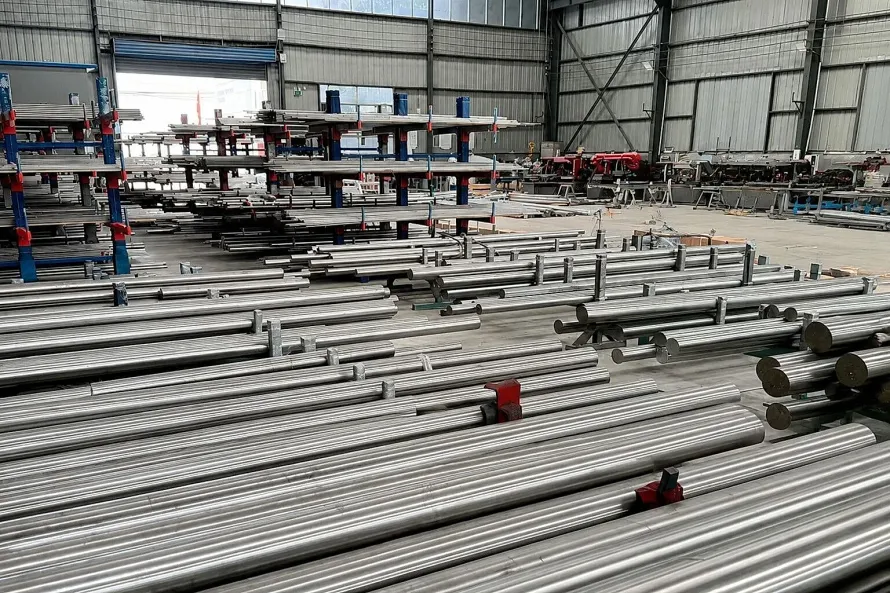
As an integrated titanium supply-chain platform working with certified partner facilities to supply ultra-low-oxygen feedstock bars and wires to powder producers, AM service bureaus, and precision manufacturers worldwide, we examine the two metallurgical and geometric gates governing wrought bar-to-powder conversion. Parent bar quality dictates powder performance.
Gate One: Room-Temperature 1:1 Inheritance vs. Atomization Oxygen Pickup—Why 3x VAR Feedstock Wins
Why does Metal Powder Works’ DirectPowder architecture—mechanically converting wrought bar stock directly into powder at room temperature without melting—place unprecedented scrutiny on upstream ingot chemistry and ultrasonic soundness? Zero remelting leaves zero margin. Process engineers qualifying feedstock bars across non-thermal and thermal routes must manage two distinct metallurgical transfer chains:
- 1:1 Inheritance of Ingot Segregation and Inclusions in Solid-State Conversion: Room-temperature micro-mechanical conversion eliminates gas-trapped hollow porosity and thermal oxide skins, yet any longitudinal aluminum/iron segregation, residual shrinkage pipe, or hard interstitial particle inside the parent bar transfers 100% unchanged into the powder drum; certified partner melt shops charge 100% Grade 0 and Grade 1 virgin titanium sponge into 3–15 tonnes Vacuum Arc Remelting (VAR) ingots (1–3 days furnace cycle from charging to ingot strip), applying computerized alloy-compensation models to cap top-to-bottom Ti-6Al-4V aluminum variation within ≤ 0.35% and oxygen variation within ≤ 0.015%. Homogeneous ingots prevent lot-to-lot drift.
- Triple VAR (O ≤ 0.05%) Protects Both EIGA Gas Atomization and Supersonic Cold Spray: On conventional crucible-free EIGA towers, inductive tip melting and supersonic argon atomization typically add 0.015%–0.030% (150–300 ppm) interstitial oxygen; meanwhile, in aerospace Cold Spray additive repair and press-and-sinter consolidation, lower-oxygen particles deform plastically with higher deposition efficiency upon solid-state impact. When producing ultra-low-oxygen additive manufacturing and powder-feedstock titanium bars and wires, partner melt shops run triple Vacuum Arc Remelting (3x VAR, carrying roughly a USD 0.70–2.10/kg melt premium over standard double-VAR industrial stock capped at O ≤ 0.20%, N ≤ 0.05%, H ≤ 0.015%) to lock feedstock bar oxygen at O ≤ 0.05% (500 ppm) while eradicating High-Density and Low-Density Inclusions (HDI / LDI). Ultra-low oxygen widens process windows.
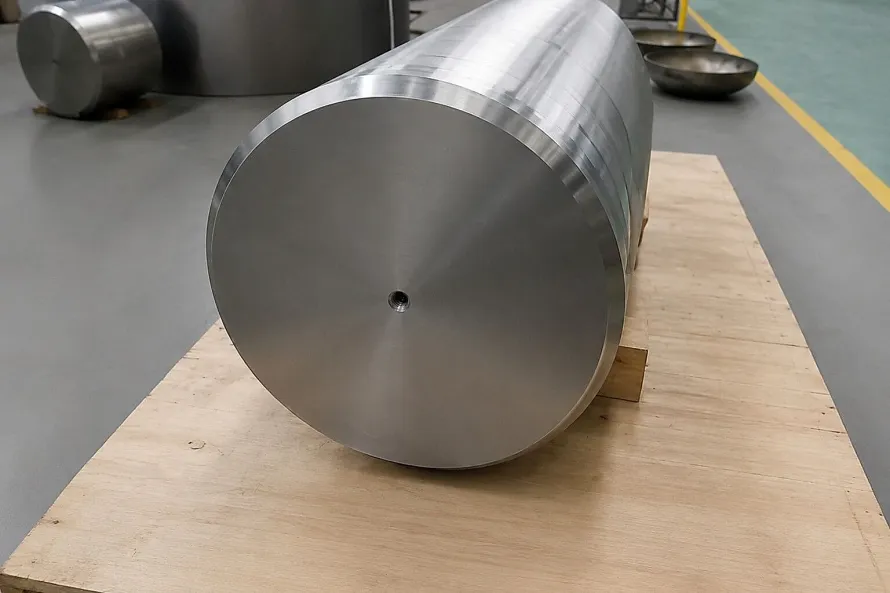
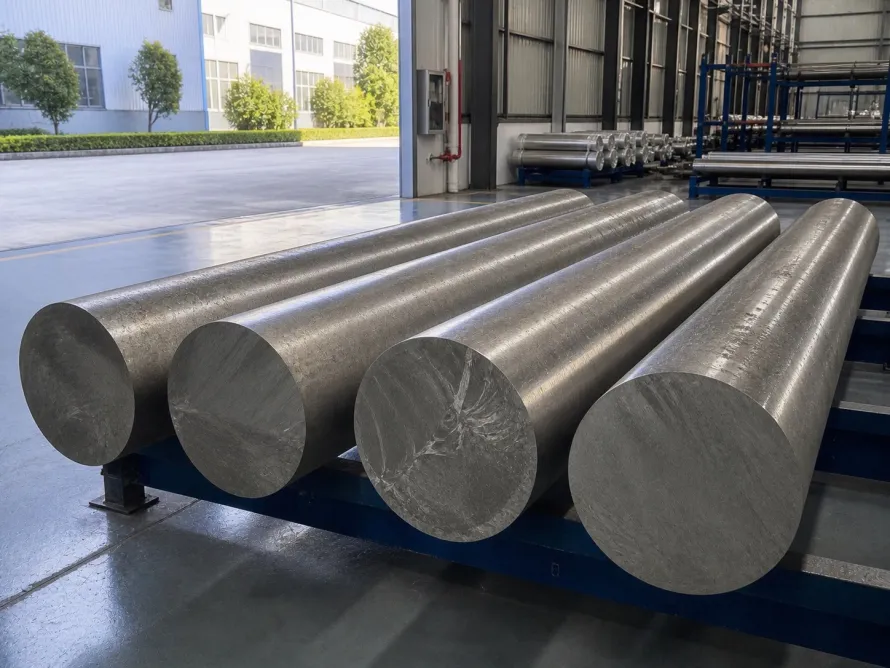
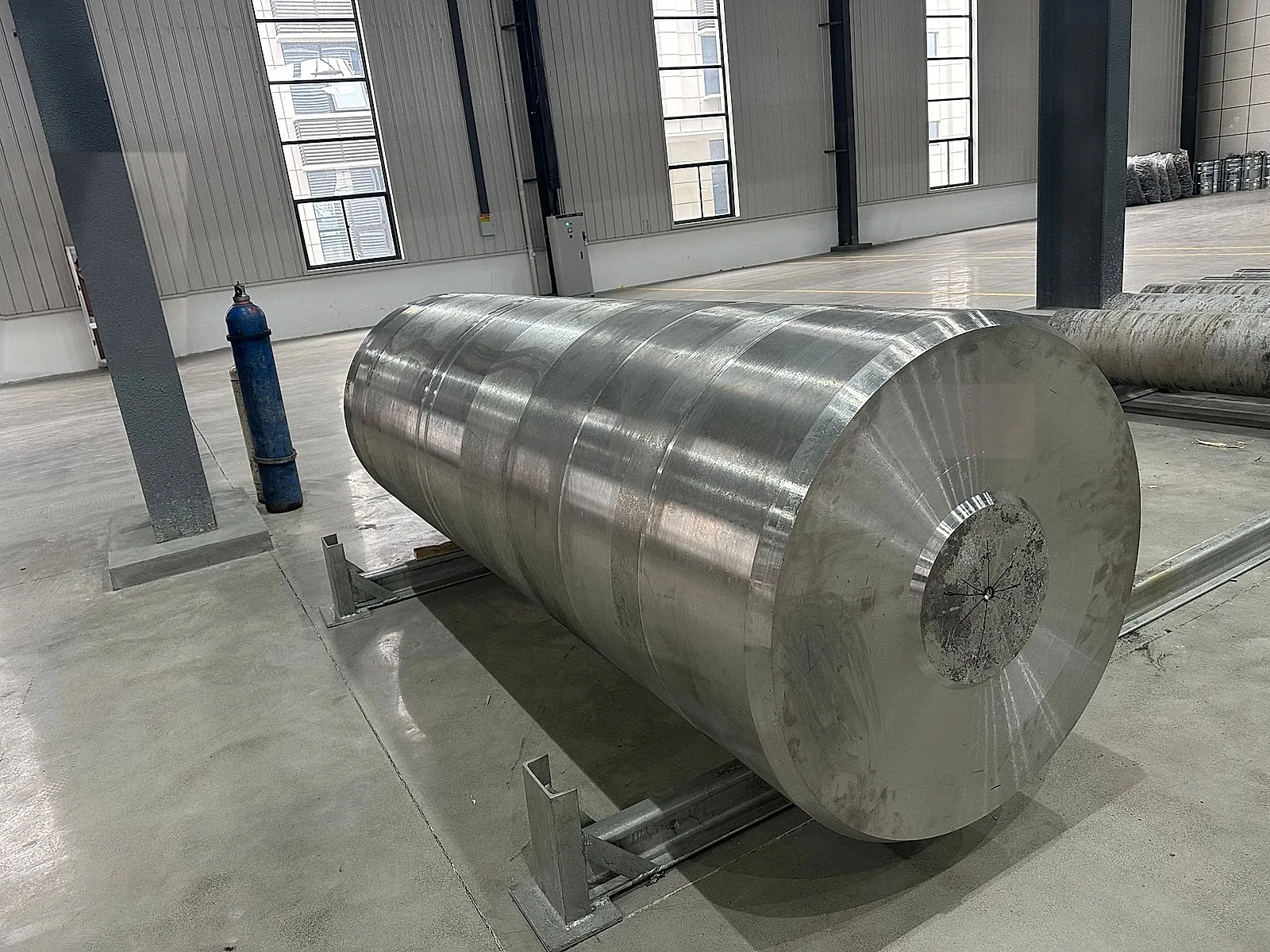 Figure 1: Precision-peeled multi-tonne VAR titanium ingot staged ahead of billet cogging at a certified partner facility (with unpeeled as-cast surface visible at right). Charging 100% Grade 0/1 virgin sponge and holding top-to-bottom oxygen spread ≤ 0.015% anchors consistent downstream solid-state and gas-atomized powder lots. Clean ingots lock powder purity.
Gate Two: Automated Feed Spindles Demand h6/h7 Centerless Grinding and ≤ 0.3 mm/m Straightness
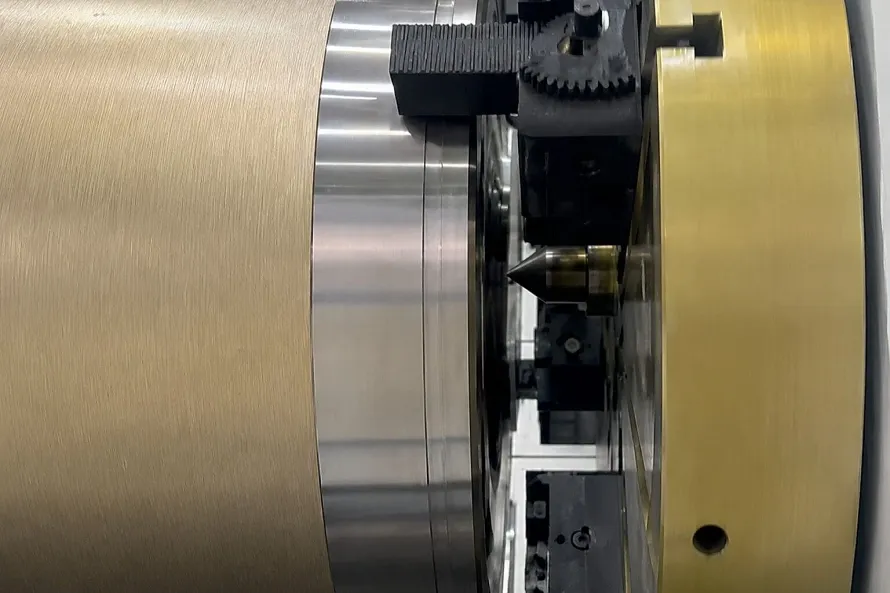
Once powder plants deploy fleets of USD 530,000 automated NextGen mechanical conversion cells—or spin 15,000–25,000 rpm Plasma Rotating Electrode Process (PREP) anodes—a titanium feedstock bar ceases to be bulk furnace charge and becomes a high-speed rotating machine element. Out-of-round bars destroy precision tooling. Across partner bar-finishing lines running 5–30 days typical production lead times, two cold-finishing controls govern unattended spindle uptime:
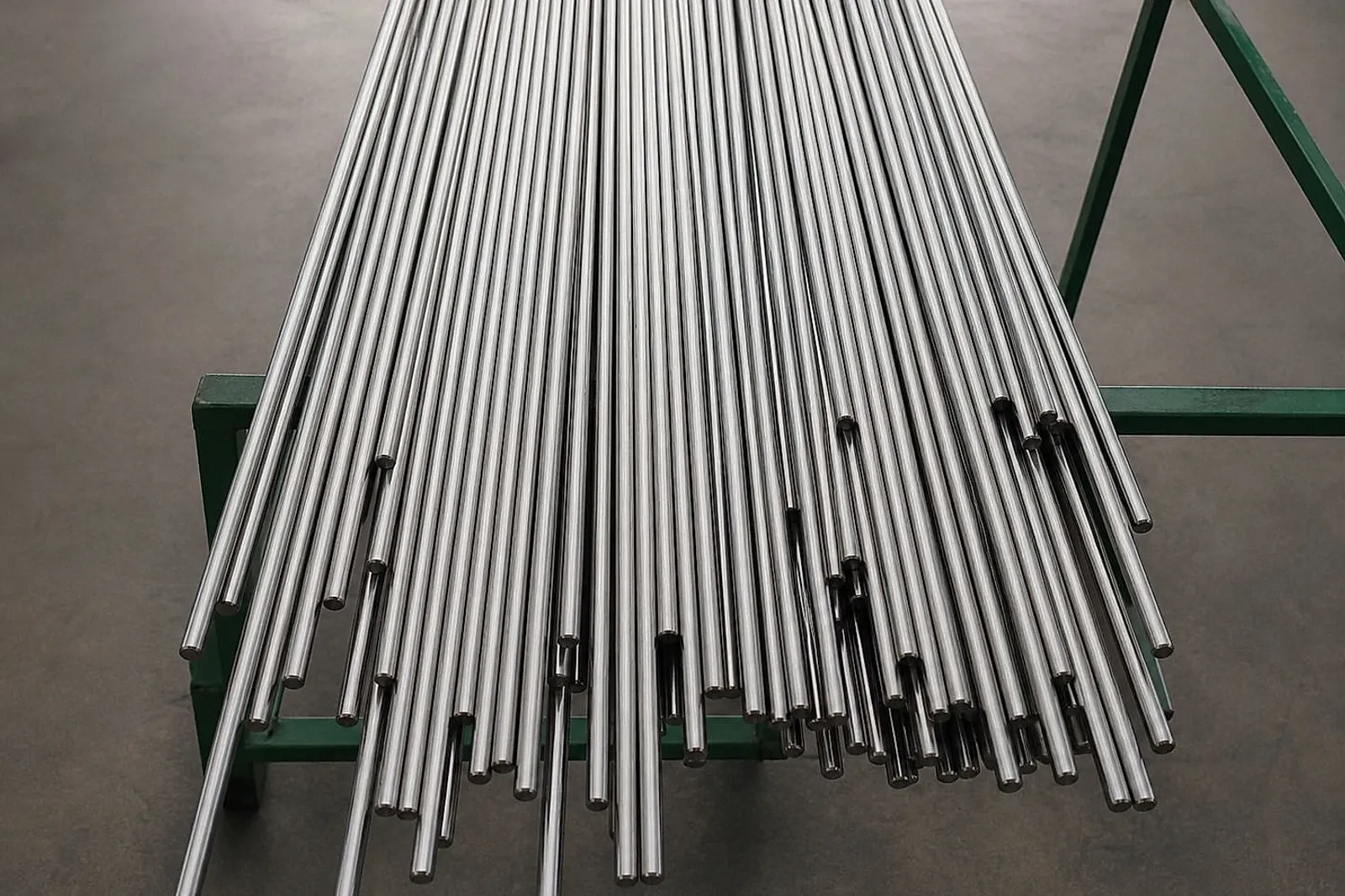
First, specify multi-pass centerless grinding (h6 / h7) to strip residual carbon, micro-fissures, and alpha-case. Hot-rolled black bars or rough-peeled billets retain trace oxide scale, drawing-lubricant carbon, or lathe tool marks that directly spike bulk carbon (C) and oxygen (O) assays if cut directly into powder; when supplying ASTM B348 centerless-ground and peeled titanium round bars, partner finishing cells run precision centerless grinders (0.005–0.01 mm dimensional capability) paired with multi-stage ultrasonic alkaline/DI-water degreasing across 3–65 mm diameters, locking h6 / h7 tolerances (± 0.005 mm to ± 0.015 mm) with bright, contaminant-free metallic surfaces. Centerless grinding strips surface contamination.
Second, enforce ≤ 0.3 mm/m straightness and 30° / 45° end chamfers for continuous collet feeding. Just like Swiss-type CNC automatic bar feeders, automated solid-state conversion collets suffer severe harmonic vibration if bowed bars whip under rotation—broadening particle size distribution (PSD) and fracturing cutting elements; whether ordering ductile commercially pure CP-Ti Grade 2 bar stock for Cold Spray or Grade 5 / Grade 23 ELI bars for LPBF, partner lines precision-straighten bars to ≤ 0.3 mm/m, machine 30° or 45° deburred end chamfers, and run 100% full-length laser diameter gauging plus eddy-current (ET) surface inspection. Tight straightness enables lights-out feeding.
| Powder Conversion Route & Industry Signal | Core Physical Mechanism & Oxygen Profile | Upstream Titanium Feedstock Bar Technical Baseline | Incoming Inspection (IQC) & Audit Gate |
|---|---|---|---|
| Room-Temp Solid-State Conversion (e.g., MPW USD 4.9M raise for 8 NextGen units) | Direct mechanical cutting of bar stock; zero melting/oxygen pickup; 100% parent inheritance | Centerless-ground h6/h7 (± 0.005–0.015 mm), ≤ 0.3 mm/m straightness, zero oil or alpha-case | Verify ingot O ≤ 0.015% uniformity, ultrasonic degreasing & laser gauge logs |
| Electrode Induction Gas Atomization (EIGA) (Mainstream LPBF / MIM spherical powder) | Contactless inductive tip remelting + argon jet; 150–300 ppm typical oxygen pickup | 3x VAR locking O ≤ 0.05% (500 ppm), high concentricity, zero centerline shrinkage pipe | Audit AMS 2631 Class A1 / A immersion UT & inert-gas fusion O/N/H assays |
| Plasma Rotating Electrode Process (PREP) (Zero-satellite aerospace & medical powder) | Plasma tip melting at 15,000–25,000 rpm centrifugal atomization; minimal oxygen gain | 3x VAR (USD 0.70–2.10/kg over 2x melt) + dynamic-balance h6 roundness + 30°/45° chamfers | Inspect archived VAR vacuum melt curves; verify beta transus (980°C–1,005°C) |
| Cross-Border Ocean Bar Supply (5–30 days mill lead time, frame contracts) | Humid salt-air transit & forklift handling risk bar bending or fretting | Individual EPE sleeves + vacuum foil moisture barrier + steel-strapped ISPM 15 crates | Review original MTC issued 2–5 days post-test; match 100% per-bar heat tags |
Four Supply-Chain Audit Steps for Qualifying 2027 Titanium Powder-Feedstock Bars
As decentralized USD 530,000-class solid-state powder cells and industrial atomization towers expand across North America, Europe, and Asia-Pacific, switching bar melt sources mid-program forces costly requalification across aerospace Cold Spray and medical LPBF part files. Mid-program source changes stall production. Sourcing and quality leads locking 2027 feedstock contracts should enforce four verification gates:
- Mandate “100% Grade 0 / Grade 1 Virgin Sponge + Specified VAR Melt Count” on Every PO: Competing bar quotes undercutting market baselines by 10%–20% routinely blend unverified machined revert turnings in place of virgin sponge—elevating baseline oxygen and risking tungsten-carbide tool-bit High-Density Inclusions (HDI). Virgin sponge blocks inclusion risks.
- Audit Archived VAR Vacuum Melt Curves and Top-to-Bottom O/N/H Assays: Certified partner melt shops permanently archive continuous arc voltage, current, and vacuum-pressure charts for every 3–15 tonnes ingot for customer quality review, reporting dual metallographic/DTA beta transus temperatures (980°C–1,005°C) on Grade 5 and Grade 23 ELI lots. Archived melt curves prove pedigree.
- Pair Immersion UT Class A1/A With Full-Length Eddy-Current Surface Scanning: Internal shrinkage voids require 100% immersion ultrasonic testing (AMS 2631 / ASTM B594), while subsurface laps require full-length eddy-current (ET) screening so zero internal defects enter solid-state cutters. Dual NDT seals quality escapes.
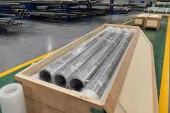
- Verify Original MTCs Within 2–5 Days Post-Test and Individual Anti-Bow Crating: Formal MTC documentation issues 2–5 days after chemical, tensile, and NDT completion with 100% per-bar heat/lot number traceability (independent SGS / TÜV witness re-testing available on request), packed in individual EPE foam sleeves, vacuum moisture-barrier foil bags, and reinforced ISPM 15 plywood crates shipped FOB China main port (with air-freight urgent lots cut ≤ 3–4 m to fit cargo holds without bending). Rigid crating preserves bar straightness.
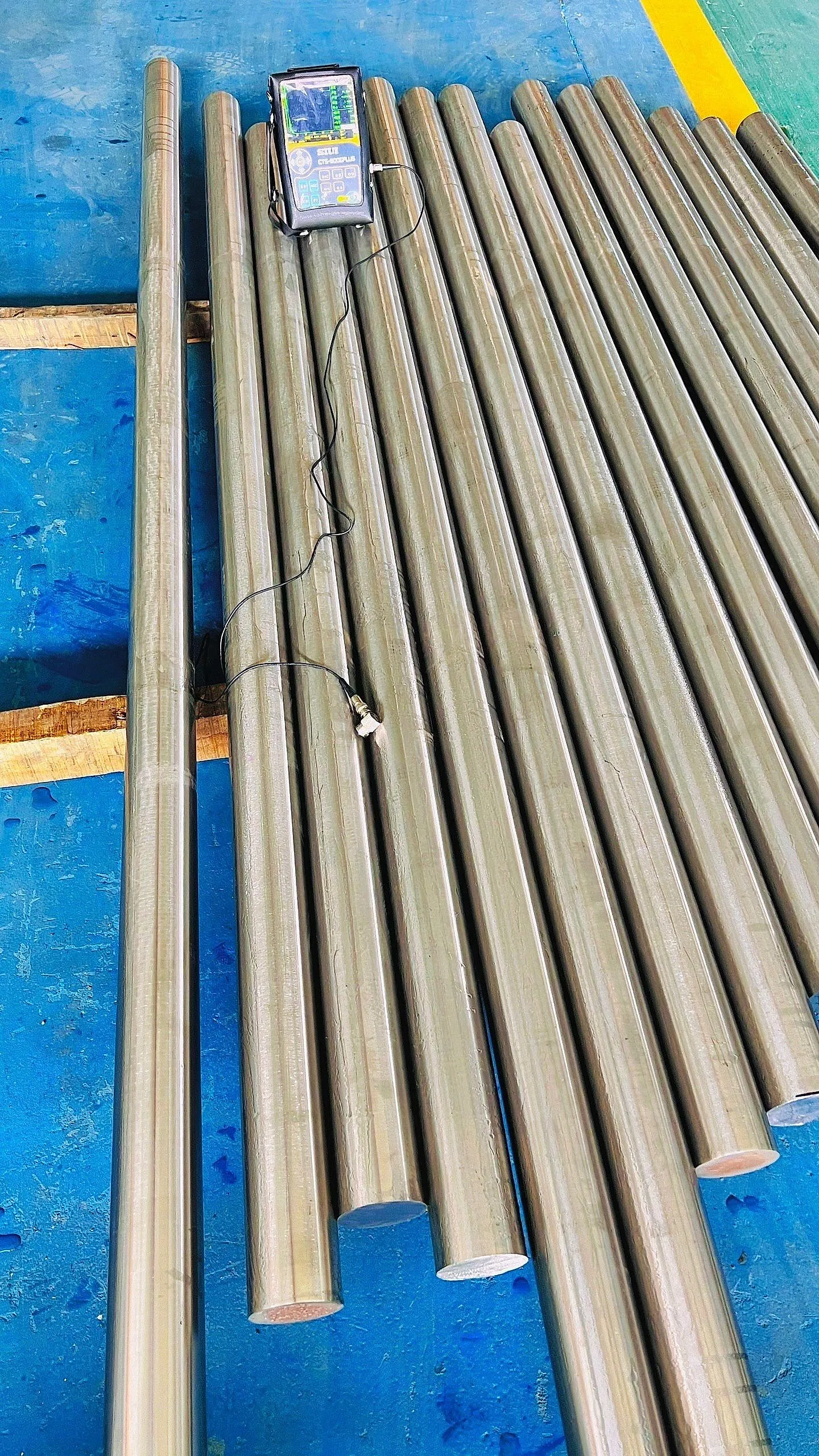 Figure 2: Bar-by-bar ultrasonic flaw detection (UT) on precision-finished titanium round bars at a certified partner facility. Because room-temperature solid-state powder conversion performs no secondary remelting, intercepting internal shrinkage voids prior to shipment is essential for defect-free powder batches. Full-bar UT stops defect transfer.
If your powder production plant or additive engineering team is qualifying 2027 supply for CP-Ti (Grade 1 / Grade 2), Grade 5, or Grade 23 ELI centerless-ground feedstock bars for solid-state conversion or EIGA / PREP atomization, submit your target interstitial ceiling, diameter tolerance, and spindle length specs via our online RFQ and complimentary feedstock specification audit portal to review redacted 3x VAR MTC packages and mill lead times. Verified bar stock secures powder yield.