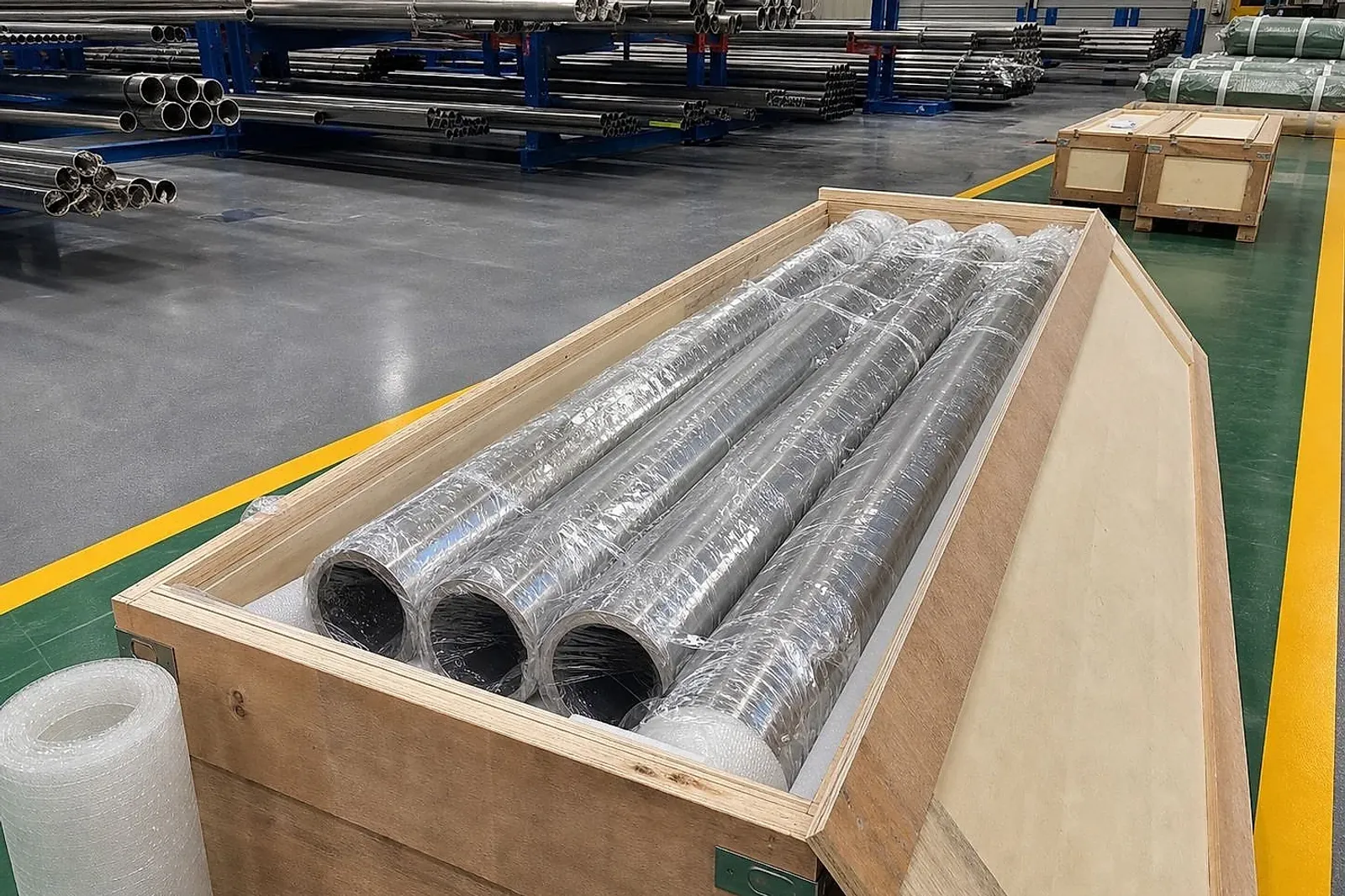
On multi-effect desalination evaporators, chlor-alkali brine coolers, and offshore shell-and-tube condensers, an ASTM B338 thin-wall titanium tube bundle routinely undergoes 30–60 days of precision cold-pilgering and non-destructive testing—only to suffer catastrophic damage during final consolidation-hub handling. Weak crating ruins compliant metal. When 6–12 m tubes with 0.5–0.89 mm wall thickness arrive at a fabricator’s assembly bay with even 5% of tube ends ovalized or scarred by transit fretting, automated bundle threading and hydraulic tube-to-tubesheet expansion grind to an immediate halt.
Procurement teams frequently dedicate three contract pages to chemistry and eddy-current sensitivity while writing just three words—“Standard Seaworthy Packing”—in the logistics schedule. Vague packing clauses block insurance claims. Once a crate suffers diagonal forklift-tine impact at a transshipment port or saline condensation ingress, marine insurers routinely deny liability by citing inadequate internal radial support.
As an integrated titanium supply-chain platform working with certified partner facilities for pressure-vessel fabricators, power-plant OEMs, and desalination contractors worldwide, we break down internal mandrel support, four-layer moisture-barrier crating, 3.0–4.0 m air-freight length ceilings, and enforceable PO clauses. Upfront crating specs protect schedules.
Internal Radial Support and Four-Layer Anti-Fretting Barriers: Protecting 0.5 mm Wall Circularity
Why can Schedule 40 process pipe travel safely in strapped bundles while 0.5–1.2 mm bright-annealed heat-exchanger tubing requires instrument-grade isolation? High diameter-to-wall tubes buckle easily. Certified partner cold-rolling plants operating LG30 through LG120 multi-stand cold-pilger mills and 18 m vacuum annealing furnaces produce 6–219 mm OD tubing across 0.5–18 mm walls; after every tube clears 100% dual-channel eddy-current (ET) plus ultrasonic (UT) testing and ≥ 10-second full-bore hydrostatic testing (up to 20 MPa) followed by dry-air bore purging, crating crews enforce three physical barriers:
- Internal PVC Support Mandrels and Rigid Press-Fit End-Caps: When packing thin-wall ASTM B338 and ASTM B861 seamless and welded heat-exchanger titanium tubes at ≤ 0.89 mm wall or elevated diameter-to-wall ratios, partner lines thread clean rigid PVC support mandrels through the bore and seat high-density polyethylene internal end-caps at both mouths—preventing multi-row stacking compression from ovalizing bevels while keeping purged bores completely dust-free. Rigid mandrels lock tube roundness.
- Individual EPE Foam Sleeving Inside Desiccant Aluminum-Foil Barrier Bags: Across 25–40 days of ocean transit, bare metal-to-metal contact under continuous vessel-engine vibration abrades passive surface oxide layers and leaves dark fretting marks; whether shipping workhorse commercially pure Grade 2 desalination and condenser tubing or crevice-resistant Grade 7 / Grade 12 alloy tubes, every single tube slides into an individual EPE polyethylene foam sleeve before the entire bundle is heat-sealed inside a silica-gel desiccant vacuum aluminum-foil moisture barrier. Individual sleeves stop transit fretting.
- Custom Comb-Slotted Spacers for Tight-Radius (R ≤ 3D) Titanium U-Tubes: For U-bent heat-exchanger bundles that have completed 500°C–600°C vacuum stress-relief annealing with verified apex wall thinning ≤ 12% and bend ovality ≤ 8%, partner packers index tubes from smallest to largest bend radius inside polyethylene comb-divider frames that lock both straight legs apart and isolate U-bends from crate walls. Comb dividers prevent leg clashing.
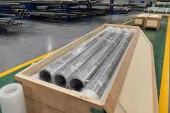
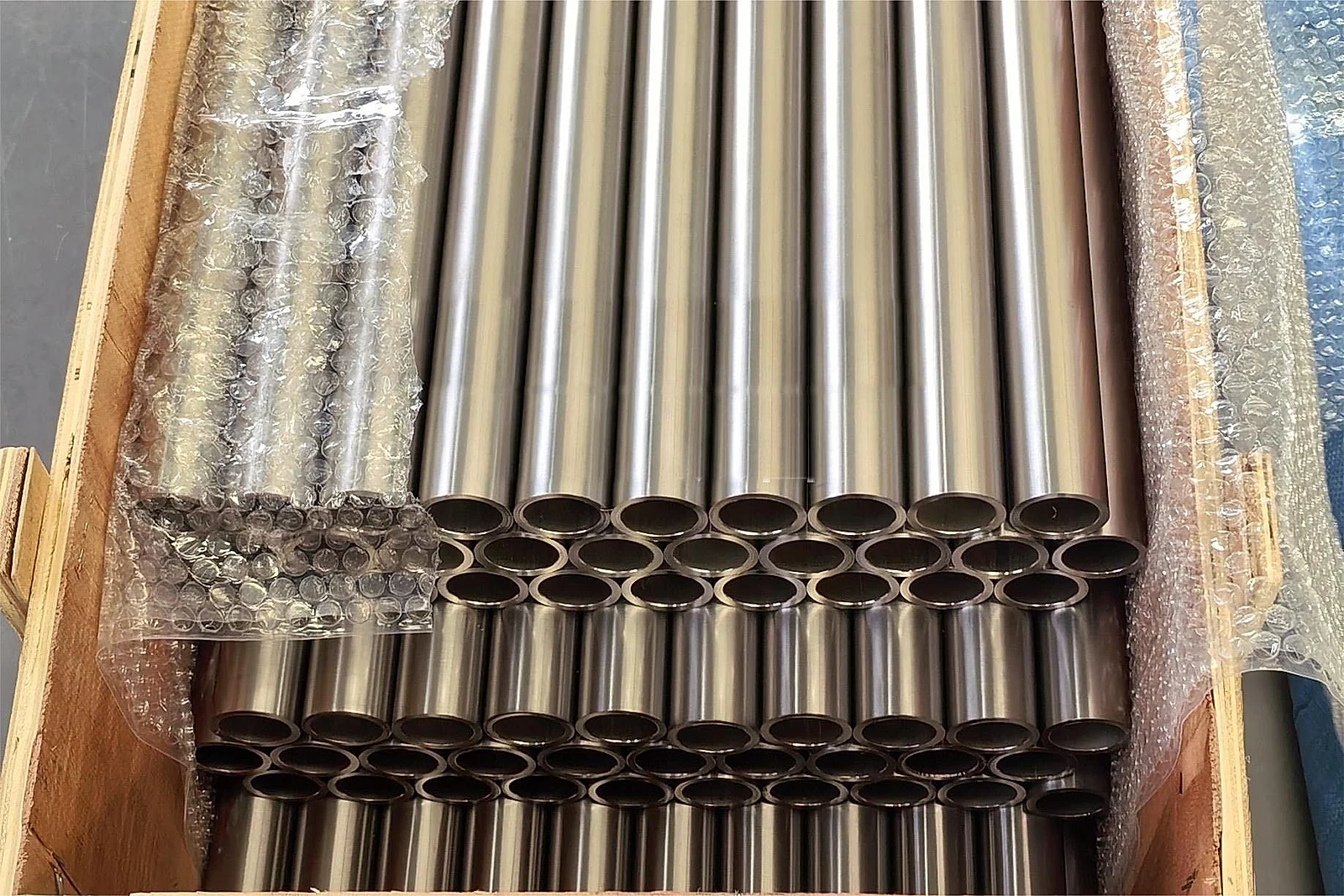 Figure 1: Seamless titanium tubes layered with protective cushioning film inside a wooden export crate at a certified partner facility. Incoming quality teams should verify layer separation integrity, mouth circularity, and bore cleanliness prior to tubesheet threading. Layered cushioning absorbs vessel vibration.
The 3–4 m Air-Freight Ceiling, 11.8 m Ocean Container Limit, and Anti-Forklift Skid Design
Beyond internal fretting, cross-border project schedules derail most frequently on two logistics blind spots: ordering cut lengths that exceed aircraft or container envelopes, and suffering forklift punctures at LCL hubs. Length mismatches stall urgent freight. Project buyers and logistics coordinators must verify three dimensional and structural gates before freezing cut lists:
First, respect the 3.0–4.0 m physical cargo-door limit on commercial air freight. Refinery turnaround buyers often attempt to book 6.0 m or 9.0 m replacement condenser tubes onto commercial passenger-belly or standard air-cargo flights; export dispatch records show that rigid crates exceeding 3.0–4.0 m cannot clear standard commercial aircraft cabin doors and pallet contours (chartering nose-loading freighters carries scarce schedules and freight bills exceeding metal value); therefore, urgent air-freight lots must split lengths to ≤ 3.0–4.0 m at RFQ stage, whereas 6–18 m full-length bundles require 30–60 days production and ocean/rail planning. Air urgent lots require short cuts.
Second, reconcile 18 m mill capacity against the 11.8 m safe net length of 40-foot ocean containers. While partner pilger lines and 18 m vacuum furnaces finish straight tubes up to 18 m (and U-tubes up to 24 m developed length) to eliminate shell-side circumferential welds, a standard 20-foot dry container measures roughly 5.89 m inside (capping safe crated tube length at ≤ 5.7 m), and a 40-foot container measures roughly 12.03 m inside (capping safe crated tube net length at 11.8 m once reinforced crate end-bulkheads and loading clearances are deducted); specifying 12.5–18 m straight tubes requires pre-pricing 45-foot containers (13.5 m internal) or specialized open-top / flat-rack ocean equipment. Matching container length avoids recutting.
Third, deploy skidded, steel-strapped ISPM 15 plywood crates to defeat forklift transfer damage. Transit claim logs confirm that over 80% of mechanical shipping damage occurs during forklift transfer at consolidation warehouses when bare steel tines stab beneath unskidded long crates and dent bottom-row tubing; partner dispatch bays build enclosed, heat-treated ISPM 15 plywood crates mounted on heavy longitudinal and crosswise timber skids (creating dedicated fork-entry pockets), reinforced with galvanized steel strapping and corner irons, capped at 1,000–1,500 kg gross crate weight to prevent mid-span sag, and backed by 100% mandatory pre-shipment scale weighing and multi-angle crating photographs. Skidded crates block tine punctures.
| Freight Mode & Tube Configuration | Safe Single-Tube Cut Ceiling | Partner Internal Support & Barrier Spec | Common Logistics Pitfall & Schedule / Damage Risk |
|---|---|---|---|
| Urgent Commercial Air Freight (Turnaround spare tubes & bars) | ≤ 3.0–4.0 m (hard aircraft door & pallet limit) | Individual EPE sleeves + rigid end-caps + lightweight ISPM 15 crate (≤ 500 kg gross) | Releasing 6 m urgent air orders that get rejected at airport cargo acceptance |
| 20 ft / 40 ft Ocean Dry Containers (Mainstream ASTM B338 straight bundles) | 20 ft: ≤ 5.7 m; 40 ft: ≤ 11.8 m | Internal PVC mandrels (≤ 0.89 mm wall) + desiccant foil bag + skidded steel-strapped crate | Shipping unmandrelled LCL bundles; hub forklifts crush bottom-row tube ends |
| 12–18 m Extra-Long Straight Tubes (Large desalination / chemical shells) | 12.0–18.0 m (mill & vacuum furnace ceiling 18 m) | Full-length PVC core mandrel + anti-sag internal baffles + crane-loaded open-top container | Ordering 12.2 m tubes for a standard 40 ft box—missing door closure by 200 mm |
| Tight-Radius (R ≤ 3D) U-Tube Bundles (Up to 24 m developed length) | Bent leg length ≤ 11.5 m (fits standard 40 ft container) | 500°C–600°C vacuum stress-relieved + indexed by R inside comb-slotted foam dividers | Unbraced U-bends swinging during ocean roll, causing leg clash and ovality drift |
Four Purchase-Order Clauses to Lock Zero-Defect Titanium Tube Delivery
To ensure thin-wall heat-exchanger bundles arrive at overseas fabrication shops 100% round, dry, and ready for tubesheet expansion, import buyers should embed four explicit crating and documentation clauses into every purchase order. Explicit PO specs prevent shortcuts.
- Specify “Internal PVC Mandrels + Rigid End-Caps + Individual EPE Sleeving” by Wall Thickness: Replace generic “seaworthy packing” wording on ≤ 1.0 mm wall ASTM B338 tubing with mandatory internal PVC mandrels or press-fit end-caps, individual EPE sleeves, and heat-sealed desiccant aluminum-foil barrier bags. Detailed specs eliminate packing shortcuts.
- Mandate Forklift Pocket Stencils and Pre-Shipment Scale & Crating Photos: Require stenciled center-of-gravity marks, sling points, fork-entry zones, and “Do Not Top-Load” warnings on every ISPM 15 crate, with digital scale weight tickets and open-crate interior photos transmitted before truck release. Pre-shipment photos establish clear accountability.
- Prioritize Factory-Loaded Full Container Loads (FCL) Matched to Cut Length: Whenever bundle volume permits, consolidate into factory-sealed 20 ft or 40 ft FCL shipments (FOB China main port) to bypass LCL warehouse de-vanning and mixed-cargo forklift collisions completely; split urgent air-freight spares to ≤ 3.0–4.0 m upfront. Factory FCL loading eliminates hub rehandling.
- Seal Dual Waterproof Document Pouches Cross-Checked Against 2–5 Days MTCs: Formal Material Test Certificates (MTC) issue 2–5 days after chemical, tensile, 100% ET + UT, and ≥ 10-second hydrostatic testing (with independent SGS / TÜV pre-shipment witness inspection available on request); require duplicate waterproof Packing Lists and 100% heat/lot-traceable MTC copies attached both outside Crate No. 1 and sealed inside to prevent customs separation or piece-count transcription errors. Dual document pouches speed customs release.
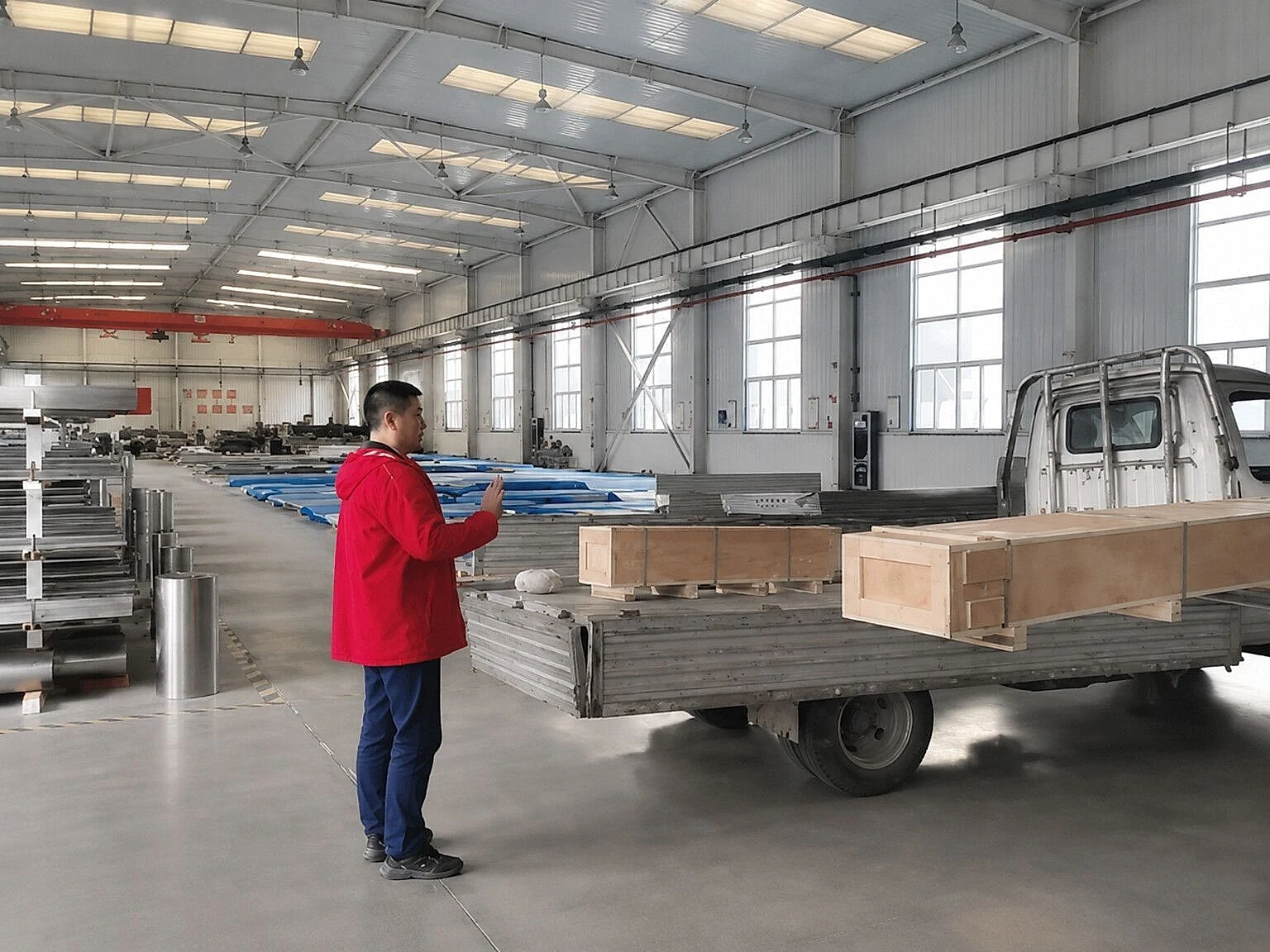 Figure 2: Reinforced long plywood export crates built with bottom forklift skids staged on a dispatch truck at a certified partner warehouse. Dedicated fork-entry clearance paired with mandatory pre-shipment scale photos prevents transshipment tine punctures. Bottom skids protect lower tube rows.
If your project procurement team is planning ocean container or urgent air-freight shipments for ASTM B338 / ASTM B861 straight or U-bent thin-wall titanium heat-exchanger tubes, submit your tube schedule via our online RFQ and complimentary tube crating, length-limit & specification audit portal to receive crate gross-weight calculations, internal mandrel plans, and sample MTC packages alongside your quote. Pre-RFQ planning secures zero-damage arrival.