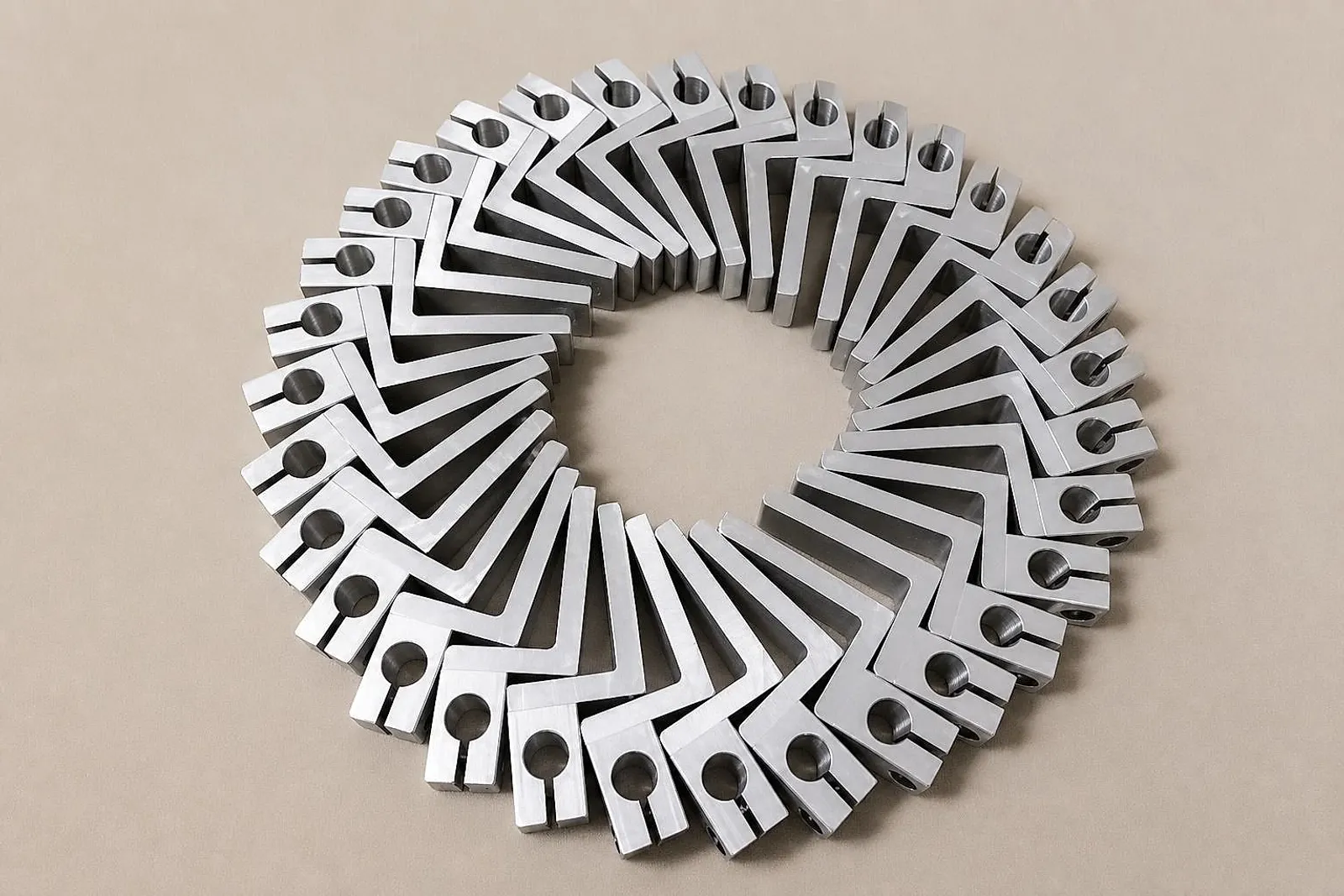
According to 3D Printing Industry reporting on November 27, 2026, UK boutique titanium bicycle manufacturer Sturdy Cycles (based in Frome, Somerset) has officially discontinued outsourced 3D-printed titanium frame junctions, transitioning to 100% in-house CNC machining from solid wrought titanium billets. An additive pioneer returned to milling. The all-subtractive workflow debuted on the company’s new Fosse endurance road and Drove gravel framesets presented at Rouleur Live in London on November 12, 2026—with the Fosse clearing 38 mm tires (and an in-house all-titanium fork slated for 2027), the Drove clearing 55 mm rear tires, both engineered to exceed ISO 4210 bicycle fatigue safety standards at a made-to-order lead time of roughly 6 weeks, with initial deliveries scheduled for late 2026.
Keeping the commercial facts within published disclosures, Sturdy Cycles previously stood among the cycling sector’s most visible additive manufacturing showcases: in 2020, New Zealand bureau RAM3D produced Selective Laser Melting (SLM) titanium parts for three bespoke road models, and in 2022 production shifted to Cold Metal Fusion (CMF) from Headmade Materials via Element22 for crank arms, frame connectors, and chainstay yokes; now, by replacing one-off rider geometry with a structured matrix of 6 frame sizes across 3 head-tube stack heights (18 configurations), the workshop redesigned every junction, stem, and aerofoil seatpost for in-house CNC milling, hand TIG welding to drawn titanium tubes, tumbling, glass-bead blasting, and Cerakote ceramic coating under one roof. Matrix sizing flips process economics.
As an integrated titanium supply-chain platform working with certified partner facilities to supply wrought billets, precision bars, and cold-drawn seamless tubing to CNC machine shops, mobility OEMs, robotics builders, and aerospace subcontractors worldwide, we examine the two upstream metallurgical gates behind successful AM-to-CNC production transitions. Sound wrought stock anchors machining yield.
Gate One: Trading Printed Micro-Porosity for 100% Dense Wrought Billet—AMS 2801 & Zero-HAZ Blanking
Why are engineering leads across specialty vehicles, robotic linkages, and flight brackets pulling high-stress structural nodes back from external SLM / CMF print bureaus onto in-house 5-axis CNC mills once designs stabilize into 18-variant production matrices? Wrought density beats sintered porosity. Unless additive titanium parts undergo costly Hot Isostatic Pressing (HIP), trace lack-of-fusion pores widen high-cycle fatigue scatter—and printed lugs still require secondary CNC fixture setups to bore bearing seats; yet machining directly from wrought stock requires locking three mill-level specifications:
- Mandate AMS 2801 Dual-Stage Vacuum Stress Relief on High-Removal (>70%) Pocketed Nodes: Frame bottom-bracket shells, head-tube lugs, and actuator clevises routinely hog out 70%–85% of starting billet volume; when ordering ASTM B348 and AMS 4928 wrought titanium round bars and machining billets (rolled across partner 18-stand Danieli high-speed mills spanning 2–600 mm diameter—with 10–100 mm core fast-moving sizes—holding ≤ 0.15 mm hot-rolled roundness, aerospace A1 fine equiaxed microstructure, and AMS 2631 / ASTM B594 Class A1 / A immersion UT), buyers should specify pre-shipment AMS 2801 vacuum stress-relief annealing and straightening to stop thin-wall bore springback after unclamping (standard milling precision 0.02–0.10 mm). Stress-relieved billets hold bore roundness.
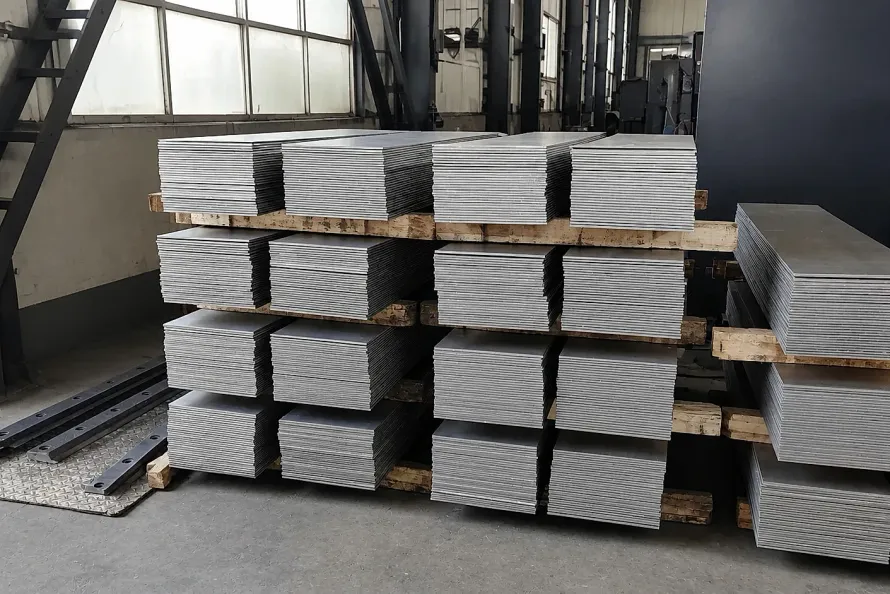
- Blank 6–100 mm Rectangular Stock via Cold Waterjet or Sawing to Avoid HAZ Tool Breakage: Because titanium’s low thermal conductivity concentrates cutting heat at the tool tip, shop records confirm titanium CNC machining consumes roughly 50% more carbide tooling than steel; partner plate-finishing cells cut 6–100 mm plates and rectangular blocks using ultra-high-pressure abrasive waterjet or cold band saws (1–5 mm sawing accuracy), delivering zero Heat-Affected Zone (HAZ) and zero oxygen-hardened alpha-case on cut faces (whereas plasma-cut blanks must carry 3–5 mm per-side sacrificial roughing stock). Cold waterjet blanking saves carbide inserts.
- Align Envelope Sizes With Revolving Warehouse Stock to Bypass Roll-Change Surcharges: When a CNC shop commits to a 6 weeks customer delivery promise, raw-material queue time becomes critical (partner bar lead times span 5–30 days, backed by roughly 50 tonnes of revolving stock across 120 active sizes where 25–108 mm OD bars and tubes turn fastest); specifying an odd custom bar diameter triggers 3–12 hours of rolling-guide changeover downtime—adding up to USD 28/kg in setup amortization on 20 kg micro-lots—whereas stepping up to stocked diameters ships immediately. Stocked billet sizes protect lead times.
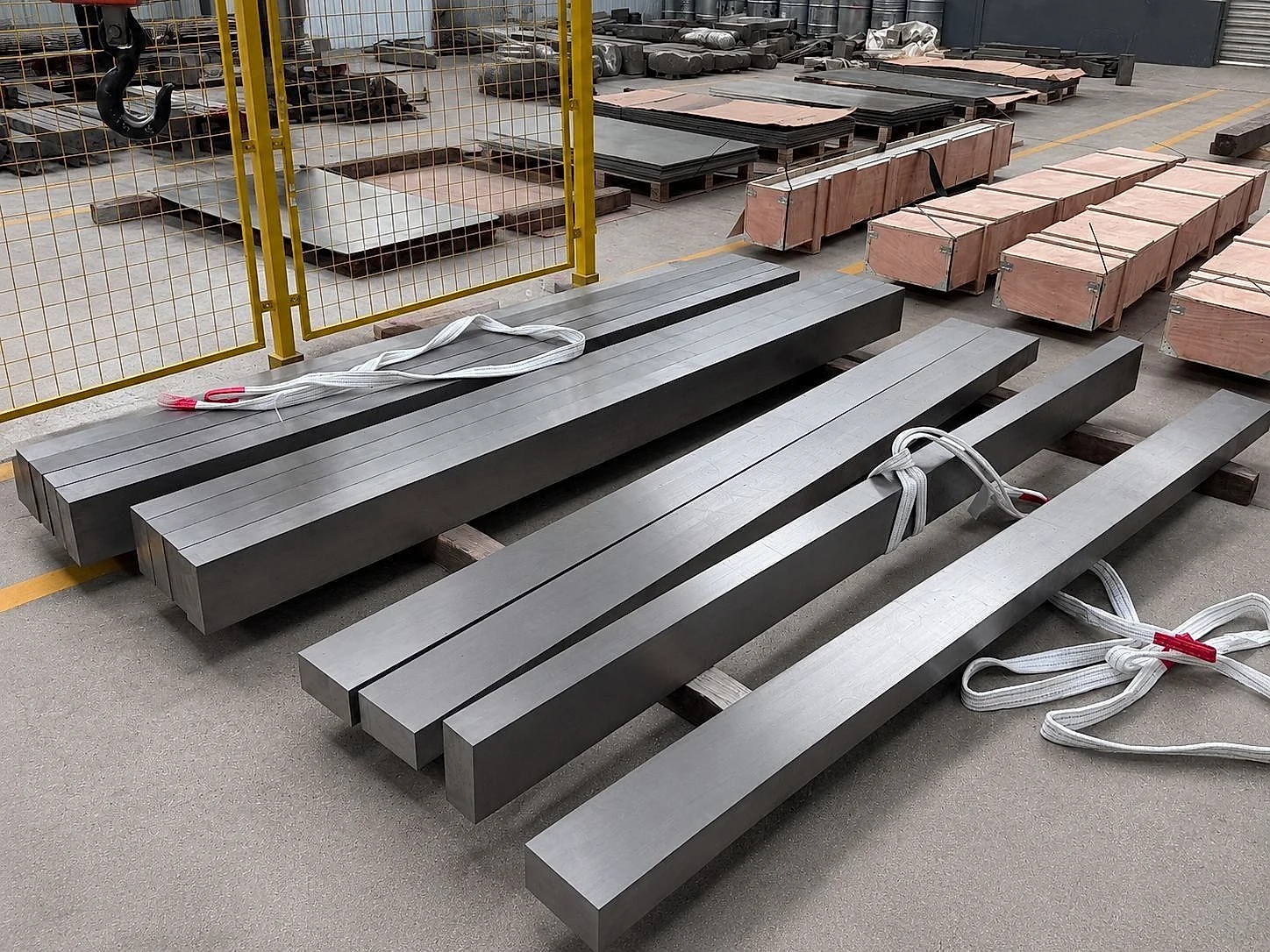 Figure 1: Straightened wrought titanium rectangular billet bars staged at a certified partner warehouse. Supplying cold-sawed or waterjet-blanked blocks with AMS 2801 stress relief prevents thin-wall socket distortion during high-removal (>70%) 5-axis CNC pocketing. Flat billet stock speeds fixture setup.
Gate Two: Welding CNC-Milled Grade 5 Nodes to Drawn Grade 9 Tubing—Concentricity & Argon Purge Rules
In Sturdy Cycles’ Fosse and Drove architecture, CNC-machined wrought junctions must weld cleanly to cold-drawn titanium tubes to survive ISO 4210 dynamic frame fatigue testing. Weld integrity governs spaceframe life. Across high-end bicycle frames, motorsport subframes, and medical exoskeletons, pairing CNC-milled Grade 5 (Ti-6Al-4V) nodes with cold-drawn seamless Grade 9 (Ti-3Al-2.5V) tubing represents the industry benchmark—provided buyers enforce two metallurgical controls:
First, lock concentricity and fine-grain anneal temper on thin-wall (0.8–1.2 mm) cold-drawn Grade 9 tubes. Commercially pure Grade 2 welds effortlessly but lacks high yield strength, whereas Grade 5 resists cold-pilgering into thin-wall small-diameter seamless tubes; near-alpha high-strength cold-drawn seamless Grade 9 (Ti-3Al-2.5V) tubing delivers 50%–80% higher tensile strength than Grade 2 alongside superior cold formability—partner multi-pass cold-rolling and drawing lines source pierced extrusion hollows exclusively from tier-one primary melt mills (rejecting uncertified mini-mill scrap hollows), holding tight eccentricity across 0.8–1.2 mm walls (25–76.2 mm core frame/exhaust ODs) with vacuum grain-refining anneals that support 1.5D tight-radius bending and 0.05–0.10 mm stepped weld-joint fit-up. Tight tube concentricity stabilizes root penetration.
Second, cap base-metal O/N/H interstitials and enforce silver-straw TIG weld color rejection gates. Dissimilar or matching titanium fusion welds absorb atmospheric oxygen, nitrogen, and hydrogen rapidly above 400°C: partner lines cap bar and tube interstitials at O ≤ 0.20%, N ≤ 0.05%, and H ≤ 0.015%; qualified titanium TIG (GTAW) welders must deploy extended trailing shields plus continuous internal high-purity argon back-purging—accepting only bright silver or pale straw-gold weld beads while immediately scrapping any dark blue, violet, or chalky gray oxidized joint, followed by 100% liquid penetrant testing (PT) and X-ray radiography (RT) on primary structural nodes. Proper argon purging prevents weld embrittlement.
| Manufacturing Route & Supply Link | Process Profile & Lead-Time / Cost Driver | Microstructure & High-Cycle Fatigue Behavior | Incoming Quality Control (IQC) & Audit Gate |
|---|---|---|---|
| Outsourced 3D-Printed Junctions (Earlier bureau SLM or CMF sintering) | Suits bespoke 1-off shapes; external bureau queues + secondary CNC bore skimming | Retains micro-pores without HIP; wider fatigue scatter & rougher as-built skin | Audit powder reuse oxygen pickup, metallographic porosity & HIP furnace charts |
| In-House CNC Wrought Titanium Billet (e.g., Sturdy 18-size matrix, 6 weeks lead) | Zero-HAZ waterjet/saw blanks milled in-house; 100% control over schedule & fit | 100% dense wrought A1 equiaxed grain exceeding ISO 4210 fatigue thresholds | Mandate AMS 2801 stress relief; verify AMS 2631 Class A1 / A immersion UT |
| Cold-Drawn Seamless Grade 9 Tube (0.8–1.2 mm wall, Ti-3Al-2.5V) | Tier-one extruded hollows + cold pilger/draw + vacuum anneal; 1.5D bend capability | 50%–80% stronger than Grade 2; weld-compatible with Grade 5 milled lugs | Verify 100% ET + UT dual NDT, end ovality & ultrasonic bore degreasing |
| Argon-Shielded TIG Frame Welding (In-house weld + bead blast / Cerakote) | Stepped spigot fit-up (0.05–0.10 mm) + trailing shield + internal argon purge | Base metal O ≤ 0.20%, H ≤ 0.015%; silver weld toes preserve fatigue endurance | Reject blue/gray weld discoloration on sight; run PT + RT on primary joints |
Four Procurement Steps for Engineering Teams Moving From Outsourced AM to In-House CNC Titanium
As mobility OEMs, drone airframe builders, and robotics startups transition structural hardware from prototype 3D printing to 100–1,000-unit in-house CNC production across 2027, locking four purchase-order rules streamlines shop-floor throughput. Four PO rules lock production yield.
- Specify “AMS 2801 Stress-Relieved + Cold Waterjet / Band-Saw Blanks” on Billet POs: For multi-axis lugs and housings exceeding 70% material removal, order pre-cut, stress-relieved rectangular blocks or bar slugs with zero thermal HAZ, sparing spindle time and carbide end mills. Pre-cut stress-relieved blanks mill flat.
- Target Revolving Stock Diameters (25–108 mm Core Range) to Avoid Changeover Fees: Align part outer envelopes with stocked bar and tube diameters during CAD freeze to bypass 3–12 hours mill pass changeovers and up to USD 28/kg small-lot surcharges on 20 kg custom runs. Stocked dimensions slash unit cost.
- Mandate Tier-One Hollow Provenance and Ultrasonic Degreasing on Drawn Grade 9 Tubes: Require documented tier-one pierced billet provenance, 100% eddy-current plus ultrasonic testing, and oil-free ultrasonic bore cleaning so cut tubes go straight into TIG welding jigs without contamination porosity. Clean tube bores prevent weld pores.
- Verify 100% Heat-Traceable MTCs Issued Within 2–5 Days and Anti-Fretting Crating: Formal Material Test Certificates (MTC) issue 2–5 days after tensile, O/N/H gas analysis, and NDT completion—recording measured beta transus temperatures (980°C–1,005°C) on Grade 5 heats with 100% lot traceability (SGS / TÜV witness testing available on request), packed in EPE sleeves inside ISPM 15 crates shipped FOB China main port. Full heat traceability secures lot release.
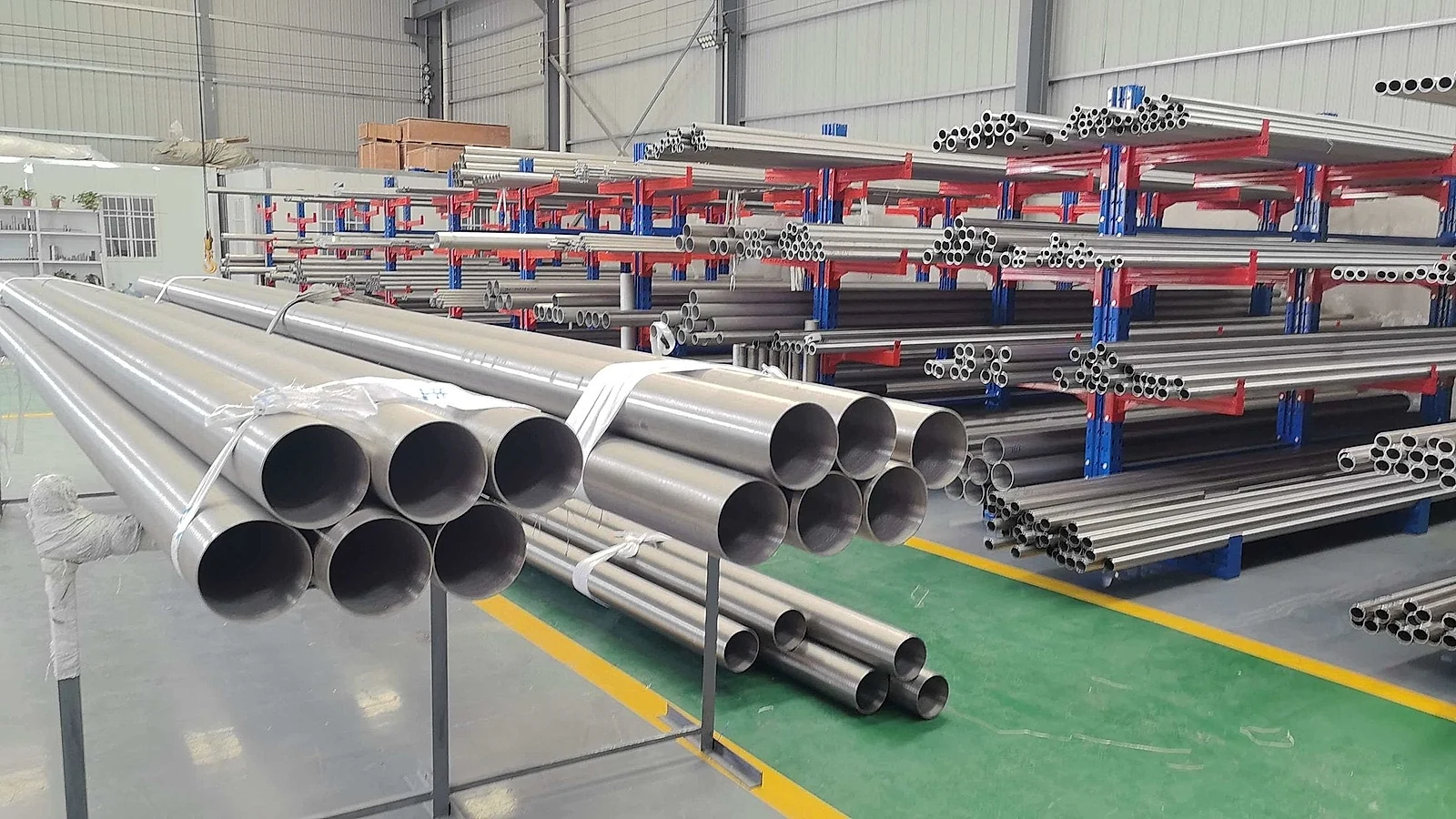 Figure 2: Cold-drawn seamless titanium round tubes staged on cantilever racks at a certified partner warehouse. Tight wall concentricity paired with CNC-machined wrought titanium spigots and internal argon back-purging delivers repeatable fatigue performance in welded tubular structures. Concentric drawn tubes ensure uniform weld penetration.
If your engineering or machine-shop team is evaluating a transition from outsourced 3D-printed titanium connectors to in-house 5-axis CNC milling from wrought Grade 5 billets paired with cold-drawn Grade 9 / Grade 2 seamless tubing, upload your CAD assembly via our online RFQ and complimentary CNC billet stress-relief & tube-welding specification audit portal to compare stocked pre-cut blank options and review sample MTC documentation. Early material alignment accelerates shop-floor ramp-up.