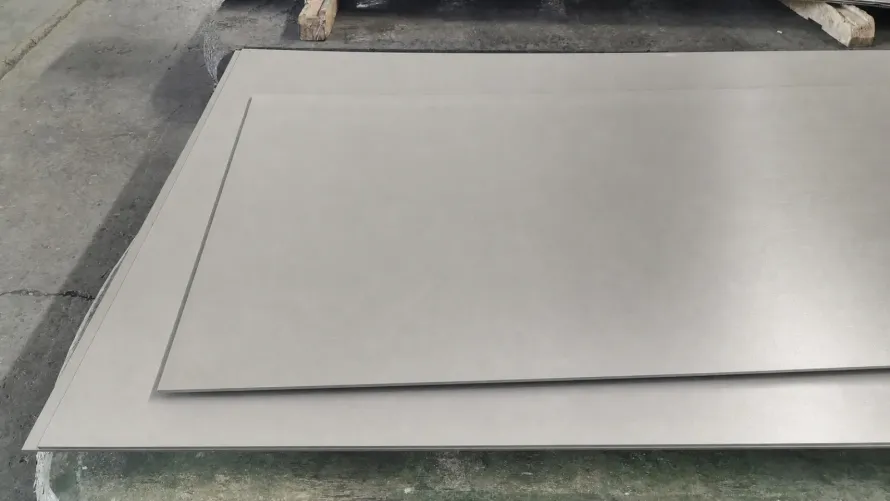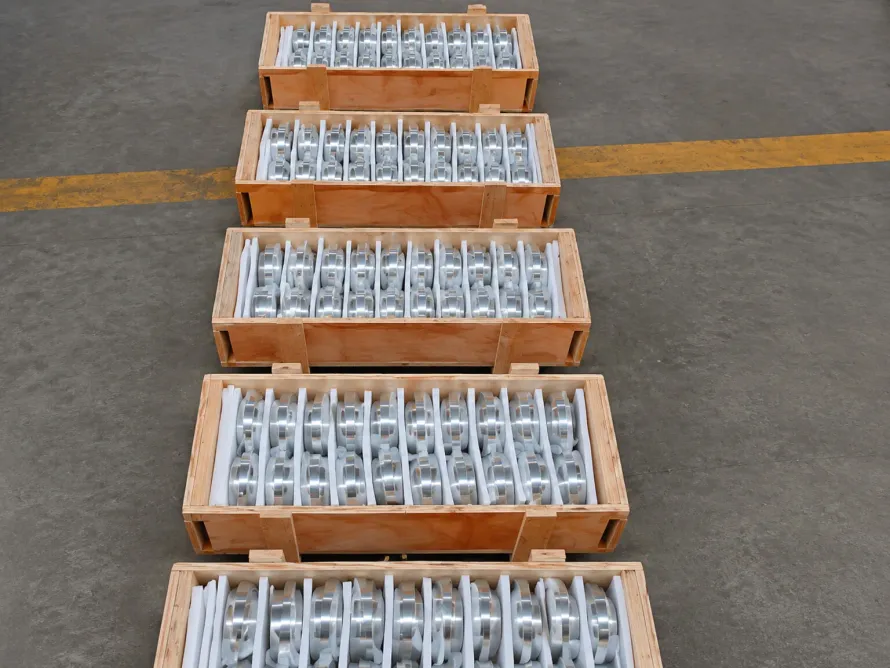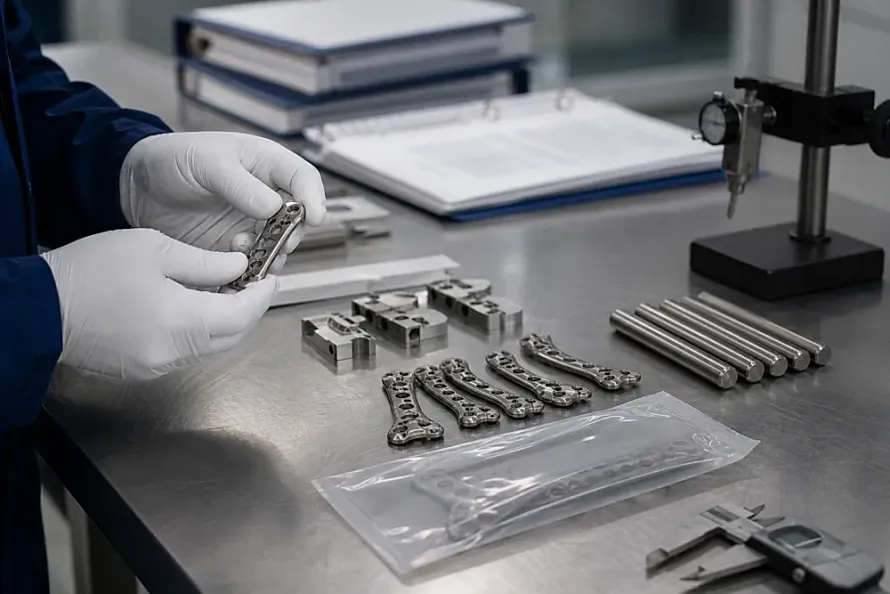
Titanium plate form shown for substrate context; the image does not identify the study alloy or laser-treated surface.
A peer-reviewed study published on September 21, 2026 applied the same femtosecond-laser and thermal-treatment framework to commercially pure titanium (cp-Ti) and Ti-6Al-4V plates, but did not obtain the same wettability state. The cp-Ti p10 surface reached a reported 0° water contact angle after the 350 °C treatment, while Ti-6Al-4V under the 350 °C route reached its best reported hydrophobic state at 137° after 15 days. For implant surface teams, the new result makes substrate identity and measurement age part of the recipe.
- Transfer boundary: a laser and furnace setting demonstrated on cp-Ti is not, by itself, a Ti-6Al-4V wettability specification.
- Biological boundary: the E. coli experiment was performed on cp-Ti surfaces; Ti-6Al-4V was the comparative wettability substrate, not a bacterial-test arm.
- Release use: retain separate substrate validation and define when contact angle is measured before using the route in a supplier or device change file.
The same processing framework produced different endpoints
Generic thermal-processing equipment illustrates the heat-treatment step; it is not the study furnace or evidence of its temperature cycle.
The researchers used 10 mm × 10 mm × 1 mm cp-Ti and Ti-6Al-4V plates. A 520 nm femtosecond laser produced cross-hatched microgrooves with 10, 50 and 100 μm pitches, about 10 μm depth and 800 nm laser-induced periodic surface structures. All samples received a 500 °C pre-treatment for 30 minutes, followed by two hours at room temperature, 150 °C or 350 °C.
On cp-Ti, the reported p10 result measured 24 hours after processing split sharply with temperature: 150 °C gave a 154° contact angle, while 350 °C gave 0°. The alloy comparison did not reproduce that switch. On Ti-6Al-4V, the best reported hydrophobicity occurred after 15 days, when the 350 °C p10 condition reached 137°.
That difference is the practical finding. The machine and furnace settings describe only part of the surface state. Substrate composition, the chemistry created at the surface and the age at which the endpoint is measured remain tied to the result. The paper discusses oxidation and surface-chemistry differences, but it does not supply a universal correction that converts the cp-Ti recipe into a Ti-6Al-4V target.
Time is part of the wettability specification
The cp-Ti p10 contact-angle series was followed for 50 days at room temperature and 30% humidity. The 150 °C condition remained stable for roughly the first 15 days, and the 350 °C condition for roughly the first seven days, before the reported contact-angle stability gradually declined. The Ti-6Al-4V comparison reached its best hydrophobicity after 15 days.
This means “contact angle after processing” is incomplete unless it includes the measurement age and storage condition. A 24-hour value, a 15-day value and a post-cleaning or post-sterilization value are not interchangeable. The study did not test the latter two, so it cannot establish cleaning or sterilization durability.
The bacterial result is cp-Ti-only
The study’s bacterial experiment used E. coli K12 on cp-Ti surfaces after UV sterilization, with one hour of exposure at 37 °C. It reports 682 CFU/mm² for the most hydrophobic cp-Ti condition and 32 CFU/mm² for the superhydrophilic condition. Those are study-specific early adhesion and colony results.
The paper explicitly describes Ti-6Al-4V as the comparative substrate for material-dependent wettability. It does not report the Ti-6Al-4V alloy as an E. coli test arm. The cp-Ti result therefore cannot be relabeled as Ti-6Al-4V antibacterial performance. It also does not establish sterilization, killing across organisms, in-vivo biofilm control, infection prevention or clinical benefit.
A transfer file should bind material, time and endpoint
For a supplier change or an implant surface-process review, the useful next step is not a generic “verify the process” instruction. It is to preserve the three links the study shows can break:
- bind the laser geometry and heat sequence to the actual substrate, rather than only to a machine recipe;
- define the contact-angle method, storage condition and measurement age that make the target reproducible; and
- support any bacterial claim on the same alloy, processed condition and relevant biological endpoint.
That three-part record is the usable boundary of this study: it preserves the substrate comparison without turning a plate-scale wettability result into a released manufacturing process or clinical claim.
Sources
- Chen, Y.-J. et al., “Controlling wettability of femtosecond laser-structured titanium implant surfaces for biological cultivation”, The International Journal of Advanced Manufacturing Technology, Version of Record published September 21, 2026; accessed September 22, 2026.