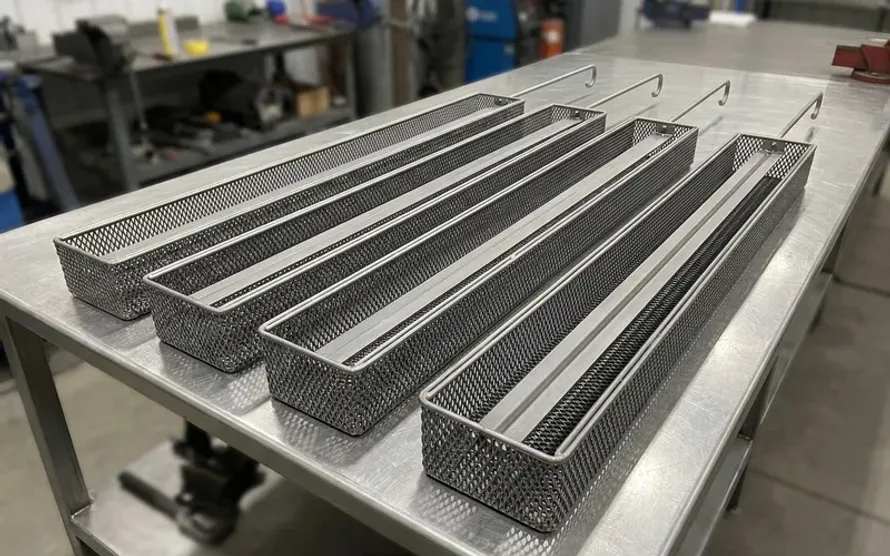
Beneath the sand cushion of a crude-oil aboveground storage tank (AST) or inside grouted slots along a coastal reinforced-concrete bridge pier, an Impressed Current Cathodic Protection (ICCP) anode grid becomes inaccessible the moment backfill or cementitious grout cures. Buried grids allow zero rework. When an improperly specified ribbon anode passivates 5 years to 8 years after commissioning—driving rectifier voltage to ceiling limits while steel potentials drop out of polarization—operators face multi-million-dollar tank cleanouts, deck demolition, or floor-plate perforation leaks.
Forensic failure audits show that premature ICCP breakdowns well short of a 50-year design target almost never stem from corrosion of the underlying titanium strip. Specification gaps cause early failure. Instead, project teams fall into three avoidable procurement traps: installing chlorine-evolving ruthenium-iridium coatings inside low-chloride acidifying sand beds, comparing bids by nominal “micron thickness” without locking XRF iridium mass loading (g/m²), and overlooking Grade 1 conductor-bar ductility and spot-weld resistance.
As an integrated titanium supply-chain platform working with certified partner facilities for petrochemical terminals, civil bridge contractors, and marine corrosion engineering firms worldwide, we translate NACE TM0108 qualification rules and 7-stage thermal sintering controls into enforceable RFQ clauses. Clear specs protect buried assets.
Matching Catalyst Chemistry and Ribbon Geometry: IrO₂-Ta₂O₅ Oxygen Evolution vs. RuO₂-IrO₂ Limits
When drafting cathodic-protection bills of materials, corrosion engineers must first align the mixed metal oxide (MMO) catalyst formulation with the exact anodic reaction occurring at the ribbon interface. Electrolyte chemistry governs coating choice. Certified partner coating lines enforce a strict operational boundary between the two industrial oxide families:
- Soil, Sand Cushions, and Concrete Pore Water Mandate IrO₂–Ta₂O₅ Oxygen-Evolving Coatings: Ternary ruthenium-iridium-titanium (RuO₂–IrO₂–TiO₂) coatings deliver low chlorine overpotential in chloride-saturated water (seawater intakes, electrochlorination cells at pH 2 to 12 and ≤ 60°C to 70°C), but inside tank-bottom sand pads, fresh damp soil, or alkaline concrete slots, water oxidation dominates and liberates hydrogen ions (H⁺) that drive local interfacial acidity down to pH 0 to 2. Acidic interfaces dissolve ruthenium fast. Ordering IrO₂–Ta₂O₅ MMO-coated titanium ribbon anodes stabilizes active iridium dioxide (IrO₂) crystals inside an inert tantalum pentoxide (Ta₂O₅) matrix, resisting acid dissolution across the entire pH 0 to 14 spectrum.
- Standard 6.35 × 0.635 mm and 12.7 × 0.9 mm Ribbons Paired with Grade 1 Conductor Bars: Partner slitting and coating lines maintain two primary flat-ribbon geometries—6.35 × 0.635 mm for standard AST sand beds and narrow bridge-deck saw cuts, and 12.7 × 0.9 mm for high-resistivity soils, large-diameter tank chimes, or extended current-distribution zones—both cross-welded to uncoated 12.7 × 0.9 mm ASTM B265 Grade 1 commercially pure titanium conductor bars. Stocked sizes stabilize project schedules. Because Grade 1 titanium holds the lowest interstitial iron and oxygen limits (partner melt controls cap O ≤ 0.20%, N ≤ 0.05%, H ≤ 0.015% with elongation ≥ 30%), coiled conductor strips bend cleanly around sump piping without cracking and form sound capacitive-discharge (CD) spot-weld nuggets.
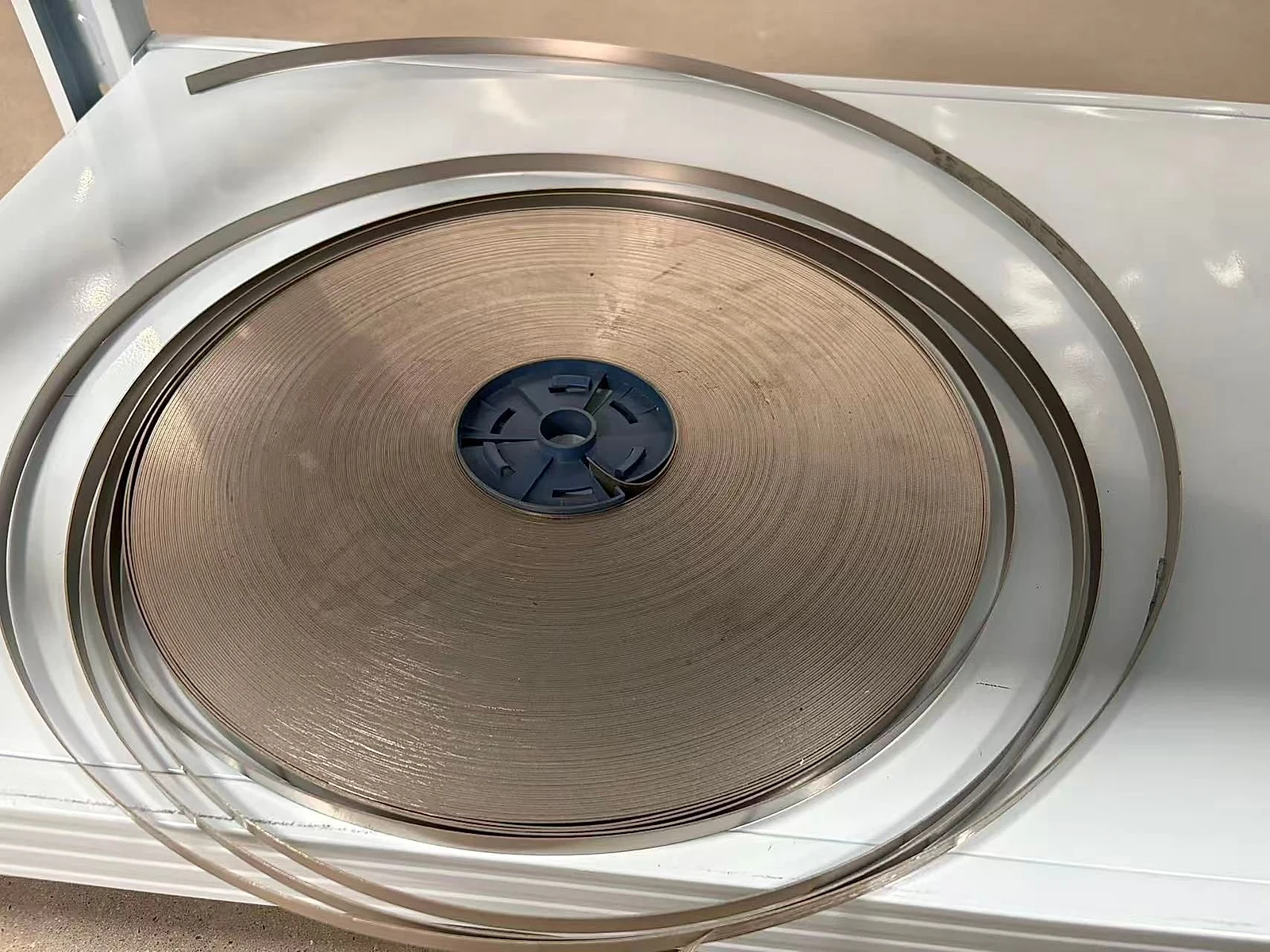 Figure 1: Uncoated 12.7 × 0.9 mm ASTM B265 Grade 1 commercially pure titanium conductor bar coil staged at a certified partner facility for orthogonal current distribution in storage-tank and bridge ICCP grids. High elongation (≥ 30%) supports tight field routing and reliable resistance spot welding.
Inside the 7-Stage Sintering Protocol: Why XRF Iridium Loading and NACE TM0108 Beat Micron Claims
Why do competing quotes for “ASTM B265 MMO ribbon anode” routinely diverge by 20% to 35% on identical project footage? Iridium mass drives real cost. When a tender specifies only a geometric target such as “coating thickness ≥ 3 μm,” low-bid coaters can bulk up precursor solutions with cheap titanium salts—forming non-catalytic TiO₂ that satisfies eddy-current or optical thickness gauges while cutting metallic iridium loading in half:
First, a disciplined 7-stage substrate preparation and 12-to-22-pass sintering cycle locks mechanical adhesion. Across certified partner lines producing industrial MMO titanium anodes and electrochemical electrodes, every ASTM B265 Grade 1 strip coil advances through 7 controlled stages: (1) ultrasonic alkaline degreasing; (2) abrasive grit blasting to strip mill passivity; (3) boiling oxalic-acid micro-etching to carve micro-scale anchor pits; (4) stoichiometric Ir–Ta alcoholate precursor blending; (5) automated roller or electrostatic application across 12 to 22 thin sequential passes; (6) low-temperature infrared solvent drying followed by 450°C to 550°C oxygen-rich thermal decomposition sintering after each pass (preventing mud-cracking seen in thick rush coats); and (7) lot-level XRF precious-metal assay plus accelerated electrolysis testing. Multi-pass sintering prevents delamination.
Second, combining XRF iridium loading (g/m²) with NACE TM0108 accelerated testing closes commercial loopholes. To guarantee a 50-year service envelope on tank bottoms and coastal bridges, buyers should mandate quantitative XRF iridium loading reports alongside NACE TM0108 accelerated life qualification in sulfuric acid electrolyte—verifying total ampere-hour capacity well beyond field operating densities of 2 mA/m² to 110 mA/m². Verified iridium guarantees fifty years. For reinforced-concrete bridge decks and tidal marine pilings, engineers also specify expanded MMO titanium mesh ribbon anodes (typically 10–20 mm wide), allowing cementitious grout to key mechanically through diamond openings against freeze-thaw shear.
| ICCP Service Environment | Standard Anode Form & Dimensions | Required MMO Catalyst System | Partner Process & Qualification Gate | Buyer IQC & Field Installation Check |
|---|---|---|---|---|
| AST Bottom Sand Cushions (Low-Cl⁻ damp sand, local pH 0–2) | Flat ribbon 6.35 × 0.635 mm or 12.7 × 0.9 mm on coils | IrO₂–Ta₂O₅ oxygen-evolving coat (pH 0–14) | 7-stage prep, 12–22 coats (450–550°C), NACE TM0108 50-year life | Audit MTC & XRF Ir loading (g/m²); reject Ru–Ir substitutes |
| Concrete Bridges & Marine Piles (Mortar-grouted slots, chloride ingress) | Flat 6.35 × 0.635 mm or expanded mesh ribbon (10–20 mm wide) | IrO₂–Ta₂O₅ acid-resistant oxygen coat | Boiling oxalic etch + 180° bend adhesion check without flaking | Verify plastic rebar spacers, grout interlock & zero rebar shorts |
| Orthogonal Current Feed Grid (Voltage-drop control across zones) | Uncoated flat bar 12.7 × 0.9 mm (ASTM B265 Grade 1) | Clean annealed-and-pickled pure Ti (oxide-free) | O ≤ 0.20%, H ≤ 0.015%, elongation ≥ 30%, burr-free slit edges | Apply 2–4 CD resistance spot welds per joint; ban high-heat TIG |
| Seawater Intake Reference (Flowing high-Cl⁻ water, pH 2–12, ≤ 60–70°C) | Tubular, rod, or heavy mesh panels (not sand-bed ribbon) | RuO₂–IrO₂–TiO₂ chlorine-evolving coat | Chloride/temp-matched Ru:Ir molar ratio + accelerated life test | Never cross-deploy seawater Ru–Ir anodes into soil or tank sand beds |
Four RFQ and Incoming Inspection Rules for 50-Year Cathodic Protection Grids
Anode ribbon and conductor bar materials typically represent less than 15% of a turnkey ICCP installation budget, yet their oxide stability dictates whether the structure runs maintenance-free for half a century. Small material budgets carry huge risk. Corrosion engineering teams and EPC buyers can lock out premature grid failure with four explicit purchase-order clauses:
- State Exact Strip Cross-Sections, Coil Lengths, and IrO₂–Ta₂O₅ Chemistry on the PO: Call out 6.35 × 0.635 mm or 12.7 × 0.9 mm ribbon dimensions (commonly supplied on 76 m / 250 ft or 152 m / 500 ft reels) alongside matching 12.7 × 0.9 mm ASTM B265 Grade 1 conductor bars, explicitly naming IrO₂–Ta₂O₅ rather than generic “MMO.” Explicit chemistry stops substitutions.
- Require Quantitative MTCs, Batch XRF Loading Logs, and NACE TM0108 Life Reports: Allow 2 to 5 days after mechanical, chemical, and XRF testing concludes for formal Material Test Certificate (MTC) issuance, confirming 100% heat/lot number traceability from primary VAR titanium ingot through slitting coils to 450°C–550°C sintering furnace batches (independent third-party re-testing can be arranged on request). Traceable lot records simplify handovers.
- Standardize Field Capacitive-Discharge (CD) Spot Welding and Waterproof Cable Seals: Specify portable CD spot welders (2–4 nuggets per orthogonal 12.7 × 0.9 mm conductor intersection, holding joint resistance near 0.001 Ω) and ban open-arc TIG welding on coated ribbons; encapsulate power-feed crimp sleeves in dual-wall heat-shrink and epoxy resin. Cool spot welds protect coatings.
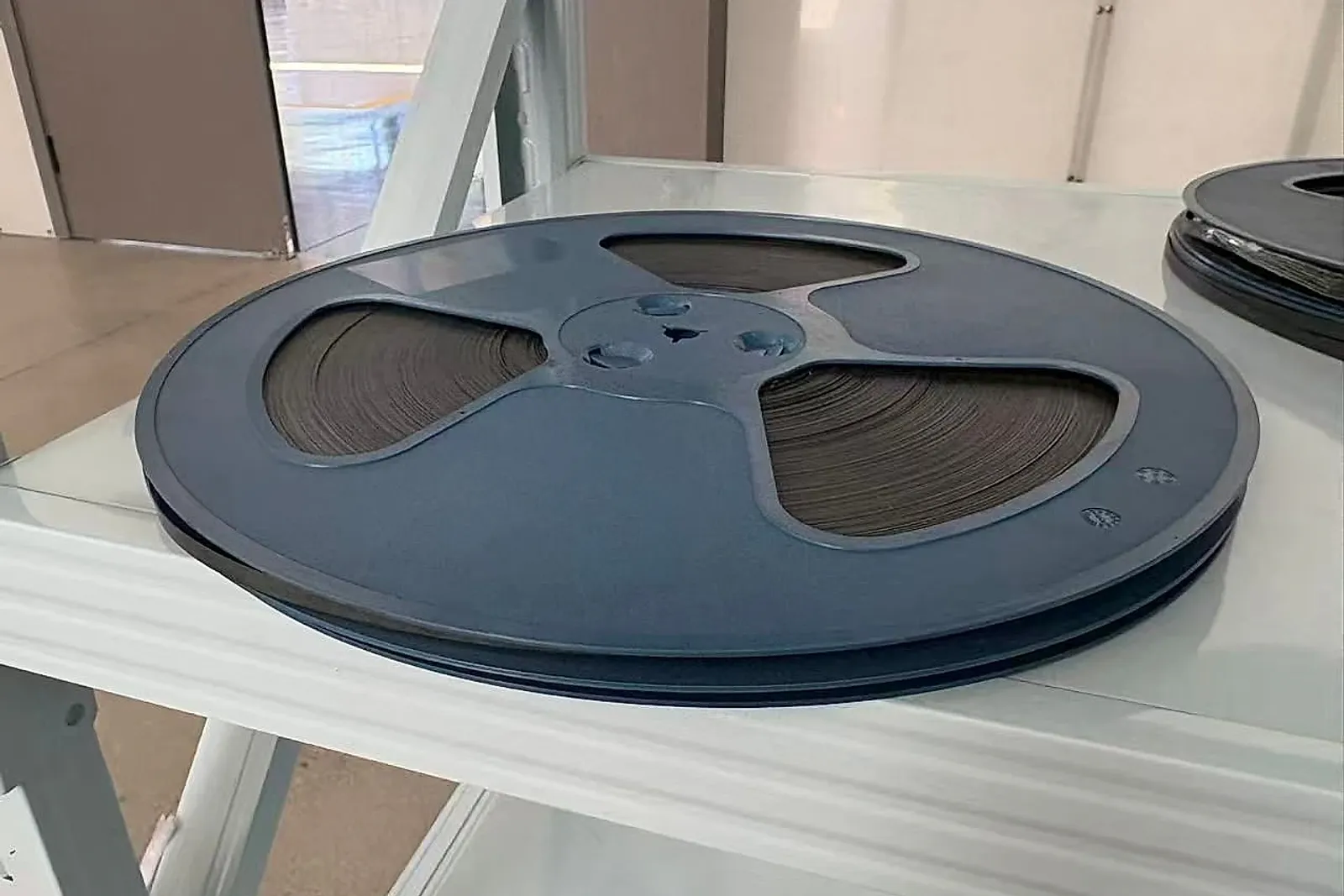
- Mandate Plastic Reel Winding and Abrasion-Proof ISPM 15 Export Crating: Sintered micro-crystalline oxide layers resist strong acid polarization but can be gouged by loose steel strapping; require winding onto high-impact ABS/PP spools interleaved with white EPE foam, desiccant barrier bags, and ISPM 15 plywood crates shipped FOB China main port. Proper spooling prevents transit scrapes.
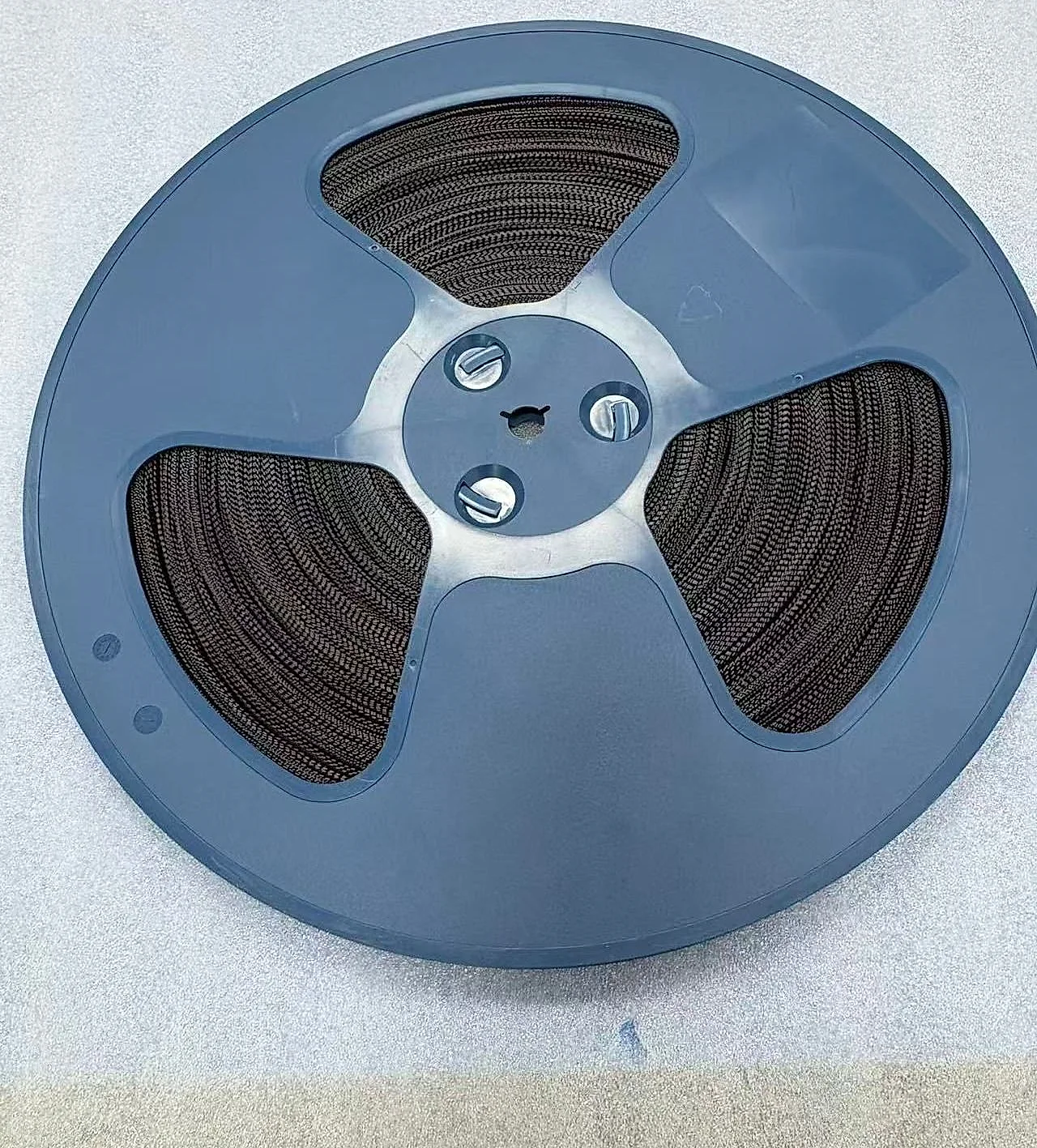 Figure 2: IrO₂–Ta₂O₅ sintered MMO titanium mesh ribbon anode wound onto an industrial plastic reel over protective EPE foam cushioning prior to export crating at a certified partner facility. Diamond mesh openings provide mechanical mortar interlock inside bridge-deck and marine-piling ICCP slots.
If your corrosion engineering team is sizing ICCP anode grids for aboveground storage tanks, buried concrete pipelines, or coastal bridge rehabilitations, submit your design current density, grid spacing, and target life via our online RFQ and complimentary ICCP anode specification audit portal to review redacted MTC, XRF precious-metal loading, and NACE TM0108 qualification records. Pre-bid verification secures fifty-year protection.