In hydrometallurgy, sodium hypochlorite generation, printed circuit board electroplating, and cathodic protection, mixed metal oxide (MMO) titanium anodes are critical electrocatalytic components. Operational environments are severe. However, procurement teams frequently encounter two common pitfalls when drafting technical requests for quotation (RFQs): confusing chlorine-evolution coatings with oxygen-evolution systems—leading to premature passivation—and incorrectly attempting to verify thin film thickness with handheld paint gauges.
At our certified partner facilities, electrochemical engineers prioritize operating chemistry and precious metal loading over superficial thickness metrics. Hard data governs performance.
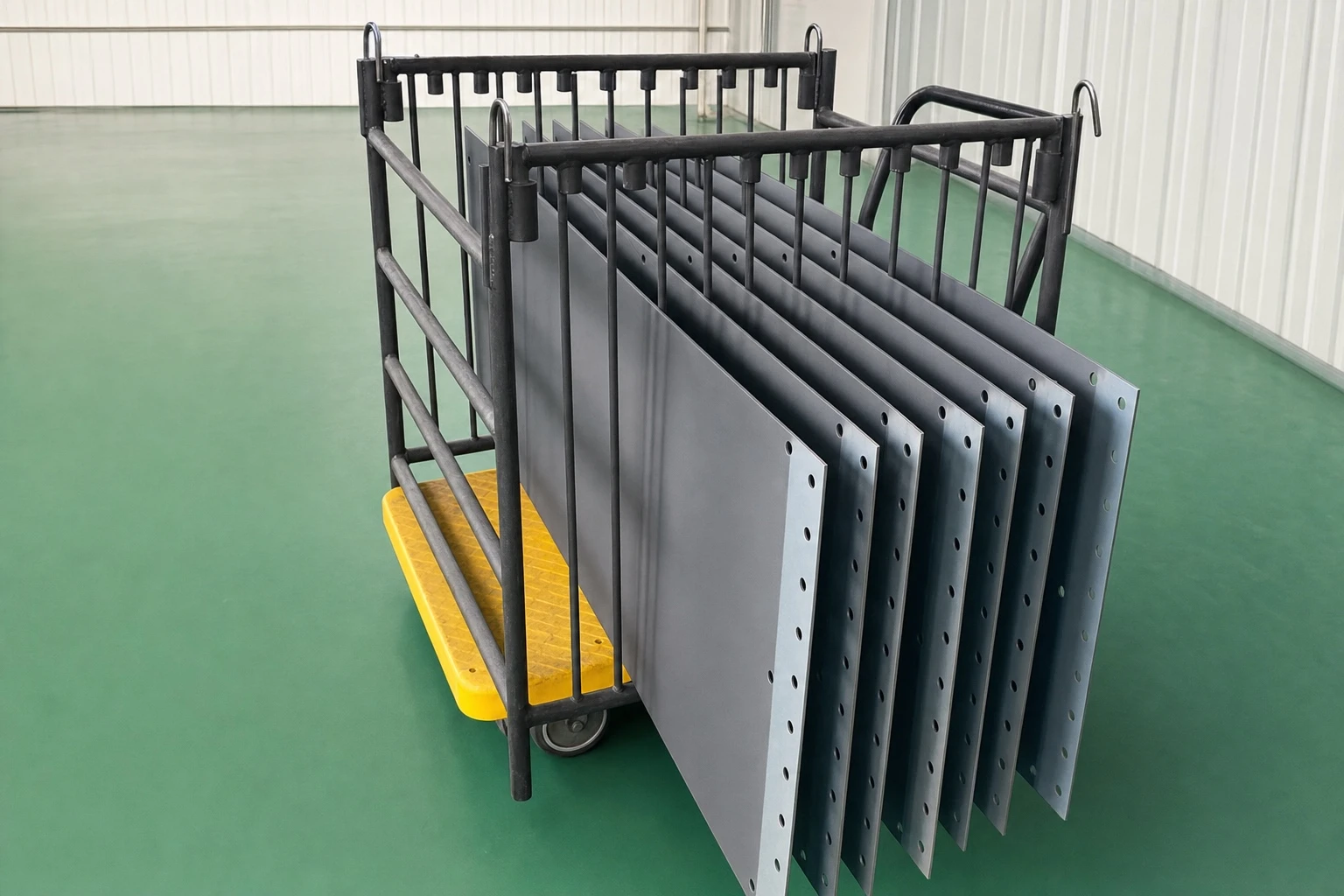
Chlorine (Ru-Ir) vs. Oxygen (Ir-Ta) Evolution: Fundamental Chemistry
The catalytic mechanism of an MMO titanium anode relies on a nanostructured solid-solution oxide film thermally sintered onto an etched titanium substrate. Chemistry dictates operational life.
Based on technical operational data from certified partner facilities, commercial MMO coatings are divided into two distinct electrochemical systems:
- Ruthenium-Iridium System ($\text{RuO}_2\text{-IrO}_2\text{-TiO}_2$, Chlorine-Evolving): Engineered exclusively for chloride-rich electrolytes ($\text{Cl}^-$). Standard applications include chlor-alkali membrane cells, on-site sodium hypochlorite generators, ballast water treatment, seawater electrolysis, and chloride effluent treatment. Ruthenium oxide provides a low chlorine-evolution overpotential and high electrocatalytic efficiency at competitive costs. However, it degrades rapidly in acidic, chloride-free oxygen-evolving solutions.
- Iridium-Tantalum System ($\text{IrO}_2\text{-Ta}_2\text{O}_5$, Oxygen-Evolving): Formulated for strongly acidic, sulfate-based, or chloride-free environments. Typical duties include copper foil electrodeposition, continuous steel sheet galvanizing, aluminum anodizing, acidic wastewater neutralization, and impressed current cathodic protection (ICCP). In these systems, water molecules decompose to evolve oxygen gas ($\text{O}_2$). Tantalum pentoxide ($\text{Ta}_2\text{O}_5$) acts as a chemically inert stabilizing matrix, preventing hyper-oxidation and dissolution of iridium.
Selection demands exact chemistry. If a buyer installs an economical Ru-Ir coating in an acidic sulfate bath, the high oxygen-evolution overpotential causes active crystallites to spall off within weeks, passivating the titanium substrate and halting cell operations.
Technical Parameters: Ru-Ir vs. Ir-Ta Specifications
When preparing technical specifications or evaluating competitive supplier bids, procurement teams should benchmark parameters against the table below:
| Technical Parameter | Chlorine-Evolving (Ru-Ir System) | Oxygen-Evolving (Ir-Ta System) | Procurement & Inspection Focus |
|---|---|---|---|
| Active Catalytic Formula | $\text{RuO}_2 + \text{IrO}_2 + \text{TiO}_2$ solid solution | $\text{IrO}_2 + \text{Ta}_2\text{O}_5$ composite phase | Never specify Ru systems for oxygen evolution |
| Primary Evolved Gas | Chlorine ($\text{Cl}_2$) | Oxygen ($\text{O}_2$) | Verify trace anions in the electrolyte |
| Electrolyte Operating Window | Brine ($\text{NaCl}$), seawater, chloride solutions | $\text{H}_2\text{SO}_4$, nitric acid, organic acid streams | Ensure fluoride ($\text{F}^-$) remains $< 5\text{ mg/L}$ |
| Substrate Grade | ASTM B265 Grade 1 commercially pure titanium | Grade 1 or Grade 2 titanium | Avoid two-phase alloys like Grade 5 |
| Noble Metal Loading | $8\text{ to }12\text{ g/m}^2$ (combined Ru+Ir basis) | $12\text{ to }25\text{ g/m}^2$ (net iridium element basis) | Specify net elemental mass via XRF spectrometry |
| Accelerated Life Expectancy | $\ge 120\text{ h}$ (in $1\text{ mol/L H}_2\text{SO}_4$, $1\text{ A/cm}^2$) | $\ge 200\text{ to }500\text{ h}$ (dependent on loading) | Benchmark per HG/T 2471 or NACE TM0108 |
| Primary Failure Mechanism | Oxidation of ruthenium into soluble ruthenates | Gradual mechanical wear and dissolution of iridium | Maintain recommended anode-cathode gaps |
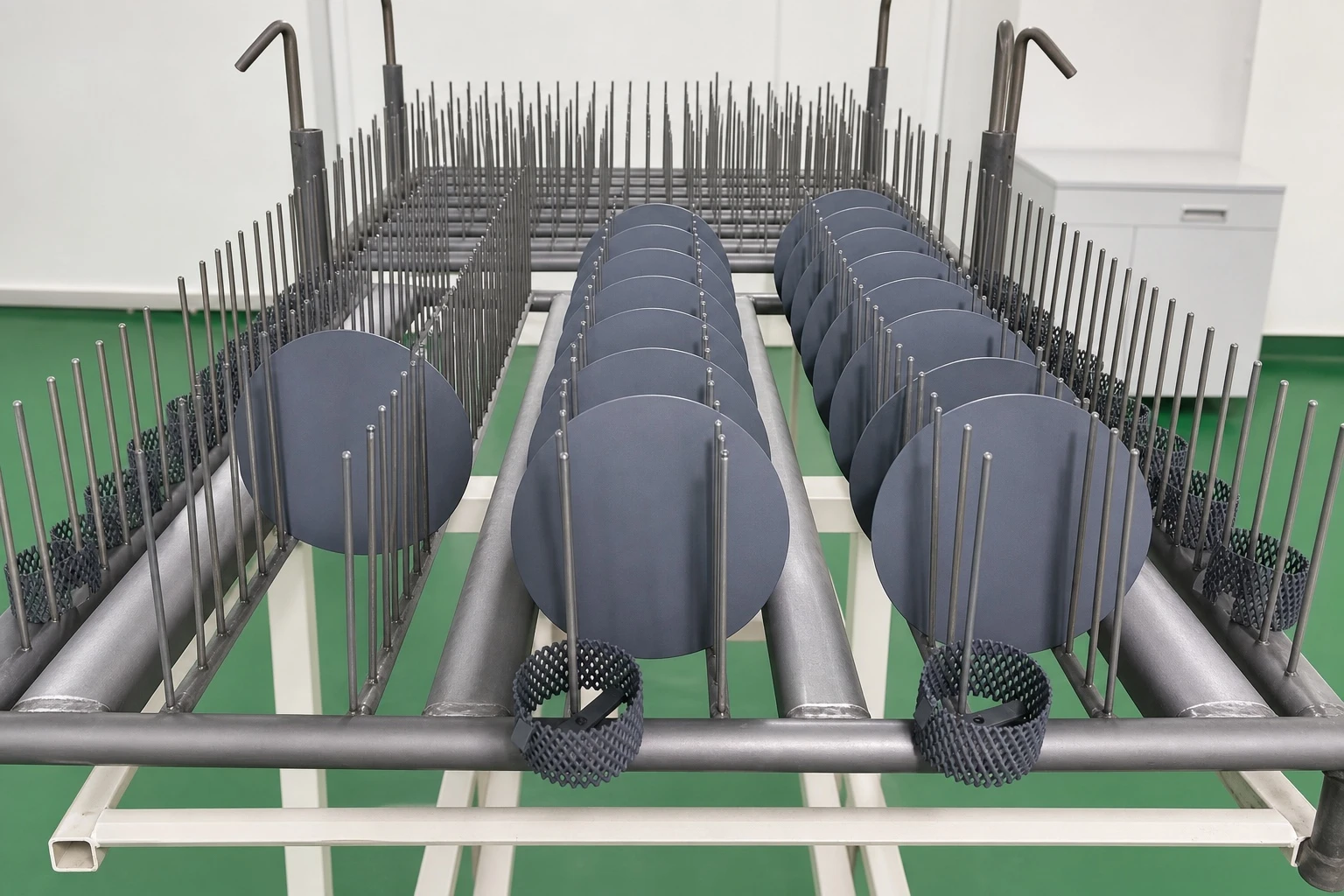
Why Handheld Thickness Gauges Invariably Fail
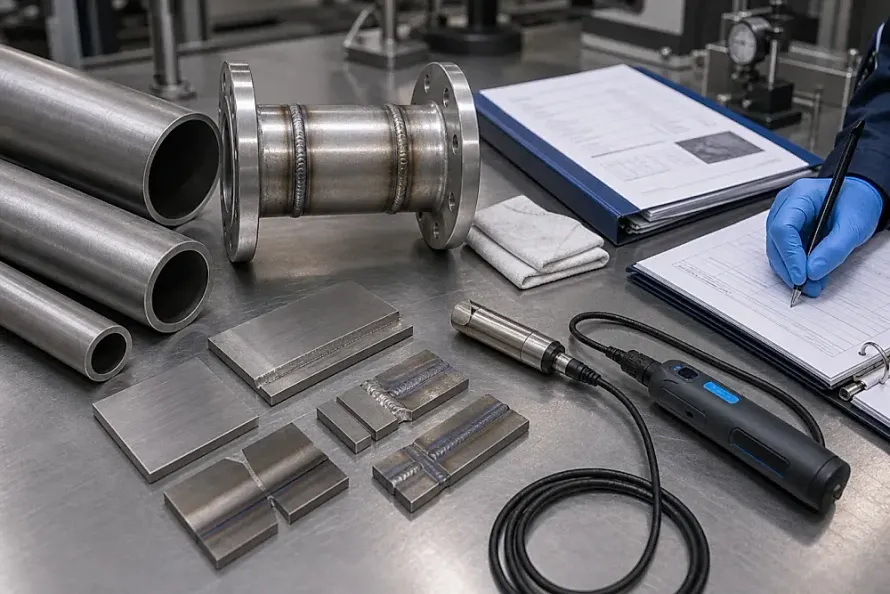
Incoming quality control personnel occasionally attempt to measure MMO coating thickness using portable magnetic or eddy-current dry-film gauges. This approach is fundamentally flawed. Physical coating thickness ranges between $5\text{ to }20\text{ }\mu\text{m}$.
Substrate roughness distorts signals. Unlike non-conductive epoxy or polyurethane coatings, thermally decomposed ruthenium and iridium oxides are electrically conductive. When an eddy-current probe contacts this porous layer, electromagnetic signals penetrate the film and interact directly with the titanium substrate, producing erratic values. Furthermore, standard acid-etched titanium substrates feature surface roughness profiles exceeding $Ra \ge 3.5\text{ }\mu\text{m}$, creating peak-to-valley variations where readings scatter by more than 60%.
Industrial standards rely on elemental loading. Buyers should mandate certified X-ray fluorescence (XRF) spectrometry reports measuring net noble metal mass per unit area ($\text{g/m}^2$). For capital-intensive chemical plants, buyers should require coupon sampling for accelerated life testing in $1\text{ mol/L H}_2\text{SO}_4$ at $1\text{ A/cm}^2$ per HG/T 2471. Standards leave no ambiguity.
Standard 7-Step Thermal Decomposition Manufacturing Process
Long-term anode durability depends on the metallurgical adhesion between the mixed oxide layer and the titanium substrate. Process discipline governs reliability.
At certified partner facilities, compliant MMO titanium anodes undergo seven strict thermal processing stages:
- Substrate Degreasing and Abrasive Blasting: Cut titanium mesh or plate is degreased in alkaline wash and blasted with clean corundum grit to achieve $Ra \ge 3.5\text{ }\mu\text{m}$. Surfaces must remain pristine.
- Boiling Oxalic Acid Micro-Etching: The substrate is etched in boiling oxalic acid to remove passive oxide scale, producing a micro-porous mechanical anchoring surface. Micro-pits anchor the crystallites.
- Precision Precursor Formulation: High-purity Ru, Ir, and Ta chloride alcoholic precursor solutions are prepared to stoichiometric proportions and applied via automated spray or lint-free brushing. Uniform application is mandatory.
- Low-Temperature Infrared Drying: Coated substrates dry at $100\text{ to }150\text{ }^\circ\text{C}$ in an infrared chamber to evaporate organic solvents without blistering. Heating must stay gradual.
- Atmospheric Muffle Furnace Sintering: The dry substrate is oxidized at $450\text{ to }500\text{ }^\circ\text{C}$ in an oxygen-rich furnace, converting metal chlorides into conductive nano-crystalline oxides. Thermal control is exact.
- Multi-Pass Repetitive Sintering (12 to 25 Cycles): A single coating cycle deposits only $0.5\text{ to }1.0\text{ g/m}^2$ of noble metal. Achieving specified loadings requires repeating steps 3 through 5 for 12 to 25 cycles. Substandard workshops cut 5 to 8 passes to trim labor and materials. Shortcut methods compromise adhesion.
- Final Post-Bake Homogenization Anneal: Completed anodes undergo extended soaking in an annealing furnace to relieve lattice micro-stresses and densify the oxide film. Microstructures achieve stability.
Technical RFQ Checklist: Engineering Input Requirements
To avoid costly procurement errors and operational downtime, technical procurement teams should document five core inputs when issuing RFQs:
Operating chemistry dictates material selection. Specify all chemical constituents, total dissolved solids, and trace contaminants—especially fluoride ($\text{F}^-$), which attacks titanium at concentrations exceeding $5\text{ mg/L}$. Chemistry limits matter.
Current density and polarity switching determine loading. State normal operating current densities ($\text{A/m}^2$) and whether the system runs periodic current reversal (PCR), which requires specialized protective intermediate layers. Polarity must be identified.
Precious metal mass must be quantified numerically. State exact net elemental requirements (such as $\text{Ir} \ge 15\text{ g/m}^2$) rather than ambiguous overall film thicknesses. Ambiguity creates commercial risk.
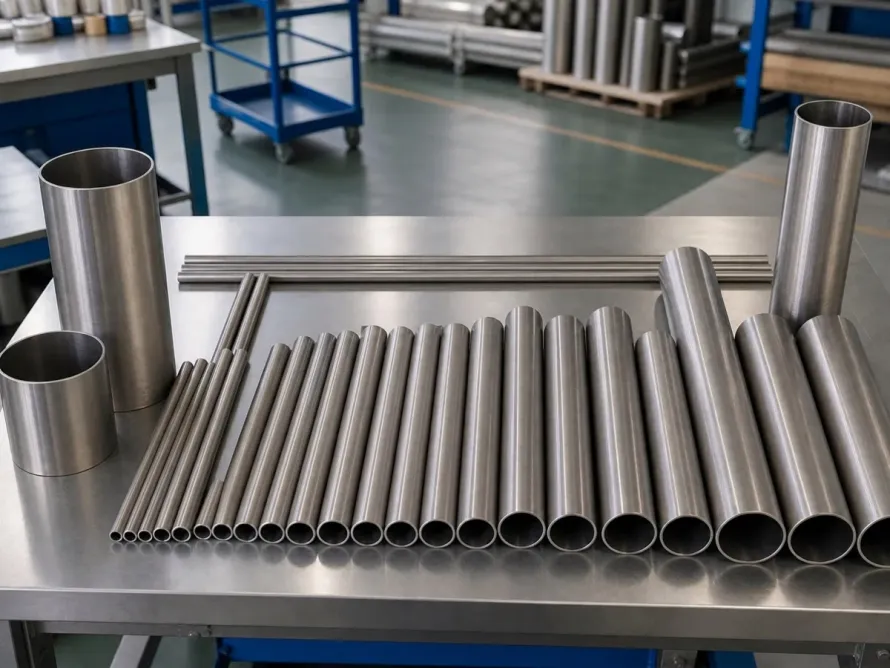
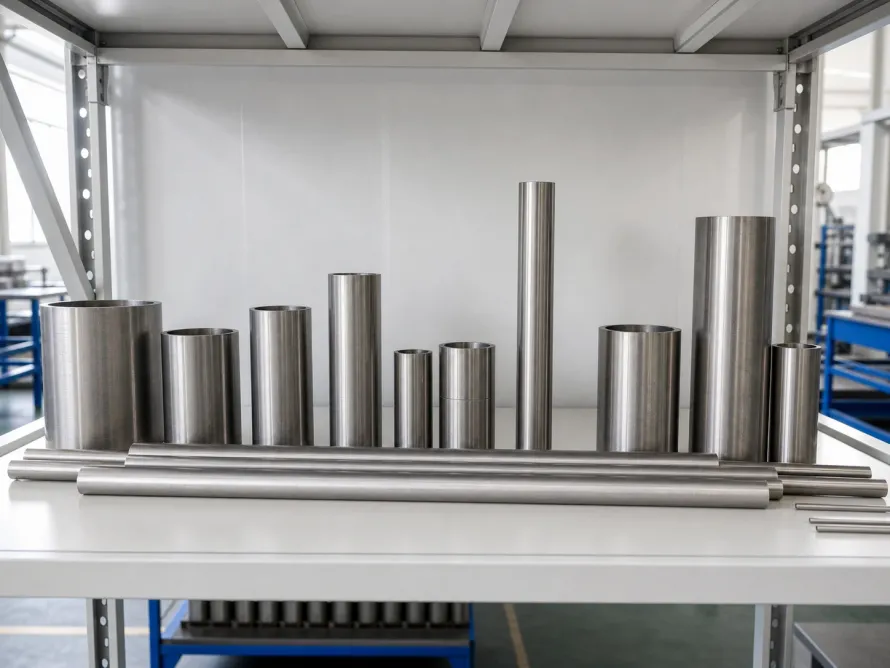
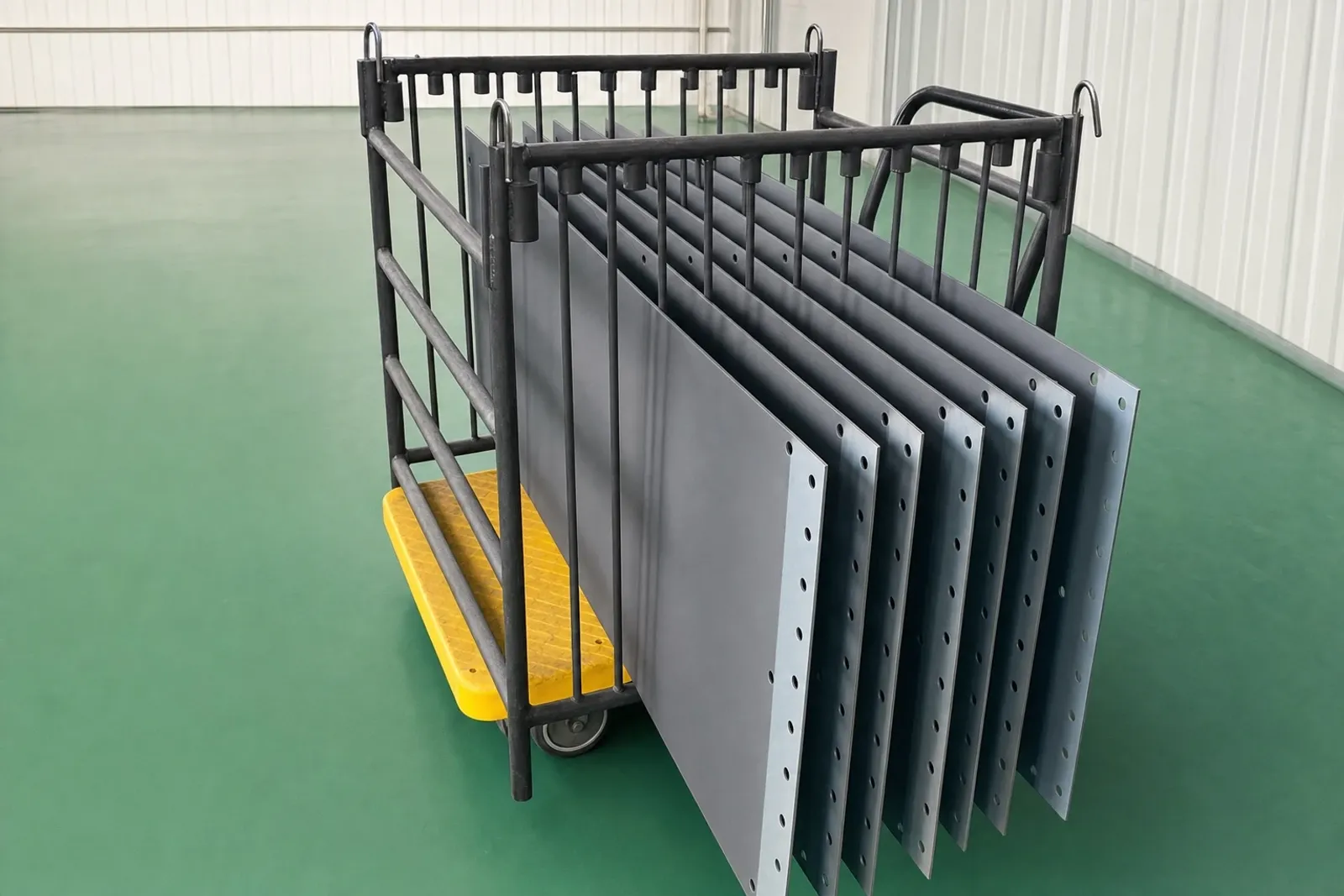
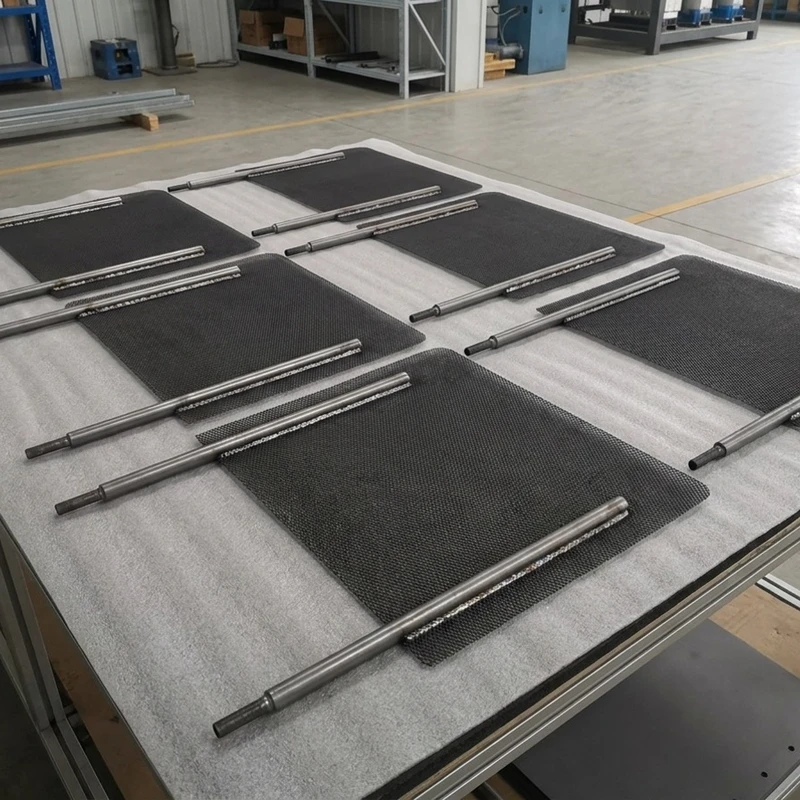
Mechanical geometry impacts cell hydraulics. Detail plate, mesh, or tubular configurations, expanded mesh strand dimensions (LWD/SWD), frame stiffeners, and titanium-clad copper busbar joints. Tolerances must align cleanly.
Material test certificates (MTC) verify authenticity. Request a certified material test certificate (MTC) with heat/lot number traceability and XRF surface mapping reports covering every production batch. Documentation protects investments.
As an integrated titanium supply-chain platform working with certified partner facilities, our engineering specialists conduct complimentary pre-RFQ technical drawing and specification reviews. Direct alignment saves resources. Engineers can submit electrolyte specifications at /get-quote/ to request coating recommendations or calculate structural metal requirements at /tools/.