Quick Answer: When purchasing 0.05 mm, 0.10 mm, or 0.20 mm cold-rolled titanium foil for hydrogen PEM bipolar plates, acoustic speaker diaphragms, or vacuum brazing shims, never rely on generic ASTM B265 thickness tables—explicitly specify 20-high Sendzimir precision gauge tolerance (±0.005 mm at 0.10 mm), Grade 1 extra-low-oxygen chemistry (O <= 0.10% for deep stamping), bright vacuum-annealed (M) temper for forming or as-rolled (Y) temper for flat shims/diaphragms, and ASTM E112 grain size No. 7–9.
Because thin titanium foils represent only 3–8 grains across a 0.10 mm cross-section, subtle shifts in oxygen content, rolling crown, or annealing grain coarsening immediately cause micro-channel tearing or orange-peel surface roughness during stamping.
1. Precision Thickness Tolerance & Width Capability (20-High Mill vs. Standard ASTM B265)
| Nominal Foil Thickness | Standard ASTM B265 Tolerance | 20-High Precision Mill Tolerance | Max Slit Coil Width | Typical Applications |
|---|---|---|---|---|
| 0.02 – 0.04 mm | Not tightly defined | ±0.003 – ±0.004 mm | 150 – 300 mm | Tweeter acoustic diaphragms, RF shields, X-ray windows |
| 0.05 – 0.08 mm | Too wide for stamping | ±0.004 – ±0.005 mm | 300 – 450 mm | PEMFC ultra-thin bipolar plates, micro-bellows |
| 0.10 mm | ±0.025 mm (unusable for dies) | ±0.005 – ±0.006 mm | 300 – 600 mm | Automotive/stationary fuel-cell bipolar plates |
| 0.15 – 0.20 mm | ±0.025 – ±0.030 mm | ±0.008 – ±0.010 mm | 400 – 650 mm | PEM electrolyzer separator plates, heat-shield shims |
2. Temper Selection: Vacuum-Annealed (M) vs. Cold-Rolled Hard (Y)
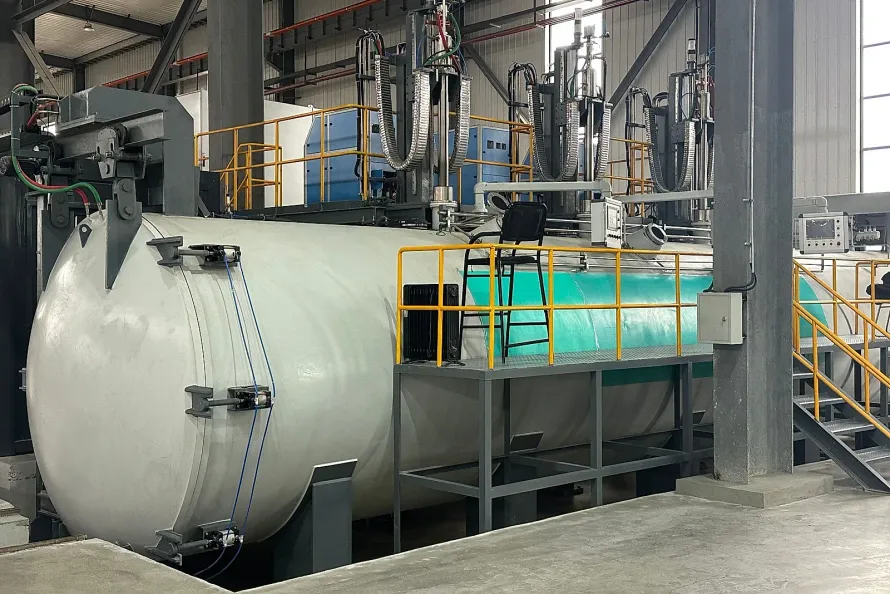
- Bright Vacuum-Annealed (M Temper — Soft/Ductile): Annealed at ~600–680°C under high vacuum (<10⁻³ Pa) to deliver a mirror-clean oxide-free surface, yield strength 150–210 MPa, and elongation 28–38%. Mandatory for hydroforming or progressive stamping of PEM bipolar plates and deep-drawn housings.
- Cold-Rolled / Half-Hard to Full-Hard (Y Temper): Retains cold-work strain hardening (UTS 450–650+ MPa in Grade 1/2; >800 MPa in cold-rolled TB5 beta strip). Preferred for precision mechanical shims, flat acoustic tweeter domes requiring high stiffness-to-weight acoustic velocity, and tensioned membranes.
- Surface Roughness (Ra) Control: For PVD carbon/gold/platinum coated bipolar plates, specify Ra <= 0.2–0.4 µm bright rolled finish free of rolling-oil stain so PVD coatings adhere without pinholes.
3. Why Grain Size & Oxygen Content Decide Stamping Yield
In 0.10 mm Grade 1 titanium foil, if vacuum annealing temperature runs too high and grains coarsen past 40–50 µm (ASTM E112 No. 6 or coarser), there are only 2 grains spanning the entire wall thickness. Under stamping tension, localized shear bands open pinholes along flow-field channel corners.
- Target Fine Equiaxed Grains: Specify ASTM E112 No. 7.5 to 9.0 (15–25 µm average grain diameter) for balanced formability and smooth stamped radii.
- Deep-Draw Oxygen Ceiling: Standard Grade 1 allows up to 0.18% oxygen, but high-depth bipolar plate stamping performs far more consistently when oxygen is capped at <=0.08–0.10% and iron at <=0.05–0.08%.
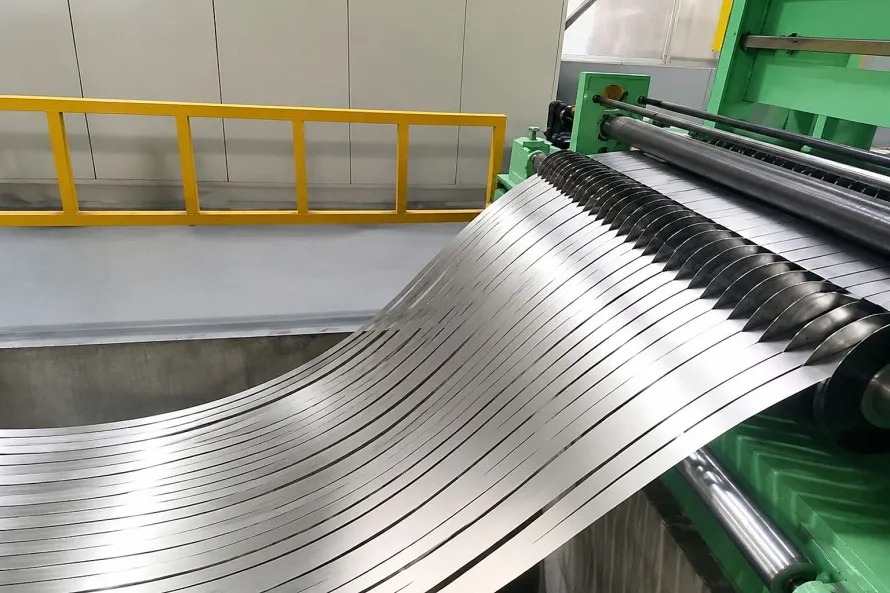
- Edge Camber & Slitting Burr: For automated progressive coil stamping, specify slit edge burr <= 5% of thickness and camber <= 1.0 mm per 1,000 mm on 150 mm or 300 mm ID fiber/steel cores.