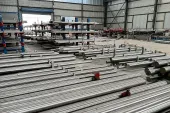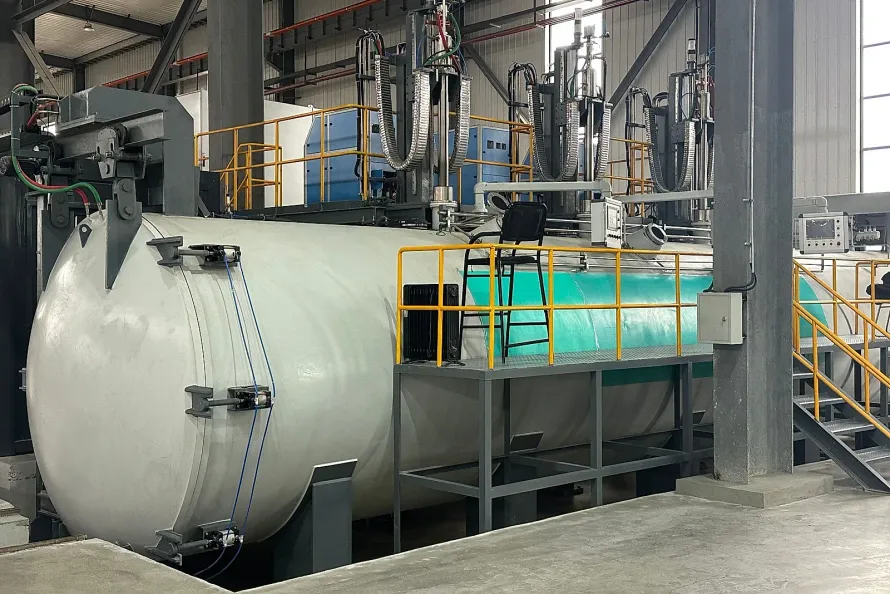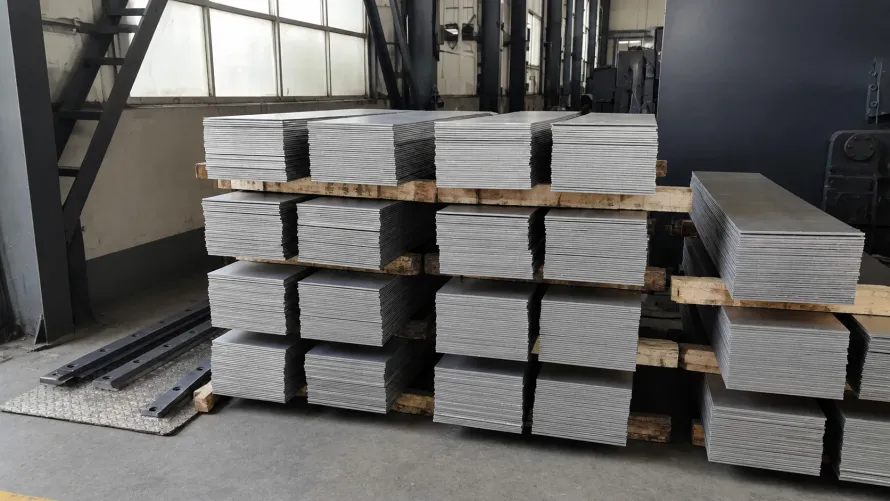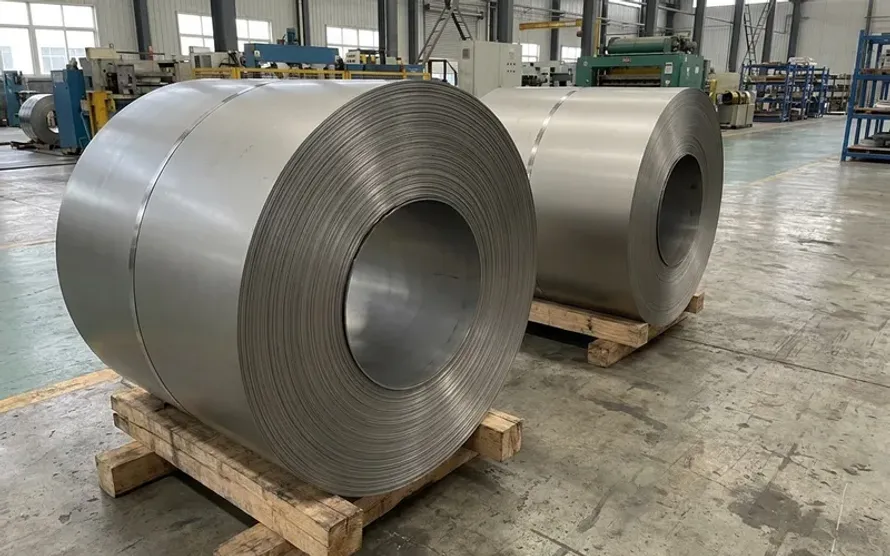
When sourcing 6 mm to 100 mm heavy titanium plate for pressure-vessel tubesheets, aerospace structural bulkheads, subsea offshore flanges, or semiconductor vacuum chamber bases, the primary blanking method determines whether downstream CNC spindles run smoothly or stall over shattered inserts. Wrong cutting choices wreck tooling. Mechanical buyers accustomed to oxy-fuel or plasma-cutting carbon steel frequently apply the same thermal blanking habits to heavy titanium—only to receive ceramic-hard edges that chip solid-carbide end mills on the first pass or crack along heat-affected weld bevels during hydrostatic proof testing.
Titanium carries an unforgiving metallurgical memory for thermal cutting heat. Hot titanium absorbs air rapidly. Once an unshielded cut face climbs past 500°C to 600°C in open air, oxygen and nitrogen diffuse into the surface lattice to form an oxygen-stabilized, zero-ductility α-case layer.
As an integrated titanium supply-chain platform working with certified partner facilities for global equipment manufacturers, we outline shop-floor blanking rules, edge-allowance tolerances, and landed-cost math comparing abrasive waterjet, horizontal CNC band sawing, and plasma cutting. Upfront blanking discipline protects margins.
Why Cold Cutting Dominates: Zero-HAZ Advantages of Abrasive Waterjet and Precision Band Sawing
Across certified partner plate processing centers, ASTM B265 industrial and structural heavy titanium plate from 6 mm to 100 mm defaults to cold-cutting routes for one overriding reason: preventing any heat-affected zone (HAZ) or oxygen-enriched skin from forming at the cut perimeter. Cold cutting eliminates edge hardening. Depending on part contour and cross-section, two primary cold processes split the workload:
- Ultra-High-Pressure Abrasive Waterjet Cutting — First Choice for Contours and High-Value Alloy Nesting: Pressurized water entraining garnet abrasive erodes titanium at ambient temperature, keeping the kerf wall cool and leaving base-metal alpha-beta microstructure completely unaltered. Nested waterjet layouts save alloy. When cutting ring flanges, perforated baffle blanks, or irregular brackets, custom ultra-high-pressure waterjet cutting services enable tight common-line and part-in-part nesting on a single master plate to minimize costly scrap; machinists need only a light cleanup pass (1.0 mm to 2.0 mm per side to remove slight jet taper and matte striation) before 5-axis finishing or weld-bevel machining.
- Horizontal CNC Band Sawing — Workhorse for Rectangular Bars and Heavy Square Blanks: For straight guide bars, die blocks, and thick rectangular billets, partner shops run rigid dual-column horizontal CNC band saws fitted with carbide-tipped blades under high-volume flood emulsion coolant at controlled low feed rates. Straight saw kerfs cut cleanly. Shop cost tracking shows precision band-saw cutting adds roughly USD 0.55 to USD 0.70/kg, delivering plumb, taper-free faces with zero embedded abrasive while keeping chip-evacuation and blade-breakage risk upstream at the plate center.
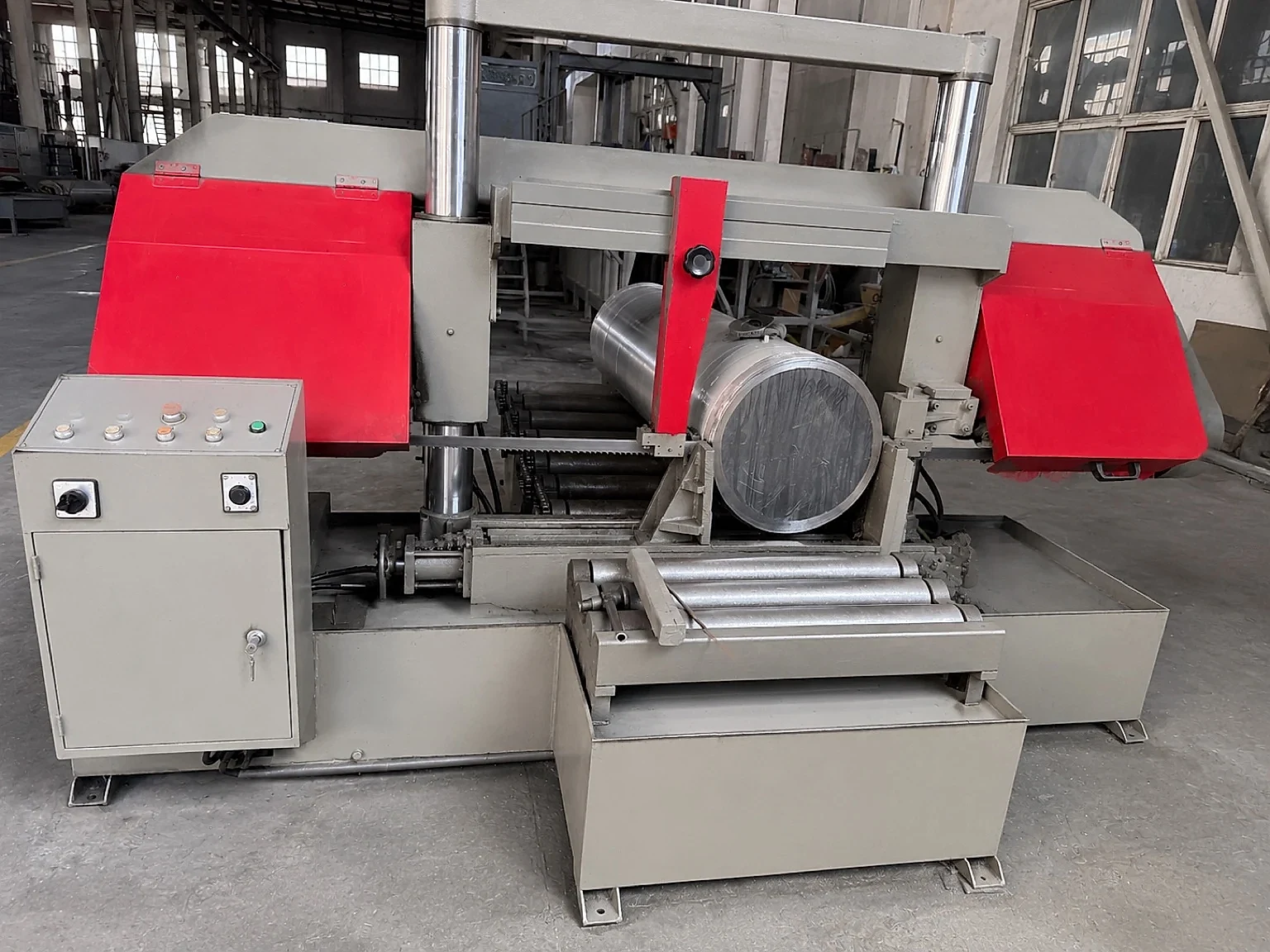 Figure 1: Dual-column horizontal CNC band saw cutting heavy titanium stock under flood coolant at a certified partner facility. Carbide-tipped blades prevent thermal discoloration. Incoming QA teams verify cut squareness and zero heat-affected edge tint before CNC clamping.
The Hidden Price of Plasma Cutting: Mandatory 3 to 5 mm Milling Allowances and 100% Alpha-Case Removal
On rush orders or extra-thick rough slabs, certain suppliers pitch plasma cutting to maximize linear travel speed, quoting a headline cutting fee slightly below waterjet or slow-feed sawing. Low cutting quotes hide scrap. Once high-strength Grade 5 (Ti-6Al-4V) heavy titanium plate reaches the machine shop, however, plasma thermal blanking imposes downstream penalties that dwarf the few dollars saved at dispatch:
First, a mandatory 3 mm to 5 mm single-side milling allowance inflates purchased metal weight. As a plasma arc melts and blows molten titanium out of the kerf, it leaves behind solidified recast dross, a brittle oxygen-rich α-case shell, and a coarse-grained beta heat-affected zone beneath the surface. Thermal edges demand heavy milling. Partner plate-shop standards enforce a strict rule: every plasma- or thermally cut titanium blank must carry at least 3 mm to 5 mm of single-side mechanical milling allowance (adding 6 mm to 10 mm of extra purchased width across opposite edges), while forcing the buyer’s CNC shop to absorb heavy roughing cycle time and rapid insert wear.
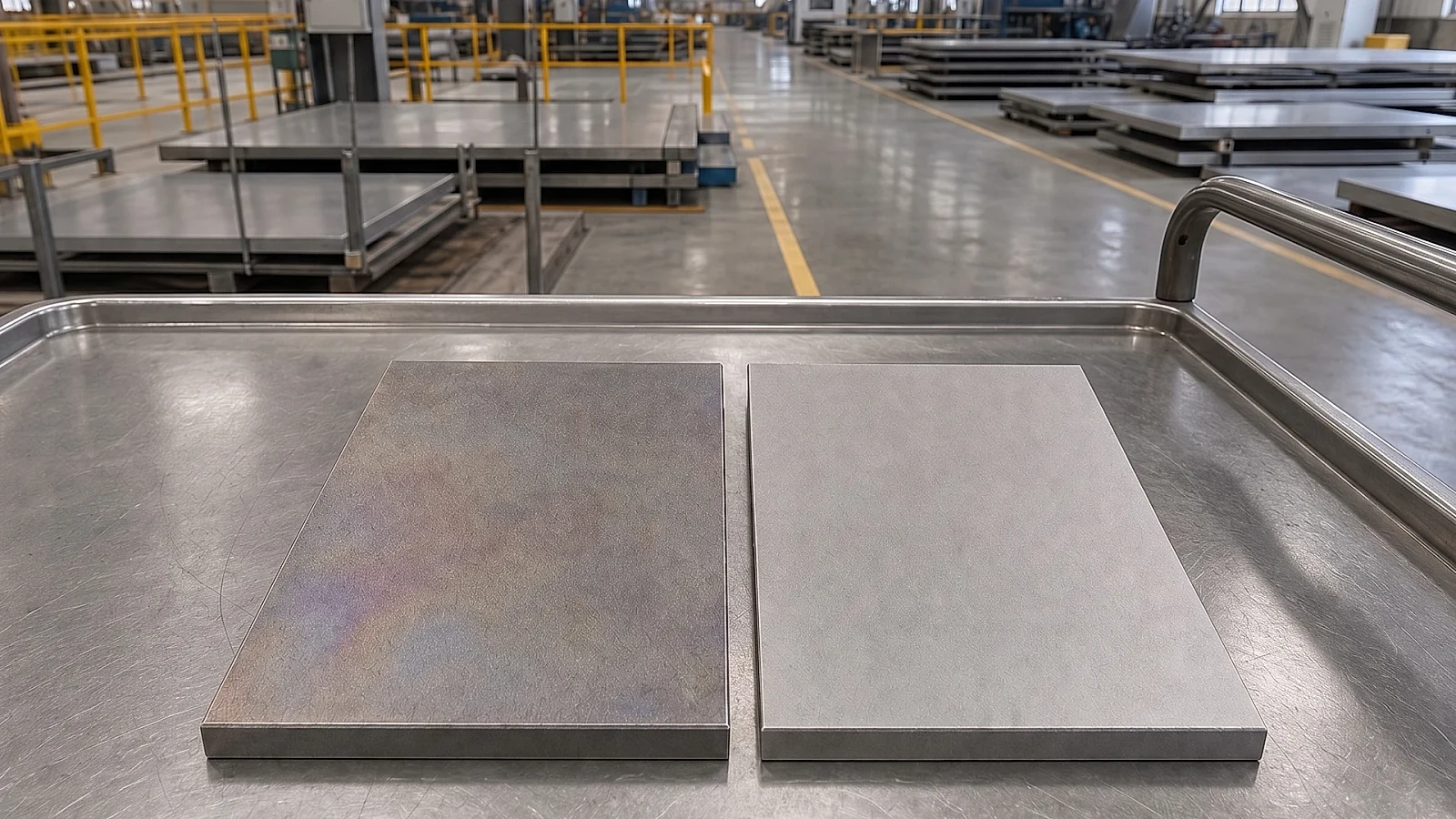 Figure 2: Side-by-side QA comparison between heat-tinted titanium showing blue-violet oxygen contamination (left) and clean matte-silver plate after alpha-case milling and mixed-acid pickling (right). Brittle oxide layers ruin fatigue life. Receiving inspectors reject any residual heat tint on weld bevels or dynamic load faces.
Second, fatigue-critical parts and weld bevels enforce 100% α-case removal with zero residual tolerance. Metallurgical quality standards leave zero room for compromise: every titanium surface destined for cyclic fatigue loading, primary load-bearing frames, or pressure-vessel weld bevels requires 100% complete α-case removal. Residual alpha-case initiates fatigue cracks. Pure mechanical milling suffices only when the specified single-side machining allowance exceeds the deepest measured thermal-hardening depth; where internal corners restrict cutter access or stock margins fall short, parts must undergo ratio-controlled nitric-hydrofluoric acid pickling (HNO₃:HF ≥ 7:1) or chemical milling backed by metallographic etch verification.
| Blanking Criterion | Abrasive Waterjet Cutting | Horizontal CNC Band Saw | Plasma Thermal Cutting | Buyer Selection & Allowance Rule |
|---|---|---|---|---|
| Thickness & Part Geometry | 6 mm – 100 mm; contoured rings, internal cutouts & nested shapes | 6 mm – 100 mm+; straight rectangular blanks, squares & flat bars | 12 mm – 100 mm+; restricted to rough slabbing with heavy stock | Nest contours on waterjet; saw straight rectangles on CNC band saws |
| Edge Heat-Affected Zone (HAZ) | Zero HAZ (ambient cold erosion); zero α-case oxygen pickup | Zero HAZ (flood-cooled mechanical cut); zero oxygen pickup | Heavy recast dross + deep brittle α-case + coarsened beta HAZ | Never finish-weld or precision-mill raw plasma edges without stripping |
| Single-Side Machining Allowance | 1.0 mm – 2.0 mm per side (clears minor jet taper & sand texture) | 1.5 mm – 2.5 mm per side (clears saw tooth marks & walk) | Mandatory ≥ 3.0 mm – 5.0 mm per side to mill off α-case | Distinguish net finished dimensions from rough blank sizes on drawings |
| Kerf Loss & Yield Efficiency | Narrow stream kerf (1.0 mm – 1.5 mm); supports tight common-line nesting | Saw kerf approx. 3.0 mm – 5.0 mm (through-cut straight lines only) | Wide tapered kerf with dross plus 6 – 10 mm two-side milling loss | Waterjet nesting saves maximum buy-weight on costly Grade 5 / Grade 7 |
| Processing Fee & Next Step | Priced by cut perimeter & gauge; ready for direct CNC finish milling | Adds approx. USD 0.55 – 0.70/kg; clamps directly into milling vises | Cheap cut fee offset by extra metal weight & insert-chipping roughing | Evaluate quotes on total landed net-part cost rather than bare mill price |
Avoiding Heavy Titanium Plate Sourcing Traps: Saw-Kerf Math, Allowance Callouts, and Even-Gauge Stocking
Hidden commercial traps often distort plate quotes. Beyond picking cold waterjet or band sawing over thermal cutting, order engineering and drawing-review logs reveal three recurring commercial and dimensional pitfalls that catch international plate buyers off guard:
- Build saw-kerf loss, export crating, and port drayage into landed-cost comparisons: Procurement teams comparing competing quotes often focus solely on bare master-plate price per kilogram while overlooking USD 0.55 to USD 0.70/kg precision sawing charges, metal weight consumed across every 3 mm to 5 mm saw kerf, reinforced ISPM 15 plywood crating, and domestic port transfer fees. Omitted kerf losses inflate budgets. Requesting itemized quotes based on “cold-cut net piece count + crated total price FOB China main port” establishes an apples-to-apples baseline.
- Eliminate tolerance disputes caused by unmarked machining allowances on finished part drawings: One of the most frequent shop-floor holds occurs when a buyer submits a finished 3D CAD model or net-dimension print without stating whether blanks should be cut plus-only to net size or padded with a specific per-side machining allowance; cutting to standard mill plate tolerances can leave insufficient stock to clean up surface flatness or mill scale. Unmarked allowances trigger tolerance disputes.
- Sidestep the 7 / 9 / 11 / 13 mm odd-gauge out-of-stock trap: Structural engineers routinely plug theoretical stress formulas directly into BOMs specifying 7 mm, 9 mm, 11 mm, or 13 mm titanium plate—unaware that global titanium service centers stock standard even-millimeter steps at 6 mm, 8 mm, 10 mm, 12 mm, and 14 mm (a typical partner warehouse carries roughly 50 tonnes across 120+ fast-moving sizes). Even plate gauges ship faster. Revising drawings up to the adjacent stocked even gauge and cold-cutting blanks to size enables dispatch within days instead of waiting weeks for a custom hot-rolling campaign.
Five-Point Pre-RFQ Verification Checklist for Cut-to-Size Heavy Titanium Plate
Clear RFQ terms prevent costly rework. To ensure cut-to-size titanium plate blanks move straight from receiving inspection to CNC fixtures or welding positioners without secondary machining holds, engineering and purchasing teams should lock five explicit terms into every RFQ:
- Mandate Cold Blanking Routes (Waterjet or CNC Band Saw) in Writing: Specify ultra-high-pressure abrasive waterjet or precision horizontal band sawing for all 6 mm to 100 mm blanks, prohibiting unapproved substitution of plasma or flame cutting. Cold cutting prevents edge embrittlement.
- Call Out Explicit Rough Blank Dimensions and Asymmetric Tolerances on Prints: State exact delivery dimensions and unilateral tolerances (such as +1.5 mm / -0 mm per side on waterjet blanks, or a mandatory 3 mm to 5 mm single-side milling pad whenever rough plasma slabs are accepted). Explicit tolerances stop shop guesswork.
- Align BOM Thicknesses with Stocked Even-Millimeter Plate Gauges: Screen bills of materials for 7 mm, 9 mm, 11 mm, or 13 mm callouts before quoting and confirm with design engineers whether stocked 8 mm, 10 mm, 12 mm, or 14 mm plate can be substituted. Stock alignment eliminates rolling delays.
- Specify High-Pressure Rinse Cleaning and Reinforced ISPM 15 Crating: Require waterjet blanks to be high-pressure rinsed free of residual garnet dust, interleaved with kraft paper or foam sheets, and packed inside steel-strapped ISPM 15 plywood crates to prevent forklift edge damage in ocean transit. Proper crating preserves plate flatness.
- Verify Material Test Certificates (MTC) and Heat-Number Transfer on Every Cut Piece: Require a complete Material Test Certificate (MTC) compliant with ASTM B265 or AMS 4911, ensuring every cut blank retains original heat/lot number traceability via low-halogen stencil marking or wired tags while verifying interstitial chemistry within O ≤ 0.20%, N ≤ 0.05%, and H ≤ 0.015% (plus ultrasonic test reports on heavy gauges). Cut blanks retain full traceability.
If you are evaluating nesting yield or blanking tolerances for custom titanium flange rings, vacuum-chamber base plates, or chemical pressure-vessel blanks, upload your DXF or STEP files through our online RFQ and complimentary plate-allowance review portal so our plate engineers can flag odd-gauge lead-time traps, optimize common-line waterjet nesting, and quote an all-in crated price before order lock. Early nesting review saves metal.