Technical Explainer
A Ti-6Al-4V Sheet Bend Radius Is Not a Universal Forming Limit
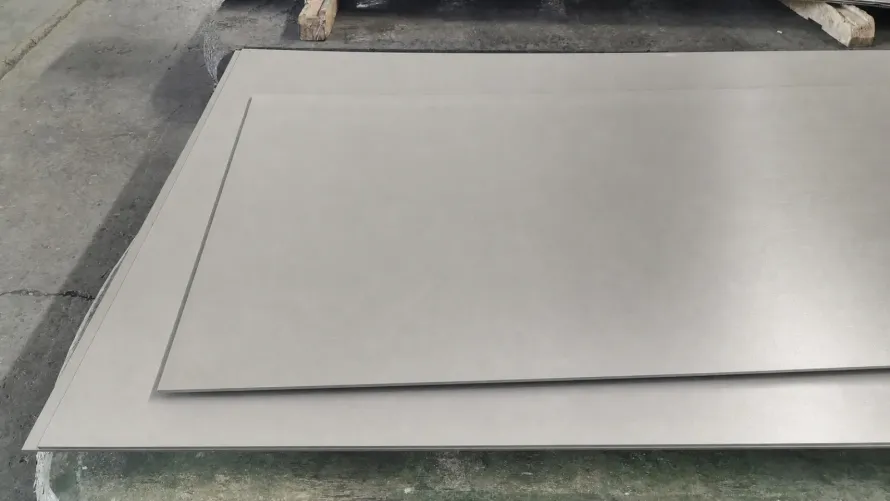
Real-product plate context: the image shows flat titanium stock only and does not establish Ti-6Al-4V, sheet thickness, condition, bend radius or availability.
A bend-radius value for Ti-6Al-4V sheet is usable only when the material state, sheet thickness, bend definition and temperature basis match the proposed forming route and the actual route is validated. TIMET’s historical TIMETAL 6-4 guide shows how strongly temperature changes the reported radius-to-thickness ratio, but its sheet table is not a universal forming limit, a titanium plate rule or a current purchase specification. Use it to screen a route and expose missing variables; release the part only against the governing drawing, current material specification and a forming procedure validated for the actual stock and geometry.
The distinction matters because a single number can hide several different decisions. The TIMET table is for annealed TIMETAL 6-4 sheet and defines r as bend radius for a 105-degree angle and t as thickness. Its reported minimum r/t changes from 4.5 at 70°F (21°C) to 3.0 at 1000°F (540°C) and 1.0 at 1500°F (815°C). Those entries show a temperature effect under the guide’s stated basis; they do not prove that another heat, thickness, bend angle, tooling system or surface condition will reproduce the same result. The table provides no test-orientation field, so direction must be treated as an RFQ check rather than a result demonstrated by this source.
First identify what the table actually measures
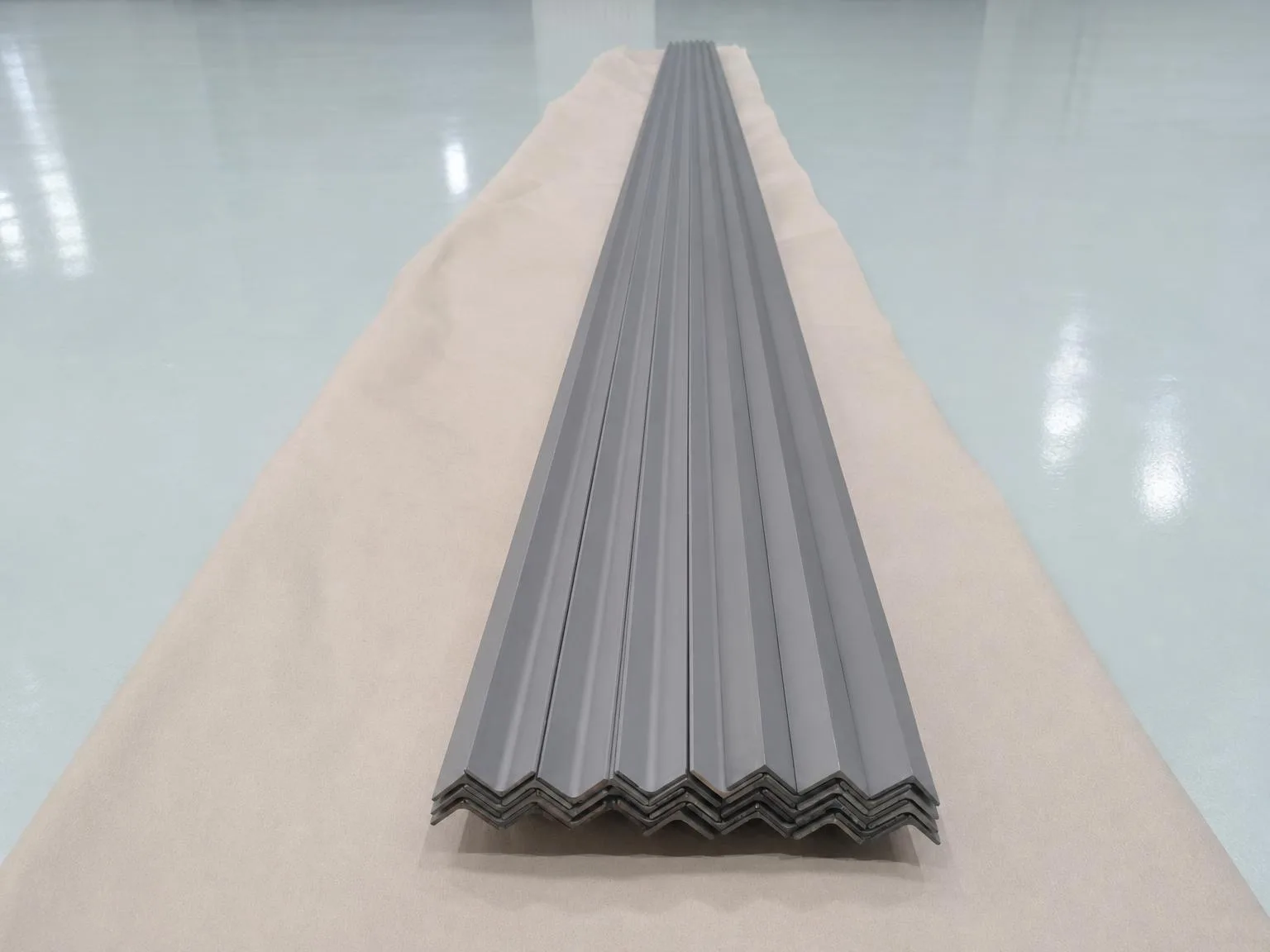
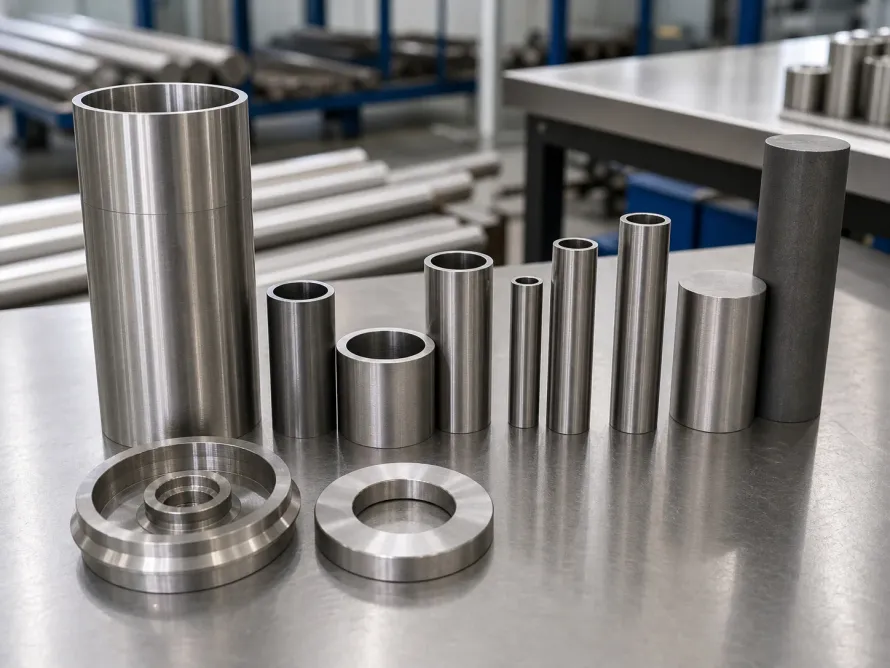
Formed-profile illustration: the visible bends help frame the radius question, but the image does not establish material, grade, dimensions, forming method or acceptance.
Radius-to-thickness ratio is a geometry normalization, not a complete forming instruction. An r/t of 4.5 means the referenced bend radius is 4.5 times the sheet thickness. For 1.0 mm sheet, that would be a 4.5 mm radius; for 2.0 mm sheet, it would be 9.0 mm. This calculation preserves the ratio, but it does not establish which physical radius the drawing controls, because drawings may specify inside radius, tooling radius or another convention. The TIMET footnote defines only its own r and the 105-degree test angle.
The table labels two data series as minimum and typical, but the guide does not disclose the test population or how the typical series was derived. The two columns therefore should not be substituted for one another. Either series may inform early process screening only; an acceptance limit must come from the contractually governing requirement and validated procedure.
Temperature improves bendability but changes the process state
The historical table shows the minimum r/t decreasing as temperature rises: 4.5 at 21°C, 4.0 from 205°C through 425°C, 3.0 at 540°C, 2.5 at 650°C, 1.5 at 760°C and 1.0 at 815°C. This is evidence that heating can reduce the radius required on the guide’s stated basis. It is not evidence that the highest temperature is automatically the best production choice.
TIMET warns that hot-forming annealed sheet should remain at or below the annealing temperature so mechanical properties are not affected. It also states that solution-treated sheet can age or overage during forming, and that aged sheet can be formed only to a limited extent. The engineering decision therefore has two coupled outputs: whether the geometry can be formed and what material state remains afterward. A route that reaches a tighter radius but changes the intended heat-treatment condition has not solved the original requirement.
Oxidation is another coupled output. The guide says oxidation becomes significant above 1100°F (590°C), recommends minimizing time and temperature in air, and recommends removing alpha case produced by hot forming. These are historical manufacturer guidelines, not a complete modern process specification. They nevertheless show why a hot-forming quotation should identify atmosphere or coating, cumulative heat exposure, post-form surface removal and the dimensional stock reserved for that removal.
Cold-forming data need a load-path check
TIMET links Ti-6Al-4V’s high strength and low elastic modulus to greater springback after cold forming than in other structural materials. Springback means the unloaded shape differs from the tool-loaded shape, so a bend-radius entry alone cannot define the finished geometry. Tool compensation, restraint, thickness tolerance and final dimensional inspection remain part of the route. Direction may also belong in the RFQ control set, but this table does not quantify its effect.
The guide also flags the Bauschinger effect: after as little as 3% stretching elongation, compressive yield strength can be reduced by 15–20%, and the effect also occurs in warm forming. This is a load-path warning. A forming sequence that stretches and then reverse-loads the sheet may not behave like a one-step bend even when alloy, thickness and nominal radius match. The exact production consequence must be established for the actual sequence rather than inferred from the percentage alone.
Convert the datasheet value into a controlled forming input
The following transfer check is an author synthesis, not a TIMET requirement. It is designed to separate what can be copied from a reference from what must be established for the order:
| Transfer field | What to freeze | Why it changes the decision |
|---|---|---|
| Material identity | Ti-6Al-4V variant, product form, delivery condition and heat/lot | The cited table is for annealed TIMETAL 6-4 sheet, not every Grade 5 product |
| Geometry definition | Thickness range, controlled radius convention, bend angle and orientation | r/t cannot resolve an ambiguous radius or a different angle |
| Temperature route | Stock temperature, tooling temperature, heating method, dwell and cumulative exposure | Temperature changes bendability and can also change material state or oxidation |
| Load path | Bend sequence, prior stretching, reverse loading, restraint and springback compensation | Prior strain and unloading can change the response |
| Surface route | Edge condition, surface cleanliness, oxidation control, alpha-case removal and final allowance | Hot forming can create a surface-removal requirement that affects dimensions |
| Release evidence | Trial coupon or representative part, dimensional result, surface result and required property checks | A historical table screens feasibility; it does not release the production part |
Apply the check in that order. First reject the reference if the material state or geometry definition does not match. Then decide whether the table is only a screening aid or an allowable input under the project’s governing documents. Finally, validate the route with representative stock and record the finished geometry and any material-state or surface checks required by the responsible engineer.
A worked screening example
Suppose a buyer is considering a 2.0 mm annealed Ti-6Al-4V sheet bend at room temperature. Multiplying the historical minimum r/t of 4.5 by 2.0 mm gives a 9.0 mm reference radius. That is a transparent arithmetic result, not a production acceptance value. Before putting 9.0 mm on the purchase order or tooling drawing, the buyer still has to confirm that the radius convention, 105-degree basis, sheet condition, thickness tolerance and applicable specification fit the intended part. The buyer may also freeze rolling direction as a process-control field, but not because this table supplies orientation data.
If the same team evaluates warm or hot forming, it should not simply replace 4.5 with the smaller table ratio. It should also compare the proposed heat exposure with the delivery condition, oxidation controls and post-form requirements. The smaller radius and the extra process controls belong in the same decision record.
The defensible conclusion is narrow but useful: TIMET’s table demonstrates that Ti-6Al-4V bendability is conditional and temperature-dependent. A buyer can use the values to screen tooling and ask better questions, but a transferable forming limit requires a matched material state, geometry definition, temperature route, load path and release method. Direction can be frozen as an additional RFQ control, but its effect is outside this table’s evidence.
Sources
- TIMET, TIMETAL 6-4 Properties (historical manufacturer technical guide; exact publication day and current revision status not stated), accessed September 14, 2026: https://www.timet.com/assets/local/documents/technicalmanuals/TIMETAL_6-4_Properties.pdf
FAQ
# Can the TIMET Ti-6Al-4V bend-radius table be copied directly into a production drawing?
# What reference radius does the historical table imply for 2.0 mm annealed Ti-6Al-4V sheet at room temperature?
Need this material? Get a factory-direct quote.