New Ti-Cu Study Separates Antimicrobial Function From Bulk Copper Content
A peer-reviewed study published on 2026-08-27 challenges a convenient shortcut in antimicrobial titanium design. Using blended powder laser powder bed fusion (BP-LPBF), the researchers found that Ti-Cu performance was governed by the spatial distribution and connectivity of Cu-rich phases rather than copper content alone (open research record).
That distinction matters to buyers and device teams. An alloy label can state how much copper entered the build. It does not show where Cu-rich phases formed, how the finished surface presents them, or whether antibacterial activity, cell compatibility and mechanical integrity occupy the same process window.
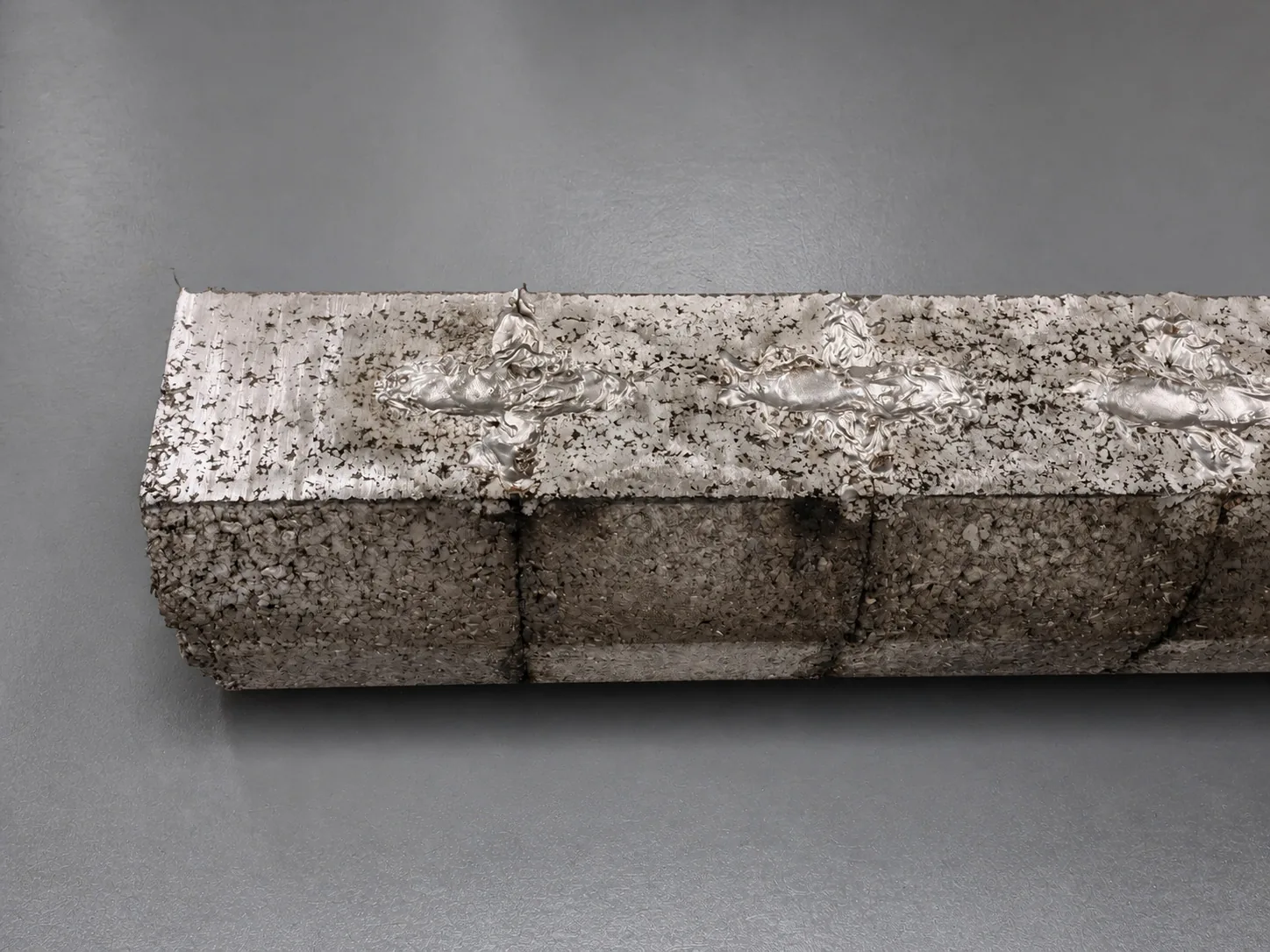
Composition is an input, not the surface mechanism
The study compared BP-LPBF Ti-Cu alloys with cast equivalents. Its central result is not simply that more copper kills more bacteria. BP-LPBF created a different microstructure, and that structure changed how copper-containing regions interacted with the surface.
The authors report that Cu ion release from every tested alloy remained several orders of magnitude below cited bactericidal thresholds. They therefore identify surface-mediated action as the dominant mechanism: localized Cu-rich phases create micro-galvanic interactions and potentially higher near-surface Cu activity. Under oxidative conditions, increased ion release can add a secondary contribution.
This mechanism separates a bulk chemistry certificate from functional evidence. Two routes with the same nominal Cu level need not create the same phase size, distribution, connectivity, surface potential or biological response.
Ti-3Cu and Ti-11.5Cu reveal the trade-off
The reported Ti-3Cu condition combined a refined microstructure and minimal intermetallic formation with more than 99% reduction of both S. aureus and E. coli after 24 h. Its reported cytocompatibility was 78% after 7 days. Those results make Ti-3Cu a useful demonstration of strong surface function at a relatively low bulk Cu level.
Ti-11.5Cu produced 99.9% antibacterial action against S. aureus and 99.99% against E. coli. But the higher-Cu route also showed more Cu release, greater microstructural heterogeneity and more Ti2Cu, alongside compromised ductility and cytotoxicity. A stronger bacterial result did not create a stronger overall release case.
The transferable lesson is a balance, not a ranking. Copper content shifts several outputs at once: phase topology, surface activity, cell response and mechanical behavior. Selecting only the most aggressive antibacterial number can move the material outside its biological or structural window.
A functional surface does not qualify the whole device
The researchers also demonstrate LPBF production of multi-material implants with antimicrobial Ti-Cu surface features. That is a manufacturing direction, not a clinical clearance. The accessible evidence does not establish fatigue life, sterilization durability, wear-debris behavior, long-term corrosion, patient outcomes or equivalence across machines and geometries.
For buyers of special titanium alloys, the practical question is where the Ti-Cu function sits. A localized surface region, a full-load-bearing section and a test coupon create different mechanical, inspection and traceability duties. Powder blending also adds segregation risk: feedstock preparation and build position must remain connected to phase mapping on the released part.
A six-layer composition-to-function map
| Control layer | Evidence question | Release risk if missing |
|---|---|---|
| Bulk composition | What Cu level and base-Ti chemistry entered the build? | A nominal grade may hide blend or lot drift |
| Powder state | How were powders sized, mixed, sampled and protected from segregation? | Coupon and part may receive different local blends |
| Phase topology | What Ti2Cu amount, Cu-rich phase size, distribution and connectivity formed? | Equal chemistry can create unequal surface activity |
| Surface state | What machining, polishing, oxidation or sterilization state was tested? | Finishing can change the active interface |
| Biological window | Are antibacterial response, ion release and cytocompatibility measured together? | One endpoint can improve while another fails |
| Device window | Are ductility, fatigue, corrosion, wear and geometry-specific evidence adequate? | A functional coupon can be mistaken for a released device |
Change control must cross all six layers. A new powder supplier, mixing time, hatch strategy, heat treatment, surface finish or sterilization cycle can change the mechanism even when the drawing and nominal Cu percentage stay fixed.
The defensible conclusion is narrower than an alloy recommendation
The study provides strong in-vitro evidence that BP-LPBF can amplify Ti-Cu antibacterial function through spatially organized surface mechanisms. It also shows why Ti-11.5Cu cannot be called superior solely from its bacterial reduction values.
The buyer rule is simple but demanding: do not release an antimicrobial Ti-Cu material from composition alone. Release the chain from powder blend to phase topology, from phase topology to surface action, and from surface action to a combined biological and mechanical envelope.
FAQ
# Why is copper content alone insufficient for Ti-Cu alloy selection?
# What did the study report for Ti-3Cu?
# Why was Ti-11.5Cu not automatically the better material?
# What belongs in a Ti-Cu LPBF release file?
Need this material? Get a factory-direct quote.