New Stainless Steel Challenges PEM Titanium Bipolar Plates? The Real Moat on the Titanium Foil Side: 0.005–1.0 mm × 350–680 mm Full Spec Plus Coating Ecosystem
May ScienceDaily Paper: New Stainless Closes In on Titanium’s Corrosion Performance
On May 10, 2026, ScienceDaily picked up a research paper reporting that a new super-stainless steel (full alloy composition not fully disclosed; core formulation high Cr-Ni-Mo with micro-N strengthening) approaches titanium’s corrosion performance under seawater electrolysis conditions. The structural cost comparison cited in the paper: for a 10 MW PEM stack at the current titanium route, this new stainless route comes in at roughly 53% of full-stack material cost.
Discussion inside the hydrogen investment community and at PEM stack OEMs has already kicked off. The question is: is this a real threat to the titanium bipolar plate and titanium foil market?
The answer comes in layers. Short term, no. Medium term, stay alert. Long term, suppliers need a clear defensive playbook.
Lab to Production: A Real 5–7 Year Cycle
From a materials paper to PEM stack commercialization, the typical cycle is 5–7 years. The pipeline runs through: (1) 1000-hour plus accelerated corrosion validation on the same alloy; (2) ASTM B117 salt spray plus actual-current-density durability for coating-substrate adhesion; (3) production-process freeze (cold-roll limits, annealing, surface treatment); (4) compatibility certification with the MEA; (5) PEM stack OEM design freeze rework (under the IEC 62282 fuel cell standard framework).
The earliest commercial PEM stacks running the new stainless bipolar plate land in 2031–2033. Until then, every “replace titanium with stainless” project is at R&D and pilot-build stage.
But timing isn’t the whole story. The research conclusion’s spread moves the negotiating position first. PEM stack OEM procurement will take this paper to titanium suppliers asking for price cuts, even when the OEM itself knows they won’t actually switch in 2026–2027. That’s market psychology, not technical substitution.
Three Real Moats on the Titanium Side
Defense doesn’t run on slogans. It runs on spec sheets, process databases, and supply-chain structure.
1. Spec Depth: 0.005–1.0 mm × 350–680 mm
Active PEM stack bipolar plate design is trending thinner and wider.
- Thinner: 1 MW single-stack mainstream at 0.1 mm → 5 MW designs evolving toward 0.05 mm → experimental 100 mW units pushing to 0.02 mm
- Wider: larger active area means more MEAs per plate and higher stack power density
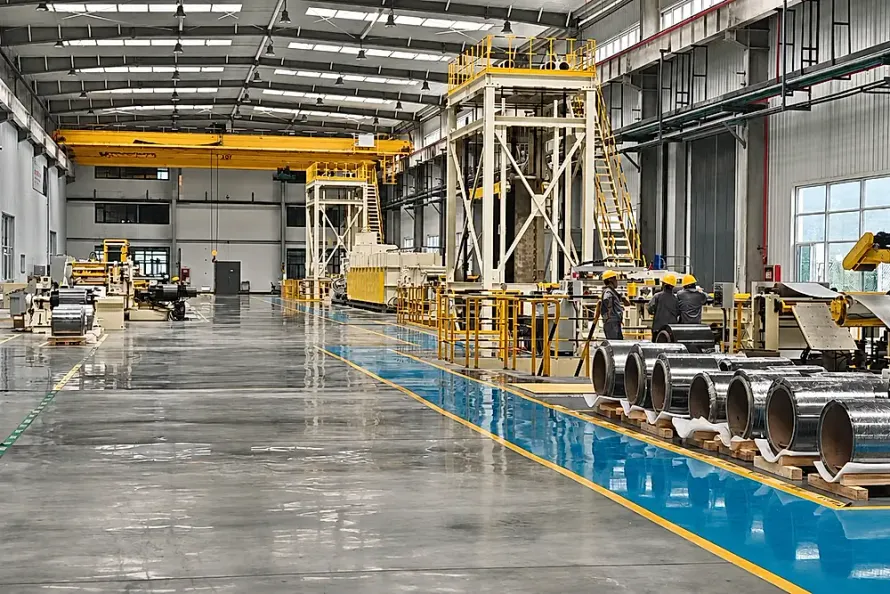
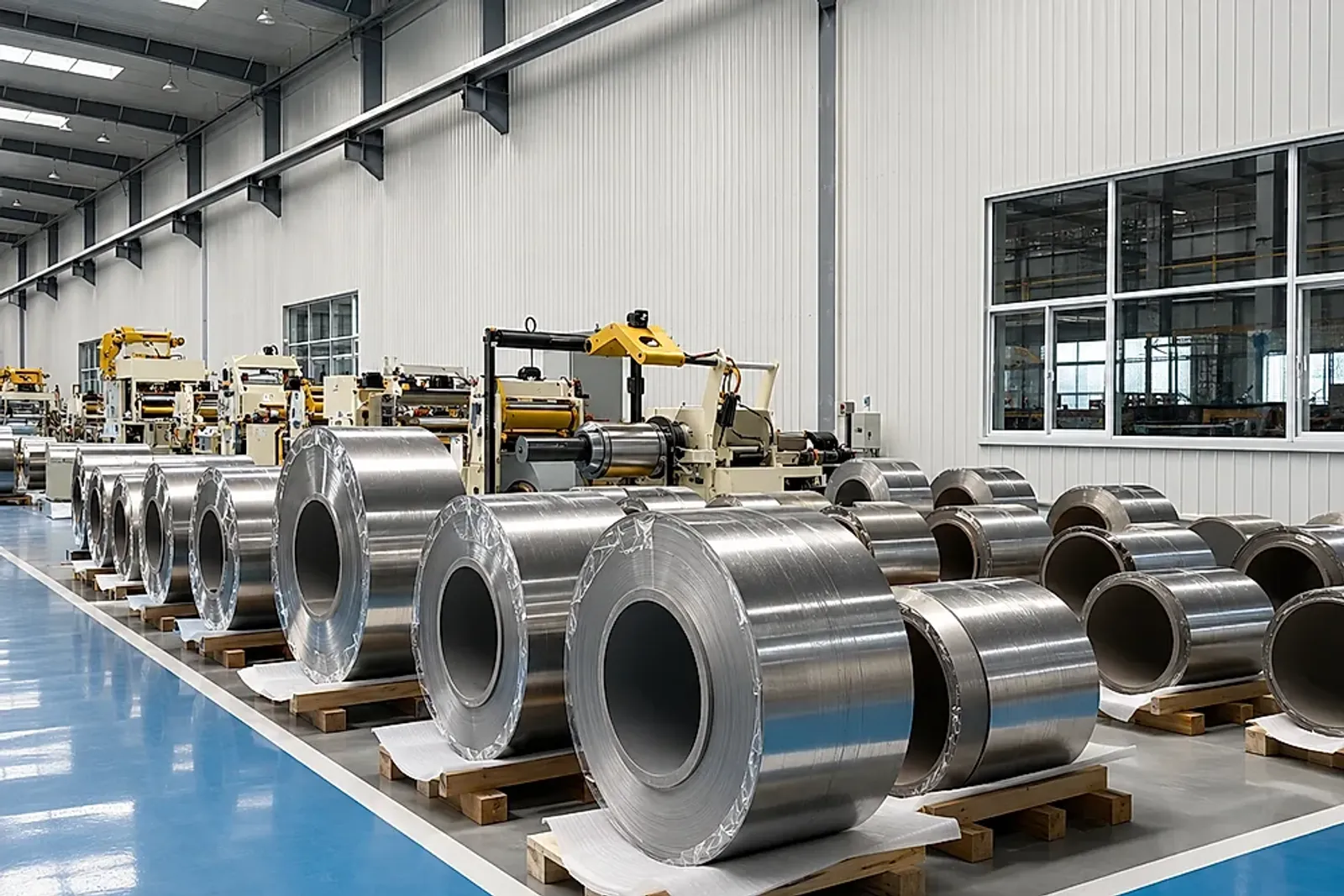
Stainless cold rolling is constrained by work hardening and precipitation on anneal, so yield drops noticeably below 0.08 mm. On the titanium side, the 750 mm twenty-high precision rolling mill is already stable at 0.02 mm, and the ultra-thin end reaches 0.005 mm × 320 mm wide-format.
The line we source from covers this spec depth:
| Product Family | Thickness Range | Width Range |
|---|---|---|
| Pure titanium strip and foil (Gr.1 / Gr.2) | 0.02 – 1.0 mm | 350 – 680 mm |
| Titanium alloy strip and foil (Gr.5 / Gr.23 etc.) | 0.03 – 1.0 mm | 350 – 680 mm |
| Zirconium strip and foil (R60702 etc.) | 0.02 – 0.8 mm | 350 – 680 mm |
| Nickel strip and foil (N02201 etc.) | 0.03 – 0.8 mm | 350 – 680 mm |
| Ultra-thin series (all metals) | 0.005 – 0.03 mm | ≤ 320 mm |
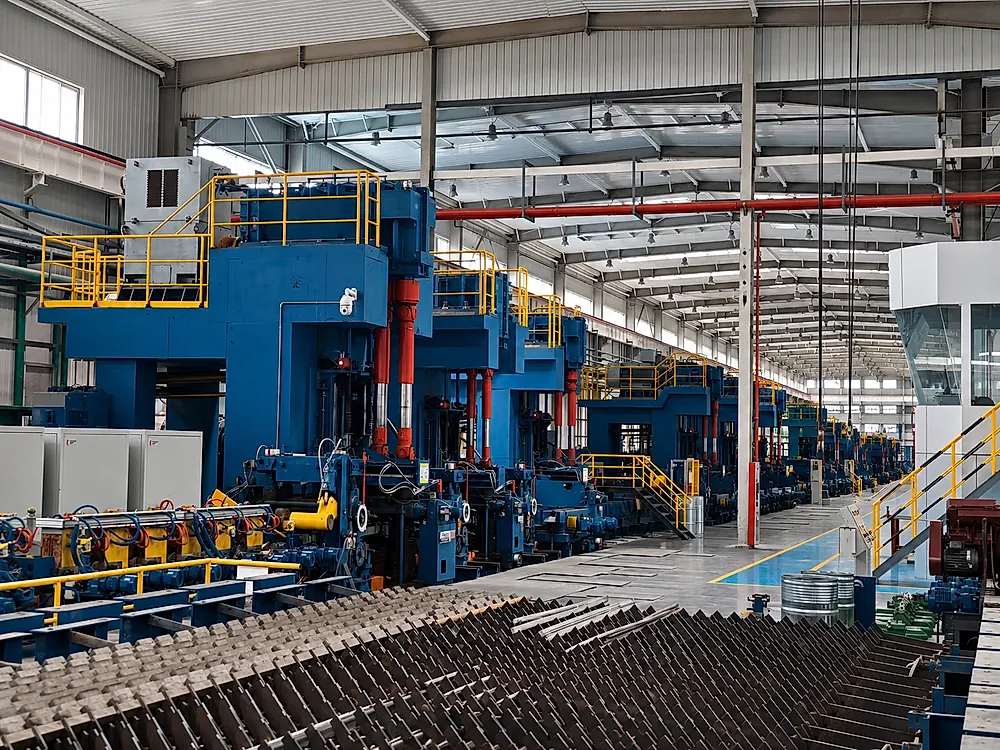
Equipment list: 750 mm twenty-high precision rolling mill + ultrasonic cleaning line + continuous annealing line + vacuum furnace + leveling line + slitting line + grinding line. This isn’t single-spec capability — it’s the capability to cover the entire design sheet.
2. Coating Ecosystem: 15–20 Year Database
For PEM bipolar plates, final performance has coating weight ≥ substrate weight. Pt / Au / PVD / sprayed (brush-sinter) processes carry 15–20 years of field data on titanium substrates:
- Shear strength of coating adhesion
- Coating spallation rate under repeated hydrogen sorption-desorption cycling
- Contact resistance evolution at the coating-substrate interface (the critical curve — it sets stack efficiency decay)
- Pitting and intergranular corrosion under long-running (>20,000 hours) operation
The coating database for a new stainless substrate sits at near-zero. Even if the new stainless body meets corrosion targets, the coating-and-interface layer needs another 3–5 years of accumulation before a PEM OEM dares to use it.
Our network into Pt / Au / PVD coating partners means customers can receive substrate + coating combined pricing rather than buying in two segments and integrating themselves.
3. Compliance System: 18–36 Month Migration Cycle
Active PEM stack OEMs’ QA systems are built around Ti substrates: GB 5085 equivalent / ISO 11114-4 / six classes of electrochemical testing / IEC 62282 fuel cell standard. Every production line’s control plan, PFMEA and SPC monitoring points map to the Ti substrate property window.
Switching to stainless requires rebuilding that entire system. Typical migration cycle 18–36 months, and it must move in lockstep with the PEM OEM’s customers (downstream stack integrators) — whoever moves first absorbs the risk. That inertia is something nobody is willing to break before 2027.
The “Multi-Metal Co-Line” Economics of the Titanium Foil Market
Looked at standalone, the PEM titanium foil market faces pressure — global PEM installation CAGR 2025–2030 runs around 25–30%, but titanium bipolar plate thickness moving from 0.1 → 0.05 mm cancels out half of the tonnage growth.
The unlock is multi-metal co-line production. The 750 mm twenty-high precision rolling line we source wide-format strip foil from runs Ti / Zr / Ni / titanium alloy across four metal families simultaneously:
- Ti strip and foil: PEM bipolar plate + chemical heat exchanger + medical
- Zr strip and foil: nuclear fuel cladding + heavy-corrosion chemical service (hydrochloric / concentrated sulfuric)
- Ni strip and foil: battery tabs + electrochemical electrodes + superalloy precursors
- Ultra-thin series (0.005 mm): semiconductor sputter targets + vacuum electronics + high-end medical
One line serving four high-end downstream markets — demand swings in any single market won’t blow through line-level EBITDA. That’s a fundamentally different risk posture than a single-product line (PEM titanium bipolar plate only).
Five Defensive Plays for the Supplier Side
1. Push upstream into ultra-thin — drive 0.02 mm down to the 0.01–0.005 mm extreme band. Stainless cold rolling won’t catch up inside 5 years.
2. Integrate downstream into coating — substrate + coating combined pricing. Customer switching cost moves from “change a mill” up to “change the full supply chain” — a wider defensive perimeter.
3. Multi-metal co-line — Ti / Zr / Ni on the same equipment and process. The customer closes a multi-metal BOM with one mill, cutting supplier integration cost.
4. Spec depth product map — upgrade the spec sheet from “quote document” to “design reference handbook”. Lock the Ti route at the PEM stack designer’s design stage rather than the procurement stage.
5. Powder to strip to part — link to titanium CNC machining services, offering Ti foil + bipolar plate stamping + welded assembly as second-tier products. Moving from raw-material mill up to component supplier raises substitution resistance.
Three-Phase Balancing Playbook for Buyers
Short term (2026–2027) — titanium is the only proven PEM bipolar plate route. Coating database, long-term corrosion data, and compliance system are all mature. Do not adjust running projects based on a lab paper.
Medium term (2028–2030) — launch a stainless route R&D parallel validation as a hedge. Watch the coating corrosion database and long-term conductivity decay curve. R&D cost ≤ 5% of total PEM program budget.
Long term (2031+) — dual route in parallel. High power density plus high-end medical and semiconductor PEM stays with titanium foil; bulk industrial-grade PEM can migrate toward stainless.
View from Titanium Valley: Why the Stainless Threat Wins the News Cycle but Loses on the Production Line
The news cycle and the production cycle are out of phase.
Within a week of a research paper hitting the wire, the hydrogen investment community recirculates it heavily and buyer-side price-negotiation calls land immediately. But a PEM stack OEM’s design freeze cycle is 18–24 months, and every freeze locks the supply chain for the next 5+ years. Lab papers don’t enter design freeze. Commercial data does.
The real risk on the titanium side isn’t that stainless catches up — it’s that titanium suppliers get distracted by negotiating-position pressure in the news cycle and stop pushing process forward into ultra-thin, multi-metal, and coating integration. If titanium suppliers sit on 0.1 mm mainstream spec, single-metal lines, and no coating integration, then yes, stainless will take the bulk industrial-grade PEM market after 2031. If titanium suppliers keep moving into ultra-thin, multi-metal and coating ecosystem, then after 2031 titanium’s position in high-end PEM and multi-metal high-end thin-strip markets gets stronger, not weaker.
Current Gr.1 / Gr.2 titanium foil combined spot inventory is roughly 8 tonnes, covering R&D validation, first-article inspection, and small-batch prototype across all three phases. The 750 mm twenty-high precision rolling line can support PEM stack OEMs running multi-spec parallel sourcing.
Conclusion: The Threat Is Real, but the Clock Is in Titanium Suppliers’ Hands
Stainless steel challenging PEM titanium bipolar plates is a news story before 2027 and a market reality after 2031. The 5 years in between — titanium suppliers’ fate hinges on a single thing: whether spec depth, coating ecosystem and multi-metal co-line all get built out.
PEM customer-side buyers shouldn’t get pulled off-line by the news cycle either — running projects stay on titanium, new projects can launch parallel R&D validation, and the main line doesn’t need to move before 2028.
Related Products & Services
- Service → Titanium CNC machining + drawing-based sample parts — PEM bipolar plate stamping / welded assembly second-tier products, 5-axis CNC 4–6 week delivery
- Product → Gr.1 / Gr.2 ultra-thin titanium foil (0.02–1.0 mm × 350–680 mm) — 750 mm twenty-high precision rolling, combined spot inventory ~8 tonnes
- Product → Titanium CNC machining — no MOQ — R&D and first-article small batch, samples from one piece
Related Articles
- PEM titanium bipolar plate brush-sinter vs PVD coating route split
- Fraunhofer FEP composite bipolar plate × titanium coating — 2026 spring route war
- Osaka Titanium Amagasaki expansion — titanium sponge tightness transition window
About: Titanium Seller is a supply chain platform based in Baoji, China’s Titanium Valley, serving aerospace, chemical, marine, medical and hydrogen-energy buyers worldwide.
FAQ
# What's the core finding in the ScienceDaily paper, and how bearish is it for titanium bipolar plates?
# What's titanium's real moat in PEM bipolar plates and foil?
# What's the real value of 0.02–1.0 mm × 350–680 mm wide-format titanium foil on the PEM side?
# How does the supplier side defend against the 2027+ stainless substitution threat?
# How should PEM customer-side buyers balance between titanium and stainless?
Need this material? Get a factory-direct quote.