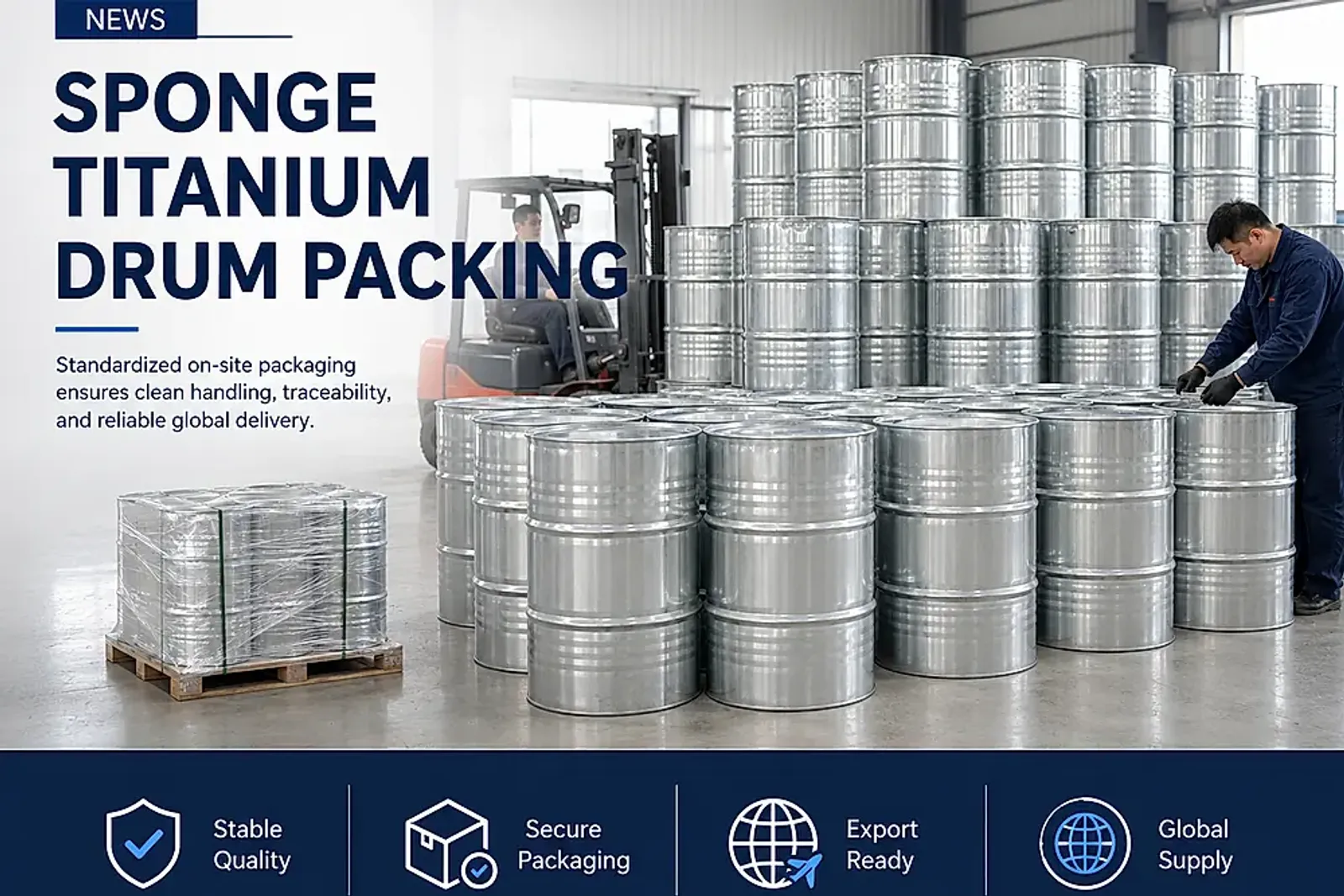
Osaka Titanium Raises Amagasaki Expansion to ~$250M: The 2026-2027 Sponge Tightness Window Is Now Nailed Down
Osaka Titanium Adds Another ~$40M to Its Expansion in May — 2028 Is the Year Western Sponge Actually Loosens
In May 2026, Osaka Titanium Technologies (one of Japan’s four titanium sponge producers) lifted its Amagasaki expansion budget from the original ~$210M to ~$250M — an 18% increase. The target hasn’t changed: by 2028, lift titanium sponge capacity from 40,000 t/year to 50,000 t/year.
On the numbers, it looks like a routine expansion. Read against the timeline, it’s a schedule confirmation: the 2026-2027 Western titanium sponge transition window is now nailed down, and real new tonnage only arrives in 2028.
The point isn’t capacity insufficiency. It’s cadence insufficiency. Osaka Titanium holds half of Japan’s 80 kt sponge capacity, and pushing this decision out to 2028 effectively tells the market not to expect Western downstream sheet, bar or forging prices to loosen in 2026-2027.
Why a +18% Capex Increase: the Kroll Process Cost Structure Is Shifting
Kroll-process titanium sponge cost is dominated by electricity plus magnesium (Mg) recycling — together 55-65% of total. Both have moved up sharply over the last three years.
Japanese industrial electricity has stepped higher in stages since the 2022 energy crisis; the 2025-2026 industrial rate is roughly 1.6x the 2020 baseline. Magnesium ingot has moved from $2.5/kg to $3.2-3.5/kg as electrolytic Mg power draw and carbon constraints tightened. The net result is that building the same 50 kt sponge plant in 2026 carries 30-40% higher capex intensity than in 2020.
Osaka Titanium raised its budget specifically to hold Mg recycling efficiency and power utilization above the 2028 break-even line. Put plainly: the additional spend isn’t to scale up — it’s to avoid losing money.
The signal to the market is that the cost center for sponge has shifted higher. New capacity won’t release via price competition; it will release via long-term contracts locked to aerospace Tier-1. Boeing / Airbus / Safran / Lockheed LTA slots opening in 2028 will be filled first.
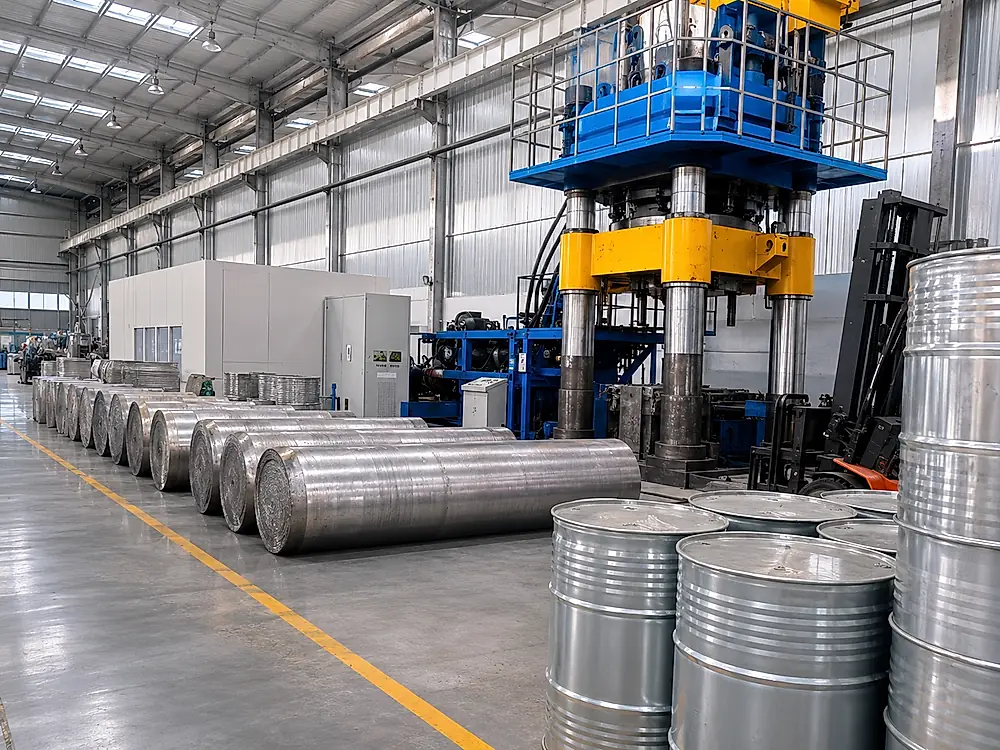
Three-Segment Slice of Global Sponge Balance: Why 2026-2027 Is Locked Tight
Lay out the global sponge capacity map and the picture is clean:
| Source | 2025 capacity | 2028 expected | Notes |
|---|---|---|---|
| China (Baoji / Chaoyang / Shuangrui etc.) | ~240 kt | ~441 kt (by 2026) | Domestically oversupplied, exports license-controlled |
| Japan (Osaka / Toho / etc.) | ~80 kt | ~90 kt | Osaka +10 kt; primarily supplies Western aerospace |
| Kazakhstan (UKTMP) | ~26 kt | ~26 kt | Geopolitical constraints |
| Russia (VSMPO) | ~17 kt (post-collapse) | uncertain | Under US/EU sanctions |
| US (IperionX HAMR) | <5 kt | ~200 t to 1,400 tpa | Order-of-magnitude too small; meaningful supply post-2027 |
| Saudi Arabia (Toho JV) | start-up | start-up | Post-2027 |
Compliant Western sourcing comes primarily from Japan + Kazakhstan, total ~100 kt. That’s the ceiling, and the most it can add before 2028 is 10 kt — exactly this Osaka expansion.
Demand side: Boeing / Airbus civil aircraft production recovery + F-35 production acceleration + European next-gen engines + Middle East desalination + medical 3D printing. Aerospace, defense and industrial demand combined runs an estimated 5-7% CAGR through 2026-2028. The supply-demand gap cannot be closed by any 2026-2027 capacity addition.
The conclusion is clean: this is structural tightness, not cyclical tightness.
Why China’s 441 kt Can’t Close the Gap
China’s titanium sponge capacity is expected to reach 441 kt by 2026, severely oversupplied domestically — some Chinese sponge plants are running below break-even.
But Western downstream mills can’t access it. The bottleneck isn’t capacity; it’s license. Since 2024, China has tightened dual-use export licenses and end-user certificate requirements for aerospace-grade titanium sponge. Single-batch approvals take 3-6 months; with FX and freight layered in, compliant Chinese sponge landed at Western downstream mills runs 15-25% above US and Japanese sponge.
Asian mill-delivered titanium sponge prices (mainline reference band):
- Grade 0 sponge: $7.4 – 7.6 / kg (aerospace and high-end medical, third-party chemistry re-test required)
- Grade 1 sponge: $7.1 – 7.4 / kg (premium chemical and medical)
- Grade 2 sponge: $6.7 – 6.9 / kg (industrial and general chemical)
This is the Asian-delivered reference, not the Western landed price. The actual compliant Chinese sponge volume flowing to Western downstream mills in 2026 will not exceed 20-30 kt — 5-7% of total Chinese capacity. The remaining 410+ kt is absorbed domestically, with a smaller flow into Southeast Asia, India and Middle East industrial-grade downstream.
That’s why Osaka Titanium’s +10 kt expansion looks small on paper but is actually 10/100 = 10% marginal supply on the compliant Western side. In a small compliant pool, that’s real leverage. The catch: it only arrives in 2028.
The Schedule Nailed Down: Capacity Curves All Aligned to 2028-2029
Stack the 2026 confirmed capacity moves on one timeline:
- May 2026: ATI South Carolina sheet mill starts up — but 18-24-month ramp, 2026 is small-batch FAI only.
- May 2026: Osaka Titanium raises Amagasaki expansion budget — but start-up is in 2028.
- 2026-2027: Airbus doubles ATI LTA — absorbs ATI’s new capacity, Tier-1 locks position.
- Mid-2027: IperionX Virginia 1,400 tpa titanium sponge begins trial production — still small.
- 2028: Osaka Titanium Amagasaki +10 kt starts up, ATI South Carolina at full ramp.
- 2029: Safran Gennevilliers 30,000-tonne hydraulic press starts up.
No segment of capacity actually loosens in 2026-2027. From sponge feedstock to ingot melting to plate rolling to large forgings, everything is queued into the same 2028-2029 window. This is what an industrial capital cycle and downstream order cycle look like when they’re “dual-misaligned.”
View from Titanium Valley: Asian Feedstock Is Stable, the Bottleneck Is Western Midstream
Looking out from Baoji, the Asian sponge feedstock side has stayed steady since spring 2026. Asian mill spot Grade 1-2 titanium sponge sits in the $6.7-7.4/kg band with no notable monthly swings. The 441 kt Chinese capacity overhang gives prices no upward pressure.
But Western buyers can’t get this price. What they see is ATI / TIMET sheet LTAs lifted from $35-42/kg to $45-52/kg, and forging lead times of 18-24 weeks pushed out to Q2 2027 and beyond. The problem isn’t Asian feedstock — it’s the Western midstream. Ingot melting, hot-rolled plate and large forgings: none of the three has spare capacity to add.
Over the last 90 days another recurring inquiry pattern has shown up in Baoji — European Tier-2 buyers sending forging drawings over for drawing-based custom work. Safran and Airbus have absorbed ATI’s and Ecotitanium’s capacity; Tier-2 sub-contractors need a new channel. Compliant Chinese channels for chemical / marine / medical adjacencies and Tier-2 non-critical parts are being opened up by default as the market clears around them.
Three Procurement Plays Inside the Transition Window
1. Western aerospace Tier-1 and engine OEMs: lock 2026-2028 LTAs. Sponge does not add before 2028 and price won’t soften. Negotiate annual tonnage with ATI, TIMET and Howmet — and add 12 months on top.
2. Chemical, marine and medical buyers: this is your window. With aerospace tightening high-end sponge (Gr.0 / Gr.1), industrial-grade (Gr.2) supply has actually loosened. Spread spot purchasing across Gr.2/Gr.7 titanium plate, Gr.7/Gr.12 titanium pipe and Gr.5/Gr.23 titanium bar — bargaining position has shifted in your favor.
3. Tier-2 / MRO and R&D small-batch buyers: bring compliant Chinese channels into the mix. Finished parts inside the ASTM B265 / B348 / F136 framework flow through titanium CNC machining and the no-minimum-order-quantity channel. Consolidate prototypes, trial runs and small-batch orders into a single shipment and lock 2026-2027 pricing.
Conclusion: Don’t Bet on a Price Drop Before 2028
The real signal from this Osaka Titanium expansion isn’t “+10 kt of capacity.” It’s the 2028 date being nailed down. Before 2028, no segment of Western sponge supply or rolling/forging capacity loosens.
Buyers aren’t facing cyclical volatility. They’re facing a structural schedule. The two tools inside the transition window are long-term contract slots and compliant pooled channels — nothing else.
Related Products & Services
- Service → Titanium CNC Machining (Drawing-Based Prototypes + Small Batch) — the window tool for locking in 2026-2027 prices; 5-axis CNC, 4-6 week delivery.
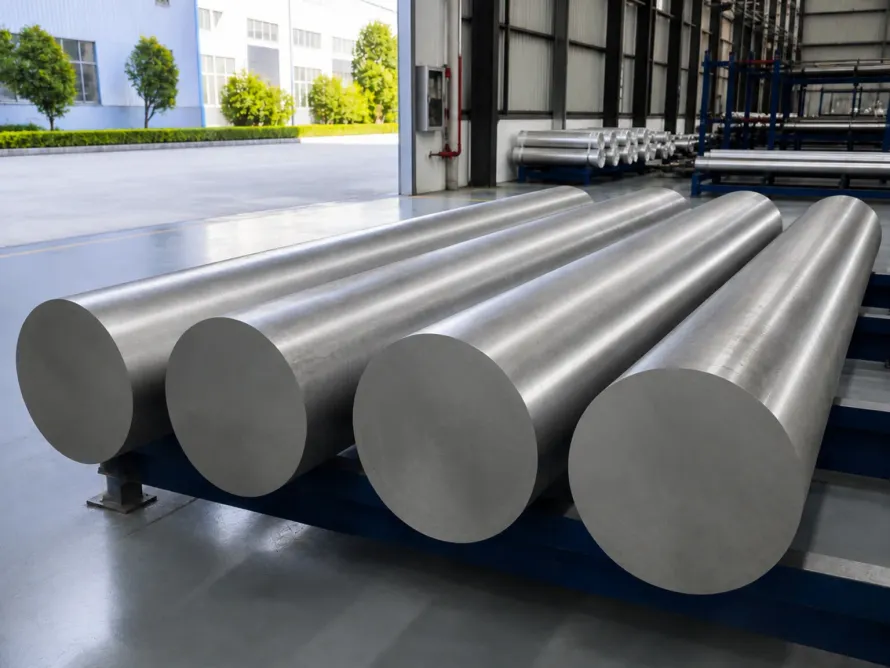
- Product → Gr.5 Titanium Bar (AMS 4928) — standard aerospace and medical sizes, roughly 5 tonnes in stock.
- Product → Gr.2/Gr.7 Titanium Plate — steady supply for chemical and marine adjacencies, improved bargaining position.
Related Articles
- ATI South Carolina Mill + Airbus Contract Doubled — De-Russification Phase Two (US Capacity Side)
- Safran Completes Non-Russian Titanium Transition in April — De-Russification Phase One (EU Procurement Side)
- China’s 440,000-Tonne Titanium Sponge Structural Oversupply — In-Depth Analysis
About: Titanium Seller is a supply chain platform based in Baoji, China’s Titanium Valley, serving aerospace, chemical, marine and medical buyers worldwide.
FAQ
# Why did Osaka Titanium raise the expansion investment?
# How big is the 40 kt to 50 kt step, and how much does it move global sponge balance?
# Why is this expansion still bearish for buyers of 2026-2027 Western sheet and forging prices?
# China has 441 kt of sponge capacity. Why doesn't that fill the gap?
# What should buyers actually do?
Need this material? Get a factory-direct quote.