PEM Titanium Bipolar Plate Coating Wars: Why Brush-Sinter Hasn't Been Killed by PVD
The coating side of the PEM (proton exchange membrane) titanium bipolar plate threw off a couple of “advanced tech crushes legacy process” signals this spring. Umicore × Ionbond rolled out the VICA900 double-sided PVD platinum production platform at H2 & FC EXPO Tokyo, rated 10 million plates per year, with nanoscale platinum film (10–50 nm) replacing full-thickness Pt (~1 μm) and an estimated 70–90% cut in platinum loading. Around the same time, BIS Research projected the PEM iridium catalyst market growing from USD 26.5 million in 2024 to USD 198 million by 2034 — a 32.5% CAGR.
Read straight, the story says PVD takes everything and brush coating + sintering gets retired. But the actual downstream qualification database in spring 2026 shows both routes expanding their customer base — they’re just covering completely different customer types. That’s the fork the market-report headlines paper over.
What Brush-Sinter Actually Is, and Where the Cost Sits
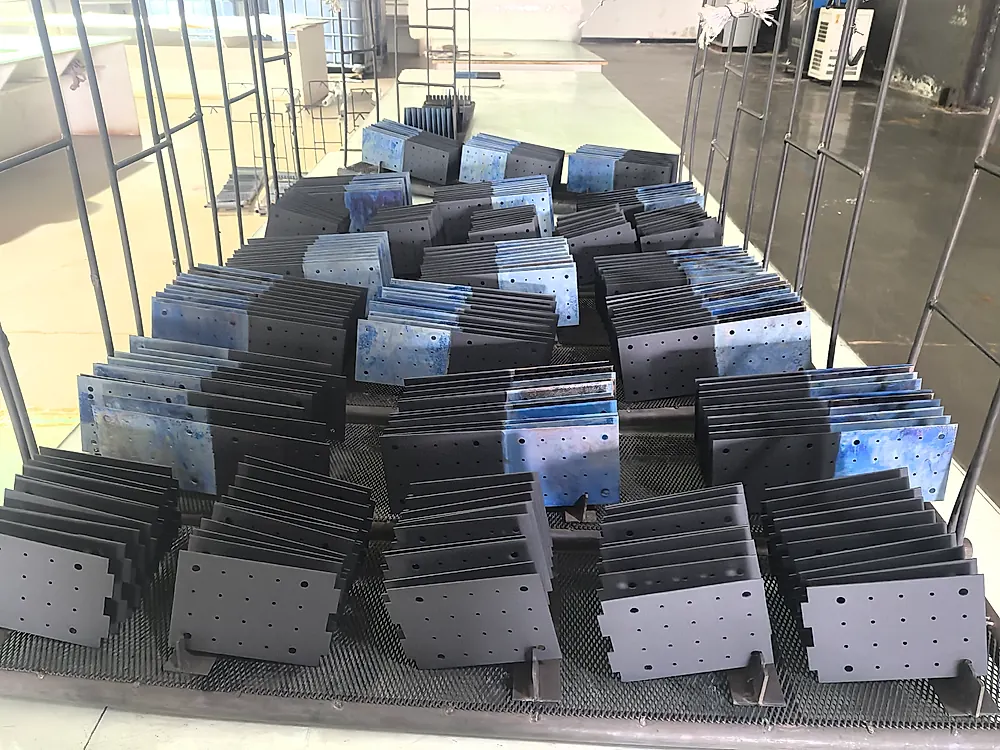
The process: a paste or ink loaded with precious metal (Pt / Ir / Au) is brushed, screen-printed or sprayed onto the titanium substrate, then sintered at high temperature (typically 400–800 °C) into a dense conductive coating.
The cost structure is nothing like PVD:
- CapEx: brush / screen-print equipment plus sintering furnace — line-level investment of a few hundred thousand USD
- PVD CapEx: vacuum chamber, plasma source, multi-target modules — line-level investment of several million USD
- Platinum loading (thick-film route): 1–3 μm, high per-plate Pt cost
- PVD platinum loading (thin-film route): 10–50 nm, low per-plate Pt cost
- Throughput: brush-sinter line — 5,000–20,000 plates per day; PVD line — 30,000–100,000 plates per day
Spread the numbers flat and PVD’s per-plate cost advantage at high volume is real and decisive — that’s the logic behind Umicore × Ionbond’s 10-million-plate-per-year line. But the market isn’t only high-volume:
- 100 MW+ orders (Plug Sines, ITM Lingen Phase 2) → PVD wins on economics
- 1–10 MW mid-size orders (Nel containerized, Chinese mid-tier electrolyzer OEMs) → brush-sinter has a faster payback
- < 1 MW samples / R&D / lab orders → brush-sinter is essentially the only viable route
That’s why “PVD line goes live” and “brush-sinter customer base expands” both happen in 2026. The two routes serve different slices of the PEM market, not the same one.
The Five Variables Behind Coating Choice
Picking a coating route looks like an engineering decision. It’s actually driven by five variables at once:
Variable 1: order size per batch. Under 10,000 plates per batch favors brush-sinter; over 100,000 plates favors PVD. The middle band can go either way depending on capacity match.
Variable 2: precious-metal price direction. When platinum spikes, PVD’s thin-film route (an order of magnitude less Pt) is the hedge. When platinum is stable, brush-sinter’s CapEx-depreciation advantage shows through.
Variable 3: customer tolerance for coating uniformity. PVD coatings hold within ±5%; brush-sinter is typically ±10–15%. Customers needing ±5% go PVD; customers tolerating ±15% go brush-sinter. The uniformity gap drives a stack-life gap, but the price gap is bigger — the customer is choosing between life and price.
Variable 4: precious-metal switching flexibility. A brush-sinter line can switch between Pt paste, Ir paste and Au paste on the same equipment. PVD requires changing targets and re-tuning parameters to switch coating metals. When iridium supply tightens, brush-sinter’s flexibility becomes the advantage — quick pivot to gold coating or Pt-Au mixed coating.
Variable 5: regional compliance preference. European and US customers lean toward PVD, treating it as “advanced process.” Asian customers lean toward brush-sinter, treating it as “mature process.” A real cultural-layer constraint, not a technical one.
Cross these five variables and you can see why both routes expanded simultaneously in spring 2026: PVD is grabbing the European/US 100 MW+ end, brush-sinter is grabbing the Asian 1–10 MW mid-size end plus the global R&D sample end. Neither side disappears.
Where Titanium Substrate Mills Sit in This
Back to the substrate view. Whether a titanium foil or plate mill gets into the PEM bipolar-plate supply chain isn’t only about substrate spec — it’s about whether the mill can pair with at least two different coating routes.
A mill paired only with PVD: serves the European/US 100 MW+ end. Customer qualification cycles run 18–24 months and order flow is volatile. A mill paired only with brush-sinter: serves Asian mid-size customers and global R&D samples. Tickets are smaller, but order frequency is denser. A mill paired across 4–6 coating routes: covers four to six times the surface area of a single-route mill. That is the real fork in titanium supply chain segmentation through 2026–2027.
Coating-process portfolio is itself a supply-side moat — not a technology barrier, but a diversity-of-customer-qualification-database barrier.
Matching Signals from Baoji
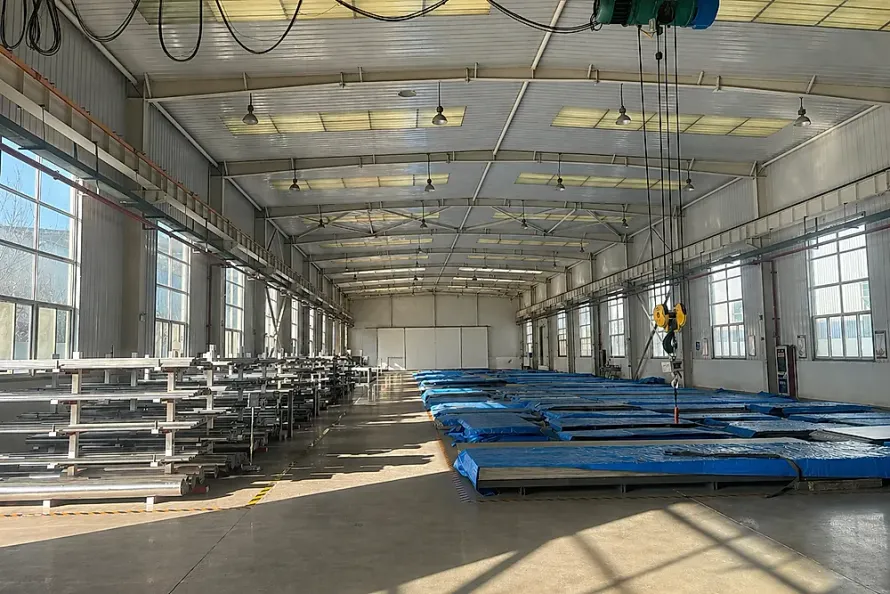
Our PEM titanium bipolar plate snapshot from Baoji (China’s Titanium Valley), measured early May 2026:
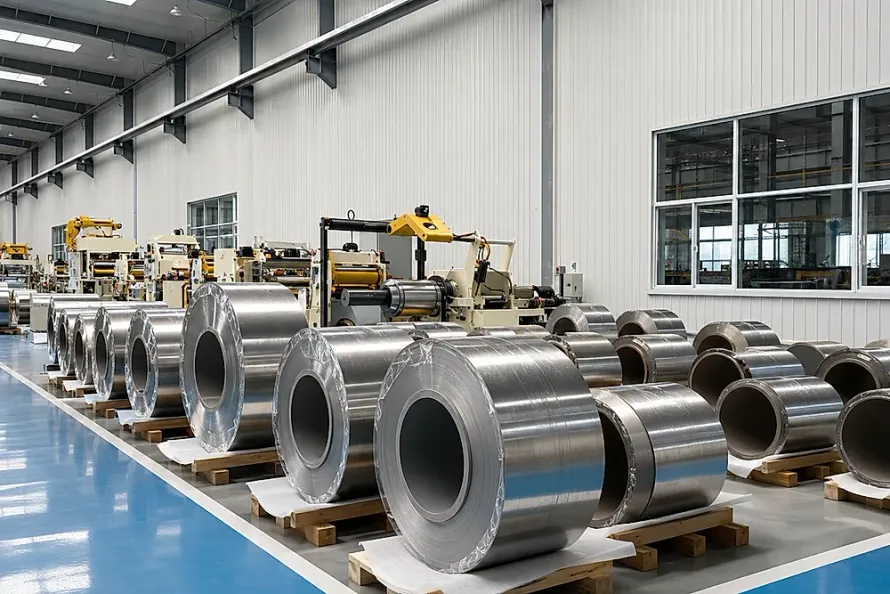
- Substrate on the shelf: Gr.1 / Gr.2 industrial pure titanium foil, 0.02–0.3 mm thick × max width 600 mm+, roughly 2 tons movable from stock through our port
- Coating partners: 2 plants, process portfolio covering 6 routes — PVD Pt, electroplated Pt-Au, paste coating (brush-sinter), electroplated Pt, gold coating, PVD TiN
- Electrolyzer RFQs this month: 2, in sample / small-batch stage. One running PVD Pt, the other running brush-sinter Pt-Au mixed coating — exactly mapping to the five-variable customer split above
Honest read: 2 coating partners is not a big number, but the route coverage (6 processes) is unusual. For hydrogen customers running qualification, “how many coating routes can the substrate mill pair with” is a scarcer metric than “what’s the mill’s annual capacity.”
A Checklist for Electrolyzer OEMs and Materials Engineers
If you’re picking the coating route for 2026–2028 PEM bipolar plates, three moves are worth making now:
First, replace single-coating-route lock-in with parallel evaluation of two routes. Pt PVD is the cost play for high-volume production; brush-sinter is the elasticity play for mid-size batches and precious-metal switching. Customers qualified on both routes don’t get pinned when iridium or platinum prices move in 2027.
Second, treat “how many coating routes the substrate mill covers” as a scoring bonus on supplier qualification. A mill covering more than four routes can hand you multiple proposed coating designs and multiple sample versions during the spec-discussion phase — compressing the total spec-plus-qualification window by 30–50%. Use the titanium foil product page spec match as a baseline filter.
Third, re-price the small-batch flexibility of brush-sinter. The market keeps treating brush-sinter as “old low-end process.” On 1–10 MW mid-size orders and on R&D samples, its payback is dramatically faster than PVD. Pair that with a no-MOQ sample channel and customers who keep brush-sinter on the AVL get noticeably more supply-chain negotiating room through 2026–2027.
The question worth tracking over the next 12 months isn’t “will PVD replace brush-sinter” — the answer there is “yes at high volume, no at mid-low volume.” The question is how the share of brush-sinter in the AVL of major PEM OEMs shifts. That curve decides the real share of mid-size order titanium mills through 2027–2030.
Related Products & Services
- Service → No Minimum Order Quantity Sourcing — early-stage PEM 50–200 kg brush-sinter sample qualification channel, single-batch
- Product → Titanium Foils — Gr.1 / Gr.2 industrial pure titanium foil 0.02–0.3 mm × 600 mm+ wide coil from stock
- Product → Titanium Sheets and Plates — Gr.1 thick-plate spec for PEM bipolar plates
About: Titanium Seller is a supply chain platform based in Baoji, China’s Titanium Valley.
Need this material? Get a factory-direct quote.