New Titanium Laser Study Makes Crystal Orientation a Surface-Control Variable
A peer-reviewed study published by npj Advanced Manufacturing on 2026-09-02 shows that an identical simulated laser input did not produce an identical response across crystal orientations of hexagonal close-packed titanium. The result does not qualify a factory recipe. It identifies a variable that a recipe can hide: the crystallographic and grain-boundary state of the incoming metal (npj Advanced Manufacturing).
For precision processors, the practical question is no longer only whether pulse duration, spot size and fluence are controlled. It is whether the proven setting remains valid when rolled texture, forged flow, grain structure or the processed surface orientation changes.
Same fluence did not create the same local state
The researchers coupled molecular dynamics with a two-temperature model and compared basal (0001), prismatic (10-10 and 11-20), first-order pyramidal (10-11), second-order pyramidal (11-22) and polycrystalline alpha-titanium configurations. The principal comparison used absorbed fluences of 0.109 and 0.545 J cm-2.
Across both fluences, the second-order pyramidal orientation produced the highest average temperature in the defined laser-interaction region. Its temperature was approximately 30-36% above the basal and prismatic cases, but only approximately 12% above the first-order pyramidal case.
The paper connects this difference to atomic packing. A less densely packed plane gives the deposited energy a different local atomic environment in which to drive vibration, displacement, melting and ejection. That is a mechanism result, not a universal production correction factor. The model deliberately held its electronic transport treatment constant across orientations to isolate the atomistic contribution.
This distinction matters because a machine setting is not the same thing as the material state it creates. Two coupons can receive a nominally identical pulse while their local crystallography produces a different thermal and defect response. A parameter sheet can therefore be reproducible at the machine and still be incomplete at the surface.
Grain boundaries change the geometry problem
The model also separated ideal single-crystal behavior from a polycrystalline configuration. Single crystals developed comparatively organized dislocation networks that tracked the evolving melt region. In the polycrystalline model, grain boundaries acted both as dislocation sources and as barriers to motion, creating a more dispersed defect field.
In the paper’s larger test-bed comparison, the polycrystalline sample produced a deeper and less uniform crater than the basal single crystal under the same simulated loading. The authors associated this with localized heat and stress around grain boundaries. They also identified a sixfold defect pattern linked to the symmetry of the HCP lattice; none of the simulated ablation configurations achieved true circularity.
For buyers, the useful inference is narrower than “texture controls laser cutting.” Local orientation and grain-boundary structure are plausible contributors to crater shape, recast behavior and surface integrity. Whether they dominate a specific production process still depends on scale, alloy, atmosphere, optical absorption, machine dynamics and the required endpoint.
A three-rung evidence ladder
When a femtosecond-laser process moves between lots, product forms or suppliers, the study supports a graduated check rather than a universal new inspection rule:
| Evidence rung | Trigger | Evidence to retain |
|---|---|---|
| Screen | Material route, product form or processed orientation changes | Compare alloy phase, texture/grain evidence and the qualified laser condition |
| Transfer coupon | The screen finds a material-state change and surface integrity matters | Repeat the intended pulse, atmosphere and focus on representative stock; inspect crater, affected zone or another relevant response |
| Application qualification | Feature scale, gas, oxidation state, alloy or duty lies outside existing evidence | Validate the real geometry and acceptance endpoint under production conditions |
The framework prevents two opposite errors. One is treating a successful setting on a single coupon as portable. The other is turning an atomistic simulation into a mandatory inspection rule for every order. The study justifies a transfer check; it does not prescribe the buyer’s acceptance limit.
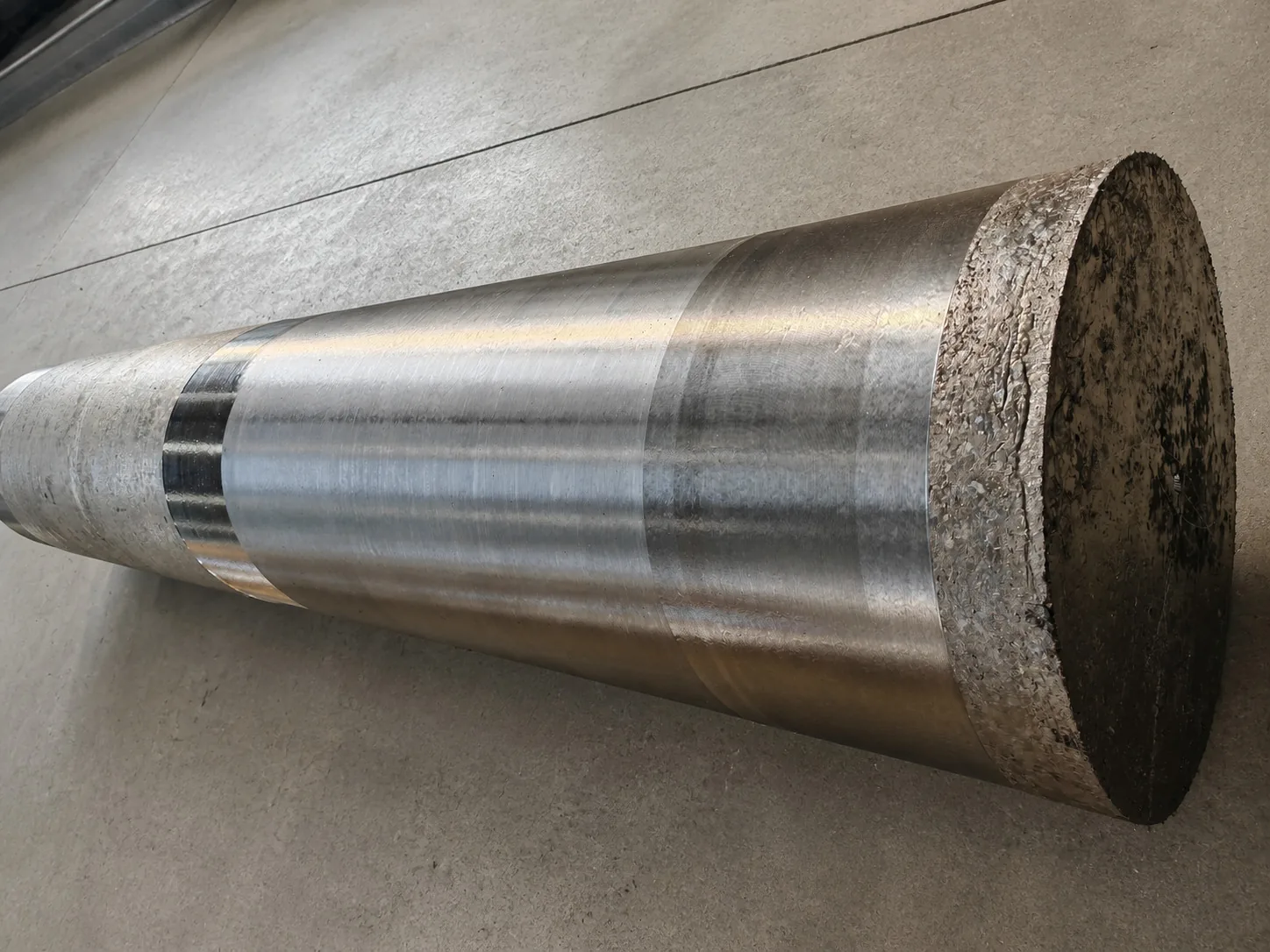
The paper notes that practical titanium can carry preferred crystallographic textures associated with rolling, forging or additive manufacturing. A titanium laser-cutting or micro-machining supplier using titanium sheet and plate should therefore define what material-state variation its procedure has actually covered. Chemistry and thickness remain necessary controls, but they do not describe crystallographic state by themselves.
What the paper does not qualify
The limits are material. The work models alpha titanium at atomistic dimensions. The simulations were performed under idealized vacuum and did not explicitly include oxidation, plasma chemistry or gas-phase interactions. The authors also identify scale and penetration-depth limits and propose larger multiscale models as future work. Their generated datasets are available on request rather than as a public production dataset.
Those boundaries rule out claims about a certified laser route, a guaranteed crater correction or transfer to Ti-6Al-4V without validation. They also keep the buyer conclusion practical: if surface geometry or integrity is critical, incoming texture and grain structure belong in the process-transfer review, alongside the conventional machine parameters.
The study changes the control question before it changes the drawing. A femtosecond-laser recipe should be treated as a material-process pair. Until tests show otherwise, a change in titanium texture, product route or processed orientation is a reason to verify the surface endpoint again.
Source boundary: This analysis uses the complete accepted manuscript and publisher record for DOI 10.1038/s44334-026-00114-8. It distinguishes the paper’s atomistic mechanism evidence from production-scale qualification and does not treat modeled temperature differences as universal machining corrections.
FAQ
# What did the new titanium laser-ablation study find?
# Which titanium orientation produced the highest simulated temperature?
# Does the study qualify a production femtosecond-laser recipe?
# What should a buyer verify when transferring the process?
Need this material? Get a factory-direct quote.