ATI's South Carolina Mill Goes Live as Airbus Doubles Its Contract: Phase Two of Western Titanium De-Russification
ATI’s South Carolina Mill Starts Up in May, Airbus Doubles the LTA — Phase Two of Western Titanium De-Russification Is On
In May 2026, Allegheny Technologies Inc. (ATI) brought its new specialty titanium sheet mill in South Carolina into production. In the same week, Airbus disclosed that it had doubled its long-term agreement (LTA) volume with ATI, weighted toward Ti-6Al-4V aerospace sheet.
This is not a coincidence. It is Phase Two of the Western titanium sheet supply chain’s de-Russification.
Phase One was the European procurement clear-out. On April 21, Safran announced it had completed its non-Russian titanium transition for forgings, moving billet and landing-gear forgings entirely from VSMPO-AVISMA to Ecotitanium plus its Japanese and US partners. Phase Two is the US capacity side filling in: ATI brings new aerospace sheet capacity online, and Airbus pins down the matching LTA share.
Capacity-side moves are slow. Safran’s transition was contract reshuffling and could close overnight. ATI’s mill is a greenfield ramp — 18 to 24 months minimum. The interval between start-up and full rate is the tightest window the market will see.
The US Capacity-Side Fill Is an 18-24-Month Ramp Curve
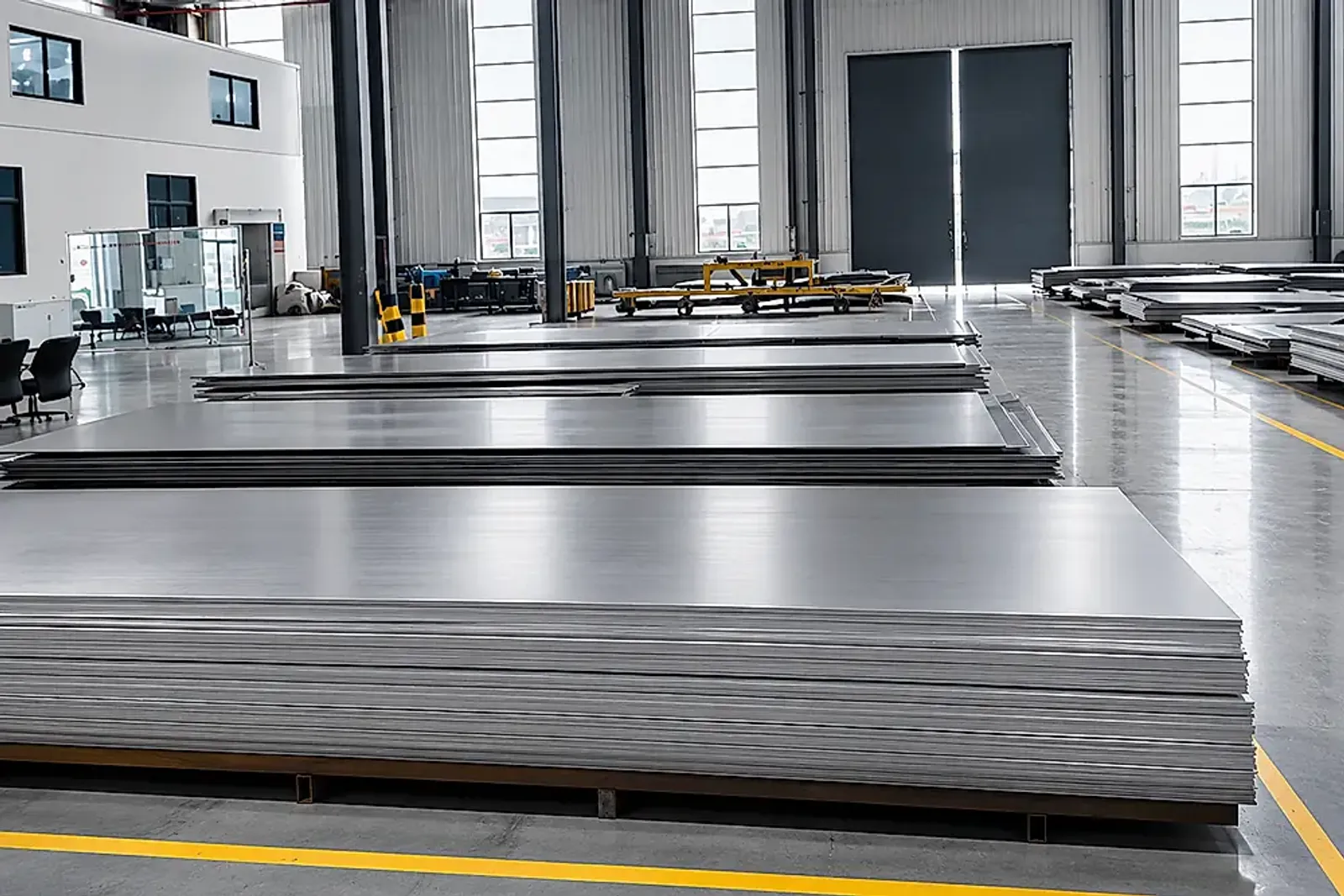
The South Carolina mill is positioned for specialty titanium sheet — AMS 4911 (Gr.5 annealed sheet), AMS 4901 (Gr.2 CP sheet), AMS 4915 (Gr.5 STA sheet) and similar mainline aerospace grades. End uses are fuselage skin, firewalls, engine nacelles and center-wing-box skin parts.
Aerospace sheet mill ramps have a rhythm. Year one runs small batches through first-article inspection (FAI) and customer system audits; year two is when steady tonnage starts. Boeing and Airbus supplier qualification runs through NADCAP AC7110/2 (chemical processing) plus AC7114 (NDT) plus AS9100D system audits, and every material grade has to run its own PPAP.
The conclusion is clean. Through all of 2026 and the first half of 2027, Western sheet supply additions are limited. Real easing waits until 2028, when the new mill reaches steady tonnage, paired with Safran’s €150M Gennevilliers press starting up in 2029. The two capacity curves only arrive together at that point.
What Doubling ATI Really Means for Airbus: a Key Step in Replacing VSMPO
Airbus did not disclose the doubled tonnage. The trade reading is that the new volume sits in the annual LTA framework for Ti-6Al-4V aerospace sheet and bar.
Airbus has admitted in recent disclosures that Russian titanium still accounts for roughly 20% of its supply and is being drawn down. This is a different curve from Boeing’s, which closed out Russian titanium back in 2022. Airbus’s slower path comes down to one structural fact: Europe has no aerospace-grade titanium smelter of its own. Aubert & Duval’s Ecotitanium handles titanium scrap recycling, but that is it. In the near term Airbus has to push VSMPO’s vacated share onto the US (ATI/TIMET) and Japan (Toho Titanium, Osaka Titanium).
Doubling the ATI book is the key step in that transfer. For Airbus, de-Russification isn’t a PR exercise — it’s capacity reservation. LTAs are multi-year contracts, and doubling them means Airbus has effectively locked in the matching ATI sheet tonnage for the 2027-2030 cycle.
The takeaway for everyone else: through 2026-2028, Airbus sheet purchasing sits ahead of every non-aerospace buyer in the queue. ATI and TIMET spot allocations will not loosen.
The Transition Window: Tier-2 and MRO Channels Open Up
Primary-structure demand is locked into LTAs, but the wider market still has gaps. They sit with Tier-2/3 sub-contractors and MRO.
Fuselage sub-assemblers, nacelle shops and auxiliary-system shops (APUs, hydraulic plumbing, firewall assemblies) form the Tier-2 layer. Line maintenance, module overhaul and modification-life extension (MLE) make up MRO. Both buy on spot orders and short-term contracts, not LTAs. When ATI and TIMET shift their sheet mix toward Boeing and Airbus LTAs, Tier-2 and MRO will see real spot shortages in Gr.5 titanium sheet, Gr.5 titanium bar and titanium forgings.
Categories that compliant Chinese channels can carry through 2026-2028:
- Chemical and marine adjacencies (ASTM B265 Gr.2/Gr.7, B338 Gr.2 welded titanium tube): non-aerospace but consuming the same sheet and tube downstream.
- Medical implant adjacencies (ASTM F136 Gr.23 ELI): a separate certification path — Baoji and Western Titanium already hold ISO 13485.
- Tier-2 non-critical parts (engine bay interior trim, APU covers, outer firewall skins): secondary parts within an AS9100D system, with shorter audit cycles than primary structure.
- MRO overhaul parts (Gr.2 CP titanium and Gr.5 repair plate for line work): MRO shops typically self-qualify suppliers and accept mill cert plus lot traceability.
View from Titanium Valley: Drawing-Based Forging RFQs from Europe Are Real
Over the last 90 days, one new pattern has shown up in our Baoji inquiry queue: European buyers walking in with titanium forging drawings and asking about drawing-based custom forging. Nothing has closed yet — these are still in discussion. But the inquiry itself is the signal.
Twelve months ago these RFQs did not exist. European Tier-2 buyers were still moving through VSMPO plus Aubert & Duval, asking supplier qualification questions, not channel questions. Now they ask “can the China channel make this forging to my drawing, and what’s your lead time?” — a direct behavioral mapping of Phase Two de-Russification.
On the supply side, the numbers are tightening too. Current AMS 4911 / 4928 / 4965 stock totals roughly 5 tonnes — enough for one or two MRO medium-batch orders. If the Airbus-doubles-ATI signal propagates through Tier-2, the next 60 days of Gr.5 titanium sheet spot may tighten further.
Sponge Cost-Side Reference
Asian mill spot prices on titanium sponge (current band):
| Grade | Mainline mill-delivered range | Notes |
|---|---|---|
| Grade 0 | $7.4 – 7.6 / kg | Aerospace and high-end medical |
| Grade 1 | $7.1 – 7.4 / kg | Premium chemical and medical |
| Grade 2 | $6.7 – 6.9 / kg | Industrial and general chemical |
These are Asian mill-delivered prices, not Western landed. Their reference value: Asian-side raw-material cost is relatively stable. What’s actually tight on the Western side is bottleneck capacity across melting, rolling and forging — not sponge feedstock. That means the 2026-2027 spread on Gr.5 titanium sheet and Gr.5 titanium forgings is set by Western midstream capacity, not by sponge volatility.
What Buyers Should Actually Do
Tier-1 and engine OEMs: lock in 2026-2027 annual LTAs. Do not bet on a price retreat. The ATI ramp plus the Airbus doubling will squeeze existing capacity at the same time. Western spot will not loosen.
Tier-2/3 sub-contractors: bring compliant Chinese channels into the mix. Aerospace secondary parts go through compliant Chinese mills inside the AS9100D framework; chemical and marine adjacencies go via ASTM B265 / B348. Priority categories are Gr.5 titanium sheet and titanium bar.
MRO: build overhaul-part inventory to 12 months. The MRO pain point is one delayed batch derailing an entire line-maintenance schedule. Through the transition window, 1.5x to 2x safety stock is cheaper than spot negotiation.
Chemical, marine and medical buyers: this window is good news for you. With aerospace tightening Gr.5, Gr.2 / Gr.7 / Gr.23 ELI supply has actually loosened and bargaining position has improved. Consolidate R&D and small-batch orders through titanium CNC machining and the no-minimum-order-quantity channel.
Conclusion: The Real Cadence of Phase Two De-Russification
ATI starting up in May plus Airbus doubling its LTA equals Phase Two of Western titanium sheet de-Russification — under way now. But the 18-24-month ramp means the 2026-2027 transition window will stay tight. Real easing waits for ATI’s full ramp in 2028, paired with Safran’s Gennevilliers press in 2029.
The opportunities inside that window belong to Tier-2/3 and MRO buyers — and to any supplier who can provide a compliant China channel to share the load.
Related Products & Services
- Service → Titanium CNC Machining — drawing-based forging inquiries from Europe are now arriving; 5-axis CNC and prototype-from-drawing in 4-6 weeks.
- Product → Gr.5 Titanium Sheet (AMS 4911 etc.) — roughly 5 tonnes in stock, covering Tier-2 and MRO short-term demand.
- Product → Gr.5 Titanium Bar (AMS 4928 etc.) — standard sizes for Tier-2 sub-contractors and MRO repair work, small-lot splits available.
Related Articles
- Safran Completes Non-Russian Titanium Transition in April (De-Russification Phase One)
- F-35 Dual Contract Awards in April 2026 — Structural Upshift in US Military Titanium Forging Demand
- VSMPO Capacity Collapse from 32k to 17k Tonnes — Global Aerospace De-Russification Rebalance
About: Titanium Seller is a supply chain platform based in Baoji, China’s Titanium Valley, serving aerospace, chemical, marine and medical buyers worldwide.
FAQ
# What kind of titanium products will ATI's new South Carolina mill produce?
# Airbus doubled its ATI contract — which segment exactly?
# Can Chinese sheet mills move into the slack Airbus is freeing up?
# How long will it take ATI's South Carolina mill to ramp to full capacity, and how much does this help 2026-2027 supply?
# What should buyers actually do?
Need this material? Get a factory-direct quote.