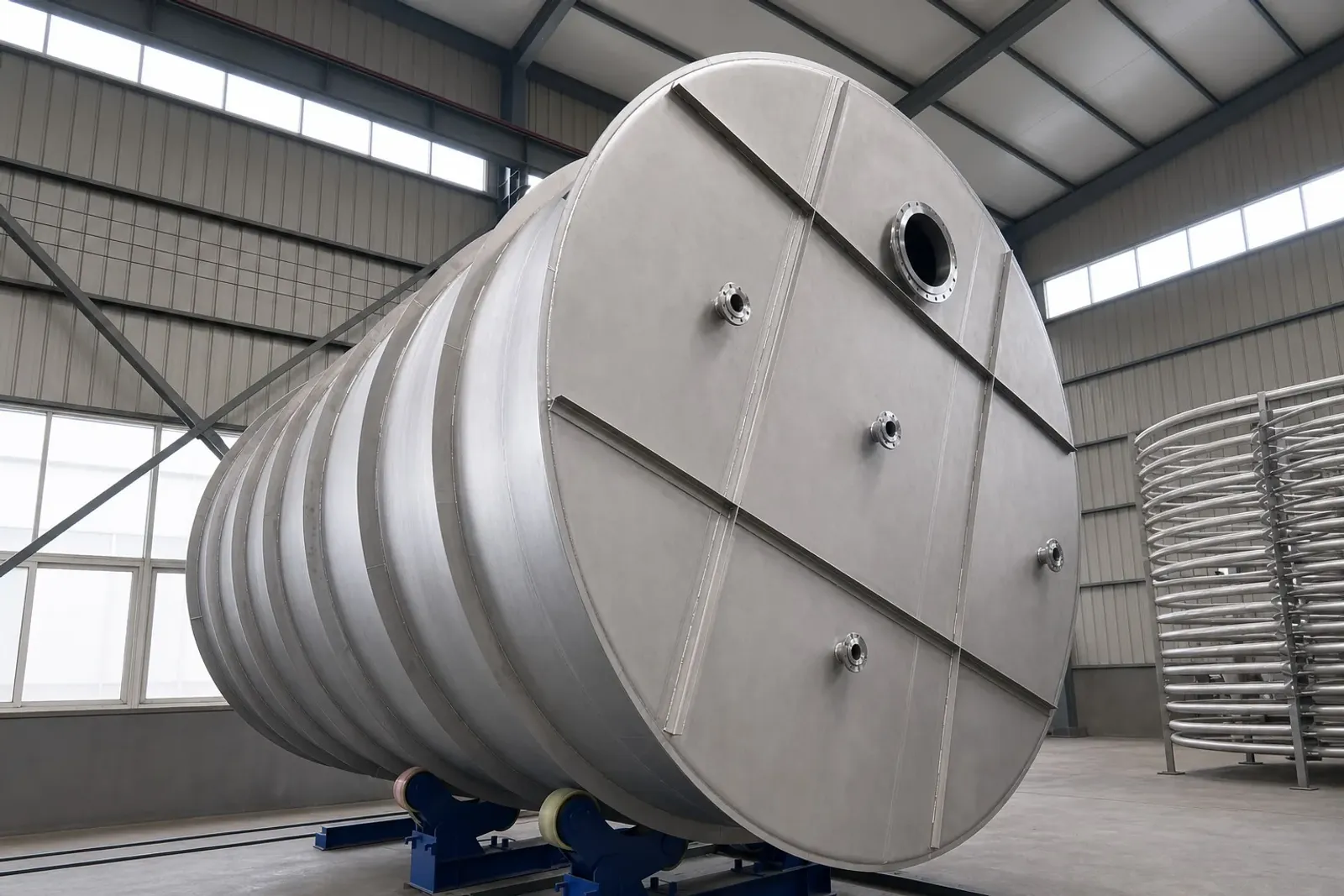
BS EN 13445-11:2026 Makes Manufacturing Route Part of the Titanium Vessel Quote
The British Standards Institution published BS EN 13445-11:2026 on July 31, 2026, adopting the current European requirements for unfired pressure vessels made from titanium and titanium alloys. The Dutch standards body NEN lists the underlying European edition as current from 2026-07 and as replacing the 2024 edition.
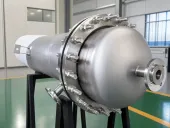
The short scope statement carries an unusually useful procurement warning. Part 11 supplements the general EN 13445-1:2026 through EN 13445-5:2026 requirements, but it explicitly excludes cast materials, hot isostatic pressing (HIP), additive manufacturing and material Groups 51.4 and 54 from this version. A buyer can therefore specify “titanium pressure vessel to EN 13445” and still leave the most important question unresolved: is the proposed material and manufacturing route actually inside the cited edition?
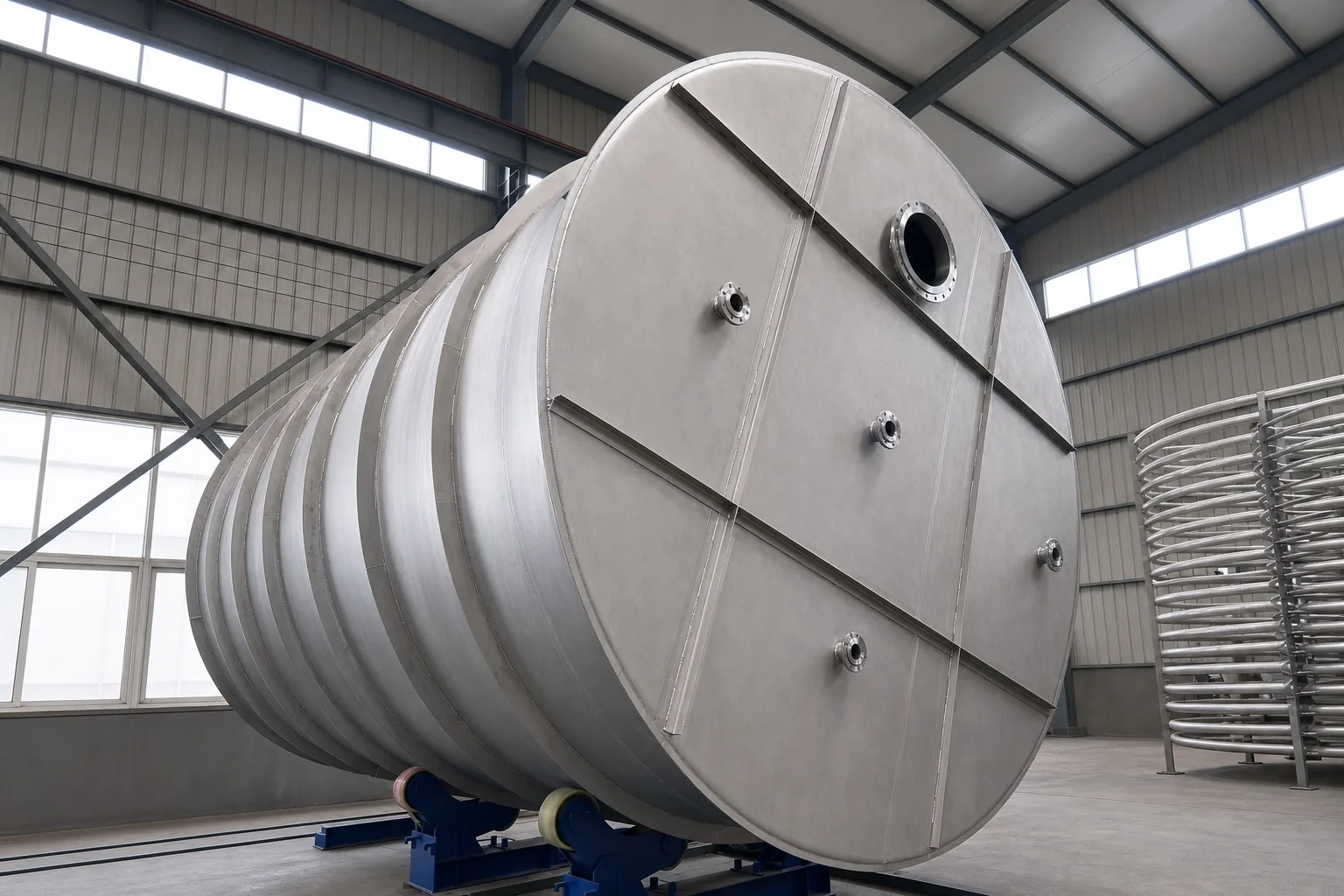
That is the news mechanism. A code reference is not merely an inspection instruction added after fabrication. Its scope selects which design, material and production route can enter the conformity path in the first place.
A Standard Number Does Not Cover Every Titanium Route
BSI describes Part 11 as additional requirements for titanium pressure vessels under Parts 1 to 5. Part 1 states that the series applies to unfired pressure vessels with a maximum allowable pressure above 0.5 bar gauge, while allowing use below that threshold, including vacuum, when appropriate. Part 11 then narrows the titanium-specific route boundary (BSI Part 11, BSI Part 1).
The exclusion of cast, HIP and additively manufactured material does not mean those routes are inherently unsafe. It means this edition does not provide their titanium-specific route into Part 11. A project proposing one of them needs another defensible code or approval path, an agreed technical justification, or a later amendment or revision that actually includes it. Calling a route “equivalent” does not place it inside the published scope.
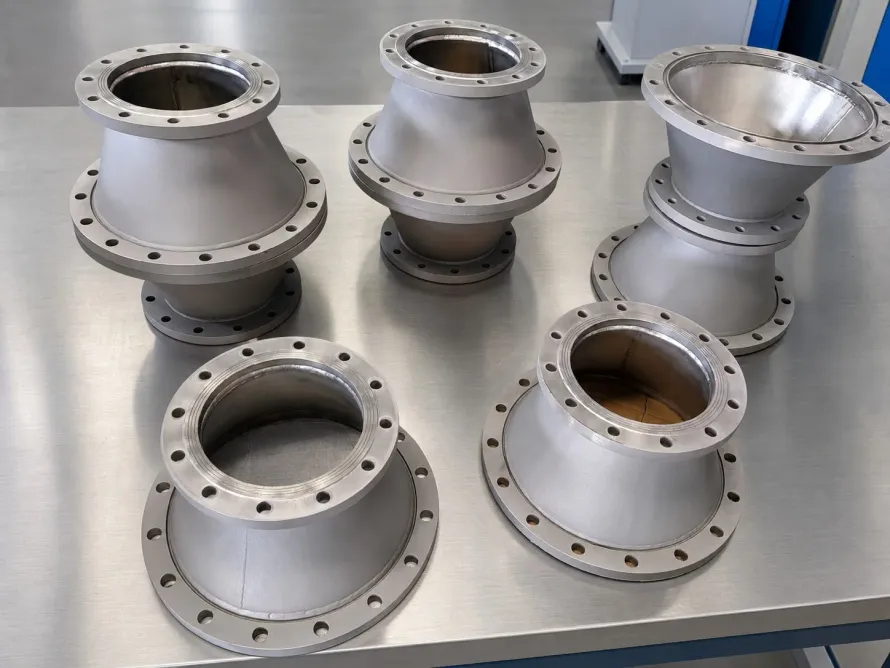
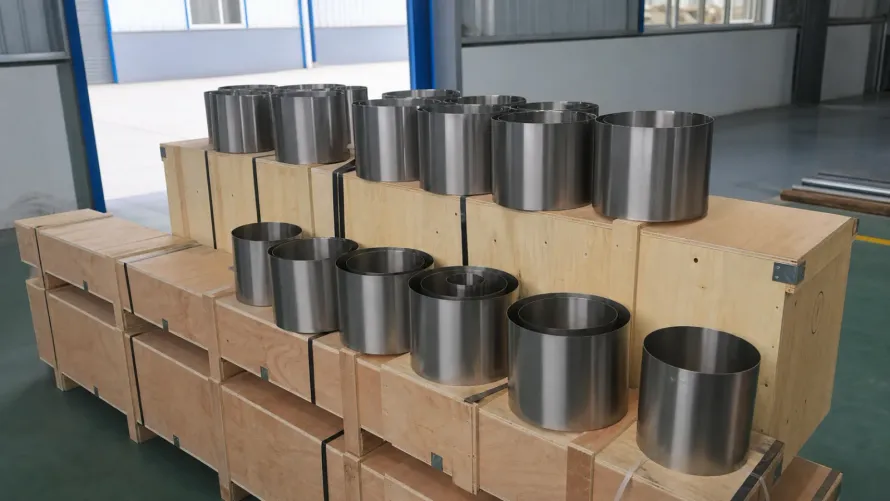
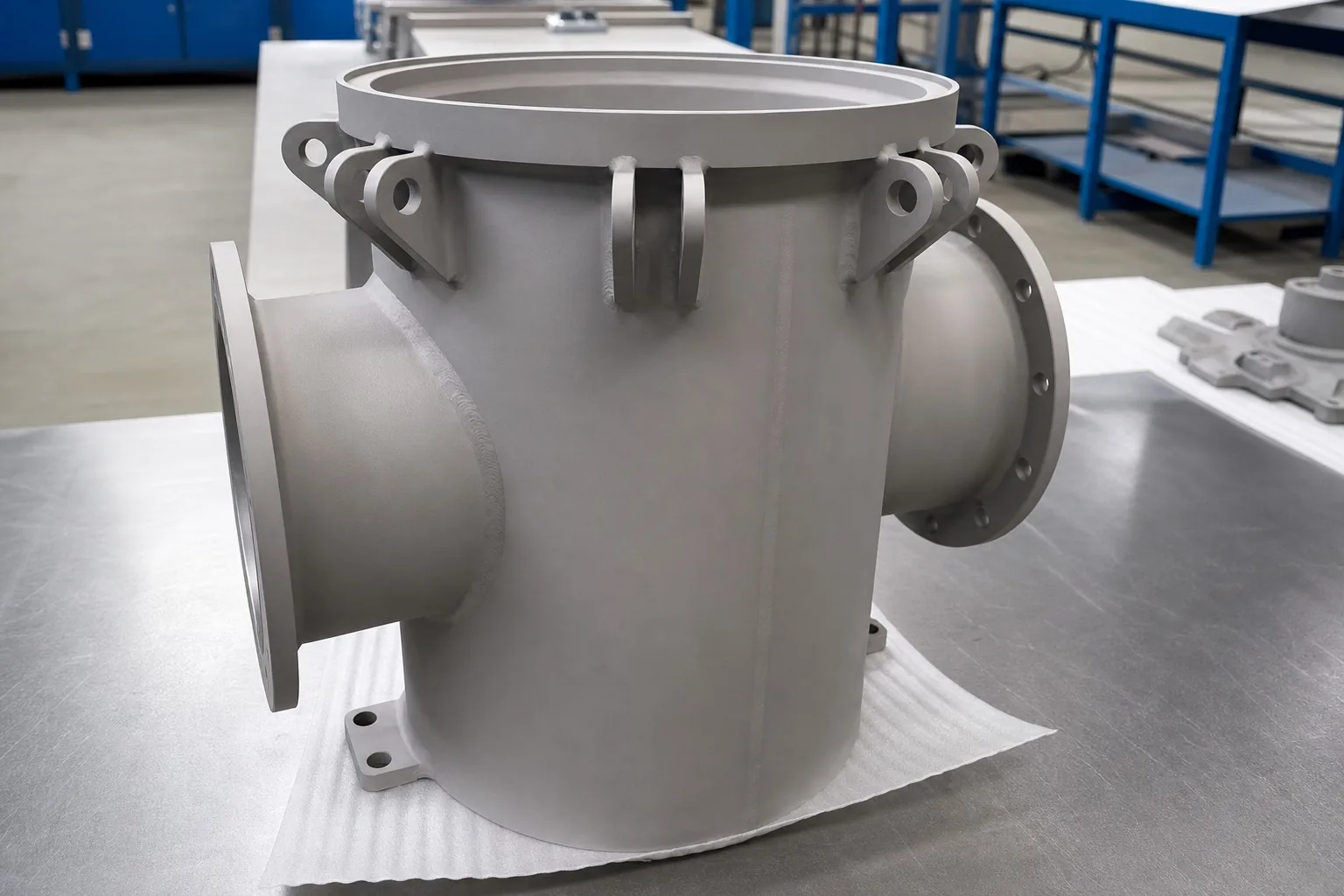
This distinction matters because titanium equipment is increasingly offered through more than one manufacturing chain. A shell may be formed and welded from plate; a nozzle may be machined from wrought stock; a complex transition could be proposed as a casting, HIP preform or additive part. The finished geometry may look interchangeable while the governing evidence is not.
Route Eligibility Comes Before Material Certification
An MTR can establish the chemistry, product form and test results for the material it represents. It cannot decide whether a design code accepts the manufacturing route. That decision begins with the contract edition, jurisdiction, vessel category, material group and component route.
For a conventional fabricated vessel, the evidence chain can connect plate, tube, forgings, forming, welding, heat treatment, NDT and pressure testing under the applicable parts of the series. For an excluded route, the chain has a gap before those downstream records are reviewed. More inspection at the end does not automatically close a scope gap at the beginning.
The buyer risk is therefore code-route mismatch. It appears when a quotation names a familiar standard but the bill of materials includes a form or process that the named edition does not cover. The mismatch can remain hidden until design review, notified-body assessment, purchaser approval or final documentation—when changing the route is expensive.
A Six-Gate Code-to-Quote Check
Before comparing price or delivery, buyers and fabricators can close six gates.
| Gate | Question | Evidence to retain |
|---|---|---|
| Jurisdiction | Which law, conformity route and responsible authority govern the vessel? | Project jurisdiction, regulatory basis, conformity plan and authority roles |
| Edition | Which exact EN 13445 and national-adoption editions are contractual? | Dated standard list, amendments, purchaser specification and precedence rules |
| Scope | Do pressure, vessel type, titanium material group and component fall inside the cited parts? | Scope review, material-group identification and documented exclusions |
| Manufacturing route | Is each shell, head, nozzle, flange and internal made by an included route? | Component-route matrix covering wrought, formed, welded, cast, HIP or AM origins |
| Verification | Which design, procedure, personnel, NDT and pressure-test records prove conformity? | Calculations, WPS/PQR, welder approvals, heat records, NDT plan and test dossier |
| Change control | What happens if material form, supplier, route or edition changes? | Deviation process, engineering review, authority acceptance and revised release file |
The framework is deliberately front-loaded. If the scope and route gates fail, the project should not proceed as though documentation can be repaired after manufacture.
What Titanium Vessel Buyers Can Use Now
Buyers sourcing titanium process equipment should ask for a component-level route matrix with the first technical quotation. “Titanium” and “fabricated” are not enough. The matrix should identify the product form and manufacturing origin of every pressure-retaining part, then link each one to the controlling clause or approved alternative path.
Suppliers providing titanium fabrication should freeze the standard edition before procedure qualification and material purchase. A quotation built around the 2024 edition should not be silently treated as a 2026 quotation, and a 2026 citation should not be used as a generic badge. The NEN record confirms that the current edition replaces the earlier one; the project still has to review which edition the contract and jurisdiction require.
Buyers should also keep national adoption separate from legal designation or harmonisation. Publication by BSI or another national standards body confirms the technical standard exists; it does not by itself prove the same regulatory status, transition date or presumption of conformity in every market. That check belongs in the jurisdiction gate.
The restrained conclusion is practical. BS EN 13445-11:2026 gives titanium pressure-vessel projects a current route, but its value begins at the boundary. A compliant-looking final vessel cannot repair an out-of-scope material route. The quote must connect jurisdiction, edition, material group, manufacturing origin and verification before production starts.
FAQ
# What does BS EN 13445-11:2026 cover?
# Does the 2026 edition cover cast, HIP or additively manufactured titanium?
# Why is an MTR not enough for a titanium pressure-vessel quote?
# What should buyers request before fabrication?
Need this material? Get a factory-direct quote.