New Composite-Rivet Study Turns Titanium Hybrid-Joint Buying Into a Thermal-Window Question
A paper published in Composites Part B: Engineering on 2026-08-01 reports a thermo-forged carbon-fiber/polyphenylene-sulfide (CF/PPS) rivet for joining carbon-fiber/PEEK (CF/PEEK) composite plate to TC4 titanium alloy plate. The fastener uses a lower-melting matrix so the rivet can be formed without remelting the higher-melting CF/PEEK laminate. The best laboratory joints came from higher forming temperatures and lower cooling rates, which increased crystallinity and improved resin encapsulation of the fibers (paper).
The buyer-relevant change is larger than a lighter fastener. Replacing a metallic rivet shifts part of the release evidence from metal grade and fastener geometry into a thermal history that controls polymer flow, crystallization and fiber support. The TC4 plate remains a structural member, but the acceptance logic becomes a hybrid material-process system.
The Lower-Melting Rivet Protects One Part of the Stack
Conventional thermoplastic composite rivets can require heating that also remelts a laminate made from the same matrix, increasing the risk of voids or delamination around the joint. The new study separated those thermal thresholds. CF/PPS could be heated and shaped while the CF/PEEK plate remained below its melt condition.
That is an architectural decision, not merely a material substitution. The rivet was first thermo-forged to a controlled shape and then headed during joining. Elevated temperature lowered flow resistance; controlled slow cooling supported crystallization. The final load path depended on how resin moved around buckled fibers and how completely it encapsulated them.
The industry mechanism is thermal-window partitioning: choose a fastener matrix and process window that allow the fastener to deform while protecting the adjoining composite and maintaining the titanium-side geometry.
Specific Strength Does Not Complete Qualification
The paper reports that the CF/PPS joints’ specific tensile-shear and pull-through strengths were 227.60% and 151.66% higher, respectively, than joints made with Ti45Nb rivets in the reported comparison. Failure occurred in the composite rivet, with fiber breakage and interfacial debonding among the observed damage modes.
Those values are meaningful within the tested specimens, methods and mass normalization. They are not aircraft design allowables and do not establish fatigue life, impact tolerance, moisture or temperature durability, installation variability, inspectability or repair behavior. A buyer should resist converting “higher specific strength” into “qualified replacement.”
The result does identify where evidence must move. A titanium fastener is commonly released through alloy, dimensions, thread or shank geometry, heat treatment, surface and mechanical tests. A thermoformed composite rivet adds resin/fiber identity, conditioning, forming temperature, cooling history, crystallinity, head formation and damage-state controls.
A Seven-Line Joint-System Evidence Map
| Evidence line | Buyer question | Record to retain |
|---|---|---|
| Material stack | Which CF/PPS rivet, CF/PEEK laminate and TC4 plate states are joined? | Certificates, laminate and plate genealogy |
| Thermal separation | Is the rivet formable without damaging the laminate? | Melt/softening boundaries and validated cycle |
| Rivet formation | Are fiber distribution, resin flow and preform geometry repeatable? | Time-temperature-pressure record and section checks |
| Cooling and crystallinity | Does cooling stay inside the demonstrated structure window? | Cooling curve and qualified material-state surrogate |
| Hole and stack geometry | Are diameter, clearance, edge distance, surface and stack thickness controlled? | Machining and dimensional inspection |
| Load modes | Are shear, pull-through, bearing and service-relevant cyclic loads covered? | Test matrix, failure modes and transfer rationale |
| Change and repair | Which material, thermal, tooling, installation or repair change reopens release? | Approved baseline and change-control rule |
The map keeps product forms visible. A strong rivet cannot correct a damaged CF/PEEK hole or an out-of-tolerance TC4 plate. Conversely, a conforming titanium plate does not validate a composite fastener’s thermal history.
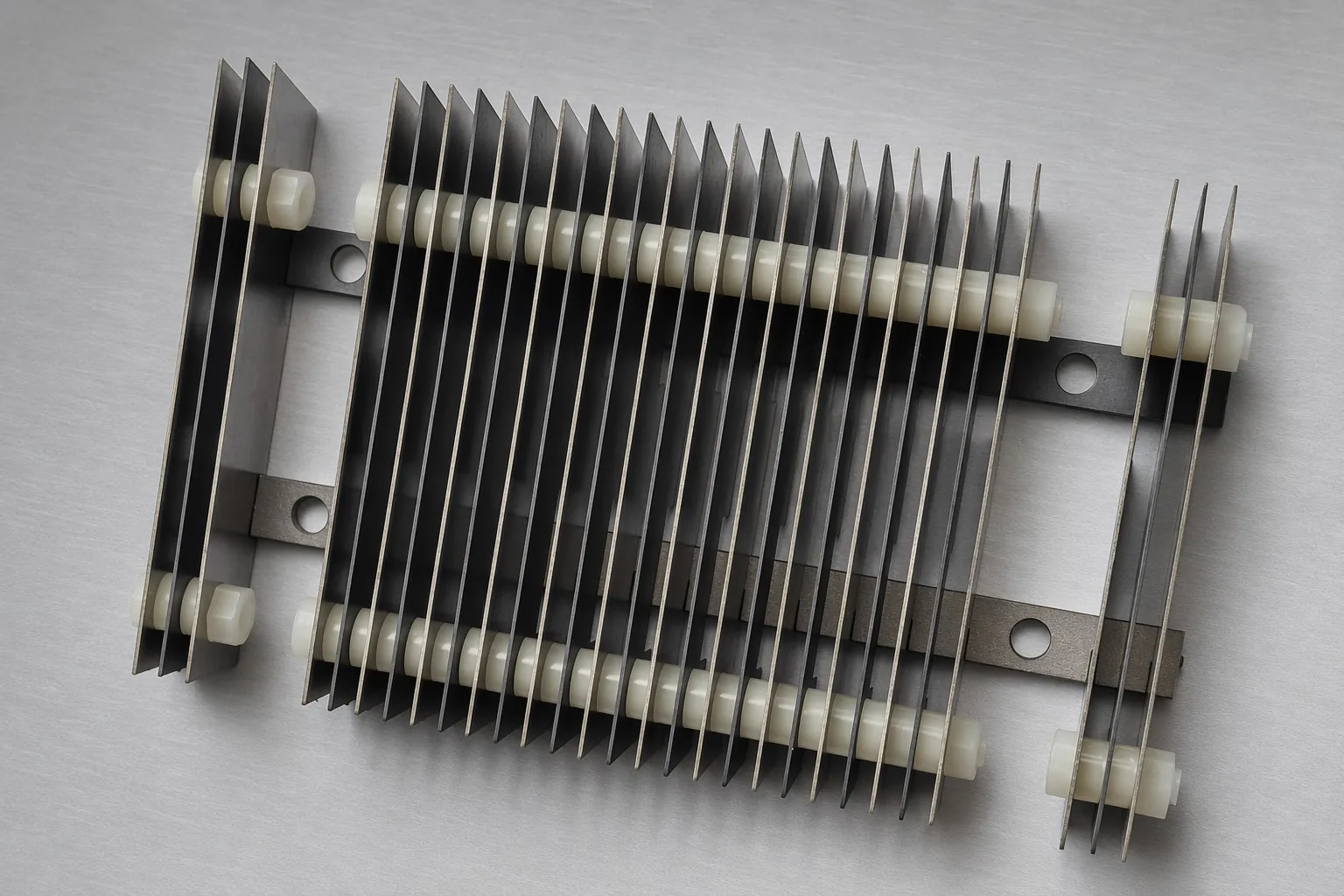
Titanium Buyers Should Treat the Study as a Substitution Boundary
For buyers of titanium sheet and plate, the paper is a reminder that material substitution can happen one component at a time. The titanium plate remains in the hybrid stack even if a metallic fastener is replaced. Surface condition, hole-making, burr control, edge distance and local bearing response still travel with the plate.
For buyers of titanium fasteners, the site’s earlier fastener-to-platform release file mapped titanium material, drawing, installation and service evidence. The composite-rivet paper adds a distinct competing route. It does not erase that file; it shows that a substitute fastener needs an expanded process-state file before the platform can compare the two routes fairly.
The restrained conclusion is that CF/PPS thermo-forged rivets deserve attention as a hybrid-joining technology, not automatic approval as a universal titanium-fastener replacement. The strongest buyer question is no longer “which fastener is lighter?” It is “which complete joint system has a controlled thermal window, repeatable geometry and evidence for every governing load and environment?”
FAQ
# What was joined in the composite-rivet study?
# Why did temperature and cooling rate matter?
# Did the study qualify composite rivets to replace titanium fasteners?
# What remains important about the titanium plate?
Need this material? Get a factory-direct quote.