New Ti-6Al-4V ELI Failure Study Shows Why Batch Compliance Can Miss a Local Fatigue Weakness
A failure-analysis paper published in Engineering Failure Analysis on 2026-08-01 tested two batches of Ti-6Al-4V ELI supplied in accordance with ASTM F136. Both passed the reported chemical, microstructural and static tensile requirements. They appeared equivalent under the acceptance evidence used. Fatigue testing then exposed a different result: one batch contained a local vein-shaped heterogeneity and suffered a fatigue-strength reduction of more than 200 MPa relative to the homogeneous material (paper).
The useful news for a buyer is not that certificates or tensile tests are worthless. It is that an average or sampled material baseline and a local fatigue-critical weakness answer different questions. When service failure begins at a small surface-connected region, a conforming heat-level record may not describe the feature that controls life.
The Accepted Batches Were Not Locally Equivalent
The researchers traced the unexpected fatigue scatter to a vein-shaped region in one batch. Its composition approached commercially pure titanium: aluminium and vanadium were absent, and coarse alpha-Ti grains replaced the expected local alloy state. The interface between that region and the surrounding Ti-6Al-4V ELI created a local stress concentration and promoted premature surface crack initiation.
That sequence explains why the static results and fatigue results can coexist. A tensile specimen reports the integrated response of its gauge section under one loading mode. High-cycle fatigue can be governed by the most damaging local feature in the stressed surface or volume. The critical feature may occupy too little material, or fall outside the sampled location, to shift a bulk result beyond its acceptance limit.
The industry mechanism is therefore sampling scale versus failure scale. Chemistry, tensile strength and a prescribed microstructural check establish a necessary material baseline. Fatigue reliability depends on whether the evidence can see the spatial scale, location and morphology of the feature that initiates a crack.
This Is Not a Verdict Against ASTM F136
The current ASTM page describes ASTM F136-26 as covering chemical, mechanical and metallurgical requirements for wrought annealed Ti-6Al-4V ELI (UNS R56401) used in surgical implant manufacture. It includes strip, sheet, plate, bar, forging bar and wire, together with heat analysis, tension and bend requirements (ASTM).
The paper does not demonstrate that every ASTM F136 lot contains this defect, that the standard was applied incorrectly, or that one added test should become universal. Its stronger and narrower conclusion is that conformance to a material specification does not automatically establish fatigue suitability for every finished component and load case.
For a medical-device buyer, the next evidence layer belongs in the device and process risk assessment. A machined bar, plate blank or wire can meet its incoming specification while downstream geometry, surface finishing and cyclic duty determine which local material volume becomes critical.
A Six-Line Average-to-Local Fatigue Map
| Evidence line | Buyer question | Record to retain |
|---|---|---|
| Specification baseline | Which ASTM F136 edition, product form and annealed condition apply? | Purchase order, certificate and edition control |
| Heat and lot acceptance | Which chemistry, tensile, bend and metallurgical results support release? | Heat analysis, product tests and sampling plan |
| Local heterogeneity screen | Which method can detect a composition or grain-state anomaly at the relevant scale? | Method capability, coverage and disposition rule |
| Stressed location | Which surface, hole, notch or machined feature carries the highest cyclic demand? | Drawing, machining route and stress-location map |
| Fatigue bridge | Which load ratio, environment, surface state and cycle range represent the device? | Coupon or component evidence and transfer rationale |
| Change boundary | Which melt, conversion, sampling, machining or supplier change reopens review? | Approved baseline and change-control trigger |
This map avoids two opposite mistakes. The first is treating a certificate as a complete fatigue qualification. The second is demanding an undefined “100% inspection” without proving that the method can detect the relevant feature. Coverage, sensitivity, location and disposition have to match the failure mechanism.
Product Form Determines Where the Evidence Must Travel
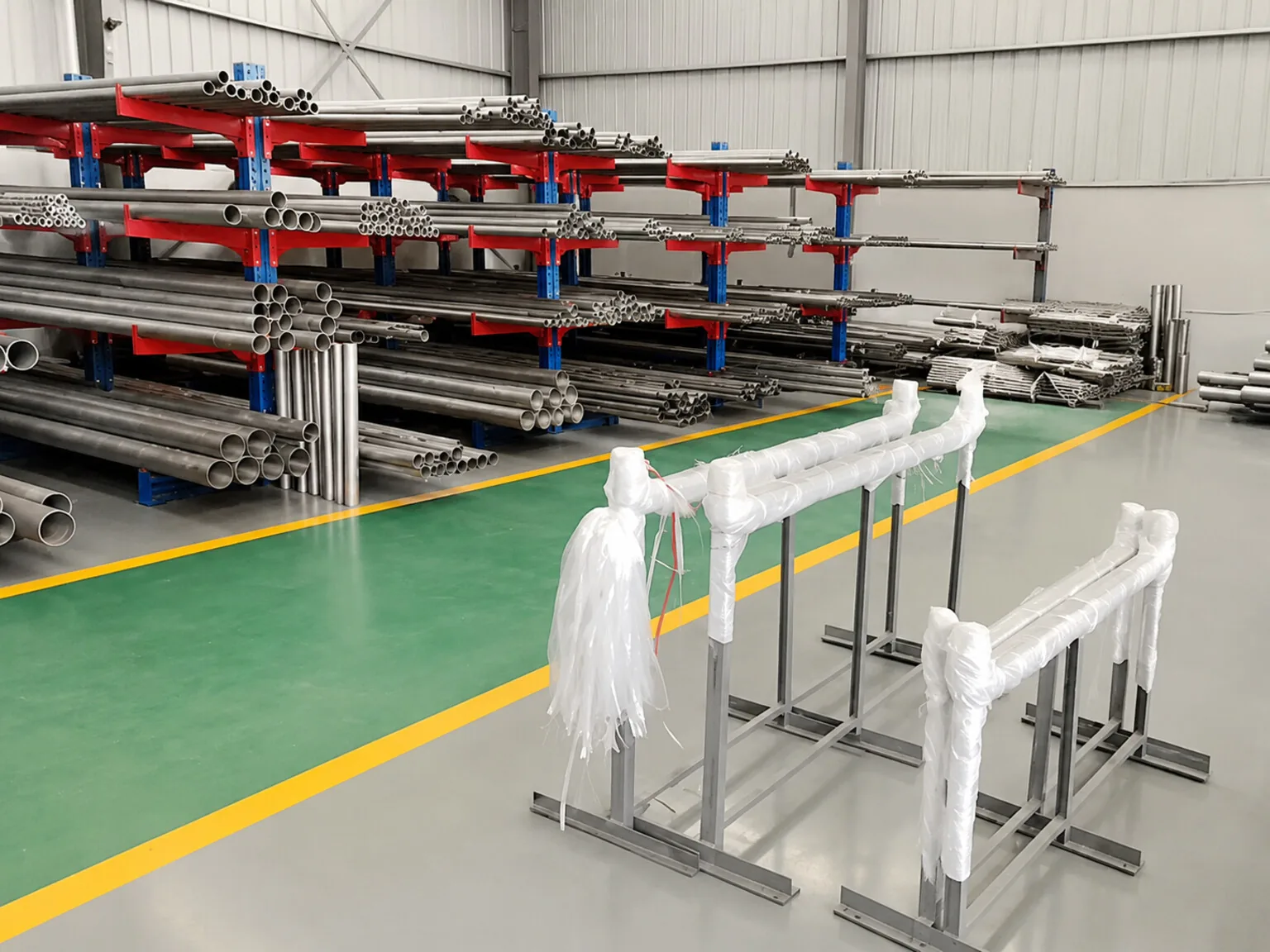
For buyers of titanium bar and titanium sheet or plate, the practical question is traceability through conversion and machining. If a bar becomes several implant blanks, the file should preserve which heat and lot entered each blank and which surfaces were created by machining. That does not prove absence of local heterogeneity, but it prevents a later anomaly from becoming untraceable.
The site’s earlier analysis of ASTM F136-26 version control dealt with keeping the correct standard edition connected to the device baseline. The new failure paper adds a distinct axis: even with the edition and reported tests aligned, the spatial resolution of evidence may still differ from the scale of fatigue initiation.
The restrained conclusion is precise. ASTM F136 conformance remains necessary for the covered material. The paper shows why fatigue-critical buyers also need a risk-based bridge from heat-level acceptance to local material condition, stressed geometry and service-representative cyclic evidence. Batch compliance and fatigue assurance should be connected, not treated as synonyms.
FAQ
# What did the Ti-6Al-4V ELI study find?
# Why did standard tensile acceptance not reveal the fatigue problem?
# Does the paper prove ASTM F136-26 is insufficient?
# What evidence should a medical titanium buyer connect?
Need this material? Get a factory-direct quote.