New Titanium Scaffold Study Turns Biocompatibility Into a Cell-Crosstalk Question
A study published online on 2026-08-05 reports a caution for 3D-printed titanium scaffold development: the biological response can depend on how two cell populations alter each other, not only on how either population behaves in isolation. The researchers examined signaling between primary human macrophages on titanium scaffolds and human periosteum-derived skeletal progenitors (paper DOI).
The result does not show that titanium implants are broadly harmful. It shows that a material-and-geometry claim can be incomplete when the relevant mechanism is a conversation between immune cells and tissue-forming cells.
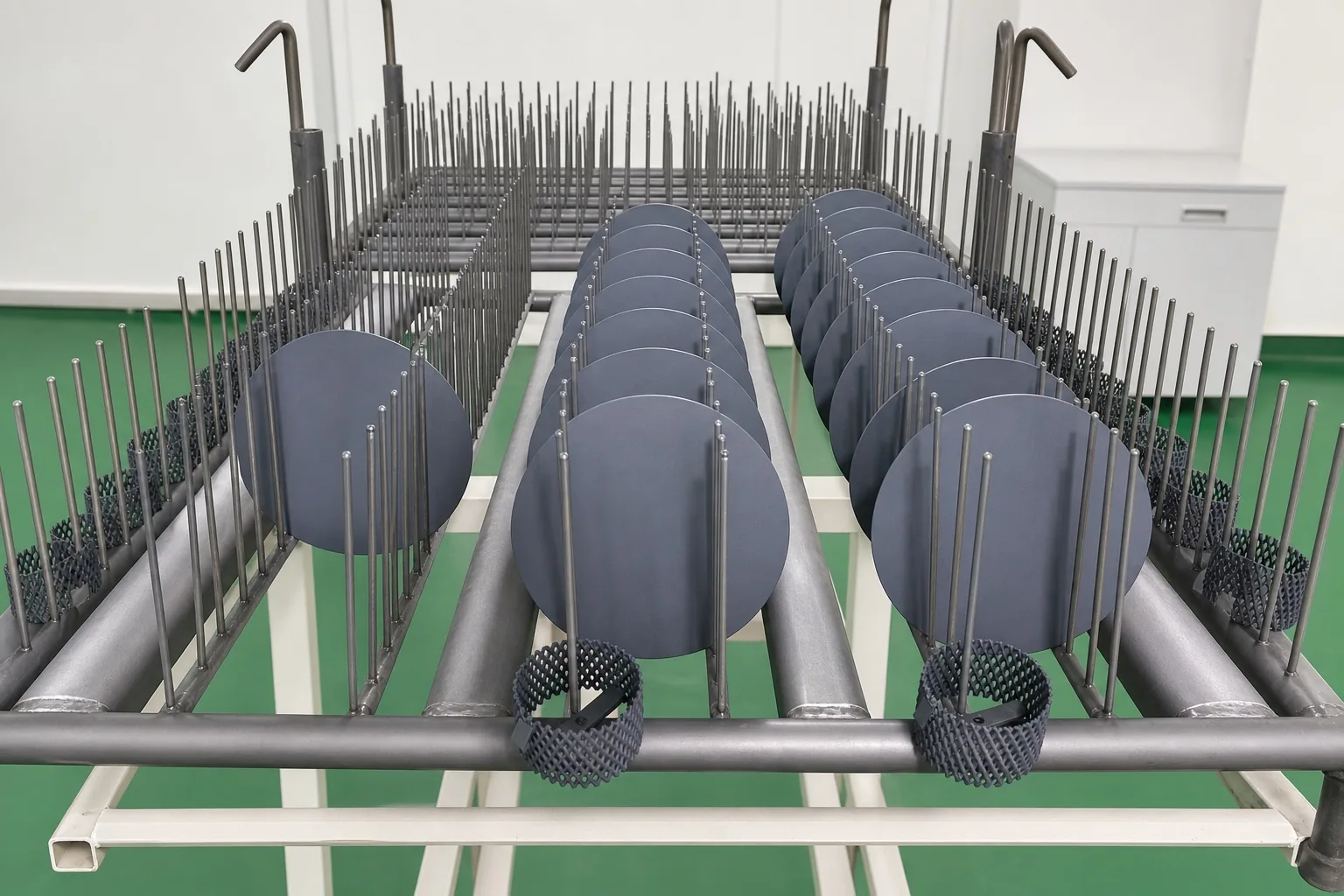
The Experiment Looked in Both Directions
The study used an indirect co-culture. Primary human macrophages were seeded on 3D-printed titanium scaffolds while human periosteum-derived cells were cultured separately. After five days, conditioned media were exchanged. That design allowed the team to ask two linked questions: how progenitor-derived signals changed macrophages on the scaffold, and how scaffold-conditioned macrophage signals changed the progenitors.
Under the reported readouts, the titanium scaffold promoted a more inflammatory macrophage profile and limited part of the progenitors’ modulatory effect. In the other direction, conditioned media from scaffold cultures selectively changed osteogenic gene expression in the progenitors, including effects on SPP1 and COL1A1.
The industry mechanism is feedback. The scaffold influences the first cell population; that population changes the signaling environment; the changed environment then influences the cells expected to build tissue. A direct adhesion or viability result from one cell type may therefore describe one link while missing the circuit.
“Negative” Is a Boundary, Not a Verdict
The paper’s title uses the word negatively, but the publication boundary matters. This was an in-vitro model with defined cell sources, scaffold conditions, exchange timing and molecular readouts. It was not a clinical trial, did not test a marketed implant in final finished form and did not establish a universal response for all titanium alloys, pore structures or surfaces.
The result should neither be dismissed nor inflated. It is strong enough to challenge a one-cell, one-endpoint story. It is not strong enough to declare that a scaffold will fail in vivo. The useful decision is to add a crosstalk hypothesis to the biological evaluation plan and then test whether it remains relevant for the target device.
A Six-Link Cell-Crosstalk Evidence Map
| Link | Development question | Evidence to retain |
|---|---|---|
| Final material state | Which alloy, build route, surface condition, cleaning and sterilization reach the patient? | Material and manufacturing baseline |
| First responder | Which immune-cell population meets the surface first, and under what exposure? | Relevant macrophage model and contact conditions |
| Progenitor signal | Which tissue-forming cells can amplify, damp or redirect that immune response? | Cell source and signaling markers |
| Exchange sequence | When and for how long do the two populations exchange conditioned signals? | Co-culture design, timing and controls |
| Functional output | Do molecular changes alter mineralization, matrix formation, integration or another device-relevant function? | Mechanistic and functional endpoints |
| Translation boundary | Which geometry, process or use change requires renewed biological evidence? | Risk assessment and change-control rule |
The map prevents “biocompatible titanium” from becoming a substitute for device-specific evidence. It also distinguishes a useful screening result from a release claim. A molecular signal can identify a risk direction; it does not automatically predict a clinical outcome.
Final Finished Form Still Controls the Regulatory Question
FDA explains that biocompatibility is assessed for the whole device in final finished form, including sterilization when applicable, rather than only for component materials (FDA biocompatibility basics). ISO 10993-1:2025 similarly places biological safety inside a risk-management process that considers material, design and tissue contact.
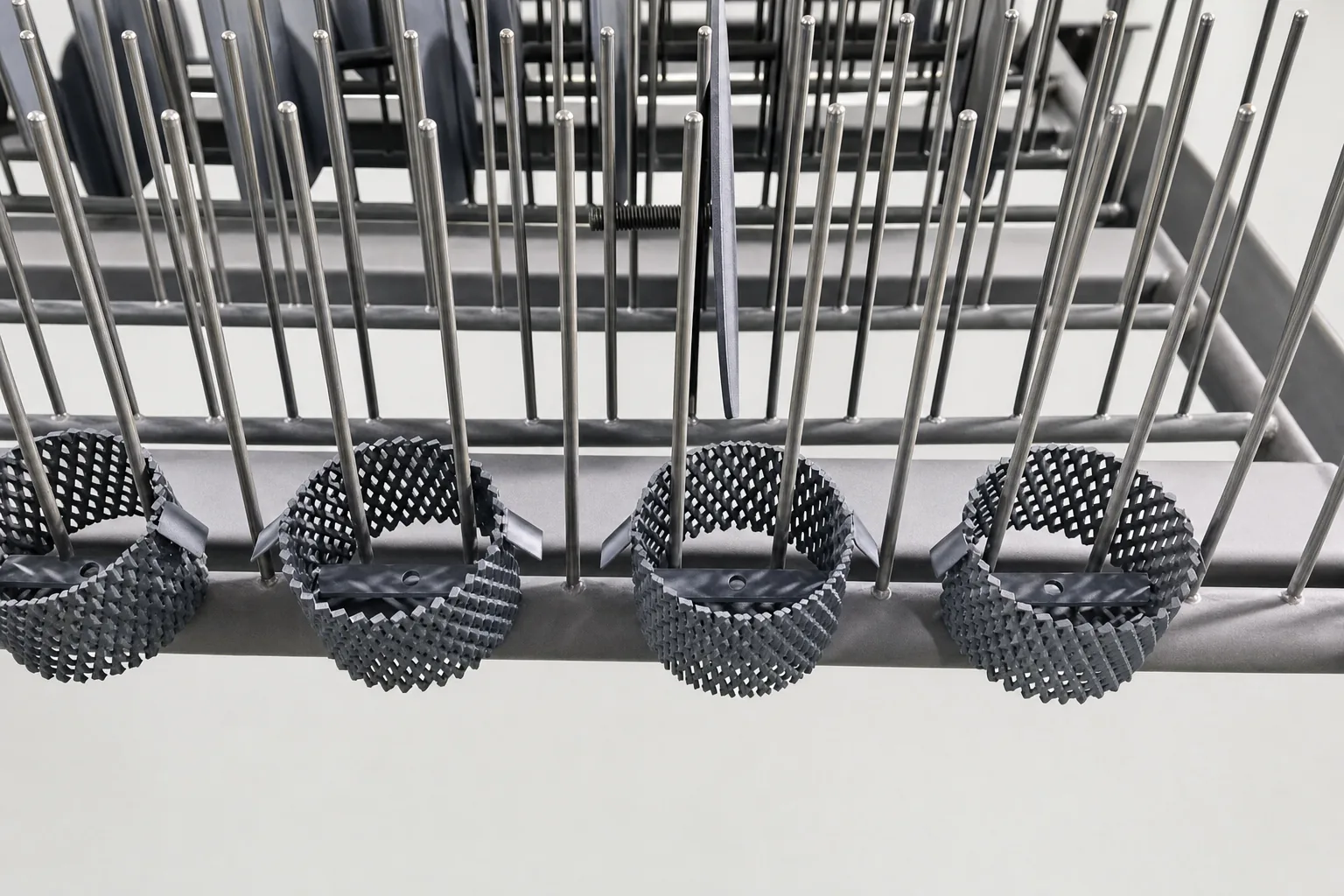
For buyers of special titanium alloys, chemistry and product condition remain necessary inputs. They do not establish the biological behavior of a porous scaffold after printing, support removal, surface treatment, cleaning and sterilization. The device manufacturer must own that bridge.
The site’s earlier article on a titanium lattice load-curve release file dealt with mechanical energy absorption and repeatable structural response. The new study adds a different axis: two scaffolds with similar geometry and static mechanics could still need different biological evidence if their surface or process state changes cell-to-cell signaling.
The restrained conclusion is not “titanium is inflammatory.” It is that biological qualification of a 3D-printed titanium scaffold should not stop at alloy identity, pore geometry or a single-cell assay. When the intended function depends on bone regeneration, the evidence plan should trace the loop from final surface to macrophage behavior, progenitor signaling and a device-relevant functional endpoint.
FAQ
# What did the titanium scaffold study test?
# Did the study prove that titanium implants are unsafe?
# Why are isolated cell tests not the whole biological picture?
# What should a medical-device evidence plan connect?
Need this material? Get a factory-direct quote.