India's ALH Approval Is a Supplier-Readiness Signal, Not a Titanium Order
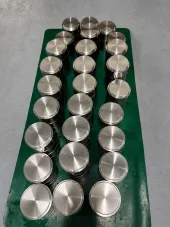
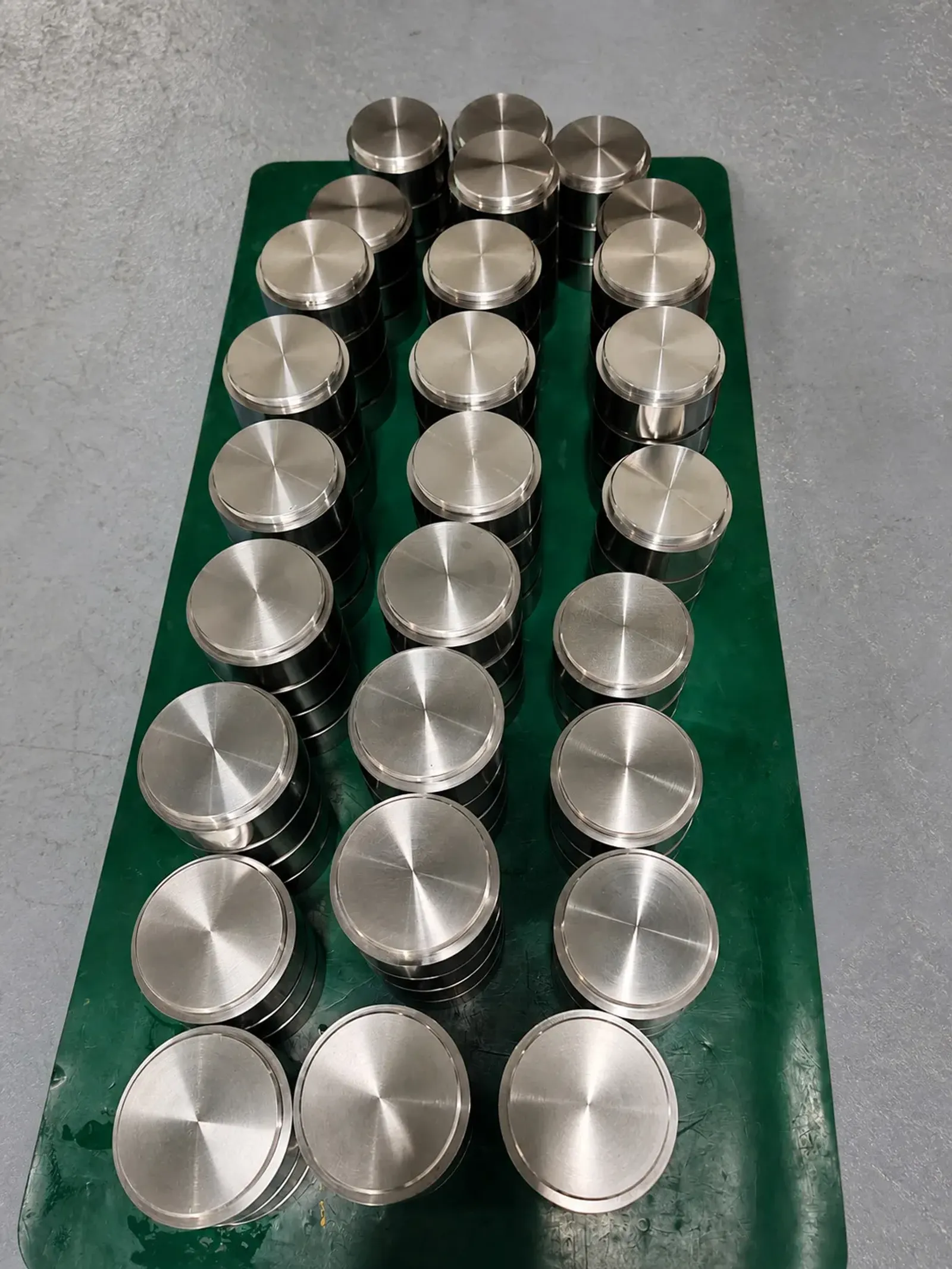
Generic product-form context: rows of machined disc-shaped metal parts. This image is not evidence of an ALH component, the September 7 AoN, or an order. The image does not establish titanium or Titan 31A, forging, aerospace or ALH use, alloy grade, melt route, tolerance, certification, qualification, approval, inventory, capacity, customer, supplier, location, date, or production batch.
India’s Defence Acquisition Council gave Acceptance of Necessity (AoN)—an in-principle administrative approval—on September 7, 2026 to a package that includes Advanced Light Helicopters (ALHs). For a qualified titanium forging supplier, this is a reason to prepare a verifiable route and watch for project documents, not evidence that a contract, titanium quantity, supplier award, or delivery schedule already exists.
- Status: AoN moves the acquisition into an approved-in-principle state, but the official release does not identify an ALH contract or order.
- Material link: MIDHANI has previously reported type-certified Titan 31A forged feedstock for ALH engine rotating parts; that proves a real titanium application, not the scope of this new acquisition.
- Supplier action: build a qualification-ready evidence file now, while keeping capacity, price, and material commitments conditional on the RFP, award, and approved technical requirements.
What the September 7 decision actually says
The Press Information Bureau release says the Defence Acquisition Council approved multiple defence acquisition proposals at an estimated aggregate cost of about Rs 1,10,000 crore. The Indian Army list includes CBRN reconnaissance vehicles, high-mobility vehicles, mine layers, ALHs, trawl tanks, and the Sarvatra bridge system. It also says the ALHs are intended for complex missions across terrains and operational situations for the Army and Air Force.
Those statements establish the event, its date, the ALH’s inclusion, and the stated mission context. They do not allocate the package value among the listed proposals. The Rs 1,10,000 crore figure therefore cannot be treated as an ALH budget, and no defensible titanium value or tonnage can be derived from it.
The release also says approximately 98% of the total AoNs will be procured from Indian industry. That is a direction for the package as a whole. It does not prove that every ALH component will be sourced domestically, identify a specific titanium supplier, or disclose the applicable procurement category and indigenous-content calculation for the ALH case.
This distinction matters because commercial planning can become distorted when an aggregate approval headline is converted into a component forecast. A supplier may reasonably treat the announcement as an early market signal. It should not treat the signal as firm demand.
AoN is upstream of a purchase commitment
The official Defence Acquisition Procedure 2020 separates AoN from issuance of a Request for Proposal (RFP), technical evaluation, negotiations, financial approval, and contract award for Buy and Buy & Make schemes. An August 14, 2026 government factsheet still labelled DAP 2026 as a draft while describing DAP 2020 as an acquisition reform. This supports using DAP 2020 as the latest identified public procedural reference, subject to any later case document or amendment.
DAP 2020’s general rules say AoN validity depends on the acquisition category: six months for Buy schemes and one year for Buy and Make (Indian) and turnkey projects, starting from formal issue of the approving authority’s meeting minutes. If an RFP is not issued within the original validity period, the AoN may require revalidation or a fresh approval.
That procedure provides a useful control point, but it does not reveal the route selected for this ALH proposal. The PIB release does not state the acquisition category, issue an RFP, list eligible bidders, define quantities, publish specifications, set a bid deadline, or announce a contract. Later project documents and any current amendments must control the case-specific interpretation.
For suppliers, the practical consequence is a staged evidence rule. AoN supports monitoring and preparation. An RFP can support a more specific compliance and bid assessment. A contract or authorized purchase order supports firm commercial allocation. Skipping those distinctions creates the risk of reserving capacity, buying raw material, or quoting fixed terms against demand that has not yet been defined.
The titanium connection is real, but narrow
The strongest public material link comes from MIDHANI’s 2022–23 annual report. MIDHANI states that it developed and type-certified Titan 31A forged feedstock for rotating parts of the ALH engine. The report identifies Titan 31A as Ti-6Al-4V elsewhere in the same product-development discussion and says the ALH feedstock used a double-melting method instead of a more expensive triple-melting route. It attributes comparable fatigue properties to controlled melting and thermomechanical processing.
This is important evidence because it connects an ALH subsystem to an actual titanium alloy, product form, and qualification state. It also shows why “Ti-6Al-4V” alone is not an adequate offer. The reported item was forged feedstock for engine rotating parts, tied to a controlled melt and processing route and a type-certification claim.
The evidence remains historical and supplier-specific. It does not say that the September 7 acquisition creates a new Titan 31A order. It does not establish which ALH variant or engine configuration will be purchased, whether the same feedstock route remains the approved baseline, whether alternative sources are eligible, or how much material would be required. It also cannot be generalized to airframe plate, sheet, bar, fasteners, or every forged ALH component.
A supplier should therefore describe the link accurately: there is a verified precedent for type-certified Titan 31A forged feedstock in ALH engine rotating parts. The new AoN makes the program worth watching. Neither source proves a current order for that material.
What a forging supplier can prepare before the RFP
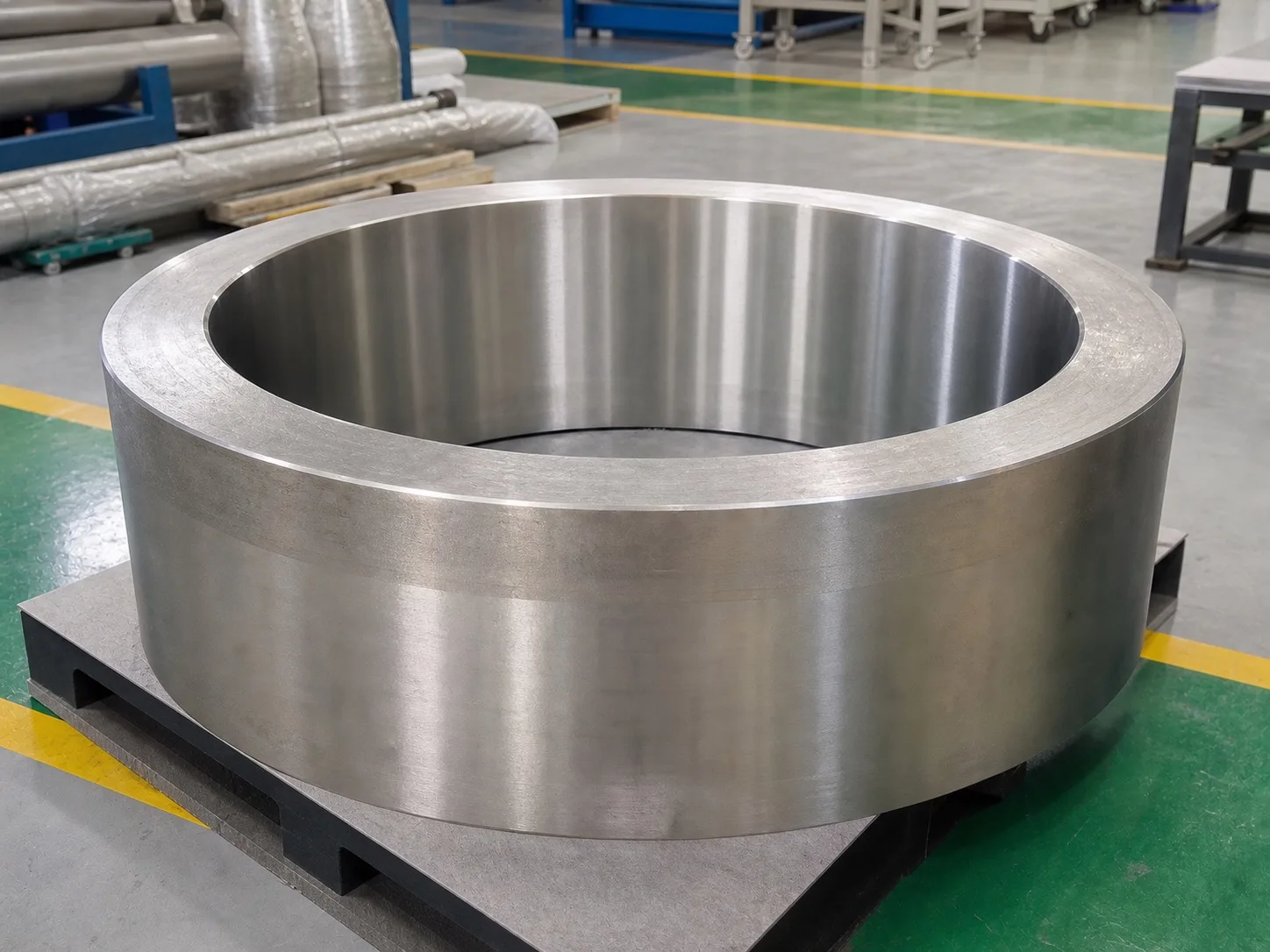
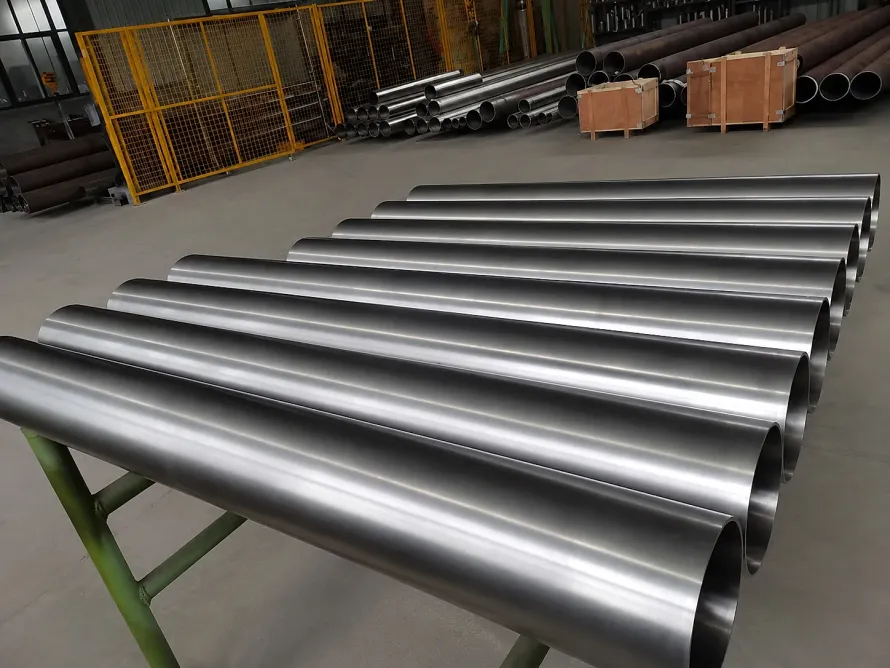
Generic product-form context: a large machined ring on a workshop pallet. Its appearance does not establish alloy, process route, qualification, or program approval. This image does not establish titanium or Titan 31A, a forging or melt route, dimensions, grade, certification, qualification, inventory, supplier, customer, factory, ALH use, order, or project approval.
Early preparation should focus on evidence that remains useful even if quantities or tender structure change. A supplier can assemble a route-specific dossier without claiming project approval.
First, define the exact offered product form. “Titanium forging” can mean billet, forged bar, ring, disc preform, near-net blank, or finished component. The MIDHANI statement concerns forged feedstock for rotating parts, so a supplier should not substitute an unrelated form merely because the alloy family is similar.
Second, document melt and conversion history. The public precedent makes melt route, melt-parameter control, and thermomechanical processing decision-relevant. A useful dossier can identify the proposed melt source, remelt sequence, heat identity, forging and heat-treatment route, process controls, and the records that would connect each operation to the delivered lot. This is a readiness recommendation, not a claim that the future RFP will mandate MIDHANI’s exact route.
Third, separate material conformance from application approval. Chemistry, tensile results, ultrasonic inspection, microstructure, and fatigue evidence can support a material case, but engine rotating-part acceptance may require program-specific design authority and airworthiness approval. A generic mill certificate or commercial aerospace approval should not be presented as automatic ALH eligibility.
Fourth, prepare change-control boundaries. A buyer needs to know which changes in melt source, billet size, forging source, reduction route, heat treatment, inspection method, or subcontractor would trigger review. The public sources do not prescribe those triggers for this acquisition, so the supplier should present its current controls and wait for the program authority to define approval requirements.
Fifth, map realistic capacity without reserving it unconditionally. Suppliers can model scenarios for forge size, batch size, lead time, inspection load, and raw-material availability. They should label every scenario as planning input until quantity, delivery phasing, approved source list, and contractual schedule are published.
A disciplined commercial response
Sales language should mirror the evidence state. It is reasonable to tell customers that the AoN creates an early supplier-readiness signal and that India has stated a strong package-level preference for domestic procurement. It is not reasonable to advertise a newly awarded ALH titanium program, imply that a foreign or domestic supplier has been selected, or attach the full package value to titanium.
Any preliminary quotation should state its assumptions. At minimum, it should identify the proposed alloy and form, qualification status, melt and forging route, quantity basis, delivery basis, inspection scope, validity period, and exclusions. If those inputs are not available, the document should be labelled a budgetary or capability response rather than a firm project quote.
The same discipline applies to capacity. A supplier can reserve an internal review window or identify tentative machine slots, but a binding reservation should depend on commercial authority and technical scope. Otherwise, the opportunity cost of blocked furnace, press, heat-treatment, and inspection time may be larger than the value of appearing early.
What would change the assessment
The assessment should be revisited when an official RFP, request for information, tender notice, contract award, approved vendor requirement, or technical specification becomes available. Those documents could clarify acquisition category, quantities, delivery phases, indigenous-content rules, variant and engine configuration, bidder eligibility, material form, melt route, testing, airworthiness approvals, and change control.
A later source could also weaken the current signal. If the AoN lapses, is revalidated with a different scope, excludes the relevant subsystem, or adopts a configuration without the cited Titan 31A application, the present supplier-readiness case would need to be narrowed. Conversely, an RFP that explicitly calls for the relevant forged feedstock would turn a general preparation signal into a concrete qualification and bidding question.
For now, the defensible conclusion is deliberately limited: India’s September 7 AoN places ALHs inside an approved-in-principle acquisition package and makes qualified titanium forging readiness commercially relevant. It does not yet create a titanium order. The best supplier response is to prepare traceable process, qualification, and capacity evidence while waiting for project documents before making firm commitments.
Sources
- Press Information Bureau, Government of India, “DAC clears capital acquisition proposals worth about Rs 1.10 lakh crore for the defence forces,” posted September 7, 2026; accessed September 8, 2026: https://www.pib.gov.in/PressReleasePage.aspx?PRID=2307452&lang=1®=48
- Mishra Dhatu Nigam Limited, Annual Report 2022–23, ALH engine Titan 31A development statement on page 49; accessed September 8, 2026: https://midhani-india.in/WordPress-content/uploads/2023/09/MIDHANI%20Annual%20Report%20%282022-23%29.pdf
- Department of Defence Production, Ministry of Defence, Government of India, Defence Acquisition Procedure 2020; accessed September 8, 2026: https://www.ddpmod.gov.in/sites/default/files/DAP%202020%20%2011%20Nov%2021_0.pdf
- Press Information Bureau, Government of India, “India’s Defence Strength Powering National Security through Self-Reliance,” posted August 14, 2026; accessed September 8, 2026: https://www.pib.gov.in/FactsheetDetails.aspx?Id=150909&lang=1®=1
FAQ
# What procurement milestones must occur after AoN before an ALH titanium supplier can treat demand as firm?
# Which Titan 31A product form, melting route, and airworthiness approvals would a supplier need for ALH engine rotating parts?
# How should suppliers avoid turning the Rs 1.10 lakh crore total into an unsupported ALH or titanium value estimate?
Need this material? Get a factory-direct quote.