New Ti-on-Mg DED Study Moves Interface Control Up Into the Arc
A peer-reviewed study published online on 2026-08-10 shows why depositing titanium onto magnesium by wire-arc directed energy deposition can fail before the two metals form a usable interface. When the researchers changed the substrate beneath ERTi-2 wire from ERTi-2 to AZ31 at 100 A, stable one-drop-per-pulse transfer gave way to short-circuit or globular transfer. At higher current, titanium spatter prevented a bead from forming (research paper).
The buyer-relevant news is not simply that titanium and magnesium are difficult to join. The paper places a major control variable above the bond line: magnesium vapor moves against the titanium-rich plasma flow, changes the force balance at the wire tip and destabilizes the material arriving at the interface.
The Substrate Rewrites the Droplet Transfer
ERTi-2 is commercially pure Grade 2 titanium wire; AZ31 is a magnesium alloy. Their melting, boiling, density and thermal behavior differ sharply. In the study, magnesium evaporating from the AZ31 pool flowed upward against the titanium-rich plasma. The authors link that counterflow to lower electromagnetic pinch force and higher pressure beneath the molten wire.
That sequence matters. A wire can meet chemistry, diameter and mechanical requirements yet enter a transfer regime that the same wire did not show over a titanium substrate. Raising current did not merely add useful heat. It produced more magnesium vapor, scattered molten ERTi-2 as spatter and eventually stopped bead formation.
The industry mechanism is therefore substrate-to-plasma coupling. The lower material is not a passive receiver of deposited titanium. Its vapor pressure changes the arc environment, and that environment changes whether the upper material reaches the joint as a controlled droplet.
Mechanical Interlocking Changes Where the Arc Works
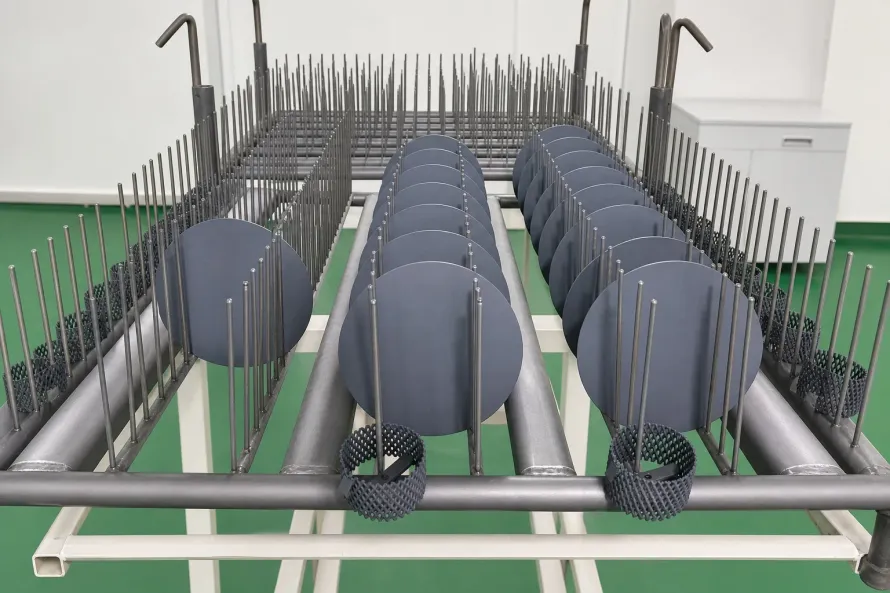
The researchers then used vertical ERTi-2 struts inside AZ31 to create a mechanical interlock. Most of the arc discharge could remain between similar titanium surfaces, stabilizing metal transfer while the macrostructure carried load across the dissimilar-material region.
This did not make geometry secondary. Changing strut unevenness from 0.6 mm to 0.2 mm shifted failure from predictable tensile fracture, with a maximum reported strength of 80 MPa, to unpredictable strut pull-out. The final paper attributes pull-out to bead misalignment and non-uniform dissimilar-metal bonding, including local ductile tearing, frictional ploughing and delamination.
Those numbers are laboratory results, not design allowables. Their useful meaning is that an interlock can solve a transfer problem while creating a new load-path sensitivity. A stable bead and a strong joint are connected, but they are not the same acceptance decision.
A Six-Stage Vapor-to-Load-Path Map
| Stage | Buyer question | Evidence to retain |
|---|---|---|
| Material pair | Which titanium wire and magnesium substrate states enter the build? | Wire certificate, substrate lot and surface preparation |
| Vapor environment | How do current, heat input and local confinement affect magnesium evaporation? | Procedure limits and atmosphere record |
| Droplet transfer | Does transfer remain one-drop-per-pulse, or shift to short-circuit, globular mode or spatter? | High-speed evidence or a validated production surrogate |
| Interlock geometry | Do strut depth, spacing and unevenness stay inside the demonstrated design? | Build file, dimensional report and section plan |
| Bead alignment | Does the deposited path load the strut concentrically and consistently? | Toolpath record and cross-section checks |
| Failure boundary | Is release controlled by fracture, pull-out, delamination or another service-relevant mode? | Joint testing, inspection and change-control rule |
The map prevents the purchase order from collapsing several different questions into “Ti/Mg bond strength.” It also identifies where a process change reopens qualification. A different current, torch orientation, substrate condition, strut geometry or toolpath may change a different link in the chain.
Wire Conformity Is Necessary but Not Process Proof
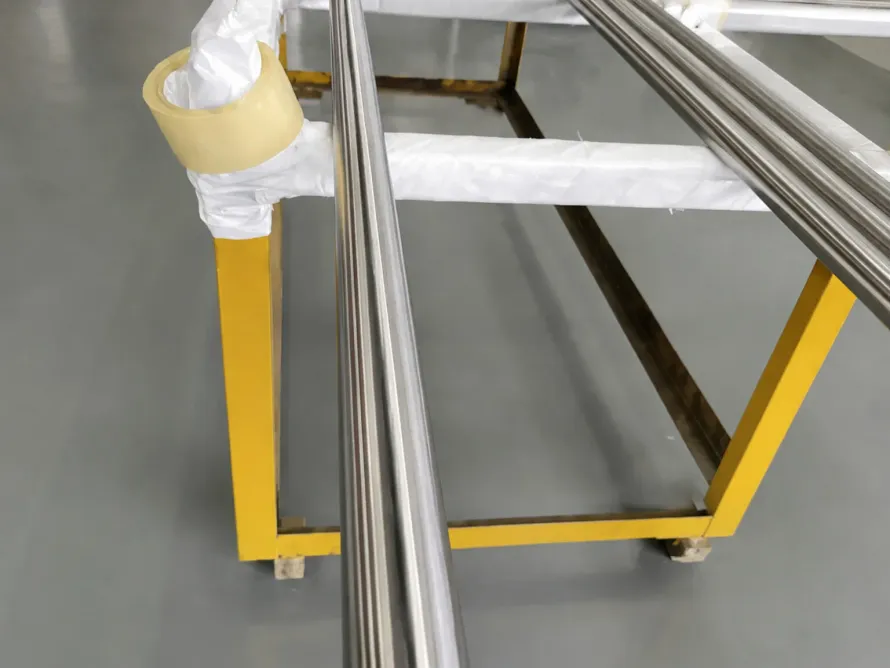
ASTM’s active titanium standards list includes ASTM B863-26 for titanium and titanium alloy wire (ASTM). That specification can support wire identity, chemistry and mechanical-property control. It cannot qualify magnesium-vapor behavior, bead alignment or a mechanical interlock.
For buyers of titanium wire, the distinction is important. A compliant consumable answers “what entered the machine.” The DED evidence answers “what the material pair and process produced.” Both belong in the file, but one cannot substitute for the other.
The site’s earlier analysis of a titanium transition-zone evidence file focused on inspection and release across a multi-material WAAM transition. This paper exposes a different upstream boundary: the interface can be lost because vapor changes droplet mechanics before the transition zone exists.
The restrained conclusion is specific. The study does not qualify a commercial aerospace or automotive part, and it does not establish fatigue, corrosion or service life. It shows that Ti-on-Mg wire-arc DED needs a connected map from substrate-driven vapor through droplet transfer, interlock geometry and the final load path. A buyer should not release the route from wire paperwork or a single tensile number alone.
FAQ
# What caused unstable titanium deposition on AZ31?
# How did mechanical interlocking improve buildability?
# Does ASTM B863-26 qualify the Ti-on-Mg process?
# What should a buyer request for a multi-material DED part?
Need this material? Get a factory-direct quote.