Multi-Material WAAM Shows Why Titanium Buyers Need a Transition-Zone Evidence File
DEEP Manufacturing and Fortius Metals did not announce a titanium product. That is exactly why the signal is useful for titanium buyers: it shows large-format metal additive manufacturing moving from single-material demonstration toward a harder question, whether different alloys can be joined in one controlled build without losing process evidence at the boundary.
On June 4, 2026, Metal AM reported that DEEP Manufacturing and Fortius Metals had begun a collaboration to build a multi-material metal cylinder using synchronized multi-robot wire arc additive manufacturing, or WAAM, a directed energy deposition route. The stated goal is production-scale control: precision, repeatability and process control for larger, more complex and higher-performing metal parts.
3D Printing Industry added useful operational detail. The project is scheduled to start with test samples and a smaller cylinder before the main print proceeds later in the demonstration sequence. DEEP will handle large-format printing, multi-robot deposition and real-time monitoring, while Fortius will contribute simulation, toolpath design and advanced welding wire.
For titanium buyers, the point is not to assume that this project validates a titanium part. It does not. The point is that multi-material WAAM exposes the next evidence problem for any buyer considering titanium wire-fed DED, titanium WAAM, Ti-6Al-4V deposited preforms or hybrid metal structures: the highest-risk area may no longer be the bulk material alone, but the transition zone between material, process, heat history and final geometry.
Why The Transition Zone Matters
Single-alloy titanium sourcing already requires discipline. Buyers normally ask for alloy identity, melt route, product form, dimensions, mechanical properties, inspection records and a material certificate. Wire-fed additive routes add more variables: wire condition, shielding, heat input, deposition path, interpass control, build orientation, post-processing, machining allowance and route-specific NDT.
Multi-material deposition adds another layer. If different alloys or different material states sit in one build, the buyer has to understand where one material condition ends and another begins. The transition zone becomes part of the product boundary. It may affect strength, fatigue behavior, corrosion response, inspection sensitivity, heat-treatment response, machining strategy and acceptance criteria.
That is why the DEEP/Fortius signal should not be read as a generic additive-manufacturing milestone. It should be read as a documentation test. If a supplier cannot describe how the material transition was planned, deposited, monitored, inspected and released, the buyer has no reliable way to compare the part with a forged, rolled, machined or single-alloy deposited alternative.
Titanium Has Its Own Process Sensitivity
Titanium makes this issue sharper. A 2024 Oak Ridge National Laboratory paper described WAAM as a viable option for fabricating large-scale titanium parts, but it also noted that localized gas shielding is inadequate for titanium because of its affinity for oxygen, requiring an inert enclosure to protect the weld from oxygen pickup.
That source is not about the DEEP/Fortius project. It is useful because it explains why titanium cannot be treated like an ordinary metal wire in large-format deposition. Atmosphere, residue handling, enclosure design and material handling are part of the process file. If a titanium buyer later evaluates a multi-material or hybrid WAAM route, the titanium portion needs its own shielding and contamination evidence before the buyer even reaches the transition-zone question.
The practical risk is over-reading a process demonstration. A cylinder that proves deposition feasibility does not prove release readiness. A strong wire supplier does not automatically prove a finished part. A simulation-led toolpath does not replace physical inspection. For titanium, the buyer needs evidence that the route protected the material state through deposition, transition, post-processing and machining.
The Transition-Zone Evidence File
A transition-zone evidence file is the buyer’s way to convert a promising multi-material or hybrid route into a verifiable procurement package. It should be requested when a supplier proposes titanium WAAM, titanium wire-fed DED, Ti-6Al-4V deposited preforms, or a multi-alloy build that uses titanium as one section, interface or structural element.
| Evidence layer | Buyer question | Records to request |
|---|---|---|
| Material map | Where does each alloy, wire batch or material condition begin and end? | Build map, wire batch IDs, material-change plan, interface drawing and traveler |
| Transition design | Why is the interface acceptable for the application? | Design rationale, simulation basis, heat-input plan, dilution or mixing assumptions and excluded load cases |
| Titanium protection | How was titanium protected from oxygen and contamination? | Shielding plan, enclosure record, gas quality, handling procedure, cleaning record and exposure limits |
| Process monitoring | What proves the build stayed inside the allowed window? | Machine logs, deposition parameters, interpass control, thermal record, real-time monitoring outputs and exception log |
| Post-processing | How did heat treatment, HIP, stress relief or machining affect the interface? | Post-processing route, machining allowance, heat-treatment record, distortion review and final geometry report |
| Inspection route | How are defects near the transition found? | NDT plan, CT or ultrasonic scope where applicable, surface inspection, acceptance criteria and inspector qualification |
| Release boundary | What exactly is approved for delivery? | Part number or product family, application boundary, certificate wording, deviation record and change-control trigger |
This framework is intentionally stricter than a normal material-certificate request. It asks whether the buyer can trace the product through material identity, transition design and process control, not only whether the final piece has a plausible alloy name.
What Suppliers Should Prepare Before Quoting
Suppliers do not need to disclose proprietary parameter sets to every prospect. They do need a disciplined evidence structure. A buyer can accept protected details under NDA later, but the quotation stage should still clarify the route type, material scope, inspection concept, post-processing boundary and change-control rule.
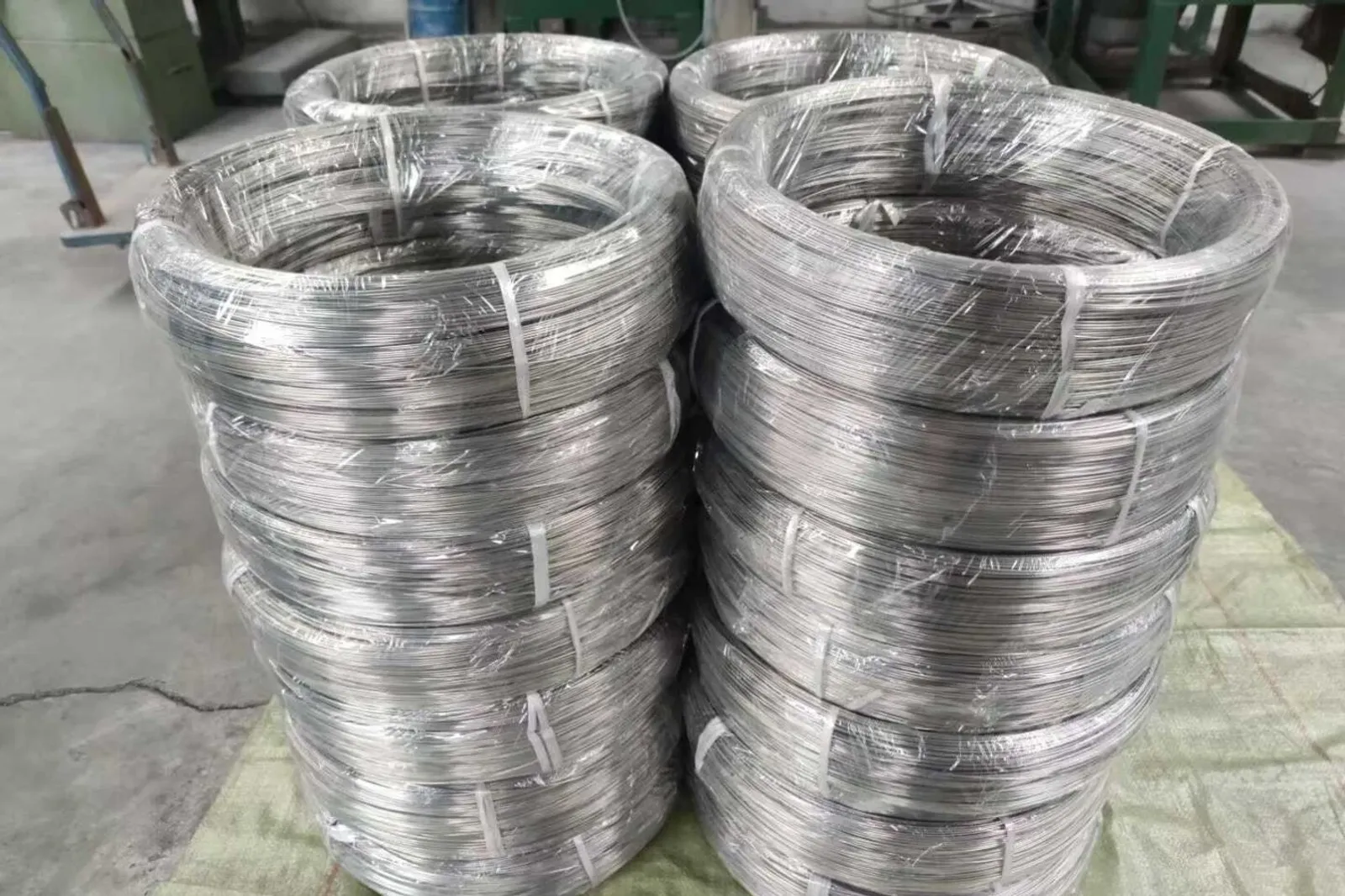
For titanium wire and deposited preforms, the first question is feedstock discipline. Wire diameter, surface condition, spool handling, storage, batch traceability and supplier approval need to match the route. A Ti-6Al-4V label alone is too thin when the wire becomes part of a controlled deposition process.
The second question is route comparability. If the buyer currently uses bar, plate, billet, forging or machined stock, the supplier should show what is being replaced, what is unchanged, and what new evidence is required. A deposited preform may reduce waste or improve geometry, but it also changes how the buyer thinks about heat history, defect type and machining allowance.
The third question is release language. Certificates for hybrid or multi-material parts should not blur the boundary between feedstock, deposited material, post-processed blank and finished component. Buyers need wording that tells them what was actually supplied and what remains the responsibility of the next processor or final-release authority.
Buyer Takeaway
The DEEP/Fortius collaboration is valuable because it moves the discussion from additive possibility to production discipline. It does not make titanium multi-material WAAM automatically ready. It does make the next buyer question clearer.
For titanium products, the professional test is no longer only whether a supplier can provide titanium wire, bar, plate, billet, forging or machining. It is whether the supplier can define the boundary between material form, deposition route, transition zone, post-processing, inspection and release responsibility.
A transition-zone evidence file gives procurement, engineering and quality teams a practical way to ask that question. Without it, multi-material WAAM remains a process claim. With it, titanium buyers can decide where a deposited route belongs, where conventional product forms remain safer, and what proof must travel with the order before a promising build becomes a releasable product.
FAQ
# Why does multi-material WAAM matter to titanium buyers?
# Does the DEEP/Fortius project prove titanium WAAM is ready?
# What is a transition-zone evidence file?
# What should suppliers prepare before quoting titanium deposited parts?
Need this material? Get a factory-direct quote.