TC4 Laser-Weld Study Draws a Boundary Between Prediction and Production Release
A 2026 study in Optics & Laser Technology reports that machine-learning models can predict two important properties of laser-welded TC4 titanium alloy with useful accuracy. XGBoost performed best for tensile strength, while CatBoost performed best for elongation. SHAP analysis identified heat input as the strongest influence on the strength model.
The numbers are promising, but the industrial story is not that an algorithm can certify a titanium weld. It is that prediction can become a process-development instrument—provided the buyer and supplier draw a hard boundary between the model’s data domain and the production release decision.
The researchers compared a multilayer perceptron, support vector regression, XGBoost, CatBoost, LightGBM and random forest. The best tensile-strength model reported an R² of 0.90 on training data and 0.84 on test data. The best elongation model reported 0.90 and 0.85. Adding tensile strength as an input to elongation prediction raised the reported test-set R² from 0.38 to 0.85, and error-propagation analysis found only a minor effect from strength-prediction error on elongation prediction (University of Birmingham research record, DOI).
Those are model results, not universal weld allowables. They belong to the dataset, input definitions, target measurements and validation split used by the study. The buyer value lies in understanding what evidence is needed before a model-guided parameter choice can enter a controlled welding procedure.
Heat Input Is A Mechanism, Not A Complete Recipe
Heat input is a useful engineering variable because it condenses the relationship among laser power, travel speed and energy delivered along the joint. The study’s SHAP result makes physical sense: thermal input shapes the molten pool, cooling history, fusion geometry and microstructure that ultimately influence joint strength.
But equal calculated heat input does not guarantee equal welds. Beam diameter, focus position, joint gap, plate thickness, surface condition, shielding-gas delivery, restraint and machine dynamics can produce different thermal fields. TC4 starting condition and lot variation also matter. A model that sees one combination of these variables may not know that another combination has crossed a metallurgical or geometric boundary.
This is the industry mechanism. Machine learning can compress a multi-variable process history into a useful prediction, but it does not remove the need to define the process envelope. It makes the envelope more visible and testable. Outside that envelope, apparent numerical precision can become an unmeasured extrapolation.
For procurement teams, that means a model output should be treated like a controlled engineering recommendation. It can select trials, narrow parameters and detect influential variables. It should not replace a welding procedure, a qualification record, lot traceability, inspection or physical acceptance evidence.
Model Accuracy And Weld Acceptance Answer Different Questions
R² measures how much variation the model explains in the evaluated data. It does not directly state the worst-case error at an acceptance limit, prove performance on a new machine or show that rare weld defects are captured. A model can fit average strength and elongation well while still missing lack of fusion, local contamination, porosity, undercut or an outlier near a critical threshold.
That distinction protects both sides of a titanium order.
A supplier should not market an R² value as proof that every weld will achieve the predicted property. A buyer should not demand an algorithm score without defining which physical tests and inspection results remain authoritative. The useful implementation is layered: the model guides the process; the approved procedure constrains production; inspection and tests release the weld.
The staged strength-to-elongation result also needs disciplined reading. Raising the elongation test-set R² from 0.38 to 0.85 shows that tensile strength carried useful information in the authors’ model. It does not mean elongation can always be inferred from strength. Another alloy condition, thickness range, joint design or heat-treatment route may alter that relationship.
A Six-Line Model-To-Weld Transfer Map
Before a predictive model influences recurring TC4 welding, six transfer lines should be closed.
| Transfer line | Question | Evidence |
|---|---|---|
| Material and joint domain | Which TC4 condition, thicknesses, joint geometries and surface states are represented? | Material lots, product form, dimensions, joint design and preparation records |
| Process-input domain | Which power, speed, heat-input, focus, shielding, restraint and filler ranges were trained? | Data dictionary, parameter limits, units, equipment identity and missing-variable review |
| Target and test basis | How were tensile strength and elongation measured and linked to each weld? | Specimen location, orientation, test method, data cleaning and traceability |
| Model validation | How does the model behave on unseen data and near acceptance thresholds? | Holdout results, residuals, error bands, outlier review and threshold-specific checks |
| Physical release bridge | Which real inspections and tests confirm production welds? | Procedure qualification, coupons, visual/NDT results, mechanical tests and acceptance criteria |
| Drift and change control | What triggers model or procedure review? | Material, geometry, machine, optics, sensor, software, parameter or supplier change rules |
The map separates three decisions that are often blurred: selecting a parameter, approving a procedure and releasing a production joint.
A Better Buyer Conversation About Intelligent Welding
The buyer should first ask whether the model is descriptive, predictive or used for closed-loop control. A model that ranks historical trials has a different risk than one that changes laser parameters during production. The closer software moves to the release decision, the stronger version control, access control, audit trail and validation need to be.
Next, ask how model inputs connect to the real work order. Are values taken from programmed settings, calibrated measurements or sensor estimates? Are units and time bases consistent? Can a predicted property be traced back to a joint, material heat, machine, operator or automated cell, and inspection record?
Finally, define the authority boundary. If prediction and a destructive coupon disagree, which result controls? What happens when the model receives a value outside its trained range? Does the system stop, warn or silently extrapolate? A production-ready workflow answers these questions before the first delivery lot.
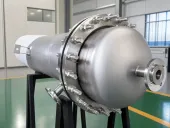
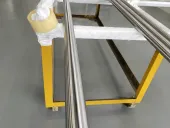
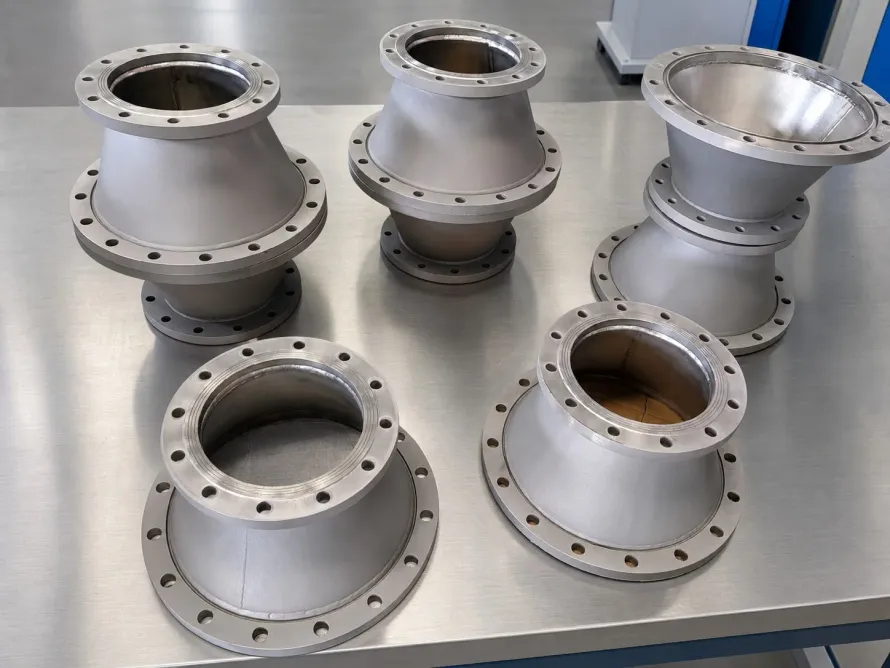
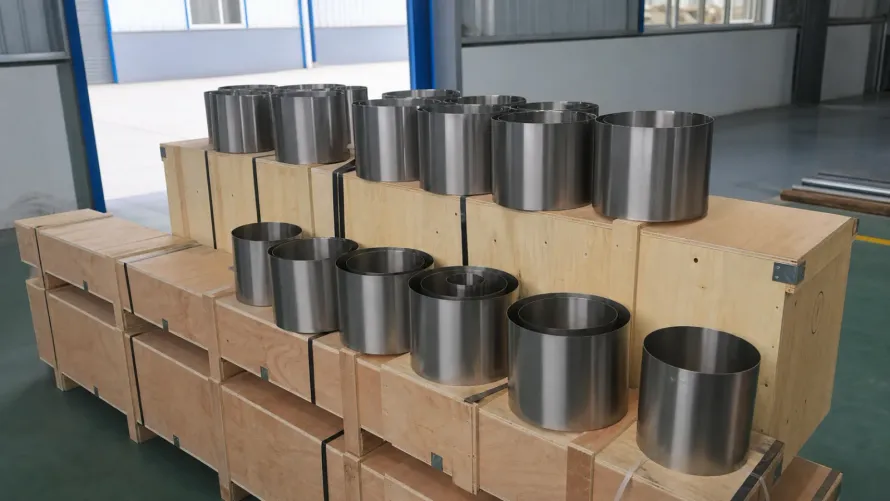
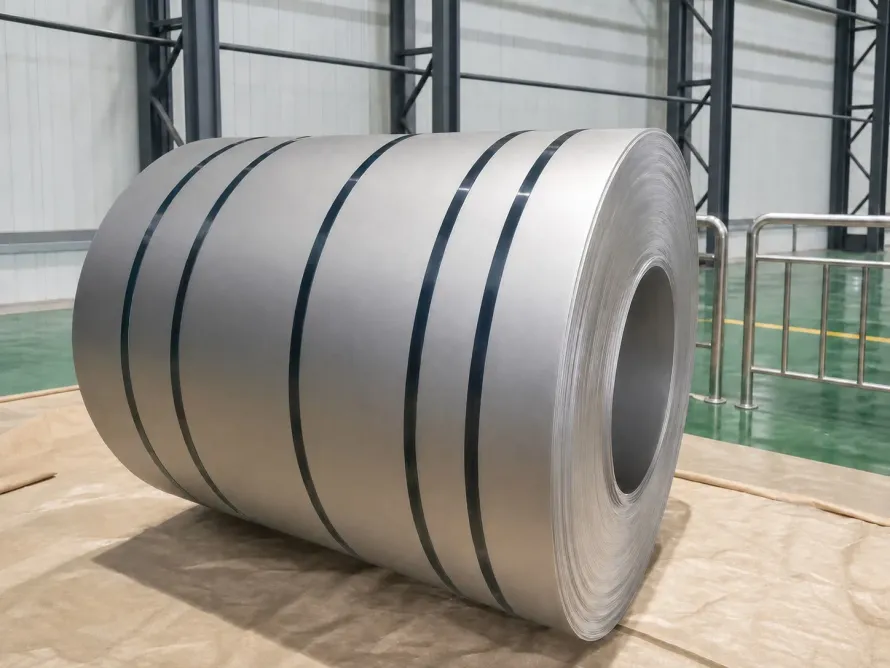
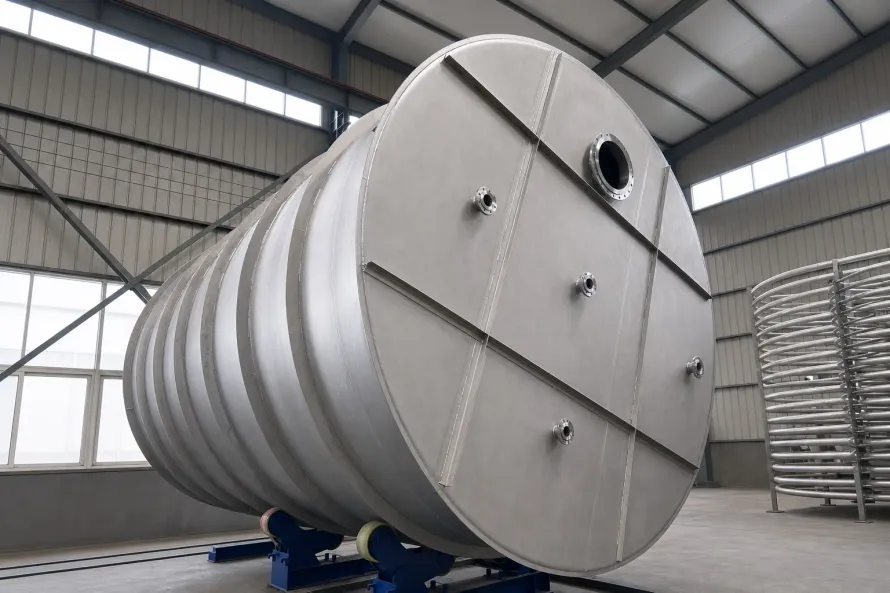
For buyers combining special titanium alloy stock with a fabricated assembly, a controlled titanium fabrication route should keep parent-material identity, joint preparation, welding variables, inspection and final dimensions connected. A model may improve parameter selection inside that chain. It does not become the chain.
The restrained conclusion is that machine learning can make TC4 laser-welding development more efficient and more explainable. The reported XGBoost, CatBoost and SHAP results show a credible direction. The purchasing threshold remains physical: use prediction to choose and monitor a controlled process, then release the weld through evidence that belongs to the actual material, joint and production lot.
Industry FAQ
What did the TC4 laser-welding study predict?
Its best reported models predicted tensile strength with XGBoost and elongation with CatBoost; heat input was the strongest influence identified for strength.
Does a high test-set R² release a production weld?
No. It describes performance on the study’s dataset. Production release still needs an approved procedure, traceable inputs, inspection and representative physical testing.
Why did tensile strength improve elongation prediction?
In the reported model, adding tensile strength as an input raised test-set R² for elongation from 0.38 to 0.85, indicating a useful staged relationship inside that dataset.
What should trigger model review or revalidation?
Changes to alloy condition, thickness, joint geometry, surface preparation, shielding, filler, equipment, parameter range, sensor pipeline or acceptance basis should trigger review.
FAQ
# What did the TC4 laser-welding study predict?
# Does a high test-set R² release a production weld?
# Why did tensile strength improve elongation prediction?
# What should trigger model review or revalidation?
Need this material? Get a factory-direct quote.