Middle East Desalination Boom: What $250B Means for Titanium Tubes
The numbers landed this week, and they demand attention. MIT Technology Review published back-to-back features on April 7 and April 9 detailing the Middle East’s accelerating push to secure freshwater through desalination — a program now valued at more than $250 billion in committed and planned investment through 2032. Buried inside those reports is a figure that matters enormously to anyone in the titanium desalination tube supply chain: global demand for titanium tubing in desalination applications is projected to rise 16% over the next five years. Multiple analysts now describe this as the largest structural growth driver for titanium mill products since the aerospace build cycle of the early 2010s.
For a Grade 2 titanium condenser tube manufacturer based in Baoji — the heart of China’s titanium production ecosystem — these are not abstract projections. They are already showing up in our order books. Here is what the data tells us, and what it means for engineers and procurement teams sourcing heat exchanger tubing for desalination projects.
The $250 Billion Wave
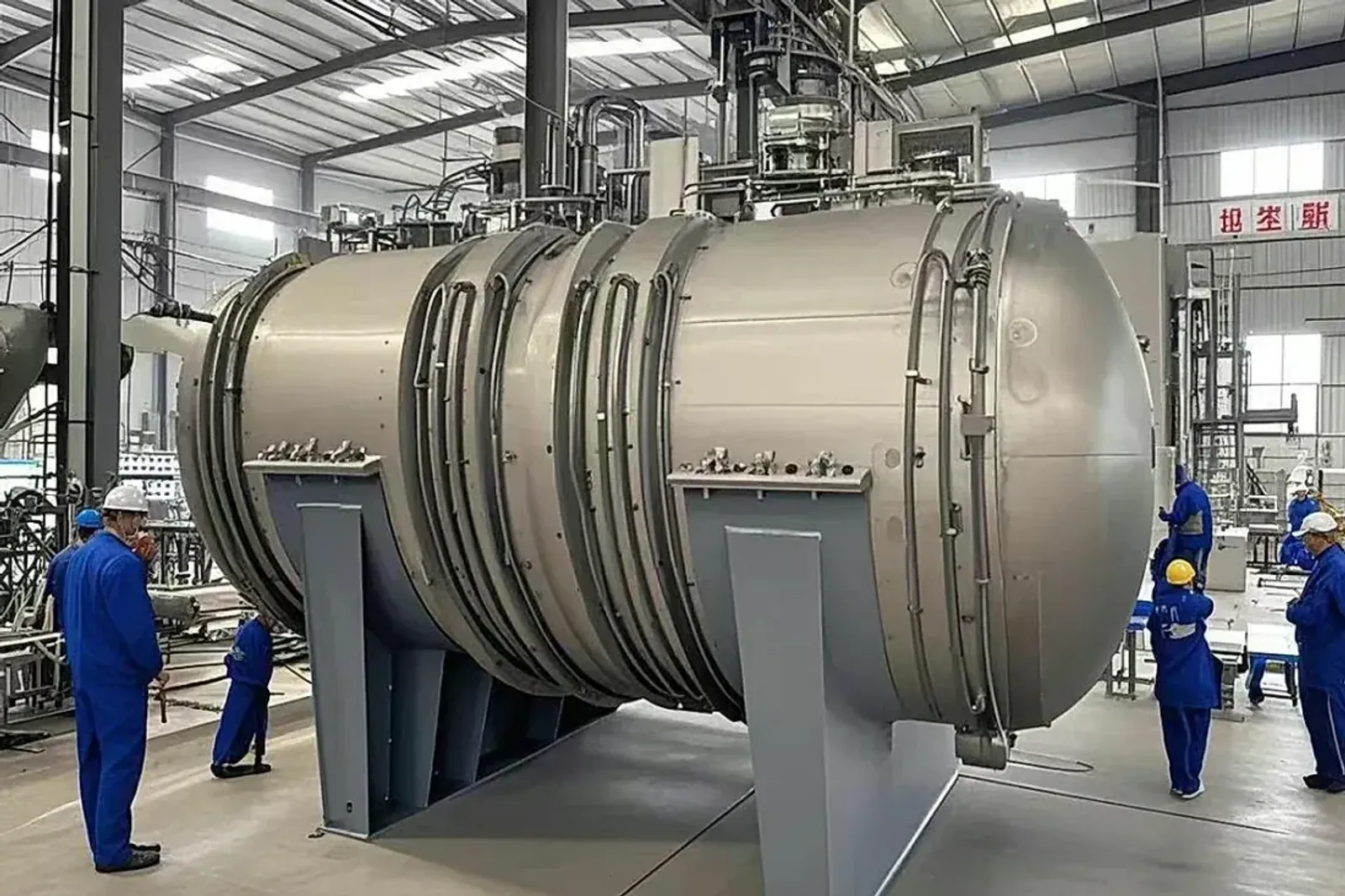
The scale of investment is difficult to overstate. Saudi Arabia alone accounts for roughly $80 billion of the total, anchored by expansions at existing mega-facilities and greenfield projects along the Red Sea and Arabian Gulf coasts. The Kingdom’s National Water Strategy targets 11.4 million cubic meters per day of desalinated capacity by 2030, up from approximately 7.3 million in 2024.
But Saudi Arabia is not acting alone. Iraq has committed over $30 billion to address chronic water shortages in its southern provinces, with at least six large-scale reverse osmosis and multi-stage flash (MSF) plants in various stages of procurement. Egypt’s New Administrative Capital and its expanding Red Sea resort corridor are driving an additional $25 billion in desalination investment. The United Arab Emirates, Kuwait, Oman, and Bahrain collectively account for another $50 billion-plus in planned capacity.
Why does this matter for titanium? The answer is longevity and total cost of ownership. In seawater service, copper-nickel alloy tubes — once the default choice for heat exchangers in thermal desalination — typically last 8 to 12 years before pitting corrosion and biofouling degradation force replacement. Titanium tubes last 30 years or more. That is not marketing language. It is field data from plants like Saudi Arabia’s Ras Al Khair, where the MSF sections have operated with 100% titanium tube bundles since commissioning. Maintenance costs run approximately 35% lower over the asset lifecycle compared to copper-nickel alternatives, primarily because titanium’s corrosion resistance in chloride-rich environments eliminates the scheduled re-tubing cycles that plague conventional materials.
The math is straightforward. When a plant is designed to run for 30 to 40 years, installing tubes that match the facility’s design life eliminates an entire category of operational risk.
Which Grades, Which Forms
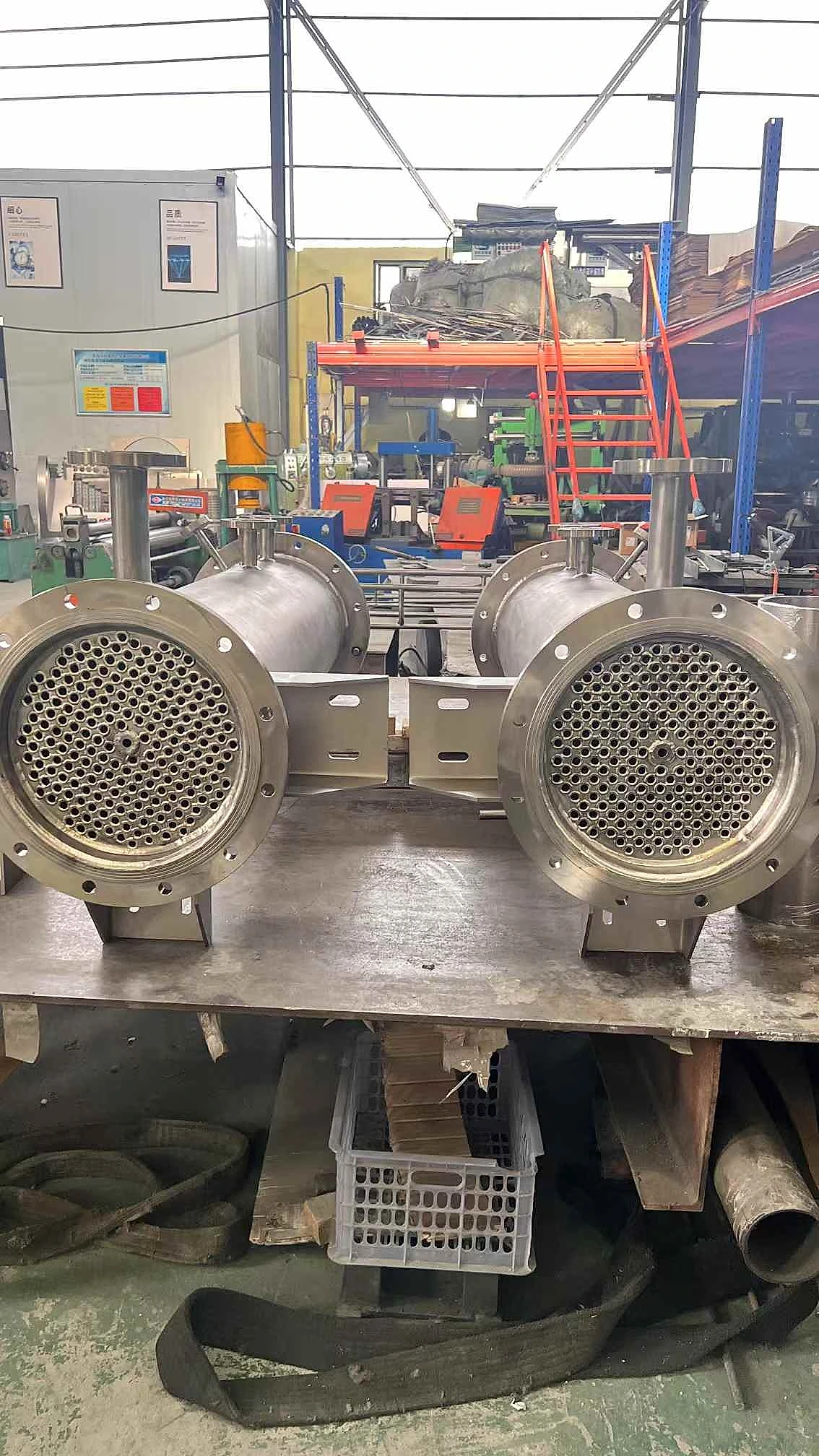
Not all titanium tubes are equal in desalination service, and specifying the right grade for the right section of a plant is critical.
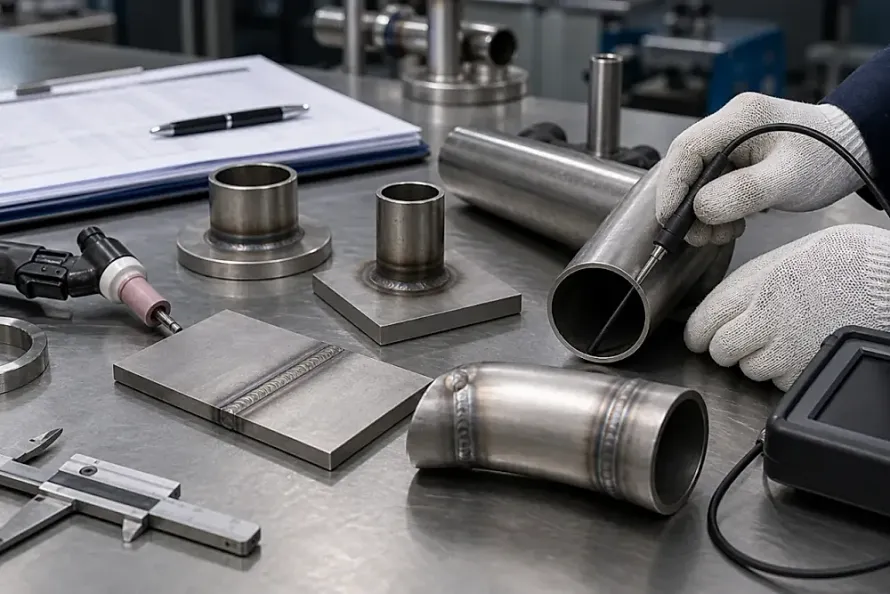
Grade 2 commercially pure titanium is the workhorse. It accounts for the majority of condenser and heat exchanger tubing specified under ASTM B338, the governing standard for seamless and welded titanium tubes in condenser and heat exchanger applications. Grade 2 offers an excellent combination of formability, weldability, and resistance to general corrosion in seawater at temperatures up to approximately 80°C. For standard MSF brine heater and condenser sections, it is the default specification.
Grade 12 — Ti-0.3Mo-0.8Ni — enters the picture when conditions get more aggressive. In sections exposed to hot acidic condensate, higher-temperature brine, or geometries prone to crevice corrosion (tube-to-tubesheet joints, for example), Grade 12 provides measurably better resistance than commercially pure grades. Its higher strength also allows thinner wall sections in some designs, which can offset its modest cost premium. We see Grade 12 specified increasingly in hybrid plants that combine MSF with reverse osmosis, where the thermal sections operate at elevated temperatures.
Grade 7, titanium with 0.12–0.25% palladium, occupies the top tier. It is the most expensive of the three but is the only reliable choice in reducing acid environments and severe crevice conditions. Large-scale MSF plants occasionally specify Grade 7 for the hottest brine heater stages, where chloride concentrations and temperatures combine to push even Grade 12 toward its limits. The cost premium is significant — typically 40–60% over Grade 2 — but for critical sections in a billion-dollar facility, that premium is a rounding error against the cost of unplanned shutdown.
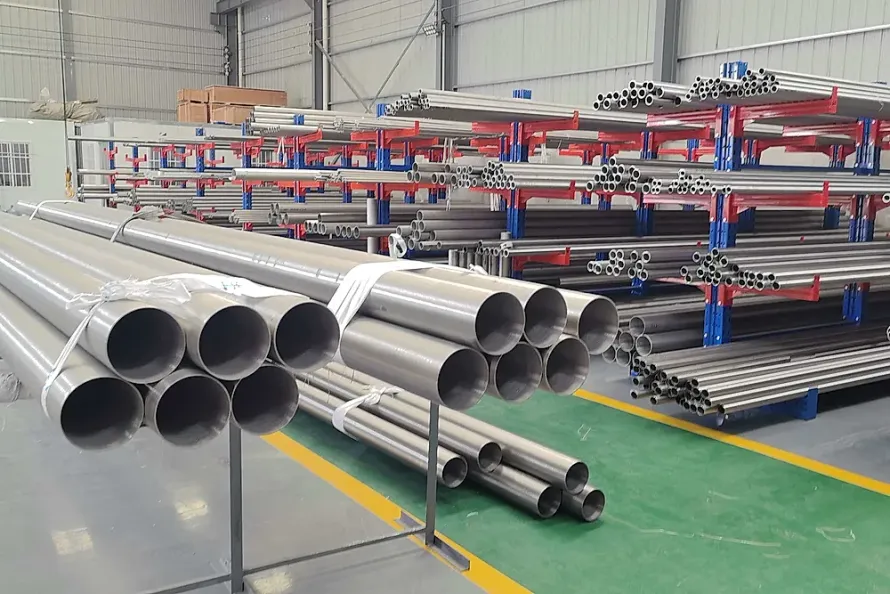
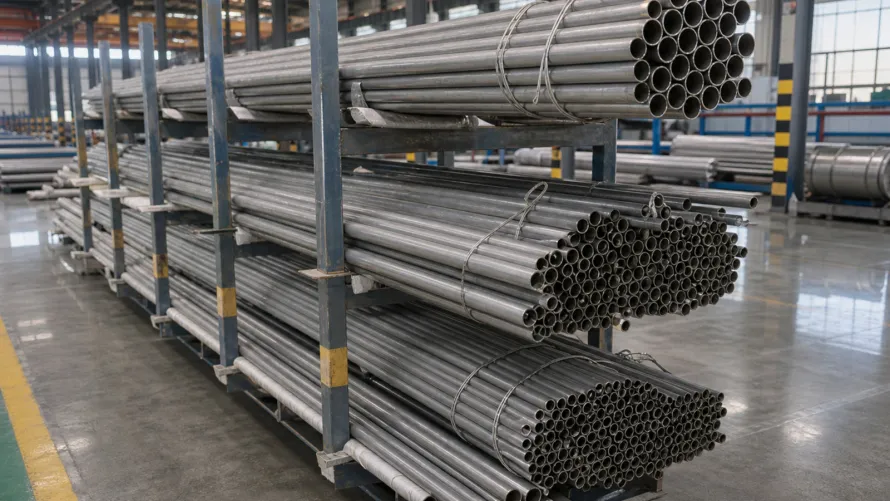
Across all three grades, the dominant tube dimensions in desalination service fall within a consistent range: outer diameters of 19 mm to 38 mm, wall thicknesses of 0.7 mm to 1.2 mm, and lengths of 6 meters to 12 meters. The Ras Al Khair facility, one of the world’s largest hybrid desalination plants at 1.025 million cubic meters per day, uses Grade 2 ASTM B338 tubes with 25.4 mm OD and 0.7 mm wall thickness across its MSF condenser banks — a specification that has since become a de facto reference for similar projects in the region.
Supply Chain Pressure Points
The 42% figure from MIT Technology Review’s analysis deserves closer examination. It refers to the share of global desalination systems — by installed capacity, not by unit count — that now incorporate titanium heat exchangers in some form. That translates into enormous volumes of thin-wall, long-length tubing that must meet tight dimensional tolerances and rigorous non-destructive testing requirements.
Global production capacity for ASTM B338-compliant titanium tubing is concentrated in two geographies: China and Japan. Chinese mills — overwhelmingly based in and around Baoji, Shaanxi Province — account for the majority of global welded titanium tube output. Japanese producers lead in seamless tube for the most demanding specifications. South Korea and the United States contribute smaller volumes.
This concentration creates vulnerability. China’s export controls on certain titanium mill products, tightened in mid-2024 and further refined in 2026, add regulatory complexity for international buyers. The practical impact is already visible: lead times for standard Grade 2 welded condenser tubing have stretched from a historical norm of roughly 6 weeks to 10–12 weeks for new orders placed in Q1 2026. For large-diameter seamless tubes in Grade 12 or Grade 7, lead times can extend further.
The bottleneck is not raw material — China’s titanium sponge production capacity is robust at over 440,000 tonnes annually. The constraint sits downstream, at the tube mill level. Desalination-grade tubing demands dedicated production lines with precision welding (for welded tubes), multi-pass pilgering or cold drawing (for seamless tubes), continuous bright annealing, and 100% eddy current or ultrasonic inspection. Not every mill that produces titanium tube can produce desalination-grade titanium tube. The distinction matters.
View from Titanium Valley
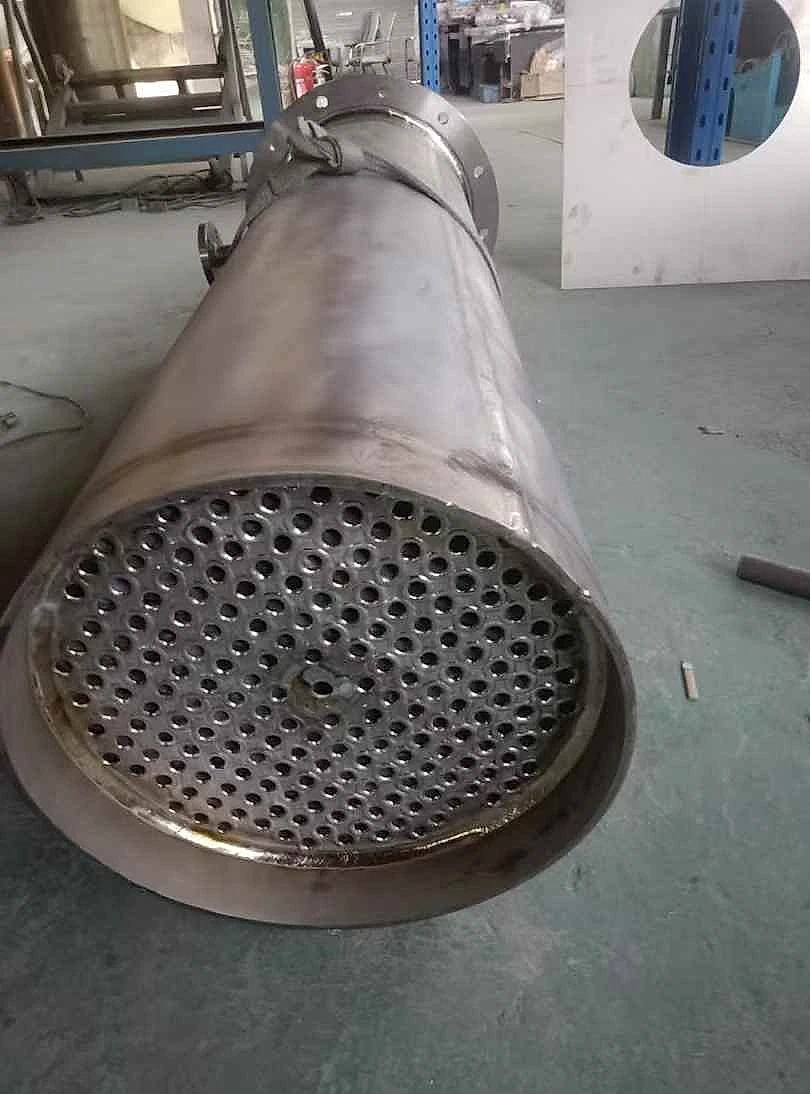
From Baoji, the signals are unambiguous. Middle East desalination tube inquiries rose sharply in Q1 2026 compared to the same period last year. The pattern is consistent: EPC contractors and their designated procurement agents are moving earlier in the project cycle to secure tube supply, often 12 to 18 months before scheduled installation.
We observe a clear trend in grade selection. ASTM B338 Grade 2 welded tube remains the volume leader, accounting for the large majority of desalination tube orders passing through Baoji. However, we are seeing a measurable uptick in Grade 12 seamless tube inquiries, driven by the hybrid MSF-RO plant designs gaining favor in Saudi Arabia and the UAE. The seamless-versus-welded decision often comes down to project specification rather than technical necessity — both forms perform well in service — but projects referencing Saudi Aramco or SWCC standards tend to specify seamless for the highest-pressure sections.
One pattern stands out. Large desalination projects increasingly favor single-source, full-quantity procurement for their titanium tube requirements. Rather than splitting orders across multiple suppliers and delivery windows, EPC contractors are locking in the entire tube package with one qualified manufacturer at a fixed price. The logic is defensive: with lead times lengthening and prices trending upward on the back of strong demand, securing the full volume early eliminates both supply risk and cost escalation risk.
This approach places a premium on suppliers who can demonstrate both production capacity and quality system maturity. A mill that can deliver 200 tonnes of Grade 2 welded tube to ASTM B338 with full EN 10204 3.2 certification, 100% eddy current testing, and on-time shipment is worth more to a project than two mills that can each deliver 100 tonnes but introduce coordination risk.
What This Means for You
If you are an equipment engineer designing heat exchangers for a Middle East desalination project, or a procurement manager responsible for sourcing the tube package, the current market environment calls for early engagement and clear specification.
Specify early, specify precisely. Define your grade, dimensional tolerances, NDE requirements, and certification level before going to market. Ambiguous specifications invite re-quoting, delays, and mismatched expectations. Reference ASTM B338 explicitly, and state whether welded or seamless is required — or acceptable — for each heat exchanger section.
Engage suppliers before the EPC award. The projects currently in FEED and early detailed engineering will hit the tube procurement phase in late 2026 and 2027. Suppliers with confirmed production slots will have leverage. Waiting until the purchase order is imminent reduces your options.
Evaluate total cost of ownership, not unit price. Grade 2 titanium tube costs more per meter than copper-nickel at the point of purchase. Over a 30-year plant life, it costs dramatically less. The maintenance cost differential alone — 35% lower for titanium — justifies the material selection in virtually every thermal desalination application. Present the lifecycle analysis to your project economists.
Understand the supply geography. The majority of your tube options will originate from Chinese mills. That is not a risk factor — it is a logistical reality that requires a knowledgeable supply chain partner with direct mill relationships, quality oversight capability, and fluency in export compliance. Working through intermediaries without production-side visibility adds cost and uncertainty.
The desalination sector’s pivot toward titanium is not a trend. It is an engineering conclusion, validated by decades of field performance and now accelerated by the largest infrastructure investment program the Middle East has ever undertaken. The $250 billion question is not whether titanium tubes will be needed. It is whether the supply chain can deliver them fast enough.
Related Products & Services:
- Titanium Tubes — Seamless & Welded for Heat Exchangers
- Grade 2 Commercially Pure Titanium
- Titanium Sheets & Plates — Tubesheet and Clad Stock
- Titanium Pipe Fittings & Flanges
Related Articles:
- From Ore to Precision: How Titanium Parts Are Engineered for Excellence
- Large-Diameter Titanium Seamless Pipe: Five Grades, One Shipment
- Why Titanium Is Taking Over Modern Manufacturing
Jason is the founder of Titanium Seller, based in Baoji, China — the country’s largest titanium production cluster. With over a decade of experience supplying titanium mill products to industrial, marine, and energy sector clients worldwide, he writes on market trends, material selection, and supply chain strategy for titanium buyers.
Need this material? Get a factory-direct quote.