IperionX's 24/7 Powder Ramp Shows Why Recycled Titanium Still Needs a Qualification Chain
IperionX’s move to continuous titanium powder production is a real supply-chain signal, but not because output tonnage alone changes the market. For buyers of titanium powder, fasteners, brackets, plates, bars or custom components, the bigger question is whether a recycled titanium route can carry enough evidence from scrap feedstock to approved product form.
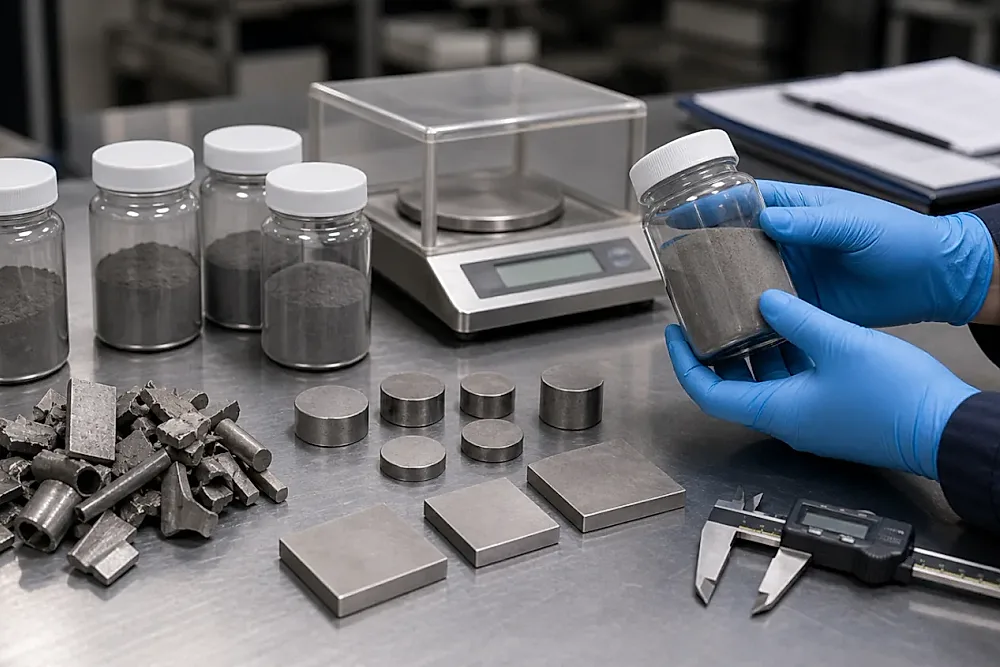
Metal AM reported on May 6 that IperionX’s Virginia Titanium Manufacturing Campus had moved to 24/7 production during the quarter ended March 31, 2026, with all HAMR powder production systems commissioned and in ramp-up. IperionX’s March 2026 quarterly report said powder output reached about 4.2 metric tons in March, equal to roughly 50 tpa annualized at an early-stage ramp rate, and that the company was targeting about 200 tpa of titanium powder run-rate capacity by the end of 2026.
The same report matters because it links powder to downstream products. IperionX said powder metallurgy scale-up continued during the quarter, including a 100-ton uniaxial press, a cold isostatic press for larger-format titanium components, a six-axis 300-ton SACMI powder metallurgy press, additional sintering furnaces and binder-jet additive manufacturing capability. The company framed these systems as part of the path from powder output toward higher-volume titanium powder-to-part manufacturing and customer qualification.
That is where the industrial story sits. A powder plant can run around the clock and still be early in commercial qualification. Buyers do not only buy powder. They buy a route that must survive material review, process validation, inspection and application approval.
Why Scrap-to-Powder Is a Supply-Chain Question
The U.S. Geological Survey’s 2026 titanium summary said the United States did not produce titanium sponge metal in 2025 and estimated net import reliance for titanium sponge at 100%. USGS also reported estimated 2025 sponge imports of 44,000 tons and noted that U.S. producers of ingot and downstream products remained reliant on imported sponge and scrap.
In that context, a recycled titanium powder route is strategically interesting. It offers a way to convert scrap into powder and then into manufactured products without treating imported sponge as the only starting point. IperionX said in January that the U.S. Government had transferred about 290 metric tons of high-quality Ti64 scrap to the company and obligated the final US$4.6 million under a US$47.1 million award supporting titanium supply-chain scale-up.
But scrap-to-powder is not automatically scrap-to-approved-part. The value is created only if the feedstock record, powder properties, forming route and final inspection package remain connected.
The Buyer Framework: From Scrap to Approved Part
For buyers evaluating recycled titanium powder or powder-derived products, the practical framework is:
| Evidence gate | What buyers should verify | Why it matters |
|---|---|---|
| Feedstock provenance | Scrap source, alloy identity, contamination controls and segregation | Recycled titanium only works when the starting material is traceable |
| Powder specification | Chemistry, oxygen level, particle size, morphology, flowability and lot consistency | Powder behavior affects pressing, sintering, AM and final properties |
| Process route | HAMR, powder metallurgy, press-sinter-forge, binder jet or other consolidation path | Different routes produce different density, microstructure and geometry limits |
| Downstream capacity | Presses, sintering furnaces, finishing, machining and inspection availability | Powder output is not the same as finished-product readiness |
| Inspection evidence | Mechanical testing, dimensional checks, density, surface condition and nonconformance records | Customers qualify evidence, not production claims |
| Customer approval path | Prototype, low-rate production, market entry timing and application-specific validation | Qualification cycles differ by aerospace, medical, automotive, consumer and industrial markets |
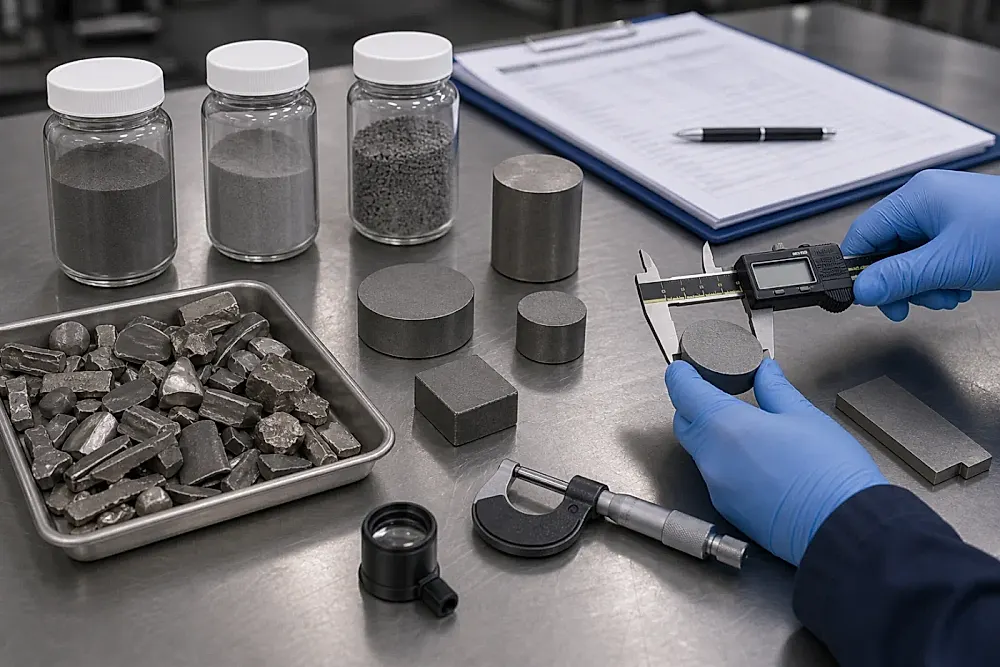
This framework is more useful than asking whether a powder plant has reached a headline capacity number. Capacity matters, but qualification determines whether the material can enter a buyer’s real supply chain. The same buyer logic appears in our parallel reads — the aerospace titanium procurement chain (five gates) and the medical titanium regulatory chain (six gates around FDA 510(k) and design control). Recycled-powder buyers face the same template, with feedstock-provenance and oxygen-control as the front-loaded risks.
What This Means for Titanium Product Buyers
For powder buyers, the first issue is repeatability. A recycled route must prove that powder chemistry, oxygen control and lot-to-lot consistency can stay inside the buyer’s window. For powder metallurgy and sintered products, the next issue is consolidation. Density, dimensional control, surface condition and downstream machining can decide whether a part is commercially usable.
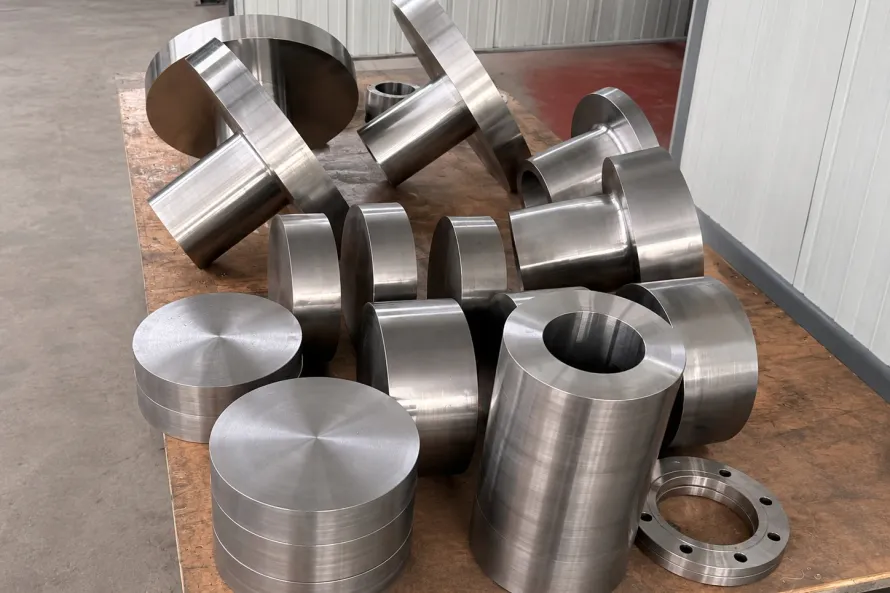
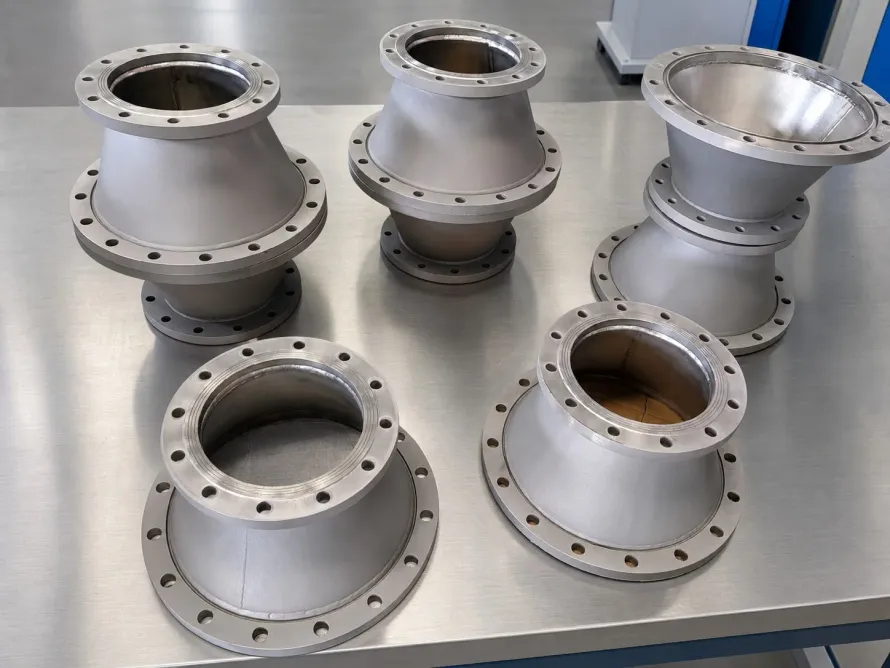
For mill-product and engineered-product buyers, the question is slightly different. IperionX’s own investor materials describe a range of possible outputs from powder into mill products, engineered products, fasteners, enclosures, brackets, impellers, actuators, gears, plates, bars, sheets and wire. That breadth is valuable only if each product form has its own qualification logic. A fastener buyer will not approve a route the same way an aerospace mill-product buyer approves plate or bar. An automotive bracket program will not move at the same pace as a consumer-electronics enclosure.
The company’s quarterly report makes the timing issue visible. It says production remains in ramp-up, downstream capacity is being installed and customer qualification timelines are expected to accelerate as bottlenecks are removed. That language should be read carefully. It is positive for supply-chain development, but it is not the same as broad commercial approval across all titanium product categories. The same caution applies to the TITAN-AM aerospace additive evidence chain — programme announcements move faster than qualified-supply approvals.
What Suppliers Should Learn
Suppliers working with titanium powder, recycled feedstock or powder-derived components should prepare to sell evidence before volume. A useful buyer package may include feedstock traceability, powder lot data, oxygen and chemistry records, powder handling controls, process-route descriptions, sintering or forging parameters, mechanical test results, inspection records and application-specific validation notes.
The same lesson applies to export suppliers outside the powder business. If recycled or powder-derived titanium becomes more common, buyers of bars, plates, tubes, forgings and machined parts will ask where the material came from and how the route was controlled. A lower-cost or lower-carbon titanium story will not be enough if the customer cannot qualify the part.
The defensible conclusion is that IperionX’s 24/7 ramp is not just a production milestone. It is a test of whether recycled titanium can move from strategic supply-chain promise into qualification-ready products. The winners in that shift will not be the suppliers that only report tonnage. They will be the suppliers that make the route auditable from scrap to powder to approved part.
Related Products & Services
- Titanium forgings — Gr.1/Gr.2/Gr.5/Gr.7/Gr.12, AMS 4928 / ASTM B381 channels
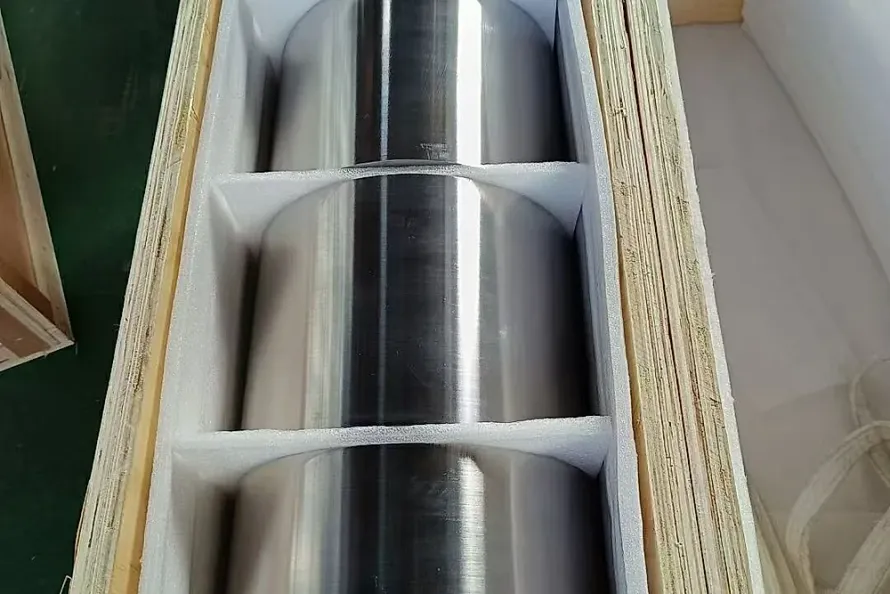
- Titanium bar / rod — ASTM B348 machining stock with batch traceability
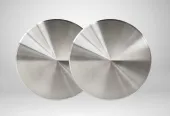
- Titanium sheet & plate — ASTM B265 plate stock for chemical, marine and structural blanks
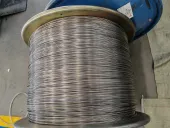
- Titanium wire — feedstock-grade wire for AM and welding routes
- Special titanium alloys — Gr.5 / Ti-6Al-4V and Gr.23 / Ti-6Al-4V ELI reference
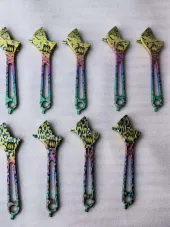
- Titanium nuts & bolts / fasteners — for engineered and bracket applications
- Contract machining services — finish machining, dimensional verification, inspection-ready delivery
- Titanium industry news — ongoing tracking of qualification chains across aerospace, medical, chemical and powder routes
FAQ
# Why does recycled titanium powder need qualification evidence?
# What is a recycled titanium powder-to-part qualification chain?
# Why is powder capacity not the same as approved titanium product supply?
# What should titanium powder buyers verify?
Need this material? Get a factory-direct quote.