FAA's MMPDS Draft Shows Why Titanium Buyers Need an Allowables-to-Lot Evidence Map
The FAA’s current draft policy statement on the Metallic Materials Properties Development and Standardization handbook is not a titanium price story. For buyers of titanium bars, tubes, plates and sheets, forgings and machined components, it is a reminder that a handbook allowable is only one layer of an aerospace evidence package.

On its draft policy page updated May 7, 2026, the FAA listed PS-AIR-600-20-05, a draft statement explaining how the MMPDS Handbook can be used to show compliance with FAA material strength regulations. The agency’s draft document treats MMPDS as an accepted source of statistically based metallic material properties, while also distinguishing conventional product forms from nonconventional routes such as additive manufacturing.
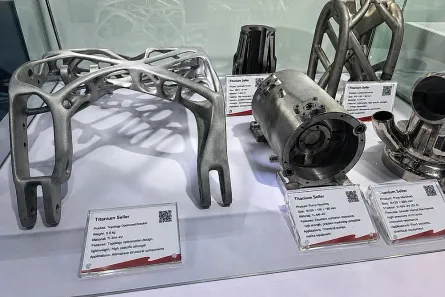
That distinction matters because titanium procurement is moving in both directions at once. Conventional mill products still have to match grade, form, thickness, heat treatment, test direction and certificate language. At the same time, wire-fed and DED titanium routes are trying to move from part-by-part approvals toward broader process-based qualification.
Norsk Titanium’s first-quarter 2026 update shows the same direction from the production side. The company said it signed an Airbus collaboration to develop and document the DED process for its RPD technology, with a Merke IV RPD machine planned for Airbus’ Varel facility and joint work around manufacturing process, controls and validation data. Norsk’s earlier Airbus collaboration announcement described the goal as a transition from part-specific qualification toward broader process-based methods for selected titanium products.
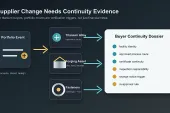
For titanium buyers, the practical conclusion is simple: do not ask only whether a material property exists in a handbook. Ask whether the allowable basis can be mapped to the exact lot, route, inspection record and application approval behind the shipment.
The FAA Draft Is A Compliance Signal, Not A Purchase Order
The draft policy is careful in scope. It does not turn every metallic material into an automatically approved finished part, and it does not remove the applicant’s burden to show that the material, process and application are appropriate.
For conventional aerospace metallic materials, MMPDS is familiar territory. The handbook has long helped applicants use statistically based material properties in certification work. The draft also discusses use across additional rules and continued-airworthiness contexts, which matters for repairs, type design changes and engineering data packages.
The more commercially interesting part is nonconventional materials. Additive manufacturing and related joining or deposition technologies can benefit from handbook-recognized data, but the buyer still needs supporting evidence. In practice, that means material equivalency, process stability, key process variables, lot identity and application-specific design values cannot be treated as afterthoughts.
This is where processed titanium suppliers can either add value or create risk. A supplier who understands the buyer’s certification route can package evidence in a way that quality teams can review. A supplier who only ships metal and a generic certificate leaves the buyer to rebuild the chain later.
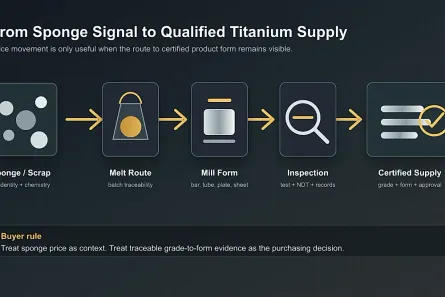
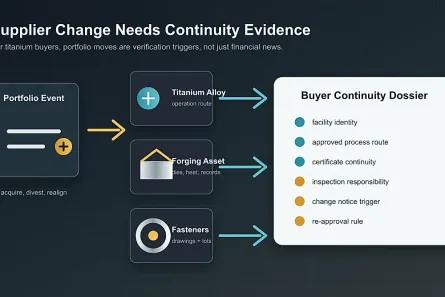
The Allowables-To-Lot Evidence Map
A useful buyer tool is an allowables-to-lot evidence map. It connects the broad material property basis to the narrow shipment record that arrives with a purchase order.
| Evidence layer | Buyer question | Titanium records to request |
|---|---|---|
| Allowable basis | Which handbook, specification or customer basis supports the material property claim? | MMPDS reference, customer material specification, drawing requirement or approved design data |
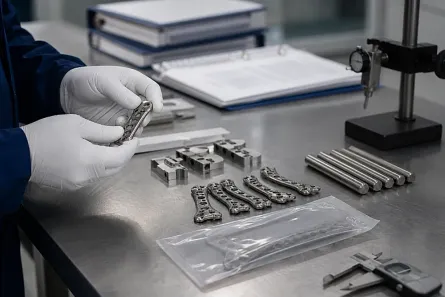
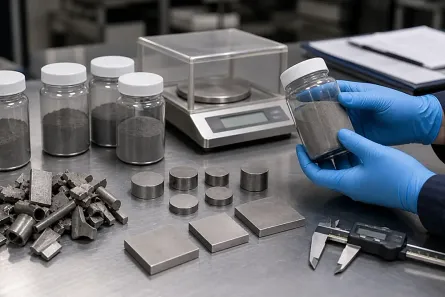
| Product identity | Does the source basis match the delivered form? | Alloy and grade, bar/tube/plate/sheet/forging form, thickness or size range, condition and heat treatment |
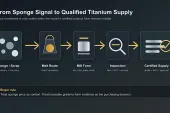
| Process route | Was the product made through the route assumed by the evidence? | Melt route, forging or rolling route, tube route, machining route, AM/RPD/DED process window or subcontracted processing |
| Lot traceability | Can the shipment be tied back to a stable population? | Heat number, lot number, billet or build identifier, traveler, machine or batch record where relevant |
| Verification | What proves this lot meets the claimed basis? | Mechanical tests, chemistry, ultrasonic or NDT records, dimensional inspection, surface and heat-treatment records |
| Application fit | Does the record fit the buyer’s aircraft, medical, chemical or industrial use case? | Drawing revision, customer approval, first-article evidence, design value assumptions and change-control notes |
This framework prevents a common procurement error: treating a recognized material dataset as if it automatically covers every form, process and part geometry.

Conventional Titanium Still Needs Mapping
The draft’s reference to conventional product forms is relevant to everyday titanium purchasing. Aerospace plates, sheets, extrusions, bars, billets, tubes and forgings may look less novel than additive parts, but they still require careful matching.
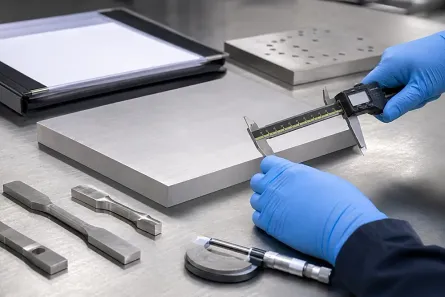
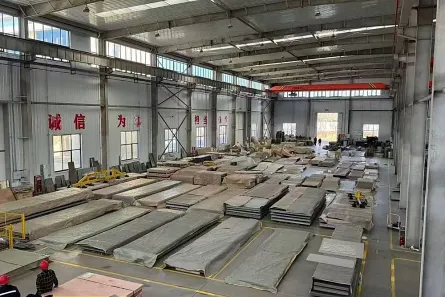
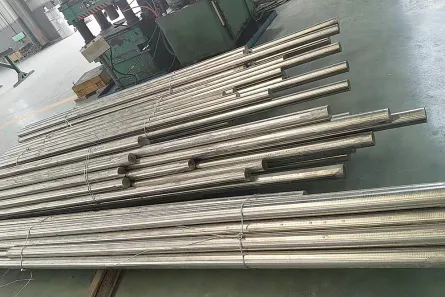
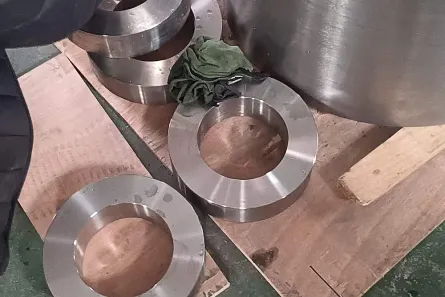
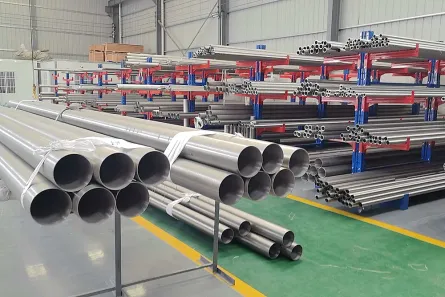
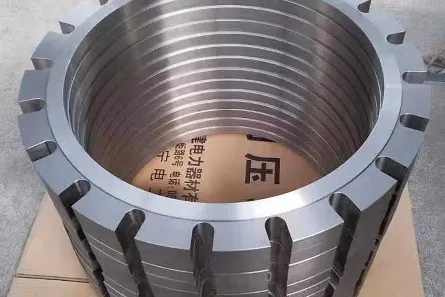
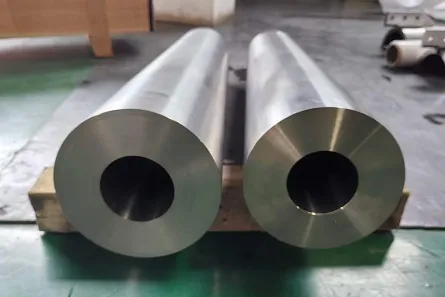
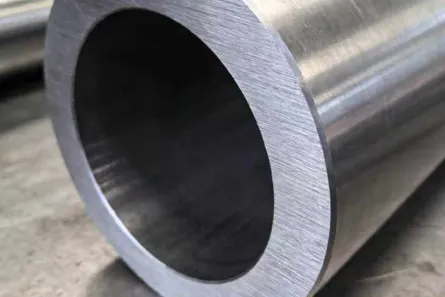
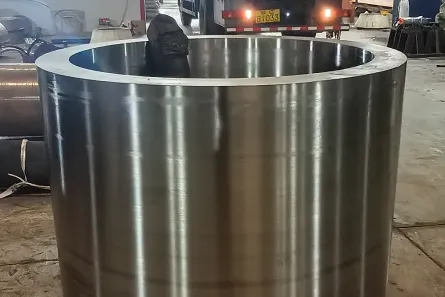
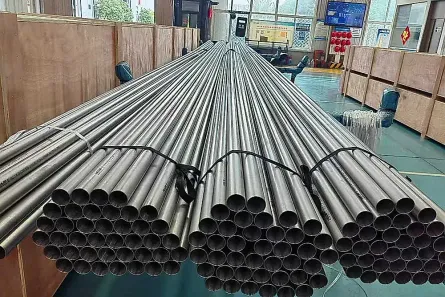
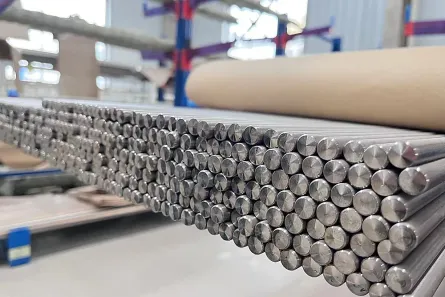
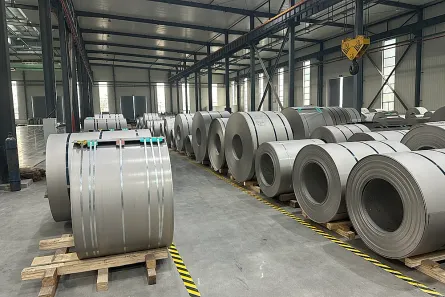
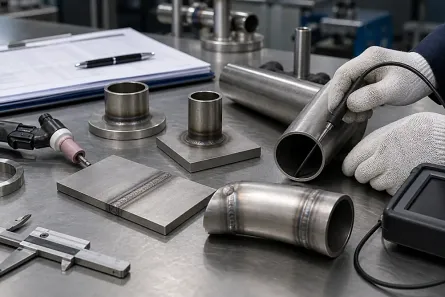
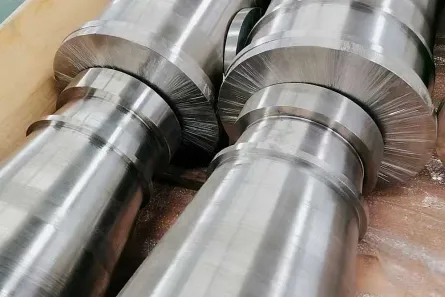
A plate buyer should verify thickness range, condition, flatness, ultrasonic inspection and test orientation. A bar or billet buyer should preserve heat identity, size range, heat-treatment condition and mechanical-property basis. A tube buyer may need route evidence, dimensional controls, surface condition and pressure-service assumptions. A forging buyer should care about die route, grain flow, heat treatment, NDT and approval status — typically certified to AMS 4928 for Gr.5 Ti-6Al-4V aerospace work.
The point is not that every shipment needs an aircraft-level dossier. The point is that a buyer should know which evidence layer is essential for the application. Export distributors, machine shops and component buyers often sit between the mill and the final approval authority. Their commercial value rises when they can keep the material basis connected to the downstream use case.
Nonconventional Titanium Raises The Documentation Burden
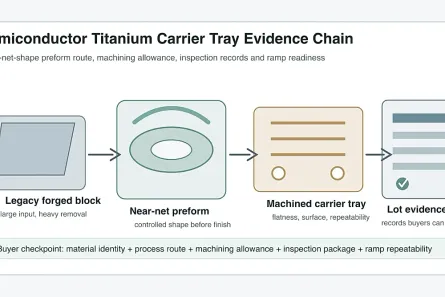
Additive and near-net-shape titanium routes make the map more important, not less. A process-based qualification model can reduce repeated part-by-part work only when the process is controlled well enough to justify that broader trust.
That is why the Norsk-Airbus signal is useful for the wider market. The notable word is not only additive. It is documentation. Buyers are watching whether process specifications, machine controls, validation data and repeatability records can become transferable procurement evidence.
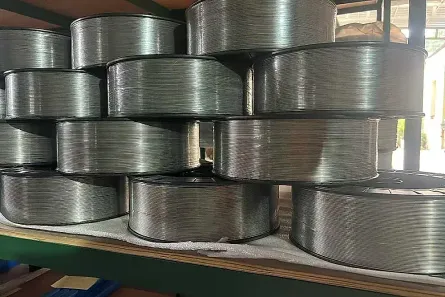
For RPD, DED or other nonconventional titanium routes, a finished-part certificate is not enough by itself. The buyer may need the machine family, feedstock or wire controls, deposition window, thermal history, post-processing route, inspection plan, mechanical testing basis and change-control trigger. If any of those variables changes, the buyer needs to know whether the previous allowable basis still applies.
This is also why conventional and additive titanium should not be framed as opposites. Both compete inside the same buyer evidence system. The winning route is the one that can prove fitness for the application with the least uncontrolled ambiguity.
What Buyers Should Ask This Quarter
The FAA comment window makes the MMPDS draft a current regulatory signal, but the buyer response should be operational. Procurement and quality teams can begin with five questions.
First, which material allowable or design-value basis is being used for the product, and is it current for the buyer’s certification or approval route?
Second, does the delivered product form match the product form, size range, condition and process route assumed by that basis?
Third, what lot-level records prove that the specific shipment belongs to the qualified population rather than only the same alloy family?
Fourth, which process variables would trigger buyer notification or re-approval if they changed?
Fifth, does the supplier’s certificate package make the buyer’s next approval step easier, or does it merely describe the metal?
For titanium suppliers, the opportunity is not to claim that MMPDS, additive manufacturing or any single standard solves qualification. The better commercial position is to make evidence easy to audit: allowables, form, route, lot, inspection and application fit in one chain.
Buyer Takeaway
The current MMPDS discussion shows a broader shift in titanium procurement. Aerospace and other demanding buyers are not only asking whether a material has strong properties. They are asking whether those properties can be traced through a controlled manufacturing route and a specific shipment.
That is the real buyer issue behind the FAA draft and the Norsk-Airbus process work. A titanium lot becomes commercially stronger when its certificate does not stand alone, but sits inside an allowables-to-lot evidence map.
Related Products & Services
- Titanium Bars — Gr.5/Gr.23 with mill certification + AMS 4928 traceability
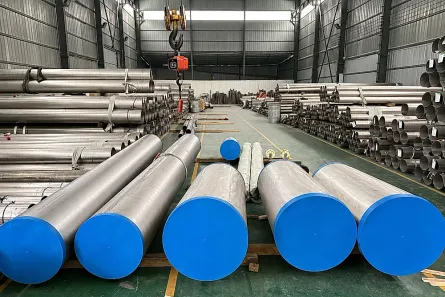
- Titanium Tubes — seamless and welded, ASTM B338 + dimensional records
- Titanium Sheets & Plates — aerospace forms to ASTM B265
- Titanium Forgings — aerospace approved routes with grain-flow records
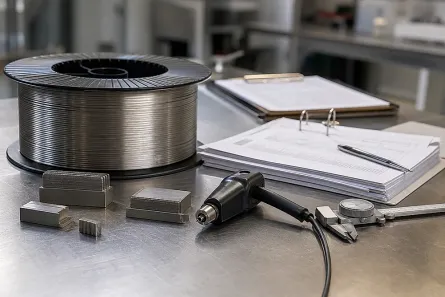
- Titanium Wires — AM/DED feedstock with lot traceability
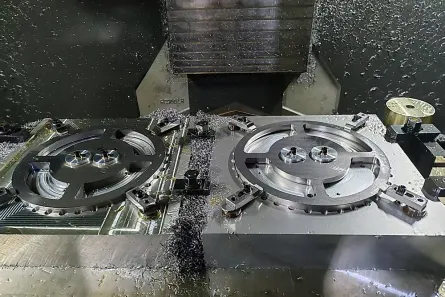
- Titanium CNC Machining — qualified contract machining
- Stocking Programs — lot-level evidence per release
FAQ
# Does MMPDS acceptance mean every titanium lot is automatically acceptable?
# What is an allowables-to-lot evidence map?
# How does this affect conventional titanium bars, plates and sheets?
# Why is additive or RPD/DED titanium different?
# What should export buyers request from titanium suppliers?
Need this material? Get a factory-direct quote.